
TL;DR
- Ford launched the Mustang on April 17, 1964, and sold roughly 22,000 on day one — a number no new nameplate had touched before.
- Only two body styles existed at launch: hardtop and convertible. The fastback didn’t arrive until August 1964.
- Five engines were offered that first year, from a 101-horsepower 170 CID inline-six up to the 271-horsepower 289 Hi-Po V8.
- The single most reliable way to identify a true 1964½: pop the hood. A generator means early car; an alternator means it’s titled as a 1965.
- Genuine, documented 1964½ cars generally run $15,000–$30,000 in decent condition, with K-code Hi-Po cars and rare San Jose–built convertibles pulling well past that.
Table of Contents
- The Launch That Broke Ford’s Own Sales Math
- Body Styles: Just Two, At First
- The Five Engines Ford Offered That First Year
- How to Tell a Real 1964½ From a Retitled 1965
- Decoding the VIN and Data Plate
- Production Numbers: How Rare Is Rare
- What a Genuine 1964½ Is Worth Today
- Authenticity Pitfalls Worth Knowing Before You Buy
The Launch That Broke Ford’s Own Sales Math
Ford unveiled the Mustang to the press on April 14, 1964, then put it in showrooms nationwide three days later, timed to a splashy debut at the New York World’s Fair. Ford rolled the car out at the fairgrounds with Henry Ford II himself doing the honors, and the timing wasn’t an accident — the Fair guaranteed foot traffic and press coverage no ordinary dealer event could buy.
It worked better than anyone at Ford expected. Roughly 22,000 Mustangs sold on the first day alone. Ford had projected sales of 100,000 units for the entire first year; they blew past that number in about four months and closed out the model year north of 400,000 units, a sales record for a new nameplate that stood for decades. Base price was around $2,368 — cheap enough that a secretary could plausibly finance one, which was exactly the point.
The car created its own category almost by accident. A compact platform (borrowed from the workaday Falcon), a long hood, a short deck, and a price tag under $2,400 added up to something buyers hadn’t seen before: a sporty two-door that didn’t cost sports-car money. The term “pony car” was coined for it, and every GM and Chrysler competitor that followed — Camaro, Firebird, Barracuda — was chasing the trail the Mustang blazed that April.
Body Styles: Just Two, At First
The 1964½ lineup was leaner than most people assume. At launch, Ford offered exactly two body styles:
- Hardtop — the volume seller, and the body style most 1964½ survivors wear today.
- Convertible — pricier, lower production, and the one collectors chase hardest now.
That’s it. The notchback fastback — the 2+2 body most people picture when they hear “classic Mustang” — didn’t exist yet. It arrived in August 1964 as part of the running changes that also brought the alternator and other updates associated with the “true” 1965 model. Any car badged as a 1964½ fastback is, definitionally, not a 1964½ at all. If you see one advertised that way, that’s your first red flag.
The Five Engines Ford Offered That First Year
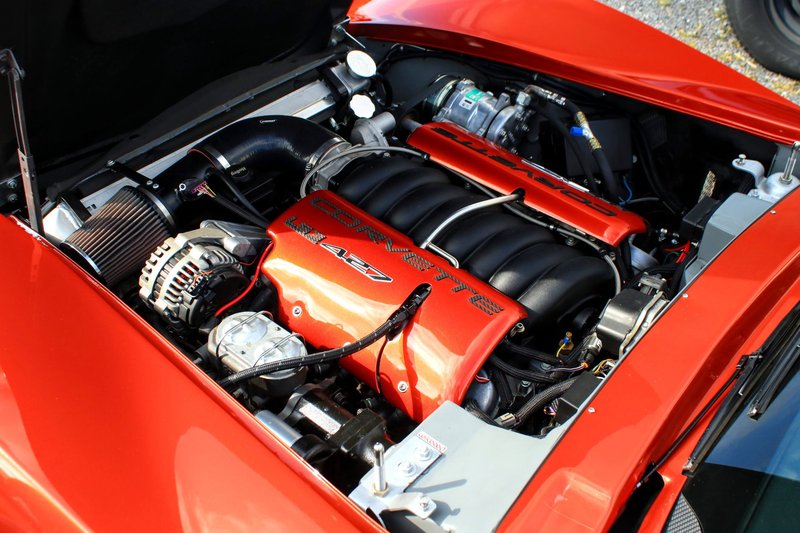
Ford gave buyers real range under the hood, from a commuter-friendly six to a genuine street performer, and the spread widened as the year went on.
| Engine | Code | Displacement | Horsepower | Notes |
|---|---|---|---|---|
| Thriftpower I6 | U | 170 CID | 101 hp | Base engine, single-barrel carb |
| Windsor V8 | F | 260 CID | 164 hp | Exclusive to early 1964½ production, dropped mid-year |
| Windsor V8 (2V) | — | 289 CID | 195 hp | Two-barrel carburetor |
| Windsor V8 (4V) | D | 289 CID | 210 hp | Four-barrel carburetor, the volume V8 |
| Hi-Po 289 | K | 289 CID | 271 hp | Solid lifters, 4-speed manual only, added mid-1964 |
The 271-horsepower K-code was the one that mattered for anyone cross-shopping a Corvette. It wasn’t available at launch — Ford introduced it partway through the 1964½ run, paired exclusively with the four-speed and Ford’s Special Handling Package, which added front discs and stiffer suspension. A K-code car also got a five-gauge instrument cluster with an 8,000-rpm tachometer in place of the base idiot-light cluster, which is itself a useful tell when you’re trying to verify an engine swap claim.
The 260 CID V8 is worth flagging on its own: it only appeared in early 1964½ production and was phased out before the model year ended, which makes a documented 260-equipped car a genuine rarity rather than just an old Mustang with a small V8.
How to Tell a Real 1964½ From a Retitled 1965
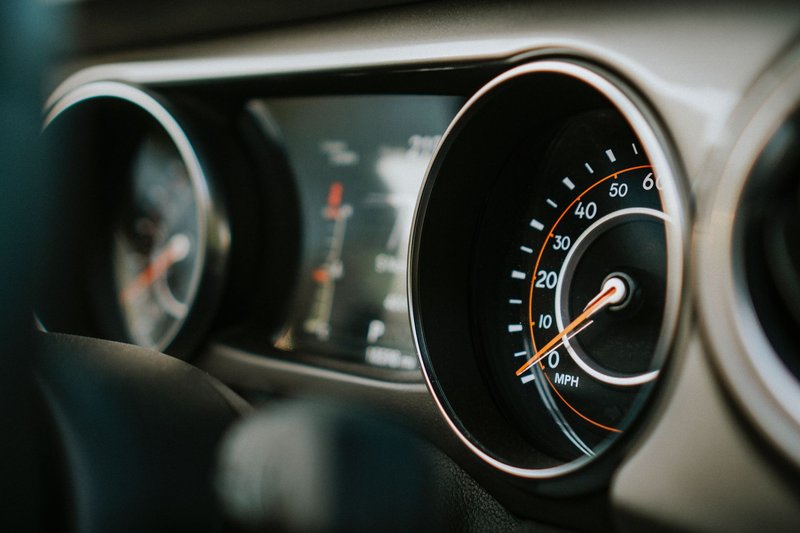
This is where most of the confusion — and most of the internet arguing — actually lives. Ford never called any Mustang a “1964½” on paperwork. Every early car was titled as a 1965 model, which means the only way to separate a true early-production car from a later 1965 is to check the build details, not the title.
The cleanest signal is the charging system. Cars built before August 17, 1964 came with a generator; everything built after switched to an alternator. That single component decides the debate more reliably than any badge or brochure claim, because it’s a hard cutoff in production, not a trim change. You can confirm it two ways:
- Under the hood: a generator sits high on the block, driven off a different pulley arrangement than the alternator that replaced it.
- On the dash: the warning light reads “GEN” on true 1964½ cars and “ALT” on 1965s. It’s a one-word tell, but it’s decisive.
Beyond the charging system, a few secondary details corroborate an early build: the absence of a fastback body (again, not offered until August), a floor-mounted parking brake handle rather than the later T-shaped unit on some trims, and hood trim details that changed with running production updates. None of those alone prove a date the way the generator does, but they’re useful cross-checks when a seller’s story doesn’t quite add up.
Decoding the VIN and Data Plate
Every Mustang VIN from this era carries the same structure, and it’s worth learning to read cold before you trust a seller’s summary of it. The year code is the quirk that trips people up: it reads “5,” for 1965, on every early car — Ford’s paperwork never distinguished a 1964½ from a 1965 at the VIN level. The plant code follows: “F” for Dearborn, Michigan, or “R” for San Jose, California, with San Jose production starting later and in far smaller numbers. Body style codes come next — 07 for hardtop, 08 for convertible — followed by the engine code (U, F, D, or K, matching the engine table above) and a sequential production number.
That sequential number is the real dating tool. Dearborn-built cars started at 100001 in March 1964; San Jose didn’t begin building Mustangs until July 13, 1964. A low sequential number from Dearborn, combined with a generator-equipped engine bay, is about as close to airtight proof of a true 1964½ as you can get without a build sheet.
Production Numbers: How Rare Is Rare
Dearborn was the primary plant and ran through production number 220317 by the end of the model year; San Jose, which came online later, topped out around 104363. Put together, well over 300,000 units left the two plants in that first stretch, and the vast majority were hardtops with the standard 289.
That volume is exactly why rarity, for 1964½ cars, isn’t about the model — it’s about the specific combination. A base hardtop with the 170 six is common enough that it won’t turn heads at a show. A documented 260-equipped car, an early K-code convertible, or anything from the limited San Jose run in the first weeks of production is a different conversation entirely.
What a Genuine 1964½ Is Worth Today
Nobody covers this well, and it’s the question most people typing “1964 Mustang” into a search bar actually want answered: what’s mine worth, or what should I expect to pay?
Documented, generator-equipped 1964½ hardtops in solid driver condition generally land in the $15,000–$25,000 range. Convertibles run higher — typically $25,000–$40,000+ depending on options and originality — because fewer were built and they show better at cruise nights. K-code Hi-Po cars, whether hardtop or convertible, sit in their own tier: verified survivors have traded well north of $50,000, with concours-level or documented low-mileage examples going higher still.
The multiplier that matters most isn’t condition — it’s paperwork. A Marti Report or comparable build-sheet documentation that ties the VIN to its original engine code, plant, and options can add real money to a sale, because it’s the only thing that definitively proves a car wasn’t reassigned a K-code or a 260 badge somewhere along the way. Buyers who skip that step and rely on a seller’s word are the ones who overpay for a car that isn’t quite what it’s advertised as.
Authenticity Pitfalls Worth Knowing Before You Buy
A few mistakes show up again and again in the classic Mustang market, and they’re worth knowing before you write a check:
- Engine swaps sold as original. A 289 4V is not hard to source, and a seller under time pressure can drop one into a six-cylinder car. Match the engine’s casting date and code stamp against the VIN’s engine code — they should agree.
- Fastback bodies claimed as 1964½. As covered above, this is a hard no. If the body style is a fastback, the car is a 1965, full stop, regardless of what the seller calls it.
- Alternator conversions on an otherwise-early car. Plenty of owners upgraded a generator to an alternator decades ago for reliability. That’s a legitimate modification, but it means you can’t use the charging system as your only proof if the current owner admits to a conversion — cross-check against the VIN sequence and plant code instead.
- “Rare” 260 claims without a matching engine code. The 260’s early-production exclusivity makes it a popular thing to claim and a popular thing to fake. The data plate’s engine code (F) should match the block’s casting number.
None of these are reasons to walk away from a car — they’re reasons to ask for documentation before you fall in love with one. A 1964½ Mustang with a clean, verifiable history is still one of the more attainable pieces of American automotive history you can put in a garage. It just rewards the buyer who checks the generator before they check the price tag.

Marco Delantero
More from Marco DelanteroHow we reviewed this article
This article was researched against manufacturer records and editorially reviewed before publishing. We accept no payment for coverage. Some guides contain affiliate links; see our affiliate disclosure.