Table of Contents
- The Quick Answer
- What Actually Happened in 1940
- From War Surplus to Tractors
- The Clutch That Started Everything
- The First Real Lamborghini Models
The Quick Answer
There is no 1940 Lamborghini. Automobili Lamborghini didn’t exist until 1963, and no car wearing the raging-bull badge rolled off a line before 1964. If you’re searching for a 1940 Lamborghini model, you’re chasing a year that belongs to a different chapter of Ferruccio Lamborghini’s life entirely — one with no cars in it at all.
That chapter is worth knowing anyway. It explains why the man who built one of the most famous sports car companies on earth spent his first three decades nowhere near a design studio.
What Actually Happened in 1940
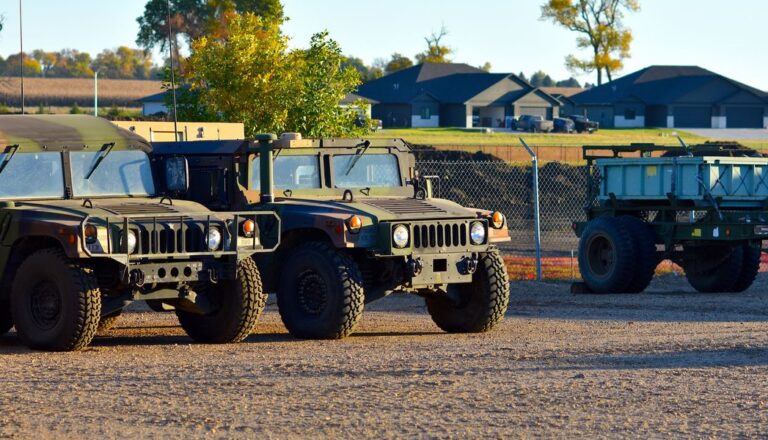
In 1940, Ferruccio Lamborghini was 24 years old and had just been drafted into the Italian Royal Air Force. He’d already trained as a mechanic — he’d graduated technical school in Bologna in 1934 and gone to work at Cavalier Righi, a shop that serviced vehicles for the Italian Army. The Air Force sent him to Rhodes, a Greek island in the Aegean, and put him in charge of the Mixed Maneuver Motor Fleet: trucks, tractors, and whatever tactical vehicles needed to keep running.
That posting mattered more to his future than anyone could have guessed at the time. Working on diesel-powered military hardware, far from any factory or dealership, is where Lamborghini built the hands-on engineering instincts that later let him look at a Ferrari engine and immediately see what was wrong with it.
The war didn’t end cleanly for him. When German forces occupied Rhodes late in the conflict, most Italian soldiers scattered. Lamborghini stayed, changed into civilian clothes, and ran a small mechanic’s shop on the island with the occupiers’ tolerance. British forces held him briefly as a prisoner of war before he finally made it back to northern Italy in 1946.
So yes, 1940 is a real year in Lamborghini history. It just belongs to a 24-year-old airman fixing trucks on a Greek island, not to a sports car.
From War Surplus to Tractors
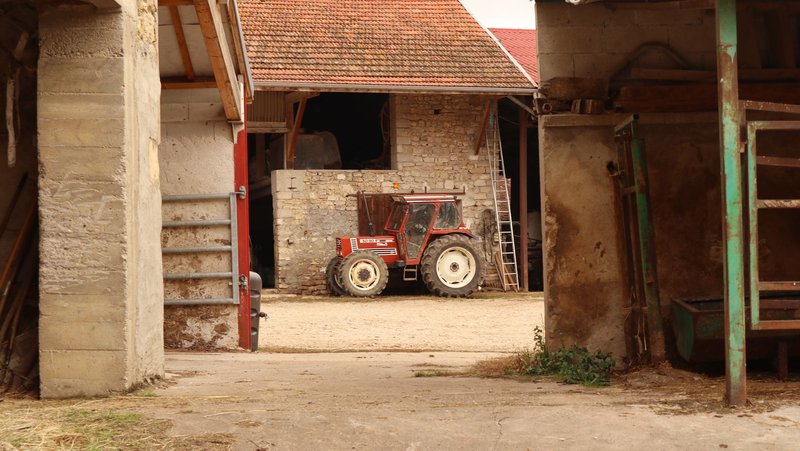
Back home, Lamborghini didn’t have capital, a factory, or connections. What he had was a scrapyard’s worth of leftover military vehicles and a country desperate to get its farmland productive again after the war. He started converting surplus trucks into agricultural equipment, and in 1948 formalized the operation as Lamborghini Trattori.
The tractors sold. Italy’s postwar farms needed reliable machines more than they needed style, and Lamborghini’s engineering background showed in equipment that held up under real work. By the 1950s the company had grown into a serious manufacturer, and Ferruccio had moved on to building oil burners and air conditioning units on the side — he was, by every measure, a successful industrialist a decade before he built a single car.
None of that history shows up when people search “1940 Lamborghini.” It’s the part of the story that actually explains where the company’s engineering culture came from, and it’s largely absent from the automotive sites that dominate the search results for this topic. The same misconception extends to neighboring years—1941 Lamborghini models and 1947 Lamborghini models don’t exist either, despite the searches people run for them.
The Clutch That Started Everything
Success bought Ferruccio Lamborghini a Ferrari 250 GT, and the Ferrari kept burning out its clutch. Because he ran a tractor company, he had his own mechanics look at the failed part — and recognized it. Ferrari was using the same clutch Lamborghini installed in his farm equipment, just marked up several times over.
He drove to Maranello to tell Enzo Ferrari as much and suggest improvements. As the story is usually told, Ferrari wasn’t interested in engineering notes from a tractor manufacturer and told him to stick to what he knew. Lamborghini went home and decided to build a car that could beat him at his own game.
Whether the clutch story happened exactly that way or has picked up some polish over sixty years of retelling, the outcome is documented: Automobili Lamborghini was incorporated in Sant’Agata Bolognese in 1963, funded almost entirely by tractor money, and staffed with engineers Ferruccio poached specifically to outbuild Ferrari.
The First Real Lamborghini Models
Here’s the actual timeline, more than two decades after the year most searches are aiming for.
1963 — 350 GTV. The prototype debuted at the Turin Auto Show in October 1963, styled by Franco Scaglione with a 3.5-liter V12 designed by ex-Ferrari engineer Giotto Bizzarrini. It was a showpiece, not yet a car you could buy.
1964 — 350 GT. This is the real answer to “what was the first Lamborghini.” The production version launched at the Geneva Motor Show in March 1964, wearing a toned-down body from Carrozzeria Touring and a detuned version of that same V12, producing 280 horsepower. Lamborghini built 120 of them through 1966 — just 13 in that first year.
1966 — Miura. The car that actually made the brand famous. A mid-engine V12 layout was unheard of in a road car at the time, and the Miura’s proportions still get cited as one of the best-looking cars ever built. Sixty years on, it’s the car most people picture when they think of the brand’s founding era, even though it arrived three years after the company itself.
1968 — Espada and Islero. Lamborghini’s answer to the four-seat grand tourer, built to prove the company could do comfort and usability alongside outright speed.
1971 — Countach. Technically outside the founding decade, but it’s the car that cemented the wedge-shaped, poster-on-a-teenager’s-wall identity Lamborghini still trades on.
None of these existed anywhere close to 1940. The gap between the year people keep searching and the year the company actually started is 23 years — roughly the distance between a scrapyard full of war-surplus trucks and a V12 built to embarrass Enzo Ferrari.
If you came here looking for a 1940 Lamborghini to buy, restore, or research, it isn’t out there. What is out there is a founder’s story that starts on an occupied Greek island, runs through a tractor factory, and ends with one of the most recognizable car badges in the world — built by a man who spent his first three decades nowhere near a drafting table.

Marco Delantero
More from Marco DelanteroHow we reviewed this article
This article was researched against manufacturer records and editorially reviewed before publishing. We accept no payment for coverage. Some guides contain affiliate links; see our affiliate disclosure.