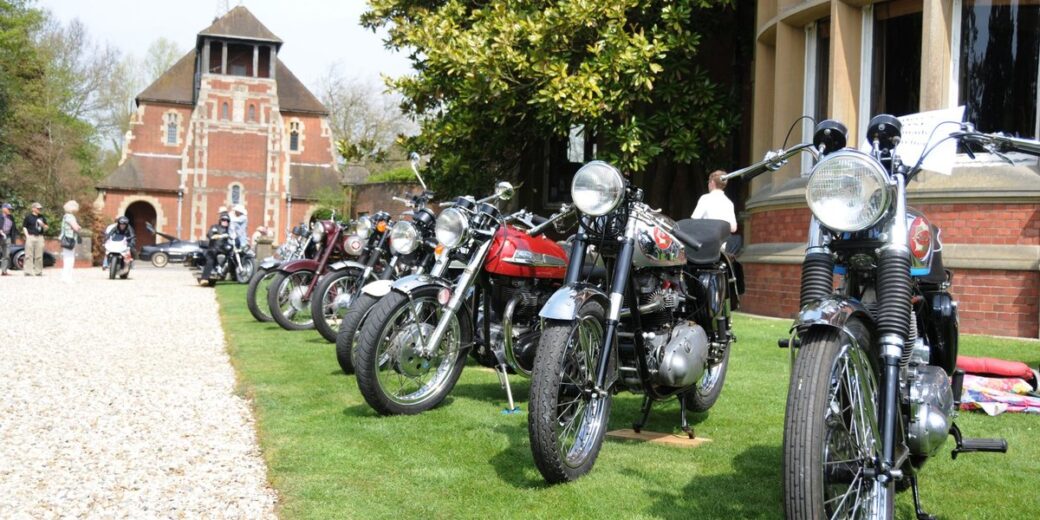
Sweden isn’t the first country anyone names when you say “vintage motorcycle.” No Brough Superior, no Vincent, no Ducati. Yet a Swedish bike won the 500cc Motocross World Championship in 1959, and another Swedish marque has been building bikes since 1903 and still does. The classic Swedish motorcycle story is short, odd and full of engines that were never meant for bikes.
This guide covers the names that matter, the dates that sources can’t agree on, and what it takes to own one.
Contents
- Husqvarna: the one everybody knows
- Monark: Varberg’s racing bicycle maker
- The Albin engine
- Union and Scherling: the obscure ones
- Conflicting dates, settled
- Buying a classic Swedish motorcycle
- Swedish motorcycles today
- Summary
Husqvarna: the one everybody knows
Husqvarna started life in 1689 making muskets for the Swedish crown. Motorcycles came in 1903, when the armament works fitted a Belgian FN engine to a bicycle frame built in-house. Output was tiny.
The 1930s are the road-racing era people forget. Husqvarna fielded 500cc V-twins in European Grand Prix racing, and Ragnar Sundqvist beat Norton at the 1932 Swedish Grand Prix, according to Cycle World’s history of the marque. The company won one race in 1935, then withdrew because it couldn’t afford to keep racing.
Key years
- 1903: first motorcycle
- 1930s: V-twin Grand Prix racing, ended after 1935
- 1936: the 112 SV 500cc single appears in period listings
- 1958: motocross program starts with Rolf Tibblin
- 1960 and 1962: world titles in the 500cc class (Bill Nilsson, then Tibblin), plus Torsten Hallman’s 250cc title in 1962
Model to know: the 112 SV. The 1936 Husqvarna 112 SV is a 500cc single of the pre-war school, upright and mechanical, built when Husqvarna still made road bikes for Swedish buyers. A 1936 example sold at auction for 90,000 SEK, which is a useful benchmark for what a roadgoing pre-war Husqvarna costs.
Why it matters. After the war Husqvarna switched to lightweight two-strokes, adapted its sport model for Swedish scrambles, and turned that into a motocross and enduro dynasty. Tibblin is still the only rider to win both the 250cc and 500cc world titles. Anyone riding a dirt bike with a Husqvarna badge today is riding the end of that line. The motorcycle division was split from the rest of the business in 1987 and has belonged to KTM since 2013.
Monark: Varberg’s racing bicycle maker
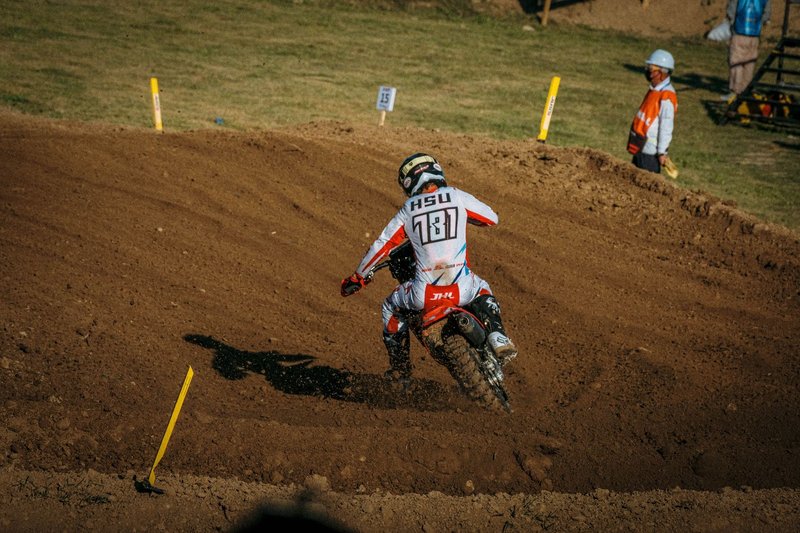
Monark began in 1908 in Varberg on Sweden’s west coast, as a bicycle maker. Motorcycles followed, including road models such as the Esse and the Blue Arrow, and during the war years Monark built military machines, including sidecar outfits. A 1943 military Monark survives in a Swedish regional museum collection.
The famous Monark isn’t a road bike, though. It’s a motocross racer.
Key years
- 1908: founded in Varberg
- 1959: Sten Lundin wins the 500cc Motocross World Championship on a Monark
- 1961: Lundin wins again, on the same bike re-badged as a Lito
- Early 1960s: merger into the Nymans group (Nymanbolagen), later Monark-Crescent
- Around 1976: motorcycle production ends
Model to know: the Monark 500 motocross. Lundin’s title bike used a 498cc Albin engine with a BSA Gold Star gearbox, assembled and tuned by former road racer Nils-Olov “Nisse” Hedlund. It was a mongrel of Swedish military hardware and British transmission parts, and it beat the factory teams.
Why it matters. Lundin was born in Stockholm in 1931, took part in Sweden’s 1955 Motocross des Nations win, and finished with 22 race wins and two world titles, according to the FIM. He also finished second in 1958, 1960 and 1963. Before Husqvarna became the name in Swedish motocross, Monark was.
The Albin engine
The engine behind that title has its own story. Albin, a Swedish marine and industrial engine maker, developed a 498cc four-stroke single for the Swedish army in 1942. It was a rugged, simple unit meant for military motorcycles, not racing.
After the war, surplus engines and the design itself found a second life in motorsport. Builders liked the cylinder dimensions and the robustness. Hedlund’s Monark was the best-known application, but the Albin shows up in Swedish scrambles specials from the 1950s onward. If you see a Swedish motocross machine with a heavy, upright single and a BSA gearbox, check the cases.
For collectors, “Albin engine motorcycle” is a shorthand for one specific thing: a military-origin power unit repurposed for competition.
Union and Scherling: the obscure ones
Two names show up mostly in archive sites, and they’re worth knowing precisely because almost nobody else does.
Scherling dates to 1903, the same year as Husqvarna’s first bike. It’s a pioneer-era marque: early motorized bicycles, tiny output, and a handful of surviving photographs. If you find a complete Scherling, you’ve found something that belongs in a museum.
Union is rarer in a different way. Only about 40 Union motorcycles were built, in 1950 and 1951. That’s less than two years of production, and a count small enough that you could, in theory, list every frame. There’s no market for Union bikes, because there’s almost no supply. Their value is purely historical.
Both appear in the Cyber Motorcycle marque archive, which is the best English-language starting point for Swedish brands that left no wider trail.
Conflicting dates, settled
Swedish motorcycle history is a patchwork of company mergers, and sources disagree. Here’s how to handle the worst offenders.
- Monark and Nymans merger. Sources give 1960, 1961 or 1964. The consistent part is that Monark was absorbed into the Nymans-led group in the early 1960s and later operated as Monark-Crescent. If a date matters for your paperwork, check the frame number and the manufacturer’s plate rather than a web page.
- Monark’s end. “Around 1976” is the safest phrasing. Different sources date the final production run a year or two either side.
- Lundin’s bike colors. Some accounts have the Monark blue before it became a Lito, others say it was painted green for 1961. Period photographs are the only reliable tiebreaker.
- Husqvarna’s racing titles. Accounts of 1930s European championships vary by class and source. The firmly documented facts are the 1932 Swedish Grand Prix win over Norton and the 1935 withdrawal.
When two sources disagree, prefer the one closest to the factory: a museum, a registry or a period document.
Buying a classic Swedish motorcycle
This is the part no brand page covers.
Prices. There’s no price guide for most of these bikes. The 90,000 SEK paid for a 1936 Husqvarna 112 SV is one real data point. Pre-war roadgoing Husqvarnas sit in a different bracket from 1960s motocross machines, which have a stronger vintage-racing market and more buyers. Union and Scherling bikes basically don’t trade.
Parts. Husqvarna is by far the easiest. Decades of dirt-bike production mean a deep pool of specialists and reproduction parts for the later two-strokes. Pre-war singles are a harder search. Monark is trickier: Albin engine parts are scarce, so expect to fabricate or swap components. For anything earlier than the 1950s, plan on machining.
Where to see them first. Before you buy, visit a museum. The Husqvarna Fabriksmuseum in Huskvarna holds a large collection of the marque’s motorcycles and factory tooling used from 1913 until 1987. The Gyllene Hjulet (Golden Wheel) museum in Surahammar has around 120 motorcycles, including Husqvarna road racers and motocross bikes.
Provenance. Because these are low-volume bikes, paperwork and period photos matter more than usual. A documented race history can double the interest from collectors.
Swedish motorcycles today
The history pages stop in the 1970s, but the story didn’t. Husqvarna motorcycles continue under KTM ownership, and small Swedish makers such as RGNT build new retro-styled bikes in the classic idiom. It’s not the same as owning a Monark, but it shows that Swedish motorcycling didn’t end with the factory closures. For the wider field, the complete list of modern motorcycle brands gives the country of origin and flagship models for each.
Summary
The best classic Swedish motorcycles come from three places: Husqvarna’s long run from 1903, Monark’s Varberg-built racer with its Albin military engine, and the ultra-rare marques like Union and Scherling that survive mostly in archives. Start with Husqvarna if you want parts and a market. Look at Monark if you want the best story. Treat the date conflicts with caution, and visit a museum before you spend money on a classic Swedish motorcycle of your own.
Sarah Thornton
More from Sarah ThorntonHow we reviewed this article
This article was researched against manufacturer records and editorially reviewed before publishing. We accept no payment for coverage. Some guides contain affiliate links; see our affiliate disclosure.