Table of Contents
- The Quick Answer
- What Honda Was Actually Building in 1957
- The Long Road From Motorcycles to Cars
- Honda’s Real First Cars
- Honda T360 (1963)
- Honda S500 (1963)
- Honda S360 — the One That Never Was
- Honda S600 and S800
- FAQ
The Quick Answer
There’s no such thing as a 1957 Honda car model. None exist, because Honda didn’t build a single car — not a prototype, not a concept, not a kei car — until 1963. In 1957, Honda Motor Co. was six years away from selling its first automobile and still very much a motorcycle company, one that had only just started shipping bikes to markets outside Japan.
If you landed here searching for “1957 Honda car models,” the honest answer is that you’re looking for something that doesn’t exist. What does exist is a more interesting story: what Honda was building instead, and how a company obsessed with two wheels ended up making some of the most peculiar, high-revving little cars of the 1960s.
What Honda Was Actually Building in 1957
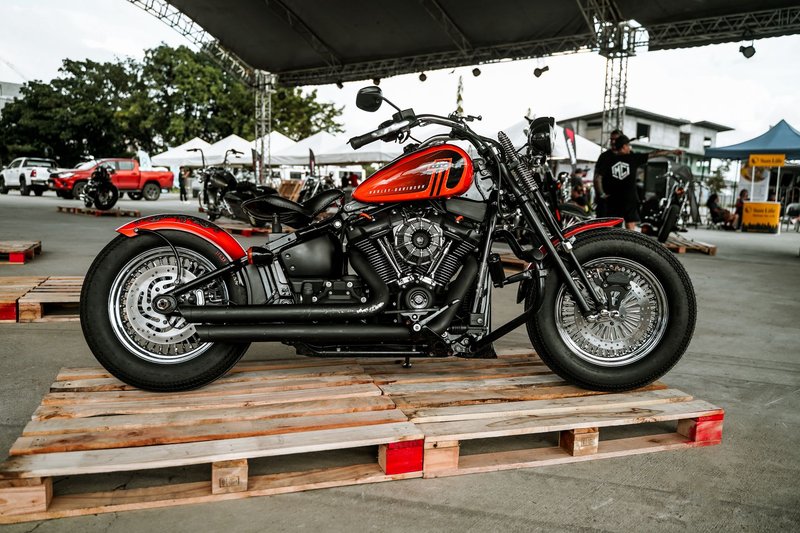
1957 was a motorcycle year, and a pivotal one. In September, Honda released the C70 Dream — its first twin-cylinder motorcycle, a 247cc machine styled under Soichiro Honda’s personal direction in a look employees nicknamed the “Buddhist temple” style for its curved, almost sculptural bodywork. The design borrowed engineering ideas from Germany’s NSU Rennmax racer, but the C70 was unmistakably Honda: engine and frame treated as one integrated object rather than a motor bolted into a bicycle-shaped chassis.
That mattered more than it sounds. Through the early 1950s Honda had been cranking out simple, cheap two-strokes — the Dream Type D, then the higher-output E model that sold 32,000 units in 1953 alone. The C70 marked a shift toward engineering ambition: overhead cams, twin cylinders, real styling. It’s the bike that shows Honda starting to think like a company that wanted to compete on quality, not just price.
At the same time, Soichiro Honda was making a bet that would define the next decade. He believed Japanese manufacturers would stay second-rate forever if they hid behind import tariffs, and that the only way to get good was to fight the established players — European and American — directly, including on the racetrack. That philosophy is what pushed Honda’s engineers toward the Isle of Man TT, still two years away in 1957, and it’s the same instinct that eventually pushed the company into cars. Historian W. Alexander traces this arc in detail in an Association for Asian Studies retrospective on Soichiro Honda, which frames Honda’s refusal to accept protectionism as the engine behind the company’s entire postwar rise.
The Long Road From Motorcycles to Cars
Nothing in 1957 pointed toward cars specifically, but the groundwork was being laid. Honda was scouting export markets across Southeast Asia and the United States, testing whether bikes designed for Japan’s roads could hold up on American highways and in American showrooms. Two years later, in June 1959, Honda opened American Honda Motor Co. in Los Angeles with a staff of eight people and a product line of exactly three motorcycles: the Dream, the Benly, and the Super Cub. That same June, Honda’s factory team showed up at the Isle of Man TT — the first Japanese manufacturer ever to enter the race that mattered most.
Cars weren’t part of the plan yet. Japan’s kei-car regulations and a domestic market hungry for cheap commercial transport changed that. By the early 1960s Honda had the engineering confidence — proven on two wheels, at racetracks, in export markets — to build something with four.
Honda’s Real First Cars
Honda T360 (1963)
The T360 is Honda’s actual first production automobile, launched in June 1963 — a compact kei-class pickup truck built to Japan’s strict small-vehicle regulations. What makes it strange, even by kei-truck standards, is the engine: a 356cc inline-four with dual overhead cams, an engine architecture you’d expect in a sports car, not a work truck. It made 30 hp at a screaming 8,500 rpm, because Honda’s engineers didn’t know how to build an engine any other way. Every T360 left the factory painted the same shade of May Blue. Honda built 108,920 of them before production ended in 1967.
Honda S500 (1963)
Four months after the T360, Honda released the S500 — its first passenger car, and the vehicle most people actually mean when they say “Honda’s first car.” It shared the same motorcycle-bred obsession with revs: a 531cc engine fed by four carburetors, spinning to 9,500 rpm, making 44 hp from a car that weighed about 1,500 lbs. Chain-driven rear wheels, a layout lifted straight from motorcycle practice, replaced the driveshaft you’d expect on a conventional roadster. Only 1,363 were built before Honda replaced it with the S600 a year later.
Honda S360 — the One That Never Was
Before the S500 existed, there was the S360 — a prototype shown at the 1962 Tokyo Motor Show, sized to meet Japan’s kei-car displacement limit. It never reached production; Honda scaled the design up into the S500 instead, aiming at export markets where a 360cc engine wouldn’t sell. The S360 is the answer if you’re chasing the true first Honda car design, even though it’s a dead end in the production history — a reminder that Honda’s first instinct was small, and the S500 was already a compromise toward something bigger.
Honda S600 and S800
The S600 arrived in 1964, growing the formula to 606cc and adding a coupe body alongside the roadster. The S800 followed in 1966 with a driveshaft finally replacing the motorcycle-style chain drive, and it became the first Honda car sold in the UK and other export markets outside Asia. Together, the S500 through S800 lineage is where you can watch Honda visibly figure out how to build a car — shedding motorcycle habits one generation at a time.
FAQ
Did Honda make cars in 1957? No. Honda built motorcycles exclusively in 1957, including the newly released C70 Dream. Its first production car, the T360, didn’t arrive until June 1963.
What was Honda’s first car? The T360 pickup truck was Honda’s first production automobile, released in June 1963. The S500, released four months later that same year, was Honda’s first passenger car.
Why do some listings show Honda vehicles from 1957? Marketplace filters and search results for “Honda, 1957” typically return motorcycles — the Dream C70 among them — mislabeled or miscategorized as cars, since Honda had no car lineup that year.
When did Honda actually start making cars? 1963, with the T360 truck and S500 roadster launching within months of each other. Honda had been a motorcycle-only manufacturer for 15 years before that.

Tyler Bridges
More from Tyler BridgesHow we reviewed this article
This article was researched against manufacturer records and editorially reviewed before publishing. We accept no payment for coverage.