General Motors built nine distinct Saturn model lines before it shut the brand down in 2010. Some were genuinely different cars. Others were Opel or Chevrolet products with a Saturn badge and a no-haggle sticker. This guide covers all nine in order, with the years, engines and one honest problem for each, then tells you which old Saturn models are worth buying today.
Table of Contents
- The short story of Saturn
- Quick reference: every Saturn model at a glance
- S-Series (SL, SC, SW): 1991-2002
- L-Series: 2000-2005
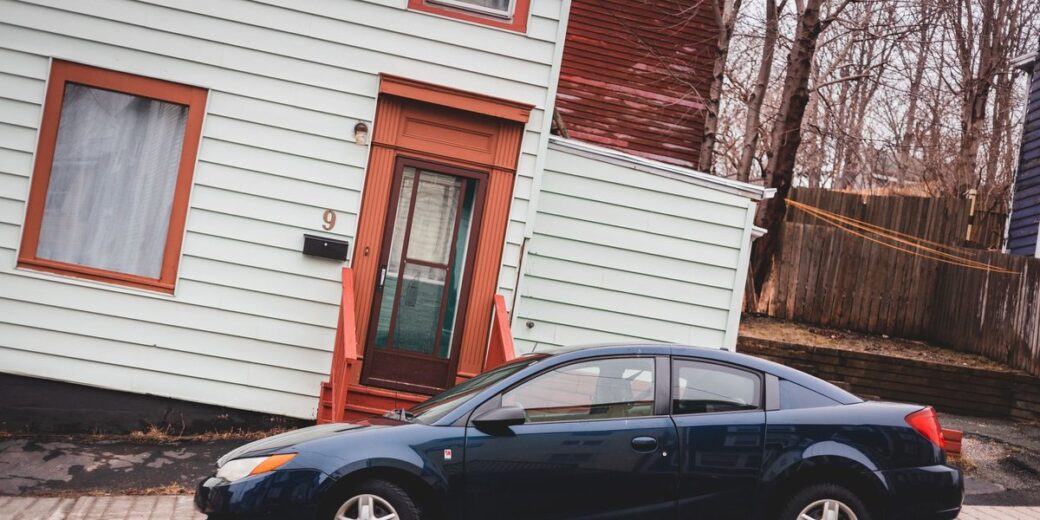
- Ion: 2003-2007
- Vue: 2002-2010
- Relay: 2005-2007
- Aura: 2007-2009
- Outlook: 2007-2010
- Sky: 2007-2009
- Astra: 2008-2009
- Which old Saturn models are worth buying today
The short story of Saturn
GM announced Saturn in 1985 as “a different kind of car company,” and it spent five years and billions of dollars backing that line up. The company built a new factory in Spring Hill, Tennessee, hired a new workforce under a separate labor agreement, and sold the first cars in late 1990 as 1991 models.
The cars themselves leaned on three ideas. The body panels were polymer, bolted to a steel space frame, so a shopping cart dent popped back out instead of rusting. The prices were fixed, with no haggling, and the people selling them were called retailers, not dealers. And owners were treated like club members: in 1994, some 44,000 of them drove to Spring Hill for a “homecoming” weekend, which no other car brand has pulled off since.
The S-Series made Saturn. What unmade it was everything that came after. GM starved the brand of its own platforms and filled the lineup with rebadged Opels and Chevrolets, and the “different kind of car company” pitch stopped meaning anything. When GM went through bankruptcy in 2009, a sale to Penske Automotive fell apart after Renault-Nissan declined to supply cars, and GM announced it would wind Saturn down. The brand was gone in 2010, joining other storied car brands that vanished from the market.
Quick reference: every Saturn model at a glance
| Model | Years | Body style | Engine |
|---|---|---|---|
| S-Series (SL, SC, SW) | 1991-2002 | Sedan, coupe, wagon | 1.9L four (85-124 hp) |
| L-Series | 2000-2005 | Sedan, wagon | 2.2L four or 3.0L V6 |
| Ion | 2003-2007 | Sedan, coupe | 2.2L four; 2.0L supercharged four (Red Line) |
| Vue | 2002-2010 | Compact crossover | 2.2L/2.4L four, 3.0L/3.5L/3.6L V6, mild hybrid |
| Relay | 2005-2007 | Minivan | 3.5L or 3.9L V6 |
| Aura | 2007-2009 | Midsize sedan | 2.4L four, 3.5L or 3.6L V6, mild hybrid |
| Outlook | 2007-2010 | Three-row crossover | 3.6L V6 |
| Sky | 2007-2009 | Two-seat roadster | 2.4L four; 2.0L turbo four (Red Line) |
| Astra | 2008-2009 | Hatchback | 1.8L four |
S-Series (SL, SC, SW): 1991-2002
This is the car most people mean when they say “old Saturn.” The lineup started with the SL sedan and SC coupe in 1991, and the SW wagon joined in 1993. All of them used a 1.9-liter four-cylinder. The single-cam version made 85 hp early on and about 100 hp after the 1996 refresh. The dual-cam version, found in the SL2, SC2 and SW2, made 124 hp.
The first generation ran through 1995. The 1996 redesign (the “second generation”) smoothed out the styling and refined the engine, but the underlying car stayed the same until the S-Series ended in 2002.
Owners remember the S-Series for the plastic panels, the lack of dealership pressure, and a certain honesty to the design. It was small, light and cheap, and the dual-cam SC2 was legitimately quick for its price. The SC also picked up a small rear-hinged door on the driver’s side, so you could load a bag onto the back seat without folding the front seat forward. At the time, almost nothing else under $15,000 did that.
The honest note: oil consumption. High-mileage S-Series engines burn oil, sometimes a quart every thousand miles or so, and owners who never checked the dipstick ended up with seized engines. Check the oil level and the history before anything else. The plastic panels, meanwhile, hold up better than steel from the same era, but the paint on them fades and peels.
L-Series: 2000-2005
The L-Series was Saturn’s first real attempt at a midsize car, sold as the LS sedan and LW wagon. It was built in Wilmington, Delaware on an Opel Vectra platform, not on the S-Series’ own architecture. It came with a 2.2-liter four-cylinder or a 3.0-liter V6 making about 182 hp.
It sold decently at first, and Saturn dealers finally had something to put in front of buyers who had outgrown an SL. But the car never matched the S-Series for charm. Reviewers called the interior dated and the ride unremarkable, and the L-Series was gone after the 2005 model year, replaced by the Aura.
The honest note: the L-Series is the Saturn that earned the weakest reputation for build quality. Cheap interior parts, electrical faults and automatic transmissions that need to be tested properly on a drive are all common complaints. Buy one only if the price is truly low.
Ion: 2003-2007
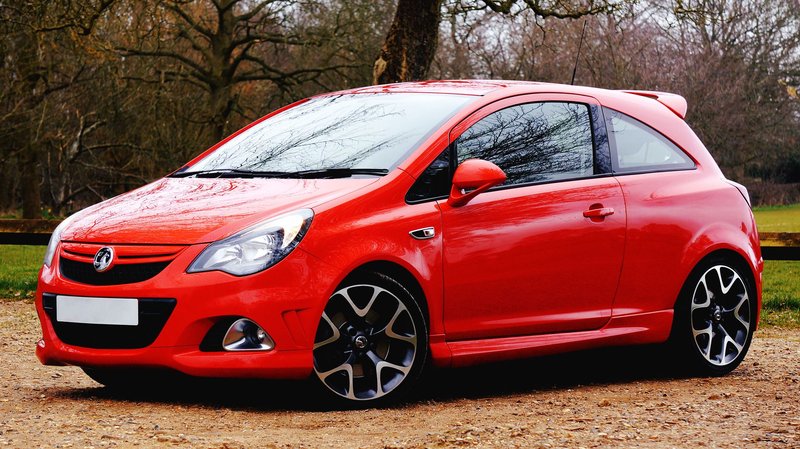
The Ion replaced both the S-Series and the L-Series entry points with a single compact car, and it is the one most people remember for the wrong reasons. It came as a sedan and as the Quad Coupe, a two-door with small rear-hinged doors on both sides. That’s the owner-level detail worth knowing: four doors, but only two of them real ones, hinged at the back.
The Ion kept the plastic body panels but moved to a 2.2-liter Ecotec four-cylinder making 140 hp. The one great Ion is the Red Line, sold from 2004 to 2007. It used a supercharged 2.0-liter Ecotec making 205 hp, paired with a five-speed manual, and tuners still enjoy them because they respond well to a larger supercharger pulley and an ECU tune.
The interior is the part everybody remembers. The gauge cluster sits in the center of the dash instead of behind the wheel, and the plastics feel cheap even by early-2000s GM standards.
The honest note: the Ion is part of GM’s 2014 ignition switch recall, which covers 2003-2007 Ion models whose switch could turn off the engine with a heavy key chain. Electric power steering failure is another documented issue on 2005-2007 cars. Before buying any Ion, run the VIN through NHTSA’s recall lookup and confirm both fixes were done.
Vue: 2002-2010
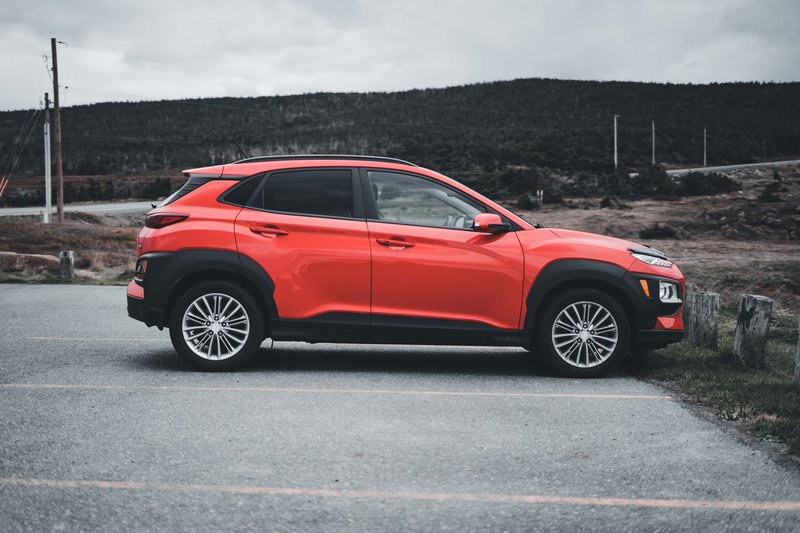
The Vue was Saturn’s first SUV, and for most of its life it was the brand’s best seller. The first generation (2002-2007) sat on a GM Theta platform and came with a 2.2-liter Ecotec four, a Honda-sourced 3.0-liter V6 making 181 hp, and, in later years, a 3.5-liter V6 making 250 hp in the Red Line version. Using Honda’s V6 was a smart call, and it remains the reason first-generation V6 Vues have a better reputation than most Saturns.
For 2007, Saturn added the Vue Green Line, a mild hybrid with a 2.4-liter four and a belt-driven starter-generator. It was a modest improvement in fuel economy, not a transformation, and you can check the specifics on fueleconomy.gov. The second-generation Vue (2008-2010) was a different vehicle altogether, built in Mexico on the same platform as the Chevrolet Captiva and Opel Antara, with a 2.4-liter four, a 3.5-liter V6, or a 3.6-liter V6 making 256 hp in the XR trim. The hybrid also continued.
The honest note: avoid the early four-cylinder Vues with the continuously variable transmission (CVT), sold in 2002-2003. The CVT in those cars has a poor failure record, and a replacement costs more than the car is worth. The Honda V6 versions with a conventional automatic are a much safer buy.
Relay: 2005-2007
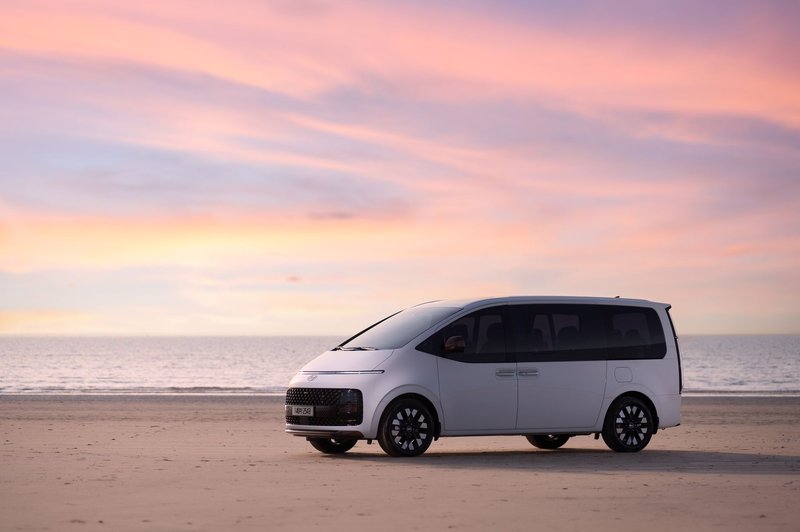
The Relay is Saturn’s minivan, and the least Saturn thing Saturn ever sold. It was a rebadged Chevrolet Uplander, with the same body, the same interior and the same sliding doors, built in Doraville, Georgia. It came with a 3.5-liter V6 making about 201 hp, and in 2006 a 3.9-liter V6 making 240 hp joined it. Saturn’s own pitch (steel-and-plastic space frame, dent-resistant panels) didn’t apply here. The Relay used steel panels.
Saturn lasted only three years with the Relay, and it never found an audience. Buyers who wanted a minivan went to Honda and Toyota, and Saturn buyers wanted something smaller.
The honest note: there’s no Saturn-specific problem here, because the Relay has none of Saturn’s engineering. It has the same ownership profile as any GM minivan of the period: reasonable power, ordinary reliability and a cheap interior. Parts and service are easy because it’s an Uplander underneath, which is the one real argument for buying one.
Aura: 2007-2009
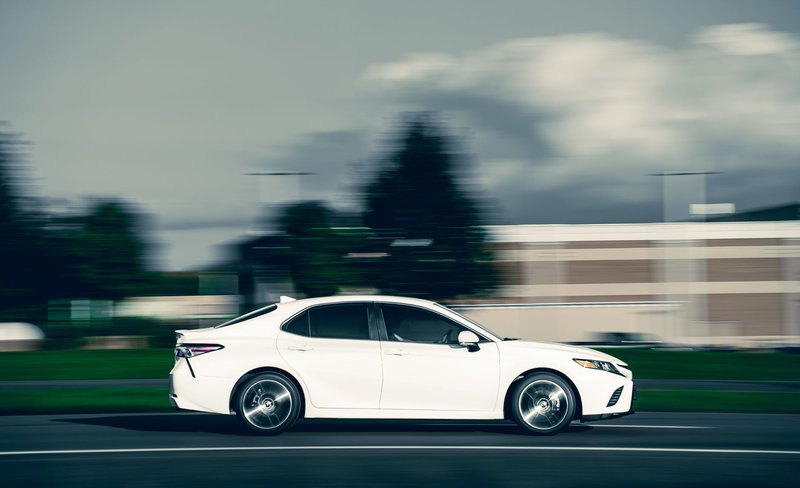
The Aura is the best car Saturn ever made, and the argument isn’t close. It sat on GM’s Epsilon platform, shared with the Opel Vectra and Saab 9-3, and it was built in Wilmington, Delaware. The Aura won North American Car of the Year for 2007 and, for the first time in Saturn’s history, looked like it belonged in the same parking lot as the Camry and Accord.
Engines started with a 2.4-liter four-cylinder, then a 3.5-liter V6 making 224 hp, and finally in 2008 a 3.6-liter V6 making 252 hp with a six-speed automatic in the XR. A mild hybrid, the Green Line, used the 2.4-liter engine from 2007.
The interior was a real step forward from the Ion’s, and the ride was quiet and settled. The Aura XR with the 3.6-liter is the one to look for, and it makes a respectable commuter even now.
The honest note: the 3.6-liter V6 used across GM’s late-2000s lineup is known for timing chain stretch at higher mileage. If you buy an XR, ask for service records and listen for a rattle at cold start. The 3.5-liter pushrod V6 in the base cars is an older, simpler design, and it avoids this specific issue.
Outlook: 2007-2010
The Outlook was Saturn’s three-row crossover, built in Delta Township, Michigan, and the only Saturn aimed at big families. It shared its Lambda platform with the Buick Enclave, GMC Acadia and Chevrolet Traverse, and the engine was the same 3.6-liter V6 as the Aura XR, making about 270 hp through a six-speed automatic. Front-wheel drive was standard, and all-wheel drive was optional.
In practical terms, the Outlook is a Traverse with a Saturn nose. It has seating for eight, a usable third row and a long list of features for its time. It was the most expensive Saturn by a wide margin, and it showed the brand could build a credible family vehicle, just a few years too late.
The honest note: the 3.6-liter V6 again. Timing chain stretch is the known failure on high-mileage Lambda crossovers, and it costs real money to repair. A well-documented Outlook with low miles is a fine family hauler, but buy it as a used Traverse and inspect it that way.
Sky: 2007-2009
The Sky is the Saturn that car enthusiasts like. It’s a two-seat rear-wheel-drive roadster, built in Wilmington, Delaware on GM’s Kappa platform alongside the Pontiac Solstice. The two cars share most of their mechanicals but differ in style: the Solstice is rounder and more curvy, the Sky is sharper and more creased. Europe got a third version as the Opel GT.
The standard engine was a 2.4-liter four making 177 hp. The Sky Red Line used a turbocharged 2.0-liter direct-injection four with 260 hp, the same engine as the Solstice GXP, and was fast enough to feel like a proper sports car. Many enthusiasts rate it the best-looking car Saturn ever sold, and the best-driving one too.
It isn’t practical. The folding roof stows in the trunk and leaves almost no cargo space, which owners learn quickly when they try to pack for a weekend trip. The interior is plastic, and the Sky is compact.
The honest note: the roof seals and top mechanism are the weak spots, and they leak with age. Checking for water stains and running the top through a full cycle before you buy is a good idea. Mechanically the Red Line is generally sound, but the manual gearbox is the one to look for.
Astra: 2008-2009
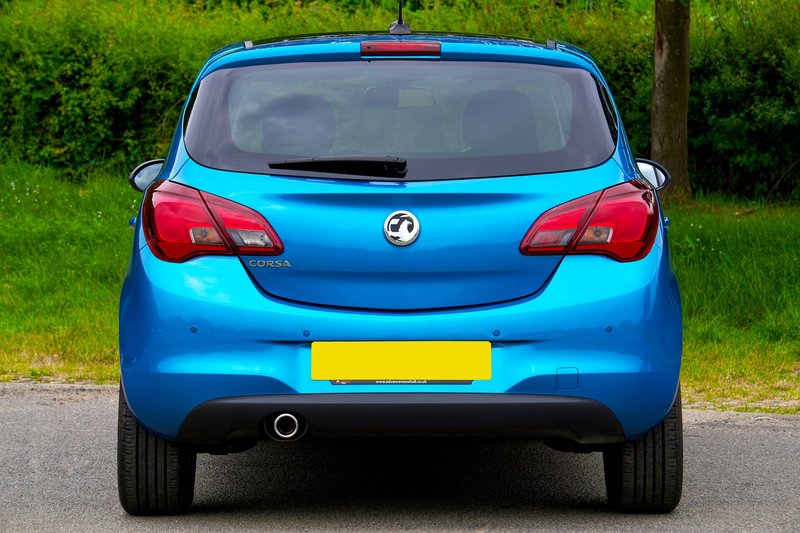
The Astra was a European Opel Astra with a Saturn badge, built in Antwerp, Belgium. It was a three- or five-door hatchback with a 1.8-liter four-cylinder making 138 hp, with either a five-speed manual or a four-speed automatic. It was a good small car by American standards, with tight handling and a real hatchback’s practicality, and it arrived exactly when GM could no longer afford to market it. Sales were small, and it lasted two model years.
It’s the rarest Saturn model you can still find in decent shape, and it drives better than the Ion it replaced.
The honest note: parts. Saturn dealers are gone, and the Astra was built in Europe on a European platform, so some body and trim parts are harder to find than for any American-built Saturn. Mechanical parts are generally available, but check supply before you commit.
Which old Saturn models are worth buying today
Not every old Saturn model deserves a second life. These are the ones worth your money, in rough order of preference:
- Sky Red Line. The most fun, the best looking, and the one most likely to hold or gain value. Check the roof.
- Aura (XR or base V6). The best all-around car. Ask for service records, especially on the 3.6-liter.
- Ion Red Line. A real performance bargain if the ignition switch and power steering recalls were done.
- Vue (2004-2007 with the Honda V6). The safest Saturn crossover, with an engine that holds up.
- S-Series SC2. The nostalgic pick. Cheap, light and simple, but only if the engine has been kept topped up with oil.
- Outlook. A practical family vehicle if the timing chain has been inspected.
Skip these unless the price is close to nothing: the L-Series, the 2002-2003 four-cylinder Vue with the CVT, and the base Ion sedan. The Relay and Astra are fine but unexciting, and their appeal depends on local price and parts supply.
A few general rules apply to any of them. Saturn’s dealer network is gone, so you’ll rely on an independent mechanic, and anything built on a shared GM platform (Aura, Outlook, Relay, Vue’s later generations) is easier to maintain than Saturn-specific components. The plastic body panels are a benefit, since they resist dents and don’t rust, but replacement panels can be hard to find. Run the VIN through NHTSA before you pay, and don’t pay S-Series prices for an Ion.
Saturn old models are cheap for a reason, but a few of them were better cars than their reputation allows. Most of the good ones came near the end, which says something about how the story went: GM finally built a decent Saturn just as it ran out of time to sell it.

James Kowalski
More from James KowalskiHow we reviewed this article
This article was researched against manufacturer records and editorially reviewed before publishing. We accept no payment for coverage. Some guides contain affiliate links; see our affiliate disclosure.