Toyota had three models on sale in 1949: the Toyopet SD, the Toyopet SA and the SB truck. The SD is the one that belongs to the year. Production started in November 1949, and it was a five-seat compact sedan built on the same chassis as the SB. The SA, a rounded four-door that had been around since 1947, kept trickling out of the factory, with just 215 built in its entire run from 1947 to 1952. The SB was the workhorse.
That’s the complete lineup of 1949 Toyota car models, and it’s small for a reason. The rest of this post covers each model, the odd naming system behind the letters, and the economic mess that kept Toyota’s passenger car output close to zero.
Contents
- TLDR
- Quick reference: Toyota models in 1949
- Reading the model codes
- Toyopet SD: the 1949 newcomer
- Toyopet SA: the first postwar passenger car
- Toyota SB: the truck that paid the bills
- Why Toyota built so few cars
- Timeline, 1947 to 1951
- From the SD to the Crown
TLDR
- New in 1949: the Toyopet SD, a five-seat compact sedan, in production from November 1949.
- Still on sale: the Toyopet SA sedan (215 built, 1947 to 1952) and the SB light truck (1947 to 1952).
- All three used the same 995 cc four-cylinder engine family, the “S” engine.
- Why so few cars: Occupation-era limits on passenger cars, a shrinking postwar economy and a company close to bankruptcy.
- What came next: the 1955 Toyopet Crown, the car Toyota was really working toward.
Quick reference: Toyota models in 1949
| Model | Type | Years | Units |
|---|---|---|---|
| Toyopet SA | Four-door sedan | 1947 to 1952 | 215 |
| Toyopet SD | Five-seat sedan | 1949 to 1951 | Low hundreds |
| Toyota SB | Light truck | 1947 to 1952 | Far more than both cars combined |
Toyota also kept building larger trucks alongside these. Trucks, not sedans, were what the company’s 1949 was about.
Reading the model codes
Toyota’s early names look like random pairs of letters, but they follow a simple scheme. The first letter identifies the engine. The second letter marks the chassis or body variant within that engine family.
All three 1949 models start with S, the 995 cc inline-four that produced about 27 horsepower. That’s why a sedan (SA, SD) and a truck (SB) can share a first letter and, in the SD’s case, a chassis. The A, B and D simply tell you which version of the S-powered vehicle you’re looking at.
The “Toyopet” badge, used for the small passenger cars and later the small trucks, appeared in 1947. It’s the ancestor of the Toyopet Crown name that Toyota’s dealers carried through the 1950s.
Toyopet SD: the 1949 newcomer
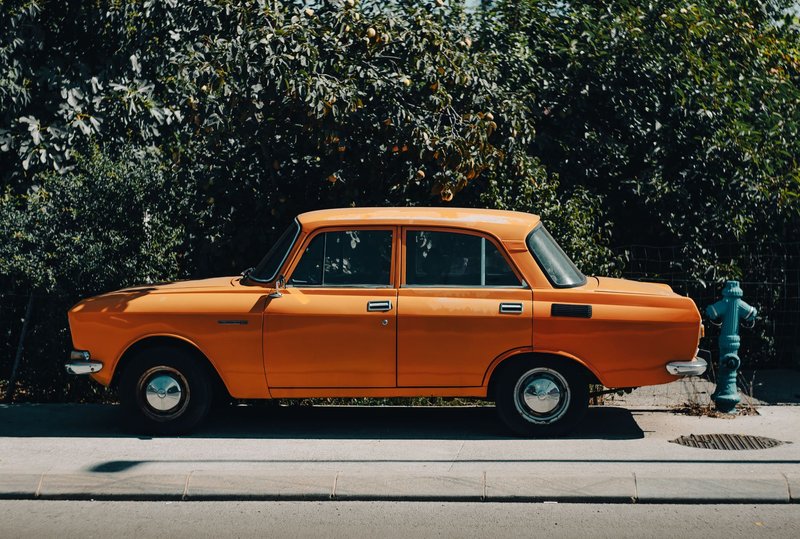
The SD is the answer to the question “what did Toyota launch in 1949?” It went into production in November 1949, and it was a different idea from the SA.
The SA had an unusual structure: a backbone frame with independent suspension at all four corners. It looked clever on paper and rode badly on Japan’s rough, unpaved roads. The SD took the sturdy approach and used the SB truck’s ladder-style chassis. A car built on a truck frame isn’t glamorous, but it survived the roads its owners actually drove on. That’s the whole design philosophy in one sentence.
Key facts on the SD:
- Engine: the 995 cc four-cylinder S engine, rated around 27 hp.
- Body: a conventional four-door sedan with seating for five, roomier than the SA.
- Chassis: shared with the SB truck, which also simplified production lines that were already stretched thin.
- Run: 1949 to 1951, with production in the low hundreds, depending on whose records you read.
Those numbers look microscopic next to what Toyota would build later. But the SD is the first Toyota passenger car designed around being a durable, ordinary product rather than a one-off statement.
Toyopet SA: the first postwar passenger car
The SA was the car that restarted Toyota’s passenger car business after the war. Toyota’s own company history marks it as the first small passenger car of the postwar era.
It’s a rounded four-door sedan with styling that’s often compared to the Volkswagen Beetle, powered by the same 995 cc S engine. Wheelbase was about 2.4 meters, which makes it a small car even by 1940s Japanese standards.
The production figure is what sticks. Only 215 SAs were built between 1947 and 1952. Many were hand-finished and sold to taxi operators and government buyers, because ordinary private owners couldn’t afford a car in a country still rebuilding. By 1949 the SA was a holdover, but a holdover with a clear job: keeping the passenger car line alive until the SD and its successors could take over.
Toyota SB: the truck that paid the bills
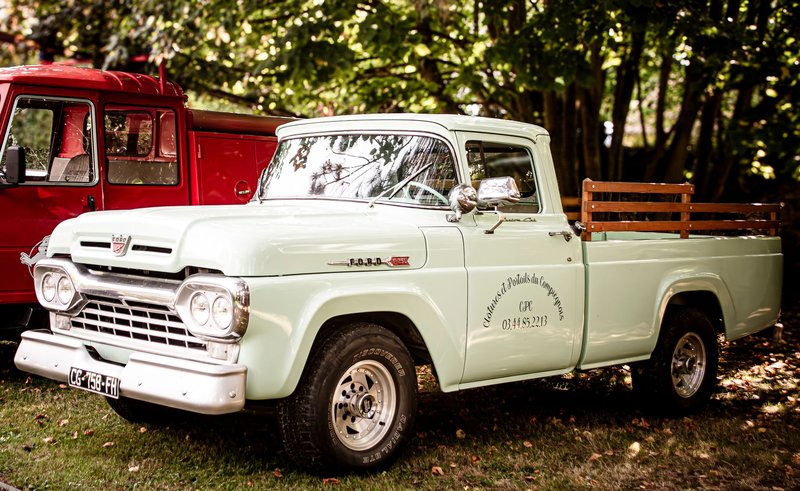
The SB, built from 1947 to 1952, is the least photographed of the three and the most important financially. It was a light truck with the same 995 cc engine and a simple ladder frame, and it was what postwar Japan needed: a cheap vehicle to carry goods through damaged cities and over bad roads.
Trucks were also the product the Occupation authorities wanted built. Reconstruction ran on freight, not on private motoring. So Toyota built trucks in the thousands and sedans in the hundreds. When the SD arrived, borrowing the SB’s chassis, it was an acknowledgement of that reality: the truck was the platform, and the car was a variation on it.
Why Toyota built so few cars
Three forces explain it.
Occupation limits. The Allied authorities restricted Japanese passenger car manufacturing in the first years after the war, in favor of trucks. The restrictions were lifted in 1949, which is the year the SD could finally go into production. Lifting a ban doesn’t create customers, though.
The Dodge Line. In 1949 the U.S. banker Joseph Dodge was sent to stabilize Japan’s economy. His austerity program brought inflation under control and also triggered a recession. Credit dried up, sales slowed, and car makers that depended on loans found themselves short of cash.
Toyota’s own finances. By late 1949 the company was close to collapse. A group of banks stepped in on the condition that Toyota restructure, and in 1950 the company separated its sales arm from manufacturing. The same year, a bitter labor dispute followed layoffs. Founder Kiichiro Toyoda took responsibility and resigned as president. Britannica’s account of Toyota Motor Corporation covers the broader arc of that period.
The rescue came from outside. When the Korean War began in mid-1950, the U.S. military placed large orders for trucks from Japanese makers, and Toyota’s order book recovered. Trucks saved the company that passenger cars hadn’t yet been able to.
Timeline, 1947 to 1951
- 1947: Toyopet SA sedan and SB truck launch, both with the 995 cc S engine.
- 1949: Restrictions on passenger car production are lifted. The Dodge Line austerity program hits the economy. The Toyopet SD enters production in November.
- 1950: Toyota separates its sales operation, a labor dispute ends with the president’s resignation, and Korean War truck orders begin.
- 1951: The SD’s production run ends and the SF takes over as Toyota’s small sedan. Other Toyota models from that year are in the 1951 Toyota car models list. A Jeep-style off-roader prototype appears, a distant ancestor of the Land Cruiser.
From the SD to the Crown
The 1949 lineup looks like a footnote, and in sales terms it is. But the pattern it set held. Toyota stayed alive on trucks, kept a small passenger car program running at a loss, and learned what a car needed to survive bad roads. The SD’s truck-based toughness fed straight into the thinking behind the Toyopet Crown, launched in 1955 as Toyota’s first fully domestically designed passenger car.
So if you’re trying to pin down the 1949 Toyota car models, the short version holds: one new sedan, one aging sedan, one truck, and a company that wouldn’t have a real passenger car business for another six years.

Marco Delantero
More from Marco DelanteroHow we reviewed this article
This article was researched against manufacturer records and editorially reviewed before publishing. We accept no payment for coverage. Some guides contain affiliate links; see our affiliate disclosure.