The best OBD2 scanner for beginners is the BlueDriver Bluetooth Pro. It plugs into the port under the dashboard, talks to a free phone app and explains each trouble code in plain English with a repair report matched to your car, with no subscription. If you want a scanner with its own screen and no phone at all, the ANCEL AD310 is the best budget pick: it reads and clears check engine codes, shows freeze frame data and tells you whether the car is ready for a smog test. For the cheapest Bluetooth option, the Veepeak OBDCheck BLE works with iPhone and Android through apps like Car Scanner.
As an Amazon Associate we earn from qualifying purchases. Disclosure
I spent ten years in independent shops and dealership service bays, and the check engine light brought in more nervous customers than anything else. Most of them had driven around for weeks, worried about a light that turned out to be a loose gas cap or a tired oxygen sensor. A few had ignored a flashing light until a misfire cooked the catalytic converter. Both groups would have been better off with a cheap scanner in the glovebox. A scan tool does not fix the car, but it tells you in two minutes whether you have a small problem, a big problem or a light you can stop worrying about.
This guide lists 12 OBD2 scanners for people who have never used one, sorted by the kind of tool you want: Bluetooth adapters that use your phone, budget handheld code readers, scanners that also read ABS and airbag codes, and one tool for when you outgrow the beginner stage. It also explains what a scanner can and cannot tell you, how to use one step by step and what the most common codes mean. Picks come from what mechanics and DIYers recommend in 32 Reddit threads about OBD2 scanners and from Amazon listings checked on November 16, 2026.
Quick picks
The budget column uses tiers instead of prices, because Amazon prices change every week. Budget is the cheapest tier here, Mid-range sits in the middle and Premium covers the scanners that cost the most.
| Scanner | Best for | Budget |
|---|---|---|
| BlueDriver Bluetooth Pro | Best overall for beginners | Mid-range |
| OBDLink MX+ | Best Bluetooth adapter for any app | Premium |
| Veepeak OBDCheck BLE | Cheapest Bluetooth scanner that works on iPhone | Budget |
| ANCEL AD310 | Best budget handheld | Budget |
| Autel AutoLink AL319 | Easiest smog readiness check | Budget |
| FOXWELL NT301 | Live data graphs on a handheld | Mid-range |
| Innova 5210 | ABS codes and a battery test | Mid-range |
| FOXWELL NT604 Elite | Engine, transmission, ABS and airbag codes | Premium |
| XTOOL A30M | DIYers ready for bidirectional tests | Premium |
What an OBD2 scanner does
Every gas car and light truck sold in the US since the 1996 model year has an onboard diagnostics system called OBD2 (or OBD-II). The engine computer watches dozens of sensors. When a reading falls outside its normal range, the computer stores a diagnostic trouble code, and if the fault affects emissions it turns on the check engine light. A scanner plugs into the 16-pin diagnostic port and reads those codes.
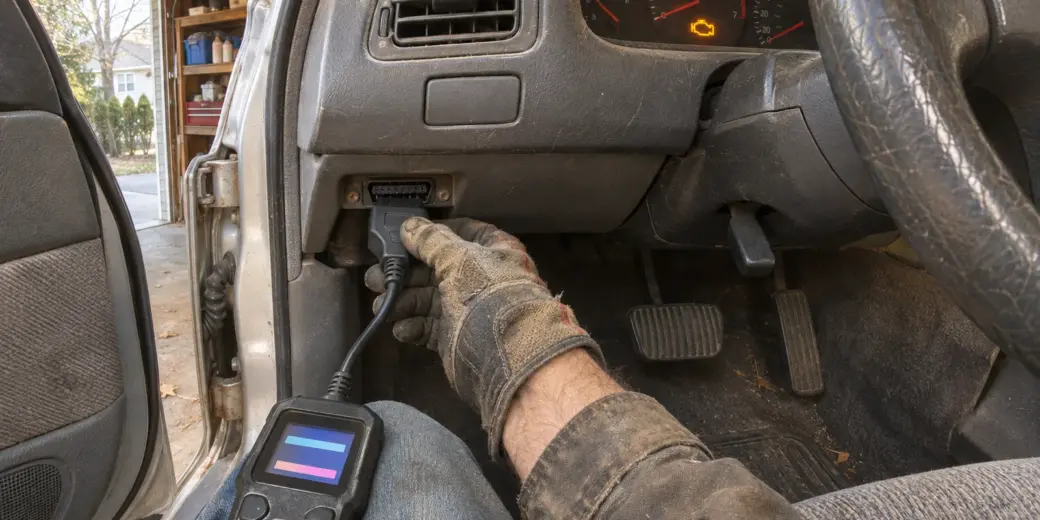
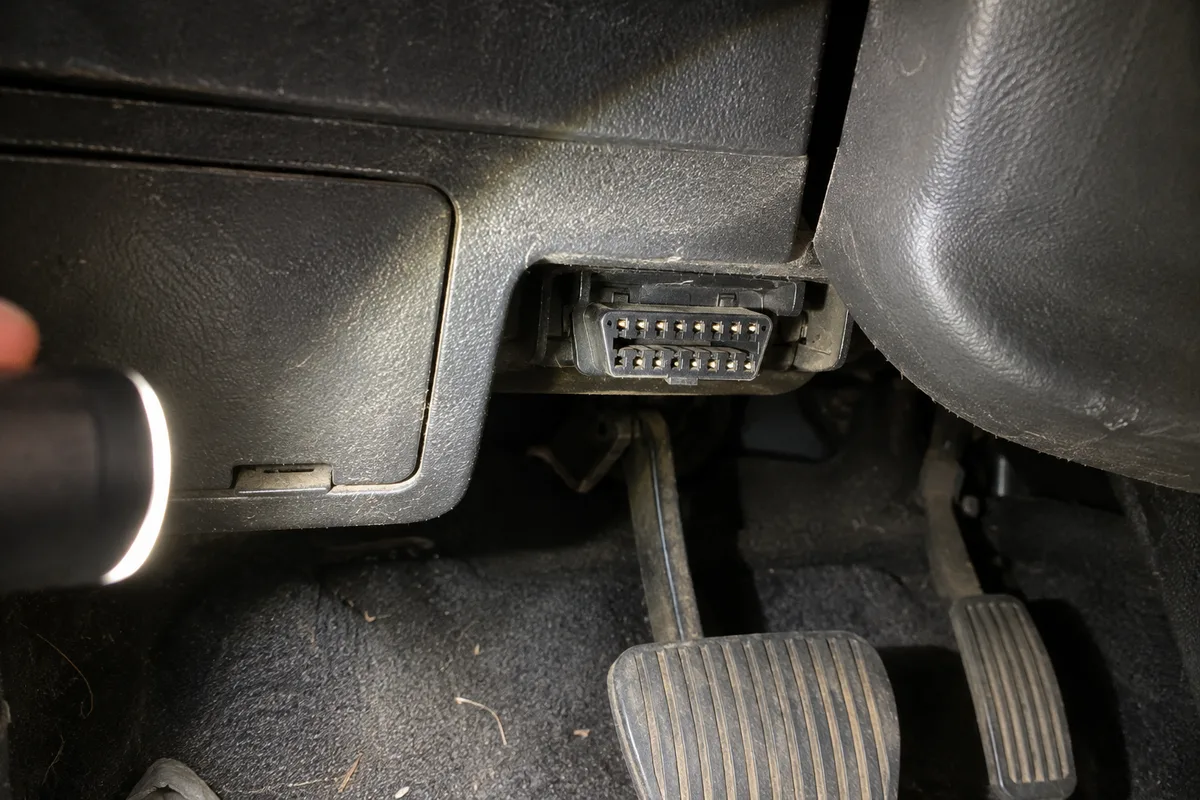
The port is almost always under the dashboard on the driver’s side, within a foot or so of the steering column. On some cars it hides behind a small cover or sits near the center console. If you cannot find it, the owner’s manual shows the location.
Even the cheapest scanner on this list does these five things, and for most beginners they are enough:
- Reads and clears check engine codes. The code (for example P0420) tells you which system reported the fault. The scanner or its app gives the definition.
- Shows freeze frame data. A snapshot of speed, engine temperature, load and other readings at the moment the code was stored. This is often more useful than the code itself, because it tells you whether the fault happened on a cold start, on the highway or at idle.
- Checks I/M readiness. Shows whether the car’s self-tests have finished. A car with unfinished monitors fails an emissions test even with no check engine light, so check this before every smog test.
- Shows live data. Real-time sensor readings such as coolant temperature, RPM, fuel trims and oxygen sensor voltage.
- Reads vehicle information. The VIN and the computer’s calibration ID.
What a basic scanner does not do: read ABS, airbag, transmission or body codes on most cars, run tests on parts, or reset service lights. Those need an enhanced scanner, covered further down. And no scanner tells you which part to replace. A code tells you where the computer saw a problem, not what caused it. A P0171 lean code can be a vacuum leak, a dirty mass airflow sensor, a weak fuel pump or a cracked intake boot. The scanner narrows the search; you or your mechanic still have to find the cause.
How to choose an OBD2 scanner as a beginner
Four questions decide which scanner fits you. Answer them before you look at feature lists, because most beginners pay for functions they will never use.
Bluetooth or handheld?
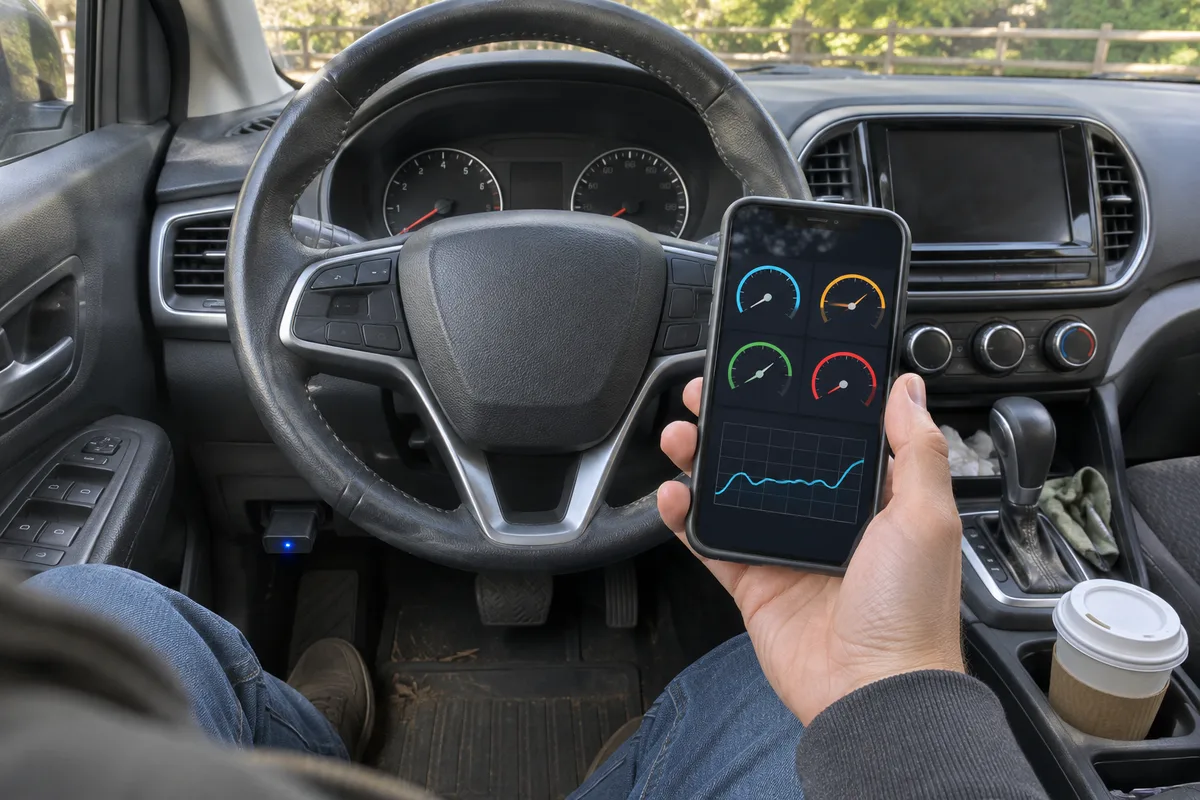
A Bluetooth scanner is a small plug that stays in the port and sends data to an app on your phone. The phone screen is bigger and clearer than any budget handheld, the app explains codes in more detail, and the plug is small enough to leave in the car. The catch is the app: some are free, some charge once, and some charge every month.
A handheld scanner has its own screen and buttons and draws power from the car through its cable. Nothing to pair, nothing to install, no account and no phone battery to worry about. Handhelds also make sense as a gift or for a second car, and they still work when your phone is dead. The screens on budget models are small and the code definitions short.
On Reddit, the split is close to even. People who already use their phone for everything prefer Bluetooth. People who work on older cars in a cold garage, or who share the tool with family, prefer a handheld because it always works the same way.
Do you need more than engine codes?
If your goal is to understand a check engine light and pass a smog test, an engine-only scanner is enough. If the ABS, traction control or airbag light is on, a basic scanner cannot see those codes at all. Buy a scanner that lists ABS and SRS (airbag) support, and check that it covers your make and year, because enhanced coverage varies a lot by brand.
Is there a subscription?
This is the most common complaint about Bluetooth scanners. Some apps show the code for free but put the explanation, repair estimates or enhanced codes behind a monthly plan. Several Reddit threads describe trouble cancelling those plans. The scanners on this list either have no subscription or say clearly what is optional.
What phone do you have?
iPhones only talk to OBD2 adapters over Bluetooth Low Energy (BLE) or Wi-Fi. Many cheap “ELM327” adapters use classic Bluetooth and only pair with Android. If you have an iPhone, buy an adapter that lists iOS support by name, like every Bluetooth pick in this guide.
Cheap clones: the no-name blue ELM327 adapters sold for a few dollars use copied chips that often drop the connection, stall on some cars or fail to read certain data. If you go cheap, buy a known brand like Veepeak, not the cheapest listing.
Best Bluetooth OBD2 scanners
A Bluetooth scanner turns your phone into the screen. These four cover the range from a full beginner package to a cheap adapter for people who already know which app they want.
Best OBD2 scanner for beginners
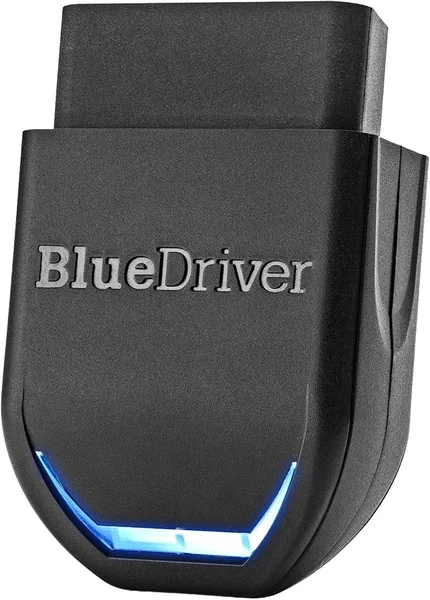
1. BlueDriver Bluetooth Pro OBDII Scan Tool
BlueDriver was the most recommended scanner in the Reddit threads, named in 20 of 32, and the reasons were the same every time: one purchase, no subscription and an app that explains codes better than most handhelds. After a scan, the app builds a repair report from your VIN with the code definition, the likely causes and the fixes that worked on the same car. It also reads freeze frame, live data, smog readiness and Mode 6 test results. On supported vehicles it reads enhanced codes from the ABS, airbag, TPMS and transmission modules too, which most scanners at this level skip. The app works on iPhone and Android.
- Connection: Bluetooth, iPhone and Android
- Reads: engine codes, plus ABS, SRS, TPMS and transmission on supported vehicles
- Extras: VIN-matched repair reports, Mode 6, smog readiness
- Subscription: none
Good: The clearest code explanations here. No subscription. Covers more than engine codes. Not great: Live data refreshes slower than a dedicated adapter like the OBDLink MX+. Enhanced coverage depends on make and year, so check your car in the app first.
Best Bluetooth adapter
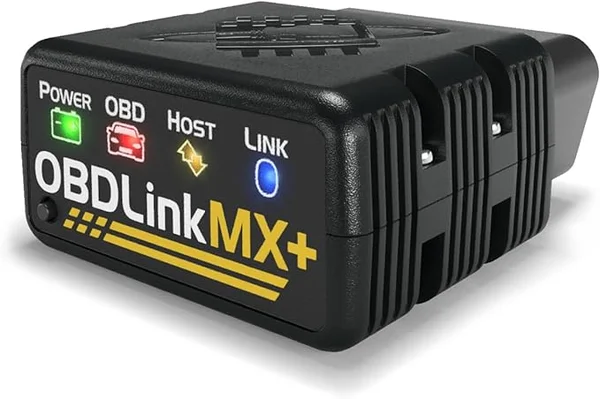
2. OBDLink MX+ Bluetooth OBD2 Scanner
The OBDLink MX+ is the adapter enthusiasts recommend once they know what they want, named in 15 of the Reddit threads. It works with the free OBDLink app and with almost every third-party app worth using: Torque, Car Scanner, OBD Fusion, BimmerCode for BMW coding and FORScan for Ford and Lincoln, which can do dealer-level work on those brands. It reads data faster than cheap adapters and has battery-drain protection, so it can stay plugged in. The OBDLink app reads engine codes and live data for free; enhanced ABS, airbag and transmission data for some brands are paid add-ons.
- Connection: Bluetooth, iPhone, Android and Windows
- Reads: engine codes and live data; enhanced OEM data for Ford, GM, Mazda, Nissan, Toyota, Honda, Hyundai and Kia
- Extras: works with FORScan, Torque, BimmerCode
- Subscription: none, some enhanced packs are one-time in-app purchases
Good: Fast and stable. Works with the most apps. Safe to leave plugged in. Not great: Costs more than BlueDriver and explains codes in less detail. Enhanced data costs extra for some brands.
Best budget Bluetooth scanner
3. Veepeak OBDCheck BLE Bluetooth OBD II Scanner
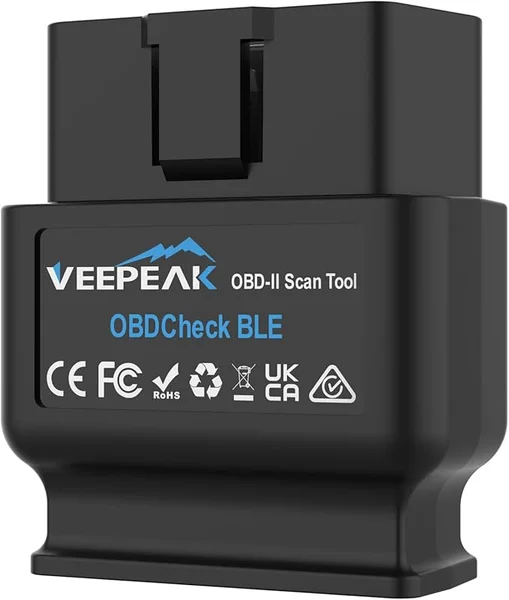
The Veepeak OBDCheck BLE is one of the cheapest adapters from a known brand that works with an iPhone, and it is the budget Bluetooth pick most Redditors point to instead of no-name ELM327 clones. It has no app of its own, so you pair it with a third-party app. Car Scanner ELM OBD2 is the easiest for beginners and reads codes, freeze frame, readiness and live data with its free version. It reads standard engine data only, not ABS or airbag codes.
- Connection: Bluetooth LE for iPhone and Android, classic Bluetooth for Android
- Reads: engine codes, freeze frame, I/M readiness, live data
- Needs: a third-party app such as Car Scanner or OBD Fusion
- Subscription: depends on the app you choose
Good: Cheap. Works with iPhone. Standard OBD2 data on almost every 1996 and newer car. Not great: No app of its own. Engine data only. Does not work with most Android car stereos.
Simplest app, read the fine print
4. FIXD Bluetooth OBD2 Scanner
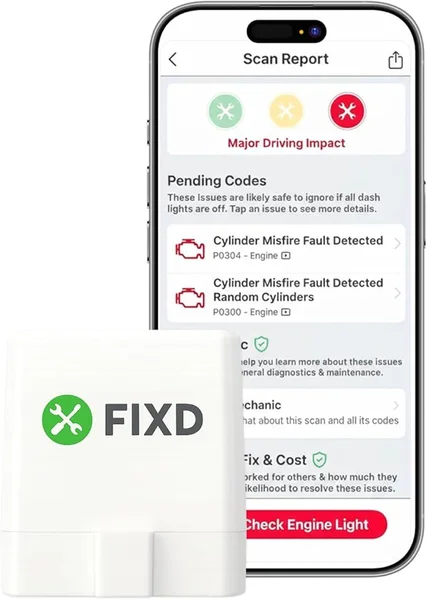
FIXD is built for people who never want to see a code number. The free app scans, translates the fault into plain language, rates how urgent it is and sends maintenance reminders, and one app can manage every car in the family. The sensor is tiny and stays out of the way under the dash. The problem is the upsell: repair estimates, live mechanic help and some advanced features sit behind a premium plan, and the app pushes it hard. Seven Reddit threads mention FIXD, and most of those posts are complaints about the subscription and billing. Buy it for the simple free app, and skip the trial if you do not want to manage a cancellation.
- Connection: Bluetooth, iPhone and Android
- Reads: engine codes and some enhanced codes; gas cars 1996 and newer, diesels 2006 and newer
- Extras: plain-language results, severity rating, maintenance reminders
- Subscription: optional premium plan with a free trial
Good: The easiest app here for someone who knows nothing about cars. Multi-car family tracking. Not great: Aggressive premium upsell. No live data in the depth the other scanners show.
Best budget OBD2 scanners (handheld)
These handhelds need no phone, no app and no battery. Plug the cable in, turn the key and read the code. They all cover engine codes only, which is what most beginners need.
Best budget handheld
5. ANCEL AD310 Classic Enhanced OBD II Scanner
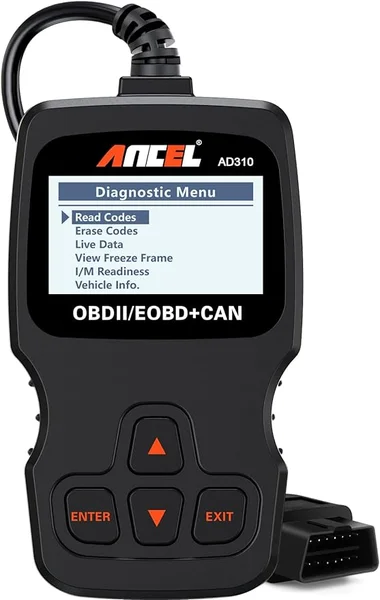
The AD310 is the best-selling budget scanner on Amazon, with more than 67,000 ratings at 4.6 stars. It does the basics well: reads and clears check engine codes, shows the definition on screen, displays freeze frame, live data and I/M readiness, and pulls the VIN. Four buttons run the whole menu, and the thick 2.5-foot cable holds up to being dropped on a garage floor. Its screen is small and monochrome, so live data is a list of numbers, not a graph. For a glovebox scanner or a first tool, nothing on this list covers the basics for less.
- Connection: cable, no battery needed
- Reads: engine codes, freeze frame, live data, I/M readiness
- Screen: monochrome backlit
- Subscription: none
Good: Cheap and simple. Sturdy cable. No phone or app. Not great: Small monochrome screen. No ABS, airbag or transmission codes. No live data graphs.
Easiest smog check
6. Autel AutoLink AL319 OBD2 Scanner
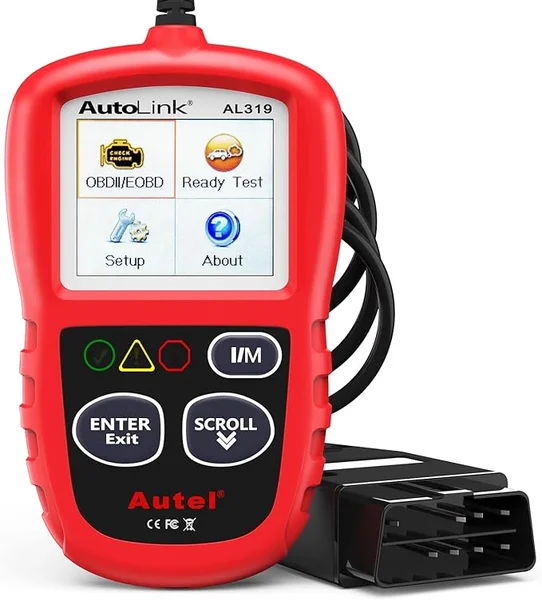
The AL319 costs about the same as the AD310 and adds a color screen and a one-click I/M readiness button. Press it and three lights on the face show green, yellow or red: green means the readiness monitors are complete and no codes are stored, so the car should pass an emissions test. That makes it the easiest scanner on this list for the one job most beginners actually have, checking whether the car will pass smog after a repair. It also reads and clears codes, shows freeze frame and live data, and has a built-in code lookup.
- Connection: cable
- Reads: engine codes, freeze frame, live data, I/M readiness
- Extras: one-click readiness with green, yellow and red lights, built-in speaker
- Subscription: none
Good: Readiness at a glance. Color screen. Autel is a brand shops trust. Not great: Engine codes only. The color screen is still small for live data.
Best handheld for live data
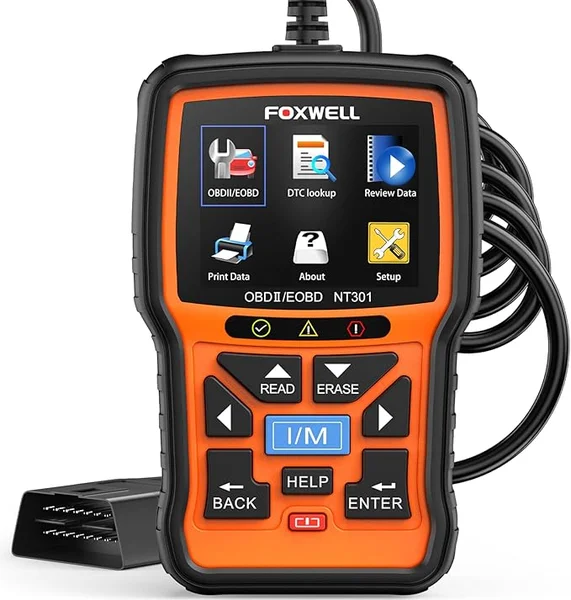
7. FOXWELL NT301 OBD2 Scanner
The NT301 is the handheld most often recommended by DIYers who want more than a code reader but do not want to pay for ABS and airbag support. Its color screen can graph live data, which makes it easier to see an oxygen sensor switching or a coolant temperature that never comes up to normal. It also has a one-press I/M readiness key with colored lights, reads permanent codes and lets you save and review data. Mechanics like it as a quick engine scanner they can keep in the truck.
- Connection: cable
- Reads: engine codes, permanent codes, freeze frame, live data with graphs, I/M readiness
- Extras: O2 sensor and onboard monitor tests, data review
- Subscription: none
Good: Live data graphs on a budget handheld. Rugged. One-press readiness check. Not great: Engine only, no ABS or airbag. Menus take some getting used to.
Best scanner and battery tester
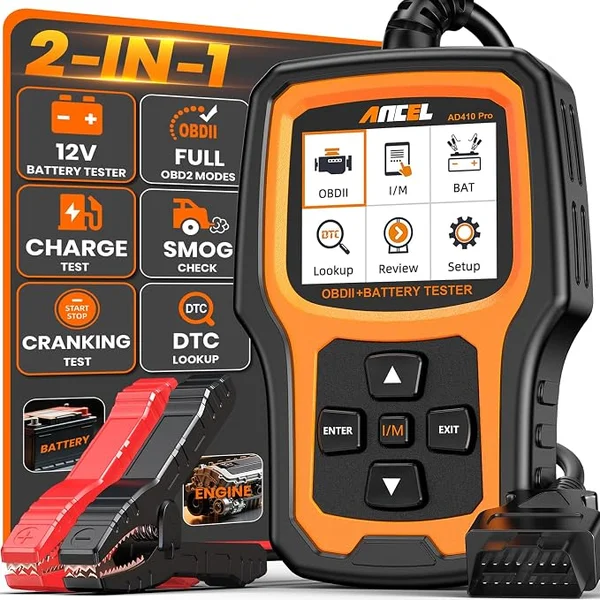
8. ANCEL AD410 PRO OBD2 Scanner and Battery Tester
A dead or weak battery is the most common reason a car will not start, and it also causes strange codes and warning lights. The AD410 PRO is an OBD2 engine scanner and a 12-volt battery tester in one: clip the included clamps to the battery and it tests battery health, cranking voltage and the charging system, so you can tell a bad battery from a bad alternator before you buy either. As a scanner it reads and clears engine codes, shows live data and freeze frame and runs an EVAP test. Like the other handhelds in this section, it does not read ABS, airbag or transmission codes.
- Connection: cable, plus battery clamps
- Reads: engine codes, live data, freeze frame, I/M readiness, EVAP test
- Extras: battery, cranking and charging system test
- Subscription: none
Good: Two tools in one. Battery test answers the most common no-start question. Not great: Bigger than a plain code reader. Engine codes only.
OBD2 scanners that read ABS and airbag codes
When the ABS, traction control or airbag light comes on, a basic scanner shows nothing. These three read the codes from those modules on most popular makes. Check the maker’s coverage list for your car before buying, because no scanner at this level covers every system on every car.
Best for ABS codes and repair help
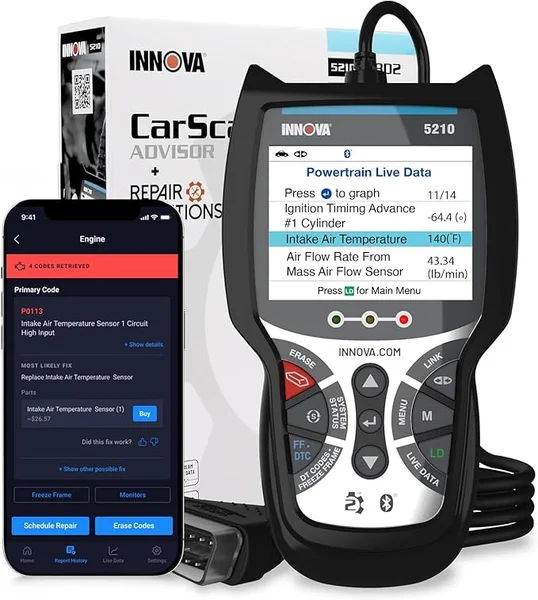
9. Innova 5210 OBD2 Scanner and Battery Tester
Innova sells its scanners at the big auto parts chains, and the 5210 is the model DIYers on Reddit recommend for ABS codes on a budget. It reads and clears engine and ABS codes, shows live data and readiness, tests the battery and alternator, and resets the oil life light after an oil change. Pair it with the free RepairSolutions2 app and you get verified fixes and step-by-step repair guidance with no subscription. ABS coverage varies by make, so use Innova’s coverage checker with your VIN.
- Connection: cable, Bluetooth link to the RepairSolutions2 app
- Reads: engine and ABS codes, live data, I/M readiness
- Extras: battery and alternator test, oil light reset, verified fixes in the app
- Subscription: none
Good: ABS codes and repair guidance in one tool. Oil reset. Brand sold in parts stores. Not great: No airbag codes. Small 2.8-inch screen.
Best four-system handheld
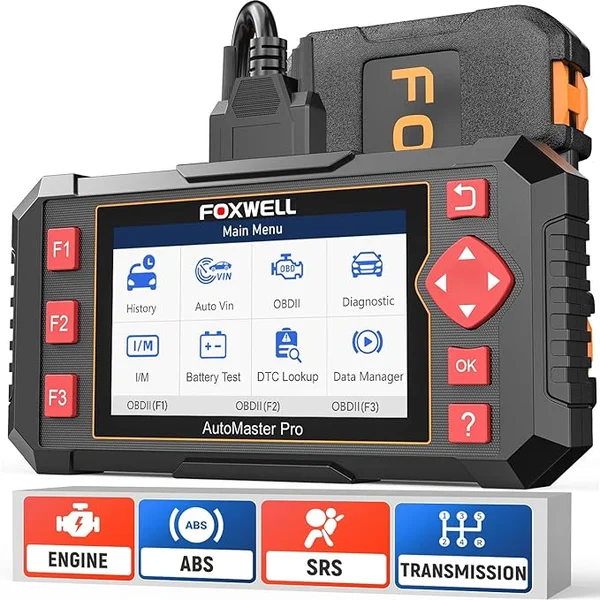
10. FOXWELL NT604 Elite OBD2 Scanner
The NT604 Elite reads and clears codes in the four systems that cause most dashboard warning lights: engine, transmission, ABS and SRS (airbags). A quick scan shows which of those modules respond and which have faults, and live data can be graphed and saved for every supported module, not only the engine. The 4.3-inch color screen and physical buttons work with gloves on, it needs no phone or app, it updates over Wi-Fi and it comes with a hard case. It does not run active tests or service resets, which keeps the menus simple for a beginner.
- Connection: cable
- Reads: engine, transmission, ABS and airbag codes and live data
- Extras: quick scan of all four systems, data graphing and saving, Wi-Fi updates
- Subscription: none
Good: All four main warning-light systems. Bigger screen. Simple menus. Not great: No oil reset, ABS bleeding or active tests. Costs as much as some Bluetooth tools that do more.
Four systems plus basic resets
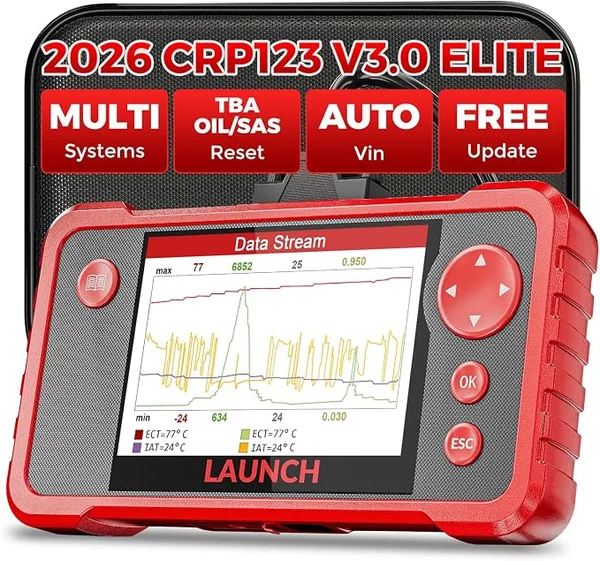
11. LAUNCH CRP123 V3.0 Elite OBD2 Scanner
The CRP123 covers the same four systems as the NT604 Elite (engine, transmission, ABS and airbags) and adds three service functions a DIYer will use: oil life reset, steering angle sensor reset and throttle adaptation after cleaning the throttle body. It graphs live data, can record and play back a data stream, and runs the full set of generic OBD2 tests including Mode 6 and the EVAP test. Updates are free for life over Wi-Fi.
- Connection: cable
- Reads: engine, transmission, ABS and airbag codes and live data
- Extras: oil reset, SAS reset, throttle adaptation, data record and playback
- Subscription: none, free lifetime updates
Good: Four systems plus the resets DIYers need most. Data playback. Not great: 3.5-inch screen is smaller than the NT604’s. Fewer ratings than the Foxwell.
When you outgrow a beginner scanner
A code reader tells you what the computer saw. A bidirectional scanner lets you command parts to work: turn on the fuel pump, cycle the ABS valves to bleed the brakes, click an injector off to find a misfire. That is the step most DIYers take after a year or two of doing their own repairs, and it used to mean a tablet scanner costing several times more than anything above.
Best first bidirectional tool
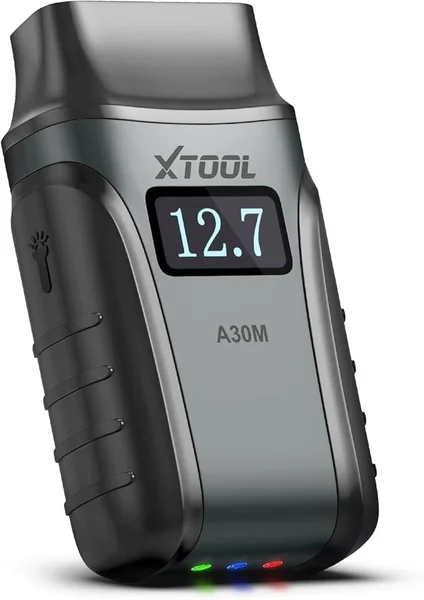
12. XTOOL A30M Bidirectional Scan Tool
The A30M is a wireless adapter that runs a full scan tool app on your phone or iPad. It reads every module the car has, not only the four main ones, and adds full bidirectional control for active tests on fuel pumps, injectors, the A/C clutch, windows and more. It also covers 26 service functions, including oil reset, electronic parking brake release, ABS brake bleeding and throttle relearn, and graphs up to eight live data streams at once. Software updates are free for life. Newer Chrysler, Jeep, Dodge and Fiat models (2018 and later) need a separate paid FCA AutoAuth account to unlock some functions.
- Connection: Bluetooth to the XTOOL app on iPhone, iPad or Android
- Reads: all systems on supported vehicles
- Extras: bidirectional active tests, 26 service resets including ABS bleeding and EPB
- Subscription: none, free lifetime updates; FCA AutoAuth is a separate account
Good: Bidirectional control and service resets at a fraction of the cost of tablet scanners. Not great: More than a beginner needs on day one. Coverage varies by car; check your VIN with XTOOL first.
OBD2 scanner comparison
| Scanner | Type | ABS and airbag |
|---|---|---|
| BlueDriver Bluetooth Pro | Bluetooth, own app | Yes, on supported cars |
| OBDLink MX+ | Bluetooth, many apps | Some makes, paid add-on |
| Veepeak OBDCheck BLE | Bluetooth, third-party app | No |
| FIXD | Bluetooth, own app | Limited |
| ANCEL AD310 | Handheld | No |
| Autel AutoLink AL319 | Handheld | No |
| FOXWELL NT301 | Handheld | No |
| ANCEL AD410 PRO | Handheld + battery tester | No |
| Innova 5210 | Handheld + app | ABS only |
| FOXWELL NT604 Elite | Handheld | Yes |
| LAUNCH CRP123 V3.0 Elite | Handheld | Yes |
| XTOOL A30M | Bluetooth, own app | Yes, all systems |
How to use an OBD2 scanner
Reading a code takes about two minutes. The steps are the same for a handheld and a Bluetooth scanner.
- Find the port. Look under the dashboard on the driver’s side, near the steering column. It is a trapezoid-shaped 16-pin socket.
- Turn the car off and plug in the scanner. Push the connector until it seats fully. A loose connection is the most common reason a scanner says “link error”.
- Turn the key to ON without starting the engine, or press the start button twice without your foot on the brake. Some scanners also work with the engine running, which you need for live data.
- Connect. A handheld powers up on its own. For a Bluetooth scanner, open the app and connect from inside the app, not from your phone’s Bluetooth settings.
- Read the codes and write them down, together with the freeze frame data. Take a screenshot or a photo of the screen.
- Look up the code for your car. The same code can have different common causes on different engines. Search the code with your make, model and engine, or read the repair report if your scanner has one.
- Fix the cause, then clear the code. Clearing the code only turns the light off. If the fault is still there, the light comes back.
- Drive and check readiness. After clearing codes or disconnecting the battery, the readiness monitors reset. Drive normally for a few days, then check readiness again before any emissions test.
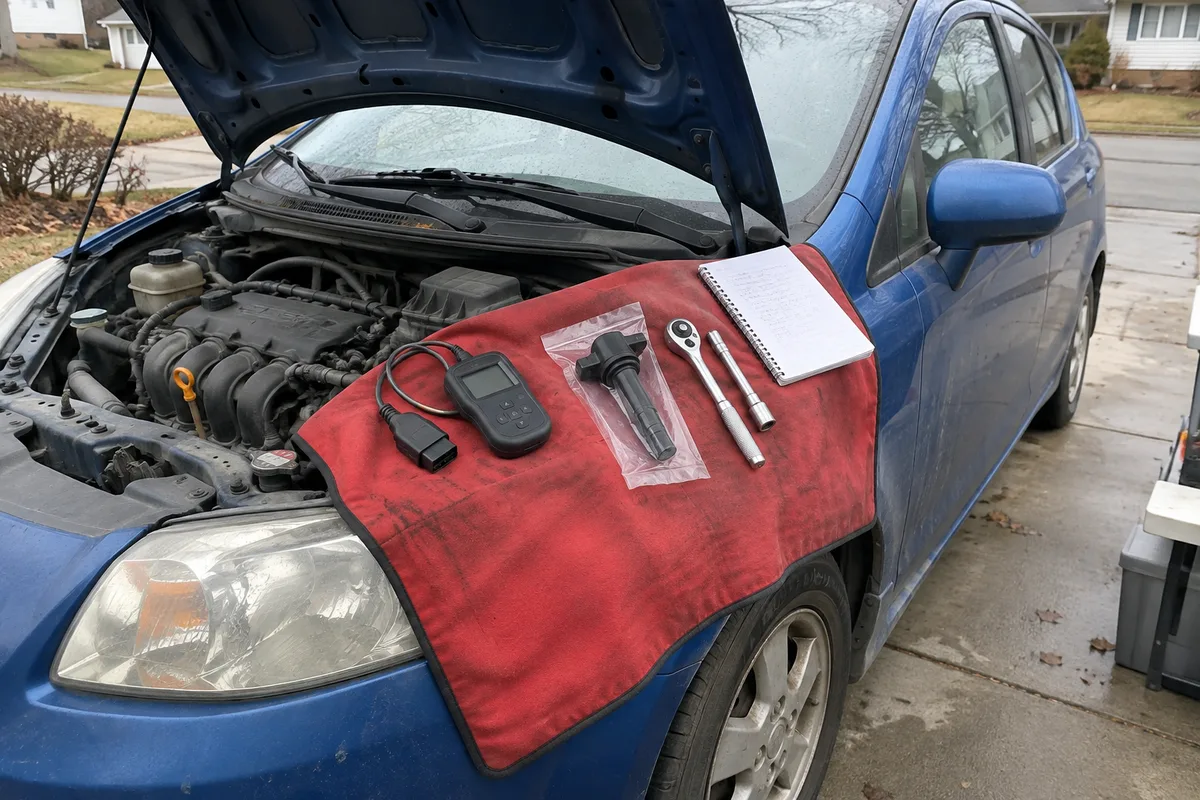
Flashing check engine light: a solid light means a fault is stored. A flashing light means an active misfire bad enough to damage the catalytic converter. Slow down, avoid hard acceleration and get the car checked the same day.
Common codes beginners see
Codes starting with P are powertrain (engine and transmission), B are body, C are chassis (including ABS) and U are network communication. The second digit is 0 for generic codes every maker uses and 1 for maker-specific codes. These five generic codes come up again and again in shops and in beginner questions online.
| Code | Meaning | Check first |
|---|---|---|
| P0455, P0442, P0457 | EVAP leak (fuel vapor system) | Gas cap: tighten it or replace it if the seal is cracked |
| P0300 to P0308 | Misfire (P0300 random, the last digit is the cylinder) | Spark plugs and ignition coils; swap the coil to another cylinder and see if the code follows |
| P0420 | Catalytic converter below efficiency | Upstream and downstream oxygen sensors and exhaust leaks before the converter itself |
| P0171, P0174 | System running lean | Vacuum leaks, cracked intake boot, dirty mass airflow sensor |
| P0128 | Engine not warming up fast enough | Thermostat stuck open |
For a deeper explanation of how the sensors and monitors behind these codes work, the Haynes OBD-II Techbook in our list of the best books to learn about cars covers the whole system in plain language.
Beginner mistakes to avoid
- Clearing codes right before a smog test. Clearing resets the readiness monitors, and the car fails until they complete again. Clear codes after the repair, then drive for a few days.
- Replacing the part named in the code. A P0420 rarely means “buy a catalytic converter” first. The code points to a system; test before you buy parts.
- Ignoring freeze frame. It tells you the conditions when the fault happened. A lean code at idle and a lean code at full throttle have different usual causes.
- Leaving a cheap adapter plugged in. Some no-name Bluetooth adapters draw power all the time and can drain a weak battery over a long weekend. Adapters with a sleep mode, like the OBDLink MX+, can stay in.
- Buying for features you will never use. A first scanner that reads codes, freeze frame and readiness covers most check engine lights. Buy ABS and airbag support when you have an ABS or airbag light, not before.
Is a scanner worth it if parts stores scan for free?
AutoZone, O’Reilly and Advance Auto Parts read codes for free in most US states, and it is a fine option for a one-time check. A scanner of your own is worth buying for three reasons. First, the store gives you a code and a parts suggestion, not freeze frame or live data. Second, the light often comes on at night, on a trip or on a weekend, and with a scanner in the glovebox you know in two minutes whether the car is safe to drive. Third, a scanner is the best tool you can bring to a used-car inspection: plug it in and check readiness. A seller who cleared the codes that morning to hide a fault cannot hide incomplete monitors.
A scanner also pays for itself at the shop. Walk in knowing the code and the freeze frame, and you can tell a fair diagnosis from a guess. Running the numbers on what your car costs you each year? Our cost of owning a car calculator includes maintenance and repairs, and catching small faults early is one of the easiest ways to keep that line low.
FAQ
What is the best OBD2 scanner for beginners?
The BlueDriver Bluetooth Pro is the best OBD2 scanner for beginners because its app explains each code in plain English with a repair report matched to your car, it reads ABS and airbag codes on supported vehicles, and it has no subscription. If you prefer a handheld with no phone, the ANCEL AD310 is the best budget choice.
What is the best budget OBD2 scanner?
The ANCEL AD310 is the best budget OBD2 scanner. It reads and clears check engine codes and shows freeze frame, live data and smog readiness. The Autel AutoLink AL319 costs about the same and adds a color screen and a one-press readiness check. For a cheap Bluetooth option, the Veepeak OBDCheck BLE works with iPhone and Android.
Are Bluetooth OBD2 scanners any good?
Yes. A good Bluetooth scanner from a known brand reads the same codes and data as a handheld and shows them on a bigger, clearer screen. The weak points are cheap clone adapters that drop the connection and apps that charge a subscription. Buy a known brand and check what the app charges before you buy.
Do Bluetooth OBD2 scanners work with iPhone?
Only if they use Bluetooth Low Energy or Wi-Fi. iPhones do not pair with classic Bluetooth OBD2 adapters. BlueDriver, OBDLink MX+, Veepeak OBDCheck BLE, FIXD and XTOOL A30M all work with iPhone.
Can I leave an OBD2 scanner plugged in?
You can leave a Bluetooth adapter with a sleep mode plugged in, such as the OBDLink MX+, BlueDriver or FIXD. Cheap adapters without sleep mode can drain the battery if the car sits for several days. Unplug a handheld scanner after use.
Will an OBD2 scanner work on my car?
Every gas car and light truck sold in the US from the 1996 model year on has an OBD2 port, so any OBD2 scanner reads its engine codes. Enhanced functions such as ABS, airbag and transmission codes depend on the scanner and your make, model and year; check the maker’s coverage list.
Can an OBD2 scanner turn off the check engine light?
Yes, every scanner on this list can clear codes and turn off the light. If the fault is still there, the light comes back after the computer runs its test again. Clearing codes also resets the readiness monitors, so do not clear codes right before an emissions test.
Do I need a scanner that reads ABS and airbag codes?
Only if you want to diagnose ABS, traction control or airbag warning lights yourself. A basic scanner reads only engine and emissions codes. If you work on your own brakes or own an older car with a history of ABS sensor faults, a scanner like the Innova 5210 or FOXWELL NT604 Elite is worth it.
What is the difference between a code reader and a scan tool?
A code reader reads and clears trouble codes, usually from the engine only. A scan tool adds live data, freeze frame, readiness, graphs and often other systems such as ABS and airbags. A bidirectional scan tool can also command parts to work for testing. Most scanners in this guide sit between a basic code reader and a full scan tool.
Does BlueDriver need a subscription?
No. BlueDriver is a one-time purchase that includes the app, repair reports and enhanced codes on supported vehicles, with no subscription or account required.
Related guides
- Best books to learn about cars: from first-timer books to repair manuals and the Haynes OBD-II Techbook
- Car emergency kit checklist: what to keep in the car for a breakdown
- Jack and jack stand size calculator: the right lifting gear for your car before you work under it
- Best gifts for car lovers: a scanner makes a useful gift for a new driver
Sources: EPA: Vehicle Emissions Inspection and Maintenance; California Air Resources Board: On-Board Diagnostic program.

James Kowalski
More from James KowalskiHow we reviewed this article
This article was researched against manufacturer records and editorially reviewed before publishing. We accept no payment for coverage. Some guides contain affiliate links; see our affiliate disclosure.