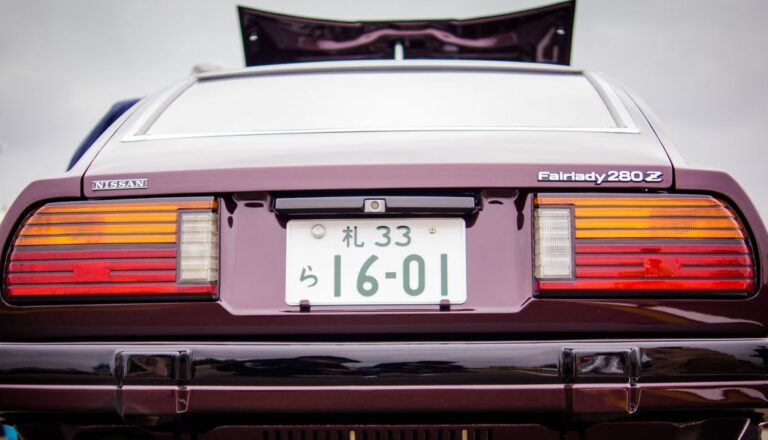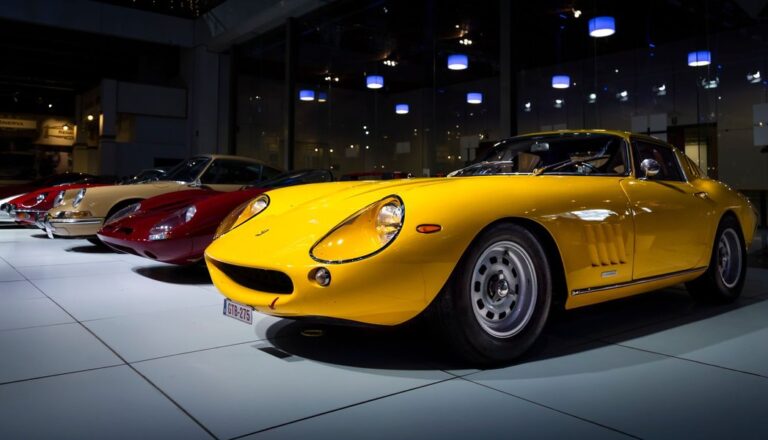
The 1960s gave us the E-Type, the Miura and the GTO inside ten years. Most lists of the decade’s cars pad themselves with sedans and hatchbacks. This one doesn’t. Every car below is a two-door coupe, and each entry gives you the launch year, the engine, the reason it matters, and a ballpark of what one costs now.
TLDR
- Best looks: Jaguar E-Type. Best drama: Lamborghini Miura. Best movie star: Aston Martin DB5.
- Best American buy: Corvette Sting Ray or a Mustang fastback. Both have deep parts support.
- Best value: Volvo P1800, Alfa Romeo Giulia Sprint GT, Buick Riviera.
- Best daily-friendly classic: Mercedes 250 SE coupe, if you can afford the upkeep.
- Values are rough ranges for cars in good, driver-to-nice condition. Auction results swing wildly with provenance and originality.
Table of Contents
- What counts as a coupe
- American muscle and personal luxury
- British and Italian grand tourers
- German coupes
- Japanese and Swedish outliers
- Comparison table
- How to choose a 1960s coupe
What counts as a coupe
A coupe is a fixed-roof, two-door car, traditionally with a shorter cabin than the sedan it’s related to. The edges blur fast. A fastback is a coupe with a roofline that slopes in one line to the tail, like the Mustang fastback. A hardtop has no center pillar, which is why the Buick Riviera and Mercedes 250 SE coupe feel so open with the windows down. A 2+2 has rear seats you’d only offer to a child or a bag.
All of those count here. Convertibles, four-door “coupes” and hatchbacks don’t. That excludes the Mini and Cortina, which show up on plenty of “best 1960s cars” lists, and it leaves room for cars those lists skip.
American muscle and personal luxury
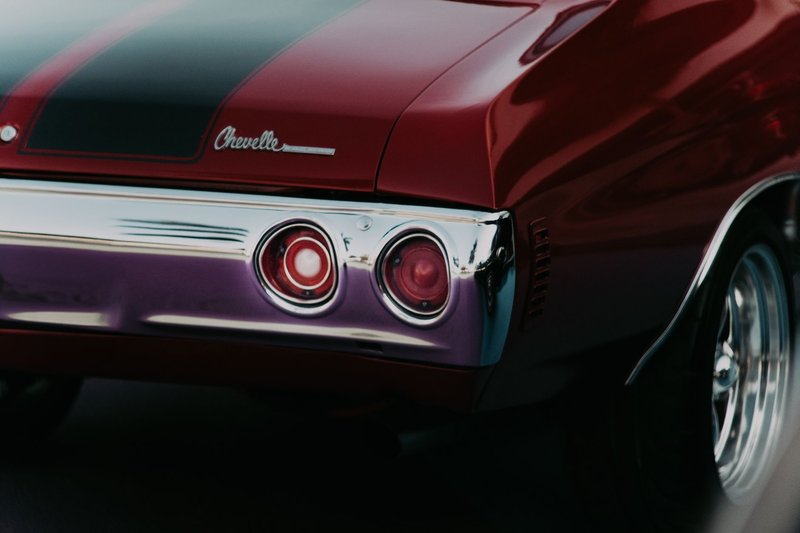
1. Chevrolet Corvette Sting Ray (C2), 1963
The second-generation Corvette arrived with independent rear suspension, hidden headlamps and, in 1963 only, a split rear window. Zora Arkus-Duntov hated the divider because it blocked rear vision, and Chevrolet dropped it for 1964. That one-year quirk is why the 1963 split-window coupe is the most valuable C2.
Engines ran from a 327 cubic-inch small-block V8 at 250 hp up to a fuel-injected version rated at 360 hp. Expect roughly $50,000 to $120,000 for later coupes and $100,000 to $250,000 or more for a split-window.
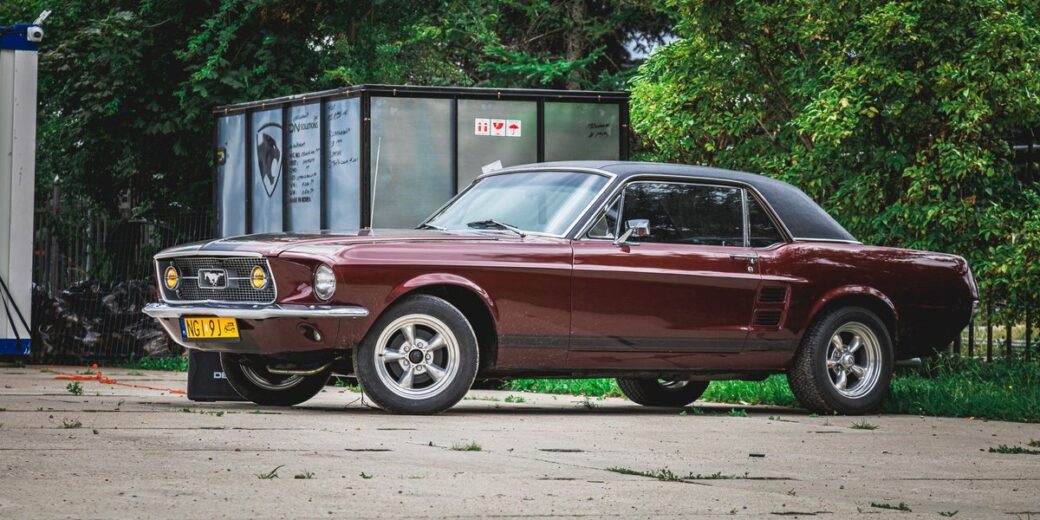
2. Ford Mustang Fastback, 1965
Ford introduced the Mustang in spring 1964 as a notchback coupe and convertible. The fastback 2+2 followed in the fall as a 1965 model, and it’s the one collectors want. The 289 cubic-inch V8 topped out at 271 hp in the “K-code” high-performance version, and the Shelby GT350 built on this same body.
Prices land around $40,000 to $100,000 for a solid V8 fastback. Real K-codes and Shelbys sit well above that. Parts availability is the best of any car on this list.
3. Pontiac GTO, 1964
The GTO started as an option package on the Tempest/LeMans coupe: a 389 cubic-inch V8 in a mid-size body, 325 hp as standard and 348 hp with Tri-Power carburetion. Engineers worked around General Motors’ ban on engines over 330 cubic inches in intermediates by calling it an option. It sold in volume and started a category.
Budget about $50,000 to $120,000. Check that the car is a real GTO and not a LeMans dressed up, because the VIN decoding matters here.
4. Buick Riviera, 1963
Bill Mitchell designed the first Riviera in the manner of a British GT, with a crisp shoulder line and no chrome excess. Under the hood sat a 401 cubic-inch “Nailhead” V8 making 325 hp with a torque curve that pulled a two-ton car without fuss. It was a personal luxury coupe before that was a segment name.
It’s also the sleeper of this list. Decent cars run roughly $15,000 to $40,000, far less than their design deserves.
5. Chrysler 300F, 1960
The 300 letter series were Chrysler’s big, fast grand tourers. The 300F had the 413 cubic-inch V8 at 375 hp, or 400 hp with the optional “Ram” induction manifold, a pair of long cross-ram intake runners that look like organ pipes. The cabin used four individual bucket seats and a center console, which was unusual for an American coupe at the time.
Good ones typically trade between $60,000 and $150,000. The Ram-induction cars are the rare ones.
British and Italian grand tourers
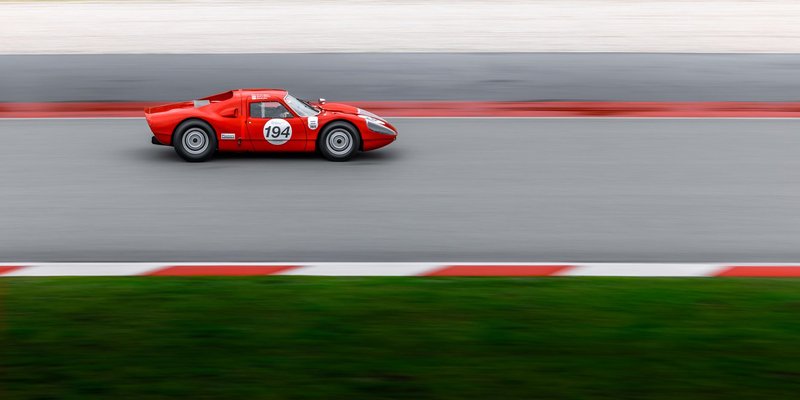
6. Jaguar E-Type Series 1 Coupe, 1961
Unveiled at the Geneva show in March 1961, the E-Type paired a 3.8-litre XK straight-six with independent suspension, disc brakes at all four wheels and a monocoque front section. It was priced thousands below a Ferrari. Enzo Ferrari is widely credited with calling it the most beautiful car ever made, and nobody has argued hard against that.
The 3.8 gave way to a 4.2 in 1964 with a better gearbox and seats. Both produce roughly 265 hp as claimed. Expect $100,000 to $250,000 for a nice Series 1 coupe, more for early flat-floor cars.
7. Aston Martin DB5, 1963
The DB5 grew out of the DB4 with a 4.0-litre straight-six making around 282 hp and a five-speed ZF gearbox on later cars. Then Goldfinger came out in 1964 and put one in Sean Connery’s hands, with ejector seat and rotating number plates. Sales didn’t suffer.
It’s a Superleggera-bodied car, meaning aluminum panels over a tube frame, so corrosion is a galvanic problem rather than a simple rust one. Values start around $600,000 and run past $1,000,000 for strong examples.
8. Ferrari 275 GTB, 1964
Ferrari’s answer to the question of how to sell a front-engined V12 in the mid-1960s was a transaxle layout and independent rear suspension. The 3.3-litre Colombo V12 made about 280 hp in the original GTB. Later cars added a torque tube and then a four-cam engine, and those are the ones collectors chase.
This is a seven-figure car. Even standard 275 GTBs sell for well over $2,000,000 in good condition.
9. Lamborghini Miura P400, 1966
The Miura put a 3.9-litre V12 behind the driver, mounted sideways, and wrapped it in a body by Marcello Gandini at Bertone that still looks fresh. It made 350 hp in the original P400, 370 hp in the S and 385 hp in the SV. Lamborghini showed a bare chassis at the 1965 Turin show before the finished car appeared at Geneva in 1966.
It’s also famously hot inside, and early cars had front-end lift at speed. Prices run roughly $1,500,000 to $3,000,000 or higher, depending on variant. By 1967 Lamborghini was also building front-engined cars, and the 1967 Lamborghini models show how that range looked alongside the Miura.
10. Alfa Romeo Giulia Sprint GT, 1963
The Bertone-bodied Sprint GT used Giorgetto Giugiaro’s early design work and a 1.6-litre twin-cam four making about 106 hp, which was plenty in a car under 1,000 kg. The driving feel is what people remember: rev-happy engine, light steering, a dashboard that looks like it was designed by an industrial engineer.
It’s a better value than the exotics above. Expect roughly $25,000 to $60,000. Rust in the sills and floors is the usual problem, so inspect it over a lift.
German coupes
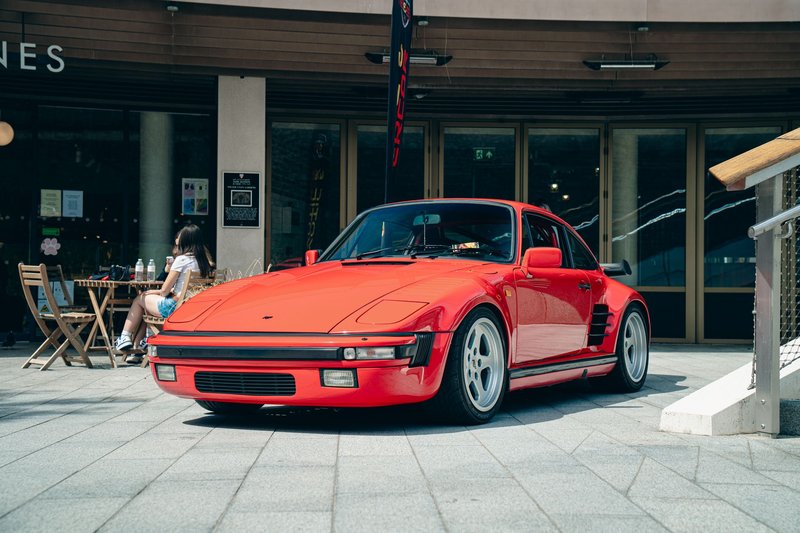
11. Porsche 911, 1964
Porsche showed the car at Frankfurt in 1963 as the 901, then renamed it after Peugeot objected to the three-digit number with a zero in the middle. The 911 launched with a 2.0-litre air-cooled flat-six making 130 hp. The rear-engine layout was a compromise that Porsche has spent six decades improving.
Early short-wheelbase cars bring $150,000 to $400,000 depending on originality. Later 1960s 911S models cost less than you’d expect, but still more than most cars on this list.
12. Mercedes-Benz 250 SE Coupe, 1965
Mercedes built the W111 coupe on a shortened sedan platform and styled it by Paul Bracq, with a thin roof and no B-pillar. The 250 SE used a 2.5-litre fuel-injected straight-six making 150 hp. The cabin is wood, leather and chrome, and the interior was built with an engineer’s disregard for cost.
That cost is exactly why repairs can get expensive. Good coupes run from $60,000 to $150,000 or so. Buy on condition, not price, because restoration bills climb faster than values.
Japanese and Swedish outliers
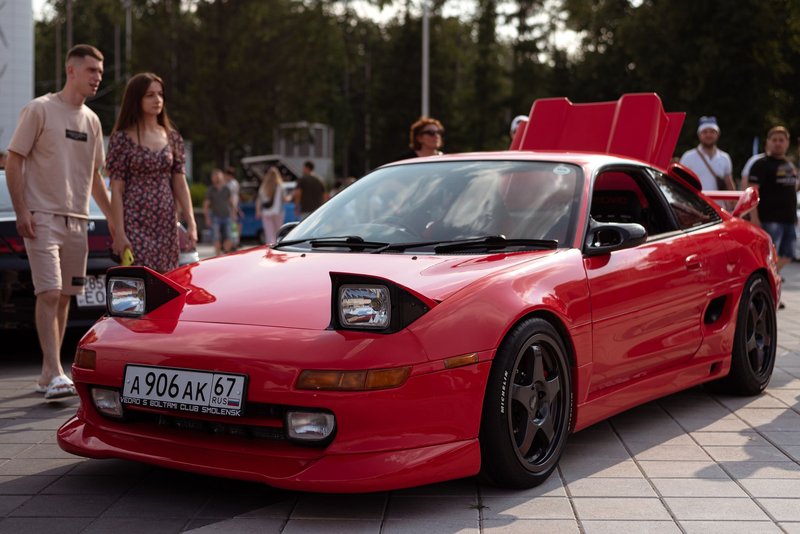
13. Toyota 2000GT, 1967
Toyota built the 2000GT with Yamaha handling engine development, which explains the DOHC 2.0-litre straight-six with 150 hp and the car’s unusually refined sound. Only 351 were produced. It was the first Japanese car to be taken seriously by the collector market, and it’s still the only one that routinely reaches seven figures. For other Japanese models from the 1960s onward, see the complete list of old JDM cars.
The Bond connection is real but slightly off: the open 2000GT in You Only Live Twice was a special convertible built because Sean Connery didn’t fit in the standard coupe. The coupe itself regularly crosses $1,000,000 at auction.
14. Volvo P1800, 1961
A Swedish car with an Italian outline: Pietro Frua drew it at Ghia, and early cars were assembled in England by Jensen before production moved to Sweden in 1963. The 1.8-litre B18 four-cylinder made about 100 hp and was sturdy enough that Irv Gordon famously drove his 1966 example past three million miles. Roger Moore drove one in The Saint.
It’s the cheapest way into a proper 1960s GT with real history. Prices usually fall between $15,000 and $50,000.
15. Isuzu 117 Coupé, 1968
Giorgetto Giugiaro designed this one at Ghia too, and the first 117s were largely hand-built, with hammered body panels and a twin-cam 1.6-litre engine. Later cars moved to machine production and lost some of that craft. Most of them are Japanese-market only, and the early handmade cars are the ones worth hunting.
Given the parts situation, ownership is a project. Cars sell for roughly $30,000 to $80,000, with the handmade early ones at the top.
Comparison table
| Car | Year | Engine | Power | Rough value |
|---|---|---|---|---|
| Corvette Sting Ray | 1963 | 5.4L V8 | 250-360 hp | $50k-$250k |
| Mustang fastback | 1965 | 4.7L V8 | up to 271 hp | $40k-$100k |
| Pontiac GTO | 1964 | 6.4L V8 | 325-348 hp | $50k-$120k |
| Buick Riviera | 1963 | 6.6L V8 | 325 hp | $15k-$40k |
| Chrysler 300F | 1960 | 6.8L V8 | 375-400 hp | $60k-$150k |
| Jaguar E-Type | 1961 | 3.8L I6 | ~265 hp | $100k-$250k |
| Aston Martin DB5 | 1963 | 4.0L I6 | ~282 hp | $600k-$1M+ |
| Ferrari 275 GTB | 1964 | 3.3L V12 | ~280 hp | $2M+ |
| Lamborghini Miura | 1966 | 3.9L V12 | 350-385 hp | $1.5M-$3M+ |
| Alfa Giulia Sprint GT | 1963 | 1.6L I4 | ~106 hp | $25k-$60k |
| Porsche 911 | 1964 | 2.0L flat-6 | 130 hp | $150k-$400k |
| Mercedes 250 SE | 1965 | 2.5L I6 | 150 hp | $60k-$150k |
| Toyota 2000GT | 1967 | 2.0L I6 | 150 hp | $1M+ |
| Volvo P1800 | 1961 | 1.8L I4 | ~100 hp | $15k-$50k |
| Isuzu 117 Coupé | 1968 | 1.6L I4 | ~120 hp | $30k-$80k |
How to choose a 1960s coupe
Start with rust. Nearly every car here was built before modern corrosion protection. Sills, floors, wheel arches and the base of the windscreen are where they fail. A shiny repaint over bad metal is the most expensive mistake in the hobby.
Check parts before you fall in love. Corvettes, Mustangs and Volvo P1800s have strong aftermarket support. Isuzu 117s and Toyota 2000GTs don’t, and some components need to be fabricated or imported.
Understand the safety gap. Federal vehicle safety standards in the US began with the National Highway Traffic Safety Administration era at the end of the decade, so most of these cars have no crumple zones, no airbags and, in many cases, no head restraints. Fit three-point belts if the car doesn’t have them.
Insure on agreed value. Standard policies pay book value, and classic car markets move faster than books. A specialist agreed-value policy costs less than you’d expect, usually with mileage limits attached.
Buy the best you can. Restoring a rough car almost never costs less than buying a good one. If your budget is $30,000, a clean P1800 or Giulia beats a tired E-Type every time.

Marco Delantero
More from Marco DelanteroHow we reviewed this article
This article was researched against manufacturer records and editorially reviewed before publishing. We accept no payment for coverage. Some guides contain affiliate links; see our affiliate disclosure.