In 1967, Lamborghini was four years old and already rewriting the rules. Ferruccio’s company had a foot in two worlds that year: the elegant front-engine grand tourers he built to out-civilize Ferrari, and the low, mid-engined Miura that more or less invented the supercar as we know it. Four vehicles wore the raging bull badge in 1967, and they tell the whole story of how a tractor magnate turned Sant’Agata into a name collectors still chase.
One quick housekeeping note before we start: Lamborghini did build tractors in 1967, including the 1R diesel. They were good tractors. They are not what you came here for, and you won’t find them below.
Table of Contents
- The 1967 Lamborghini lineup at a glance
- Lamborghini 350 GT — the last of the first
- Lamborghini 400 GT 2+2 — the grown-up GT
- Lamborghini Miura P400 — the one that changed everything
- Lamborghini Marzal — the four-seat concept that previewed the future
- What a 1967 Lamborghini is worth today
The 1967 Lamborghini lineup at a glance
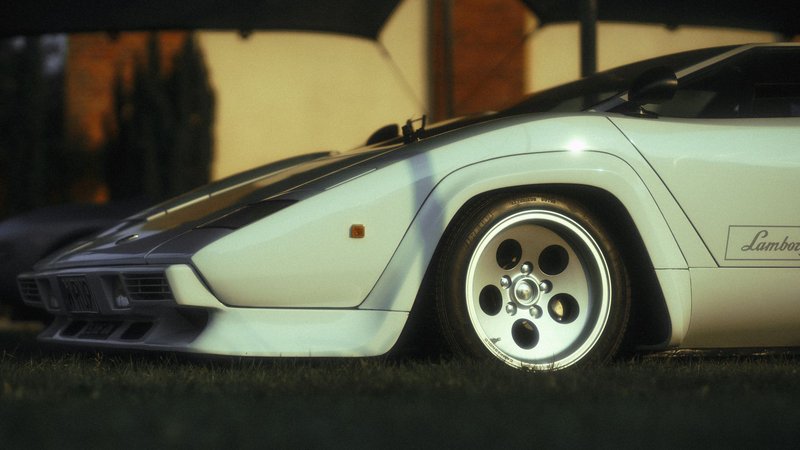
Lamborghini’s 1967 catalog splits cleanly down the middle. On one side, the front-engine GTs that paid the bills: the outgoing 350 GT and its larger-engined successor, the 400 GT 2+2. On the other, the mid-engine Miura P400, hitting its first full year of production and quietly making every other road car look old. The Marzal sat off to the side as a one-off Bertone show car, a glimpse of where the brand might go.
Here’s the short version before we get into each car.
| Model | Layout | Engine | Power | Built | Original price (approx.) |
|---|---|---|---|---|---|
| 350 GT | Front V12 | 3.5L V12 | ~270 hp | 120 total | ~$13,900 |
| 400 GT 2+2 | Front V12 | 3.9L V12 | ~320 hp | 224 total | ~$14,250 |
| Miura P400 | Mid V12 (transverse) | 3.9L V12 | ~350 hp | 275 total | ~$20,000 |
| Marzal | Mid inline-six (concept) | 2.0L straight-six | ~175 hp | 1 (concept) | N/A |
Now the cars themselves.
Lamborghini 350 GT — the last of the first
The 350 GT was Lamborghini’s first production car, and 1967 was its last call. It started life as the 350 GTV prototype in 1963, the car that announced Ferruccio meant business. By the time the final examples left the factory, the design had been softened by Touring of Milan into something genuinely pretty — a long-nosed coupe with a delicate greenhouse and oval headlights that look almost shy compared to what came later.
Under the aluminum hood sat the engine that would define the company for decades: a 3.5-liter V12 designed by Giotto Bizzarrini, good for roughly 270 horsepower. That engine is the thread running through all three road cars on this list. Top speed sat around 150 mph, which in 1967 put it squarely in Ferrari territory, which was exactly the point.
Total 350 GT production came to about 120 cars across its full run. That scarcity, plus its status as the genesis of the brand, makes it one of the more historically loaded Lamborghinis you can own. It isn’t the fastest or the flashiest car here. It’s the one without which none of the others exist — a status it shares with the other genre-defining grand tourers that populate any list of the most iconic cars of the 1960s.
Lamborghini 400 GT 2+2 — the grown-up GT
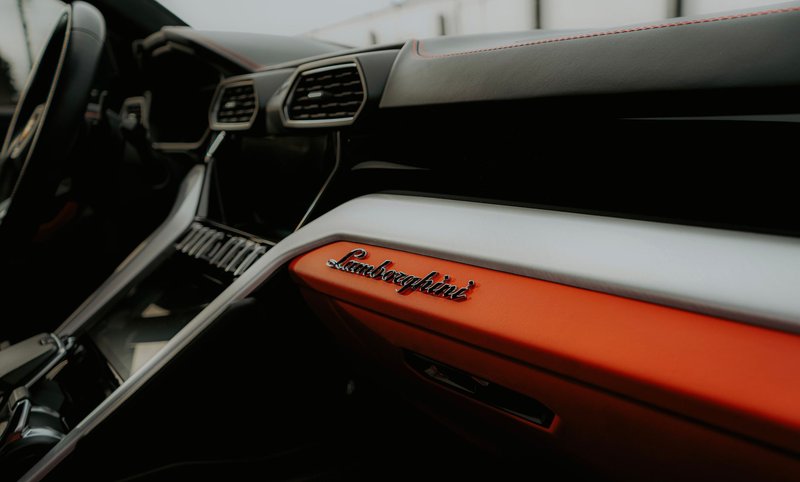
If the 350 GT was the proof of concept, the 400 GT 2+2 was the refinement. Introduced in 1966 and selling strongly through 1967, it took the same basic Touring-bodied silhouette and made it more usable. The headline change was the engine: bored out to 3.9 liters, now producing around 320 horsepower. Lamborghini also dropped the earlier car’s ZF gearbox in favor of its own five-speed transmission, finally building the whole drivetrain in-house.
The “2+2” in the name is the practical bit. By reworking the roofline and the rear floor, Lamborghini squeezed in two small back seats — enough for kids, luggage, or a passenger willing to negotiate. The front-end styling gained twin round headlights in place of the 350’s ovals, a small change that reads as more serious and more modern.
This is where the volume was. Lamborghini built 224 examples of the 400 GT 2+2, making it the best-selling Lamborghini of the decade and the car that proved the company could be a real business and not just an expensive grudge against Enzo Ferrari. It earned its place among the best luxury cars of the 1960s, where usable grand touring mattered as much as outright pace. For a 1967 Lamborghini you could actually drive across a country, this was the answer.
Lamborghini Miura P400 — the one that changed everything
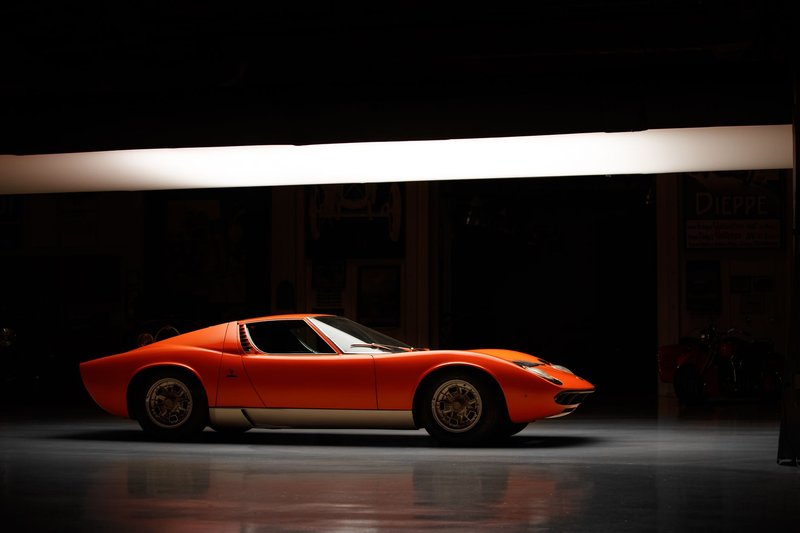
And then there’s the Miura. If you only remember one car from this list, make it this one.
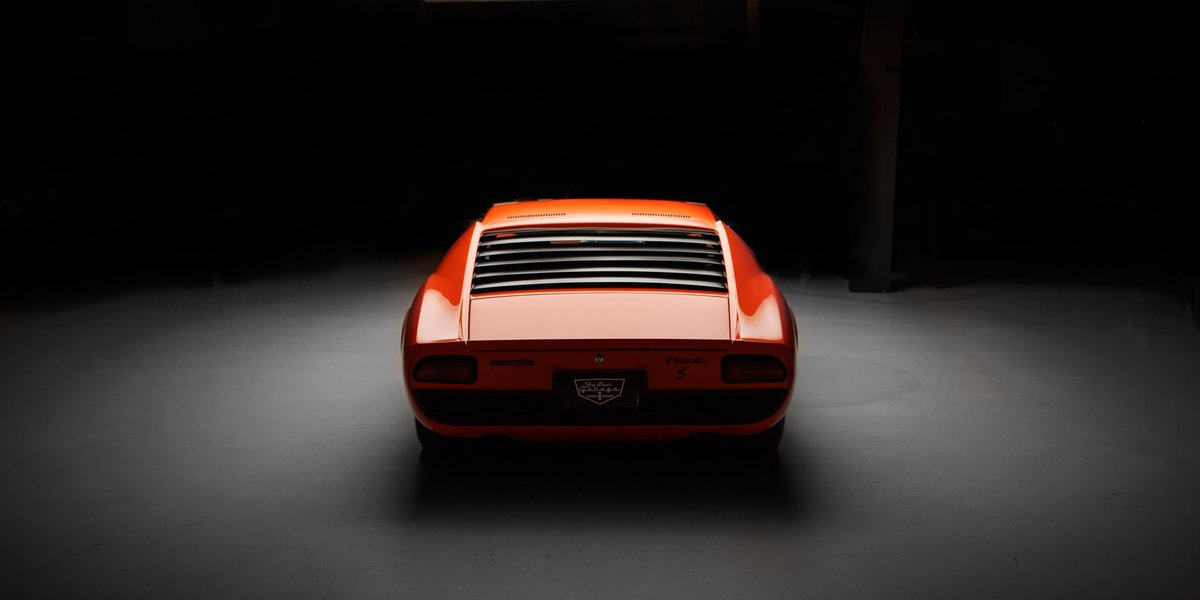
The P400 was, by most reasonable definitions, the first true supercar. Its trick was the engine placement: that 3.9-liter V12 was mounted transversely behind the driver, sharing its sump with the gearbox in a compact package that let designer Marcello Gandini at Bertone draw a body lower and more dramatic than anything else on the road. The result made roughly 350 horsepower and could crack 170 mph, numbers that genuinely had no peer in 1967. Period road testers struggled to find anything to compare it to, because there wasn’t anything — and even alongside the best sports cars of the 1960s, the Miura stood in a class of one.
The story behind it is almost as good as the car. The Miura was a skunkworks project — Lamborghini’s young engineers, including Gian Paolo Dallara, built the rolling chassis in their own time, partly because Ferruccio thought a mid-engined road car was an impractical distraction. They showed the bare chassis at the 1965 Turin show, the body at Geneva in 1966, and the orders flooded in before the thing was even finished. By 1967, the P400 was in full production and Lamborghini couldn’t build them fast enough.
The name, fittingly, comes from a line of Spanish fighting bulls — the start of a naming tradition that runs straight through to the modern Aventador and Huracán. The mid-engine layout the Miura pioneered became the template every supercar maker copied, from Ferrari to McLaren. For the engineering-minded, the Wikipedia entry on the Lamborghini Miura lays out the development timeline and the chassis details in depth.
Roughly 275 examples of the original P400 were built before the more powerful P400 S arrived. Of all the cars wearing a 1967 build date, this is the one that turned Lamborghini from a respected GT maker into a legend.
Lamborghini Marzal — the four-seat concept that previewed the future
The Marzal never went into production, but it earned its place in any honest accounting of 1967. Unveiled at the Geneva Motor Show in March 1967, it was Bertone and Gandini’s answer to a question Ferruccio kept asking: could Lamborghini build a genuine four-seater?
The car was wild even by show-car standards. It had enormous gullwing doors made almost entirely of glass — so much glass that the entire cabin was visible from the side, occupants and all. The interior was trimmed in silver hexagonal patterns, a motif that would echo through Lamborghini design for years. Most unusually, it was powered not by a V12 but by a 2.0-liter straight-six, essentially half of the Miura’s engine, mounted behind the rear axle.
The Marzal made one famous public appearance beyond the show stand: Prince Rainier III drove it, with Princess Grace beside him, on the opening lap of the 1967 Monaco Grand Prix. It never reached customers, but its DNA absolutely did — the production Lamborghini Espada that followed in 1968 was the four-seat GT the Marzal had promised, glass doors traded for sanity.
What a 1967 Lamborghini is worth today
These cars occupy very different rungs of the collector ladder now, and the spread is enormous.
The front-engine GTs are the relative bargains, though “bargain” is doing heavy lifting here. A solid 400 GT 2+2 trades in the mid-six-figure range, with strong examples crossing into seven figures at auction; the rarer 350 GT commands similar or higher money on the strength of its first-car status. The classic marketplaces give a live sense of this — a 1967 400 GT Spyder, for instance, has been listed in the neighborhood of €289,500, and full coupes regularly clear several hundred thousand dollars.
The Miura is a different universe. Original P400s in good condition are firmly seven-figure cars, and the best examples — low mileage, documented history, desirable colors — have pushed well beyond that at major auctions. Provenance matters enormously: a Miura with a known ownership chain and matching numbers can be worth multiples of a project car. If you want to track real transaction data rather than asking prices, dedicated classic-car market sites catalog Miura sales going back years.
The Marzal, being a single one-off concept, effectively has no market price. It lives in the Lamborghini orbit as a piece of history rather than a tradeable asset, surfacing occasionally at concours events where it draws a crowd every time.
The takeaway from 1967 is simple. In a single model year, Lamborghini produced its founding grand tourer, its best-selling early car, a one-off that previewed a whole design language, and the car that invented an entire category. Not bad for a company that started because a man was annoyed about a clutch.

Daniela Voss
More from Daniela VossHow we reviewed this article
This article was researched against manufacturer records and editorially reviewed before publishing. We accept no payment for coverage.