
TLDR
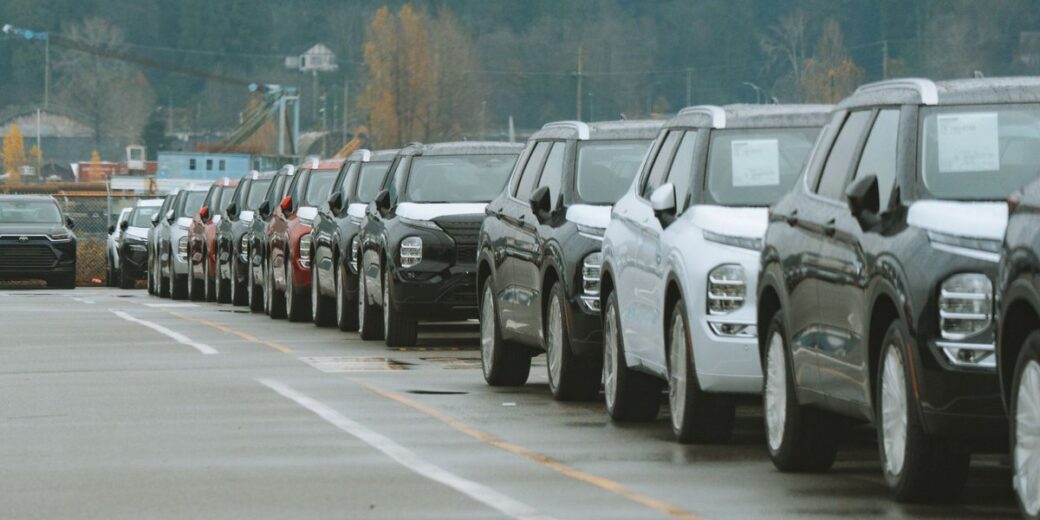
Search “2024 Ford cars” and you’ll mostly find dealer blogs padding out feature lists for local SEO. Here’s the short version: Ford doesn’t sell sedans anymore, hasn’t since 2019, and the Mustang is the only car-shaped car left. Everything else is a truck, an SUV, or an electric version of one. If you want a quick answer — Mustang for a driver’s car starting at $32,515, Maverick if you want a truck under $30K, Explorer if you need three rows, Mach-E or F-150 Lightning if you’re EV-curious. The full breakdown, with pricing and trims, is below.
Table of Contents
- Ford Doesn’t Really Make “Cars” Anymore
- Performance: The Mustang, Solo
- Crossovers and SUVs: The Actual Lineup
- Trucks: Where Ford Makes Its Money
- Electric and Hybrid: The New “Cars”
- Which 2024 Ford Actually Fits You
Ford Doesn’t Really Make “Cars” Anymore
Type “2024 Ford cars” into Google and the results assume you already know something most people don’t: Ford stopped building traditional passenger cars for the U.S. market years ago. The Fusion sedan died in 2020. The Taurus, once the best-selling car in America, ended U.S. production in 2019. The Fiesta and C-Max went the same way. Every Discontinued Ford Model and Why It Died traces the full graveyard of Ford nameplates that never made it to 2024.
Ford’s own executives have said the decision came down to money, not demand. The company was reportedly losing thousands of dollars per sedan against cheaper-to-build rivals like the Corolla and Civic, and Ford announced in 2018 that it would wind down car production almost entirely to focus on trucks and SUVs. The Mustang survived because it’s a halo car with margins that actually work.
So when people search “2024 Ford cars,” what they’re really asking about is the 2024 Ford lineup — one sports car, a stack of crossovers and SUVs, several trucks, and a growing electric and hybrid wing. That’s not a knock on Ford. It’s just not the lineup a decade-old memory of the brand expects.
Performance: The Mustang, Solo
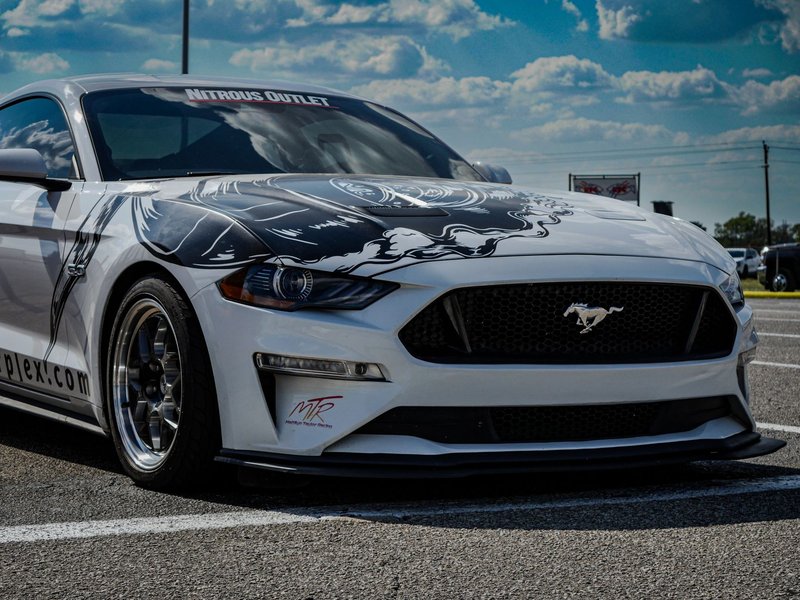
The seventh-generation Mustang carries the entire “car” category by itself now, and it comes in more flavors than that job title suggests. The base EcoBoost Fastback starts at $32,515 and runs a 2.3-liter turbo-four making 315 horsepower, paired only with a 10-speed automatic — no manual on the four-cylinder.
Step up to the GT Fastback, around $42,500, and you get a 480-horsepower V8 with a manual transmission still on the order sheet, which is more than most rivals in this price range can say. At the top sits the new-for-2024 Dark Horse, starting near $59,270, packing a 500-horsepower version of that V8 and chassis tuning aimed at people who actually track their cars, not just look tough in a parking lot.
Every 2024 Mustang gets a 12.4-inch digital gauge cluster and a 13.2-inch infotainment screen as standard — tech that used to be a Premium-trim upsell is now baseline. It’s the one Ford where “car” still means the thing your grandfather meant.
Crossovers and SUVs: The Actual Lineup
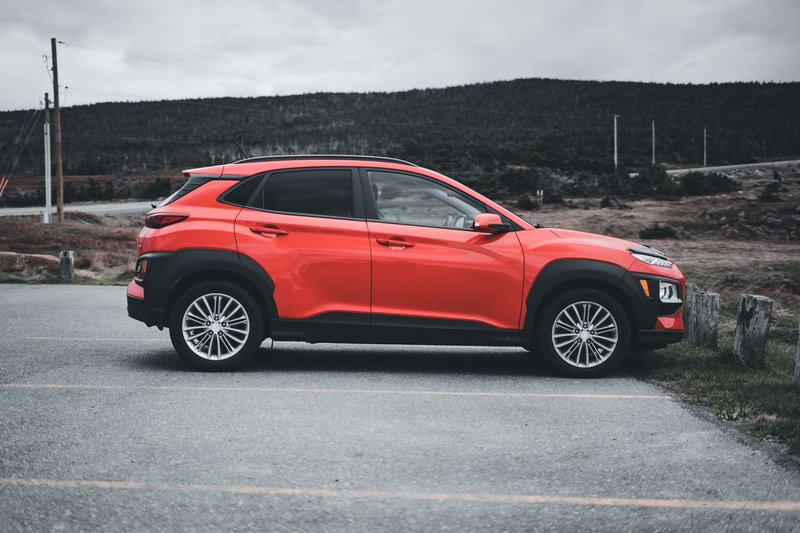
This is where most 2024 Ford shoppers actually end up, and it spans from compact runabouts to three-row family haulers.
The Escape starts at $29,495 and remains Ford’s entry point into the crossover world, with a hybrid powertrain available across most trims for buyers who want better mileage without stepping up to an EV. The Bronco Sport, starting at $31,230, is mechanically related but leans harder into off-road styling and available all-wheel-drive traction modes — it’s the Escape’s tougher-looking cousin, not a direct upgrade.
The Explorer, from $36,860, is Ford’s mainstream three-row SUV, with an ST performance trim for people who want a family hauler that doesn’t feel like a chore to drive. Above that sits the body-on-frame Bronco, starting at $39,130, which trades on-road manners for genuine off-road capability — removable doors and roof included — and competes directly with the Jeep Wrangler rather than with crossover SUVs.
At the top of the SUV range is the Expedition, which starts north of $54,000 and offers Ford’s biggest three-row footprint for families that have outgrown the Explorer or need serious towing alongside passenger space.
One casualty worth flagging: the Edge was discontinued in April 2024, with the last U.S.-bound unit built at Ford’s Oakville, Ontario plant. If you’re cross-shopping older “best Ford SUV” lists, cross the Edge off — it’s gone.
Trucks: Where Ford Makes Its Money
Trucks are the actual core of Ford’s business, and the 2024 range covers a wider spread than most buyers realize.
The Maverick, starting at $29,990, is the compact unibody pickup that undercuts nearly everything else in the lineup on price while still offering a standard hybrid powertrain — a genuine oddity in the truck world, where hybrids are usually an upcharge, not the default.
The midsize Ranger starts at $32,670 for the XL trim and climbs to $55,470 for the off-road-focused Raptor. In between sits the full-size F-150, which for 2024 dropped its old base engine in favor of a turbocharged 2.7-liter V6 as standard, bumping baseline horsepower and torque, and added the Pro Access Tailgate — a built-in door cut into the tailgate itself for easier bed access without dropping the whole thing. F-150 pricing spans roughly $37,000 for a base XL to over $112,000 for the supercharged Raptor R.
Beyond that is the Super Duty lineup — F-250 and up — for buyers whose towing needs exceed what a half-ton truck can handle. It’s not a category most “2024 Ford cars” searchers need, but it exists if a half-ton F-150 tops out short of your trailer weight.
Electric and Hybrid: The New “Cars”

If sedans used to be Ford’s volume play, electrification is the closest modern equivalent — a lower running-cost option that doesn’t require committing to a truck-sized footprint.
The Mustang Mach-E starts at $39,995 and, depending on battery and drivetrain configuration, delivers an EPA-rated range between roughly 230 and 320 miles — closer to a compact crossover in size than an actual Mustang, despite the badge. It’s the most affordable way into a Ford EV by a wide margin.
The F-150 Lightning is the pricier route. Ford cut Lightning pricing multiple times through 2024 as demand cooled, and by mid-year the entry Pro trim landed closer to $50,000 — still a real premium over a gas F-150, but with full truck capability and a frunk that doubles as extra cargo space or a backup power source during outages.
For buyers not ready for a full EV, Ford’s hybrid options are worth a look before the electric jump. The F-150’s PowerBoost hybrid V6 is rated at an EPA-estimated 25 mpg combined, notably better than any gas-only F-150 configuration, without the range anxiety or charging-network dependency of the Lightning.
Which 2024 Ford Actually Fits You
Skip the spec-sheet rabbit hole and match yourself to a category:
| If you want… | Look at | Starting price |
|---|---|---|
| A driver’s car, not a family hauler | Mustang EcoBoost or GT | $32,515 |
| Track days and bragging rights | Mustang Dark Horse | $59,270 |
| Cheapest way into a new Ford | Escape | $29,495 |
| A truck bed under $30K | Maverick Hybrid | $29,990 |
| Off-road capability with removable doors | Bronco | $39,130 |
| Three rows for the family | Explorer | $36,860 |
| Maximum towing and cargo | F-150 or Super Duty | ~$37,000 |
| An EV without truck size or price | Mustang Mach-E | $39,995 |
| Truck capability with electric running costs | F-150 Lightning | ~$50,000 |
The pattern underneath all of this: Ford bet its entire consumer lineup on the idea that most people want a truck, an SUV, or a Mustang — and given how the sedan math worked out, it’s hard to argue they read the room wrong. Whatever your “2024 Ford cars” search actually meant when you typed it, one of the nine models above is almost certainly the answer.

Tyler Bridges
More from Tyler BridgesHow we reviewed this article
This article was researched against manufacturer records and editorially reviewed before publishing. We accept no payment for coverage. Some guides contain affiliate links; see our affiliate disclosure.