Table of Contents
- TLDR: What Volkswagen Sold in 1950
- The Beetle Lineup: Four Trims, One Shape
- What Actually Changed for 1950
- The New Arrival: Type 2 Transporter
- 1950 Specs at a Glance
- 1950 by the Numbers
- What a 1950 VW Is Worth Now
TLDR: What Volkswagen Sold in 1950
Two model lines, five configurations. The Type 1 Beetle came as a Standard sedan ($1,280), DeLuxe sedan ($1,480), Sunroof sedan ($1,560), and Cabriolet ($1,997). Mid-year, Volkswagen added a second model entirely: the Type 2 Transporter, sold as a panel van (from 5,850 DM) or a Kombi minibus (from 6,950 DM). Every Beetle built that year still wore the split rear window that collectors chase today, and 1950 was the last year before hydraulic brakes and a few other quiet upgrades started spreading across the range.
The Beetle Lineup: Four Trims, One Shape
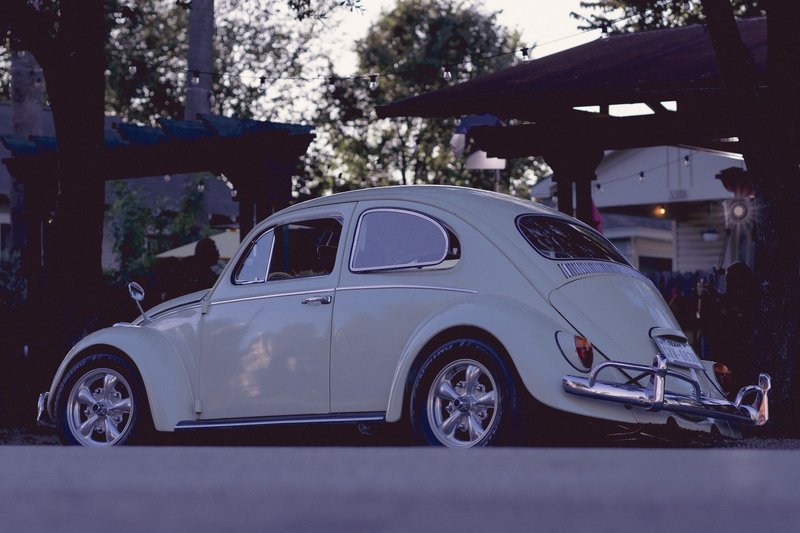
There was no “1950 Beetle” in the way there’d later be a distinct model year with a fresh grille or updated taillights. Volkswagen in 1950 was still building essentially the same car Ferdinand Porsche had drawn up more than a decade earlier, refined in small steps rather than redesigned. What buyers actually chose between was trim level.
The Standard sedan started at $1,280 and got you the car stripped to essentials — no chrome trim around the windows, painted bumpers on some export markets, and a bench seat that didn’t recline. The DeLuxe at $1,480 added the brightwork, a folding rear seat, and a dashboard clock. Step up to the Sunroof sedan at $1,560 and you got a fabric roll-back sunroof on top of the DeLuxe spec — a genuinely popular option in a car with no air conditioning and painted metal that baked in direct sun. At the top sat the Cabriolet at $1,997, built by Karmann in Osnabrück rather than at Wolfsburg, with a fully folding soft top and reinforced sills to compensate for the lost roof structure.
None of these were badge names yet — Volkswagen wouldn’t start calling it “Beetle” officially for years, and Americans knew it mostly by nickname. What every one of them shared was the split rear window: two small panes divided by a steel bar, run from 1948 through 1952 before Volkswagen switched to a single oval window in 1953. It’s the detail that separates a “split” from an “oval” in any enthusiast forum today, and 1950 sits right in the middle of that production window.
What Actually Changed for 1950
The changes that year were mechanical housekeeping, not styling. Volkswagen swapped in new Bosch headlamp units with a cleaner beam pattern, added ashtrays to the dashboard (a genuine omission before this, given how many Germans smoked in 1950), and — critically for export cars — added hydraulic brakes in place of the older cable-and-rod mechanical system. Domestic German-market cars held onto mechanical brakes a while longer; it was the cars built for export, especially to the US, that got hydraulics first, because American dealers and buyers expected them.
That export focus matters more than it looks. Volkswagen in 1950 was still rebuilding from a factory that British occupation forces had run since 1945, largely under Major Ivan Hirst, before management passed back to German hands in 1949 under new CEO Heinz Nordhoff. Every car exported for hard currency was doing double duty as a product and as evidence that West Germany’s shattered industrial base could produce something the rest of the world wanted to buy. The Beetle became one of the more visible pieces of that recovery.
The New Arrival: Type 2 Transporter
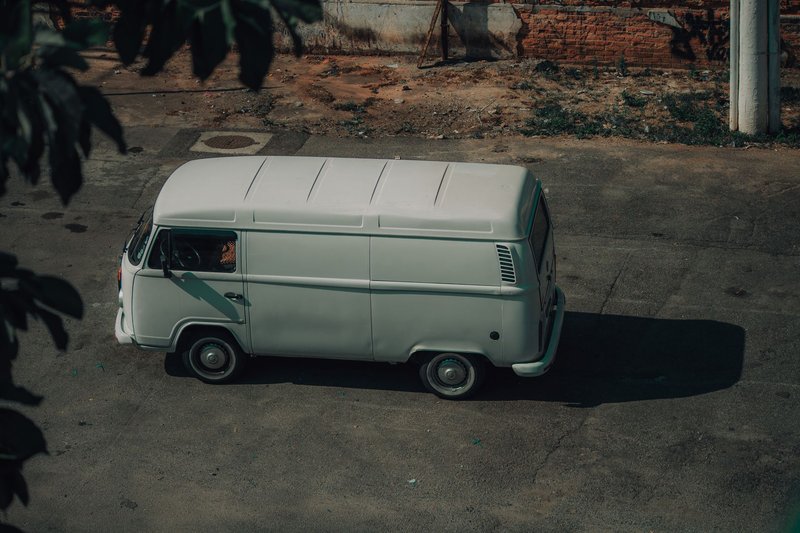
1950 wasn’t just a Beetle story. On March 8, Volkswagen started production of an entirely new vehicle: the Type 2, known ever since as the Transporter, the Bus, or the Kombi depending on who’s talking and which body style they mean.
The idea didn’t originate inside Volkswagen. Dutch VW importer Ben Pon sketched the concept in 1947 after watching factory workers rig makeshift flatbed carts out of Beetle chassis to move parts around Wolfsburg. Pon pitched a proper van built on the same mechanicals, Nordhoff approved it for production in May 1949, and the first one rolled off the line the following spring. Volkswagen offered it two ways at launch: a panel van starting at 5,850 Deutsche Marks for tradesmen who needed enclosed cargo space, and a Kombi minibus from 6,950 DM with windows and folding seats for people-hauling.
It used the Beetle’s rear-mounted, air-cooled flat-four and swing-axle rear suspension, but nothing about the body carried over — a flat-fronted cab-over layout that put the driver almost on top of the front axle, maximizing cargo length on a short wheelbase. Volkswagen built just under 10,000 Transporters in that first partial year, all of them out of the Wolfsburg plant, which kept building the Type 2 until a dedicated Transporter factory opened in Hanover in 1956.
1950 Specs at a Glance
| Model | Launch Price | Engine | Output | Notable Feature |
|---|---|---|---|---|
| Type 1 Standard Sedan | $1,280 | 1,131cc air-cooled flat-4 | 25 hp | No chrome trim, base spec |
| Type 1 DeLuxe Sedan | $1,480 | 1,131cc air-cooled flat-4 | 25 hp | Chrome trim, folding rear seat |
| Type 1 Sunroof Sedan | $1,560 | 1,131cc air-cooled flat-4 | 25 hp | Fabric roll-back sunroof |
| Type 1 Cabriolet | $1,997 | 1,131cc air-cooled flat-4 | 25 hp | Karmann-built full convertible |
| Type 2 Panel Van | 5,850 DM | 1,131cc air-cooled flat-4 | 25 hp | Enclosed cargo, cab-over layout |
| Type 2 Kombi Minibus | 6,950 DM | 1,131cc air-cooled flat-4 | 25 hp | Windows, folding passenger seats |
The Beetle’s 1,131cc engine made a modest 25 hp, ran through a 4-speed manual, and moved a car that weighed around 1,600 lbs and measured 160 inches long on a 94.5-inch wheelbase. Not quick by any measure — but reliable enough that the number of them still running seventy-plus years later says more than the horsepower figure does.
1950 by the Numbers
Volkswagen built 82,399 Beetles in 1950, a real jump from the previous year and proof the postwar rebuild was gaining speed. Almost none of them came to America — just 157 Beetles sold in the US that year, in a market still dominated by Detroit’s big three and unconvinced that a small, odd-shaped, rear-engined German car was worth a look. The landscape of popular cars in the 1950s tells the story of just how thoroughly American manufacturers controlled the decade. That number wouldn’t start moving meaningfully until the mid-1950s, once Volkswagen of America built out a proper dealer network and buyers got past the styling.
What a 1950 VW Is Worth Now
A 1950 split-window Beetle in solid condition today typically sells in the $60,000–$80,000 range, with exceptional, documented examples pushing past that. The split window itself is the single biggest value driver — cars from 1953 onward with the oval window are common enough to be affordable weekend drivers, while a genuine split-window car from 1948–1952 is a different category of collectible entirely, judged on window originality, matching-numbers engines, and how much of the original Bosch electrical system survives intact.
Transporters from the same era are rarer still and priced accordingly, since far fewer were built and commercial vans got worked hard and scrapped rather than preserved. If you’re chasing one, expect the search to take longer and the number at the end of it to be higher than what a Beetle from the same year commands.
Either way, what’s on offer in 1950 wasn’t a lineup Volkswagen was still experimenting with — it was a company that had figured out what its car was, and had just decided to build a second one.

Tyler Bridges
More from Tyler BridgesHow we reviewed this article
This article was researched against manufacturer records and editorially reviewed before publishing. We accept no payment for coverage. Some guides contain affiliate links; see our affiliate disclosure.