Germany has a lot of car brands, but the list people actually mean is short: Volkswagen, Audi, Porsche, Mercedes-Benz, BMW and Opel, plus a handful of performance names and tuners. The confusing part isn’t the names. It’s who owns what, and which badges are separate companies, which are sub-brands, and which are just trim levels with a fan club.
This guide covers the German car brands worth knowing, sorted by what they sell, with the ownership tangle untangled and a plain answer at the end on which one fits you.
Contents
- TLDR
- The German car brands at a glance
- Mainstream German car brands
- German luxury car brands
- German sports car brands
- Performance sub-brands: AMG, M, RS and Alpina
- Tuners
- Who owns whom
- Defunct German car brands
- Reliability, running costs and the EV shift
- Which German brand fits you
- FAQ
TLDR
- Cheap and sensible: Volkswagen and Opel.
- Premium daily drivers: Audi, BMW and Mercedes-Benz.
- Sports cars: Porsche, and the fast versions of the premium three (M, AMG, RS).
- Ownership: Volkswagen Group owns Audi and Porsche. BMW and Mercedes-Benz are independent of each other and of VW. Opel belongs to Stellantis.
- Reliability depends more on the model and engine than on the badge.
The German car brands at a glance
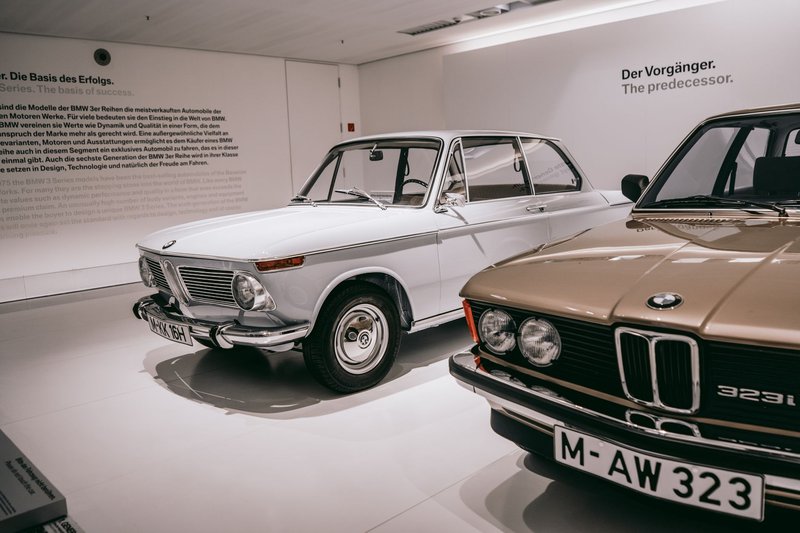
| Brand | Founded | HQ | Parent | Segment | Signature model |
|---|---|---|---|---|---|
| Volkswagen | 1937 | Wolfsburg | Volkswagen Group | Mainstream | Golf |
| Opel | 1862 (cars from 1899) | Rüsselsheim | Stellantis | Mainstream | Corsa |
| Audi | 1909 | Ingolstadt | Volkswagen Group | Premium | A4 / quattro |
| BMW | 1916 | Munich | BMW AG (independent) | Premium | 3 Series |
| Mercedes-Benz | 1926 (Benz 1883, Daimler 1890) | Stuttgart | Mercedes-Benz Group | Premium / luxury | S-Class |
| Porsche | 1931 | Stuttgart | Volkswagen Group (majority control) | Sports | 911 |
| smart | 1994 | Stuttgart / Beijing | Mercedes-Benz and Geely (joint venture) | City / EV | fortwo |
| Maybach | 1909; revived 2014 as sub-brand | Stuttgart | Mercedes-Benz Group | Ultra-luxury | Mercedes-Maybach S-Class |
The 1926 date for Mercedes-Benz is the merger of Benz & Cie, which built the first Benz Patent-Motorwagen in 1886, with Daimler-Motoren-Gesellschaft. Supercars.net and others often quote conflicting dates for the car’s invention; the Benz machine of 1886 is the one with a patent behind it.
Mainstream German car brands
Volkswagen
The name means “people’s car,” and that was the brief in 1937: a car ordinary Germans could afford. The Beetle delivered, with about 21.5 million built before production ended. Today the Golf, launched in 1974, is the one that defines the brand: a small hatchback that feels like it belongs to the class above.
VW suits you if you want solid build, a calm interior and no drama. The Golf GTI and the electric ID range cover the fun and the future.
Opel
Opel is the oldest name on this list. Adam Opel started with sewing machines in Rüsselsheim in 1862 and built his first cars in 1899. General Motors bought in during 1929, and in 2017 the brand moved to PSA, now part of Stellantis. Outside the UK, where the same cars wear Vauxhall badges, Opel is a staple of German roads: the Corsa and Astra are practical, fairly priced and unglamorous.
Opel suits you if you want a plain, affordable car and don’t need the German-prestige halo.
German luxury car brands
Mercedes-Benz
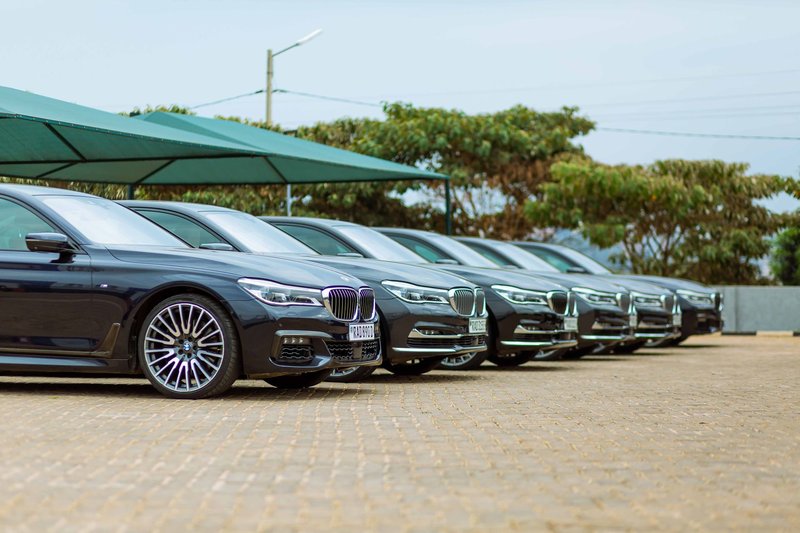
The three-pointed star has been on the bonnet since the Daimler days, and the brand has spent a century setting the template for the luxury saloon. The S-Class is where new safety and comfort technology tends to appear first. The G-Class, essentially unchanged in silhouette since 1979, is the odd one out: a boxy military-derived off-roader that became a status symbol.
Mercedes suits you if you want comfort first and sportiness second. Mercedes-Maybach sits above it as the top-end sub-brand, revived by Daimler in 2014 after the standalone Maybach cars of 2002 to 2013.
BMW
BMW began in 1916 as Bayerische Flugzeug-Werke, an aircraft engine maker, and made its first cars only in 1928 when it took over Dixi. The slogan and the reputation are about driving: rear-wheel-drive layouts, near-even weight balance and the 3 Series as the benchmark compact sports sedan.
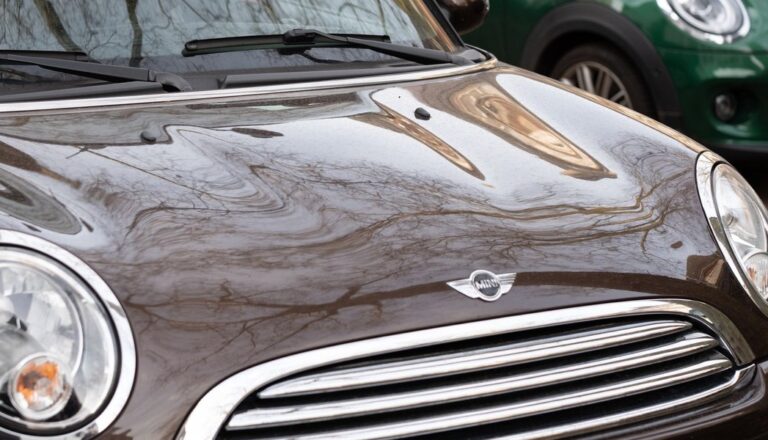
BMW suits you if you care about how the steering feels on a bad road. It also owns the Mini brand (British-built) and Rolls-Royce Motor Cars, both sold with German money behind them.
Audi
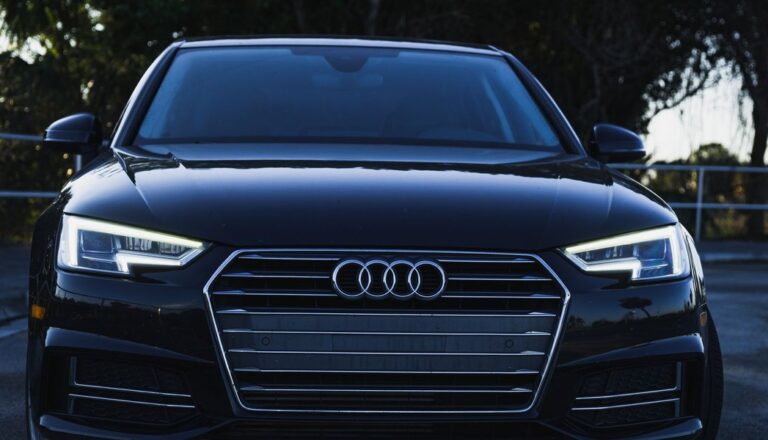
Audi was founded in Zwickau in 1909 by August Horch, who had left his earlier company after a dispute and was barred from using his own name. He translated Horch (“listen” in German) into the Latin audi. The four rings represent the 1932 merger of Audi, DKW, Horch and Wanderer into Auto Union. Modern Audi built its identity on quattro four-wheel drive, shown in 1980, and on tidy, minimalist interiors.
Audi suits you if you want the premium feel with less aggression than BMW and more tech-forward design than Mercedes. It also owns the sports-focused Audi Sport GmbH, which makes the RS models.
smart
smart started as a Swatch and Daimler-Benz collaboration in 1994, and the tiny fortwo reached showrooms in 1998. Since 2019 it’s been a joint venture between Mercedes-Benz and Geely, and the cars are now fully electric. It’s a city car and nothing else, which is the point.
German sports car brands
Porsche
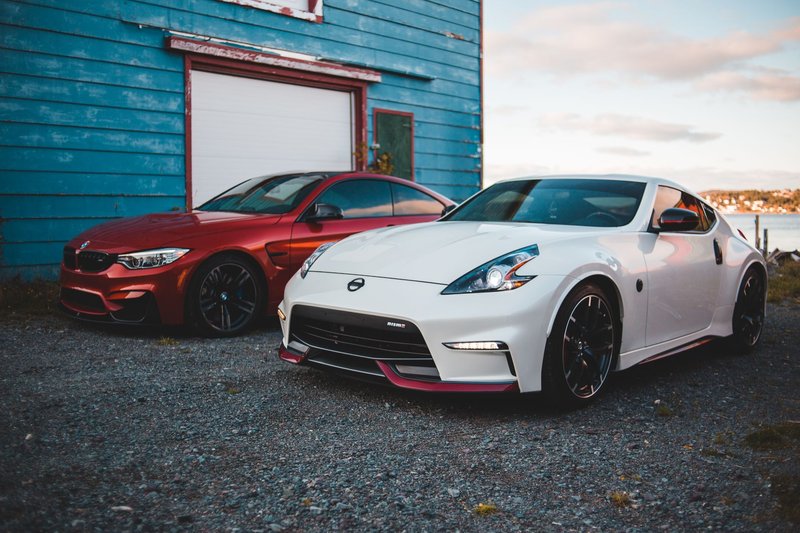
Ferdinand Porsche opened his design office in Stuttgart in 1931. The brand’s first own car, the 356, arrived in 1948, and the 911 followed in 1964. The rear-engined 911 has been refined every generation without ever being replaced, which is rare. Porsche also sells the Macan and Cayenne SUVs, which fund the sports cars, and the Taycan, its first fully electric model, since 2019.
Porsche suits you if you want a sports car you can drive every day.
Porsche AG was floated on the stock market in 2022, but Volkswagen Group still controls it.
Performance sub-brands: AMG, M, RS and Alpina
This is the part where brand and sub-brand get mixed up. These are not separate car makers. They’re factory-backed performance divisions that sell faster, more expensive versions of the parent’s cars.
- AMG (Mercedes-Benz): founded in 1967 by Hans Werner Aufrecht and Erhard Melcher, with the name from their initials and Aufrecht’s hometown, Großaspach. Daimler took a majority in 1999 and full ownership in 2005. Hand-built V8s are the signature.
- M (BMW): began as BMW Motorsport GmbH in 1972. The first road-going M3 arrived in 1986. Most buyers meet it as the M Sport package, which is mainly cosmetic; real M cars are a different thing.
- RS (Audi): built by Audi Sport GmbH in Neckarsulm. The RS models, such as the RS 6 Avant wagon, pair family practicality with supercar pace.
- Alpina: founded in 1965 by Burkard Bovensiepen in Buchloe. Alpina was long an independent manufacturer building high-end BMWs, and BMW Group took over the brand rights, with the transition effective from 2026.
Tuners
Tuners modify existing cars. Some, like Brabus (Bottrop, founded in 1977) work almost exclusively on Mercedes models and sell conversions with power figures that exceed factory ones. Others fall in between. RUF, founded in 1939 in Pfaffenhausen, is a particular case: it’s officially recognised as a manufacturer and builds its own cars from Porsche underpinnings.
If you want something that’s mostly like the standard version but angrier, buy the factory sub-brand. If you want something nobody else has, go to a tuner, and expect to pay for it.
Who owns whom
Ownership is where most lists go wrong. The short version:
Volkswagen Group is the largest. Within Germany it owns Volkswagen, Audi and Porsche. Outside Germany it also owns Skoda, SEAT and Cupra, Bentley, Lamborghini and Ducati, so a Bentley is a British brand with German parents and a Lamborghini is Italian. It also holds a minority stake in Bugatti-Rimac.
Mercedes-Benz Group owns Mercedes-Benz and Mercedes-AMG, plus Mercedes-Maybach, and shares smart with Geely.
BMW Group owns BMW, BMW M, Mini and Rolls-Royce Motor Cars, and now the Alpina brand.
Stellantis owns Opel. Opel is German by origin and manufacturing, not by ownership. Stellantis also owns Peugeot, Citroën and Fiat.
So when someone says “German cars,” they may mean cars made in Germany, brands founded in Germany, or brands that Germans own. These aren’t the same set. The same kind of ownership tangle runs through other markets too: Korean car brands: every maker, who owns whom untangles the Hyundai, Kia and Genesis web.
Defunct German car brands
Most lists skip these, and they’re half the story. For a wider look at why car brands disappear, read 18 old car brands that vanished, and why they died.
- Auto Union (1932 to 1969): the four-ring conglomerate that became modern Audi. DKW, Horch and Wanderer were its parts.
- NSU: absorbed into Audi in 1969. It’s known for the Wankel-engined Ro 80.
- Borgward (1919 to 1961): a major Bremen maker that went bankrupt, then was revived in 2008 under Chinese ownership.
- Trabant (Zwickau, 1957 to 1991): East Germany’s plastic-bodied two-stroke people’s car, built until the Wall fell.
- Wartburg (Eisenach, until 1991): the other East German mass-market brand.
- Maybach (1909 to 1940, then 2002 to 2013): returned as a sub-brand in 2014.
- Wiesmann (1988 to 2014): a boutique roadster maker with BMW engines.
Reliability, running costs and the EV shift
No German brand is reliable or unreliable in a blanket sense. The industry’s most useful yardstick is the TÜV Report, published by Germany’s technical inspection associations, which tracks the share of cars failing the mandatory inspection by make and age. Mainstream models from Mazda and Toyota usually top it, and German brands land in the middle or the upper half, with big spreads between models. A diesel Audi at 120,000 miles and an electric Volkswagen at two years old are different risk profiles.
Running costs are the bigger gap. Parts, servicing and tyres on Audi, BMW and Mercedes cost more than on VW or Opel, and out-of-warranty electronics repairs can be steep. Independent specialists lower the bill. Check that a service history exists before you buy.
On electrification, the German makers have moved from converting existing cars to building electric platforms. The Volkswagen ID.3 and ID.4, the Porsche Taycan, the Audi e-tron GT, the BMW i4 and iX, and the Mercedes EQ line all sit on that spectrum. Germany’s motor vehicle authority KBA publishes registration figures if you want to see how the market is shifting.
Which German brand fits you
- You want one car for a family and a tight budget: Volkswagen Golf or Opel Astra.
- You commute and enjoy driving: BMW 3 Series.
- You do a lot of motorway miles and want to arrive rested: Mercedes-Benz E-Class.
- You need all-weather grip and a quiet cabin: Audi A4 or A6 with quattro.
- You want a weekend toy that works on Monday too: Porsche 911 or Cayman.
- You want a family wagon that embarrasses sports cars: Audi RS 6 Avant or Mercedes-AMG E 63.
- You only drive in a city: smart, or an electric Volkswagen ID.3.
FAQ
What are the main German car brands? Volkswagen, Audi, Porsche, Mercedes-Benz, BMW and Opel. smart and Maybach are smaller sub-brands.
Which German car brands does Volkswagen Group own? In Germany: Volkswagen, Audi and Porsche. Globally it also owns Skoda, SEAT, Cupra, Bentley, Lamborghini and Ducati, among others.
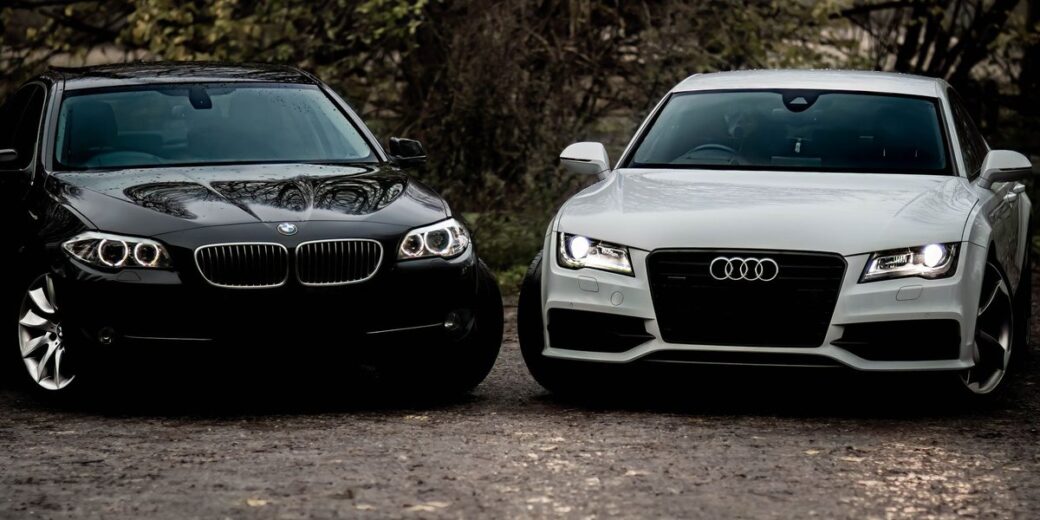
Are Mercedes and BMW owned by the same company? No. Mercedes-Benz Group and BMW Group are separate, competing companies.
Is Opel still a German brand? It’s headquartered in Rüsselsheim and builds cars in Germany, but it’s owned by Stellantis.
What are AMG, M and RS? They are the performance divisions of Mercedes-Benz, BMW and Audi respectively.
Which German brand is the most reliable? It varies by model and engine. Check the latest TÜV Report for the model and age you’re considering.

Marco Delantero
More from Marco DelanteroHow we reviewed this article
This article was researched against manufacturer records and editorially reviewed before publishing. We accept no payment for coverage. Some guides contain affiliate links; see our affiliate disclosure.