Harley-Davidson’s 1959 catalog fits into four families: the FL and FLH Duo-Glide big twins, the XL and XLCH Sportsters, the small two-stroke singles led by the Model 165, and the three-wheeled Servi-Car. Each one sold to a different buyer, and each one is a different project to own today.
Contents
- Why 1959 matters
- Quick comparison table
- FL and FLH Duo-Glide
- XL and XLCH Sportster
- Model 165 and the small singles
- Servi-Car and utility models
- What they’re worth today
- Identification and buying checklist
- Summary
Why 1959 matters
Two big changes landed within a year of each other, and 1959 is the first model year where you can see both on the showroom floor. The big twins had just gained a rear swingarm frame with hydraulic damping in 1958, ending decades of rigid and springer-era riding. The Sportster, introduced in 1957, was settling into its identity, and its hot-rod sibling, the XLCH, was a year old.
Spec sheets from different sources disagree on horsepower, weights and even what counts as a separate model, so treat any single number below as approximate. For the wider 1959 field, see the complete list of 1959 motorcycle models. Factory ratings of the period were generous, and dyno results on restored bikes vary widely.
Quick comparison table
| Model | Engine | Approx. power | Brakes | Rear suspension | Notable feature |
|---|---|---|---|---|---|
| FL Duo-Glide | 74 ci (1200 cc) OHV Panhead V-twin | mid-50s hp | Drum, hydraulic rear actuation | Swingarm, hydraulic shocks | Touring-oriented big twin |
| FLH Duo-Glide | 74 ci Panhead, higher compression | about 60 hp | Drum, hydraulic rear actuation | Swingarm, hydraulic shocks | The performance big twin |
| XL Sportster | 883 cc OHV V-twin | about 42 hp | Drum | Swingarm | Road-going Sportster, 4-speed |
| XLCH Sportster | 883 cc OHV V-twin, hotter cams and compression | about 50 hp | Drum | Swingarm | Stripped competition-style bike |
| Model 165 | 165 cc two-stroke single | low-teens hp or less | Drum | Basic frame | Entry-level lightweight |
| Servi-Car | 45 ci flathead V-twin | low-20s hp | Drum | Rigid rear axle | Three-wheel utility and police |
FL and FLH Duo-Glide
The Duo-Glide name came from its two hydraulic ends: a hydraulically damped telescopic fork up front, and, new for 1958, a hydraulically damped swingarm at the back. It also got a hydraulically actuated rear brake. Riders who’d spent years on hardtail Hydra-Glides finally had a bike that took a rough road without rattling their fillings loose.
The engine is the Panhead, named for the shape of its rocker covers. These are aluminum-head engines, used in big twins from 1948 to 1965. Some blog posts claim 1959 was the last year of cast-iron Panhead heads, and that doesn’t hold up: the Panhead’s heads were aluminum from the start. If a seller repeats that line, treat the rest of their listing with extra skepticism.
The FL and FLH split is the first thing to learn. The FL is the standard 74 ci bike. The FLH uses higher compression and a hotter state of tune, which is why it was the choice of riders who wanted speed and of police departments that wanted to catch them. Both share the frame, the 4-speed foot-shift, hand-clutch transmission and the big, valanced fenders.
Compared with 1958, the changes are modest. You’re looking at paint, trim and running refinements rather than a redesign, which is why dating a Duo-Glide to a specific year takes serial numbers and not guesswork.
How to recognize one: swingarm frame with twin rear shocks, a Panhead top end, a fat dual seat or a solo saddle with a rear pillion option, and a large headlight nacelle. Two-tone paint was common and desirable.
XL and XLCH Sportster
The Sportster was Harley’s answer to British parallel twins, and 1959 was its first full model year as a settled design. Both versions use the 883 cc (55 ci) overhead-valve V-twin, with the engine and gearbox as a unit-style package and a 4-speed transmission.
The XL is the street Sportster. It makes about 42 hp, carries a battery and lighting, and looks the part of a stripped-down tourer. The XLCH is a different animal. The “CH” stands for competition hot, and it was sold in rawer trim, with a magneto-style setup originally paired with a kick-start-only, lighter build. Power sits around 50 hp, which in 1959 put it on the same side of the street as a Triumph Bonneville.
Both use drum brakes, front and rear, which is the single biggest reason to ride one cautiously today. Weight is lower than the Duo-Glide’s by a wide margin, so the Sportster feels like a different category of machine.
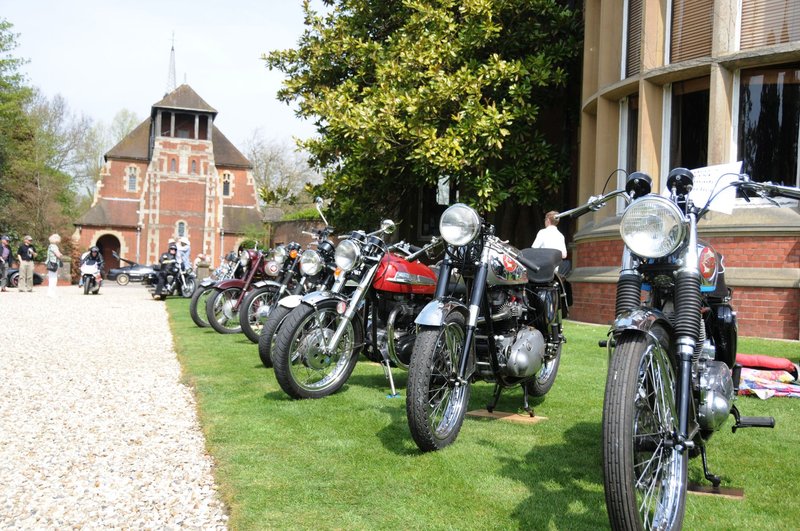
To tell them apart, check for a battery box and lighting on the XL and for the XLCH’s minimalist fenders, small fuel tank and exposed look. Always cross-check with the serial number prefix, because many XLs have been converted into “CH” lookalikes over the decades, and a real XLCH carries a premium.
Model 165 and the small singles
Not everything Harley sold in 1959 was a big V-twin. The company’s small bikes were two-stroke singles in the 125 to 165 cc range, and the Model 165 sits at the top of that family, a lightweight machine aimed at new riders and anyone who thought a Duo-Glide was too much bike.
These are the odd ones in a Harley collection. They’re simple, light and cheap to maintain, but they lack the big-twin heft collectors pay for. That also means they’re the easiest 1959 Harley to afford, and the one where a complete, running example is realistic on a small budget.
Check carefully for correct paint and for missing parts, because small-bike parts are far harder to source than Panhead components. The 165’s low profile in the market also means fewer reproduction parts, so completeness matters more than cosmetic perfection.
Servi-Car and utility models
The Servi-Car is the 1959 lineup’s oddball and its longest runner. It used a 45 ci (750 cc) flathead V-twin, an engine that was already old news in passenger bikes, and it ran on a rear axle with a differential and a cargo box. Harley built the model for decades, and it stayed in production into the early 1970s.
It was a working machine. Police departments used them for parking enforcement, and businesses used them for delivery. That history makes the Servi-Car the one 1959 Harley that survives mainly in service-fleet condition: tired, repainted and modified.
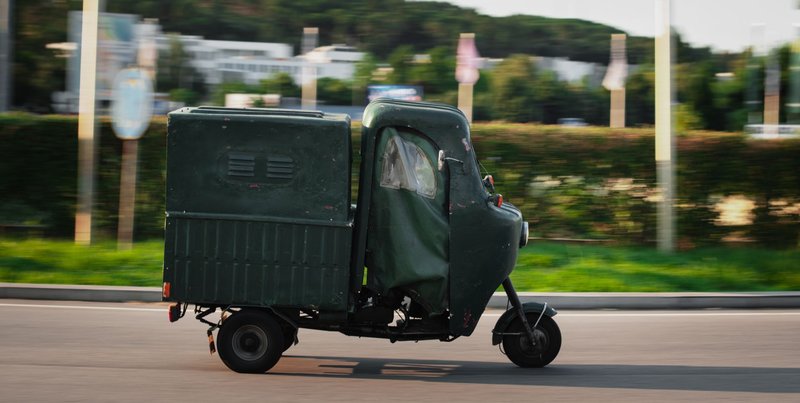
If you’re after a distinctive classic that nobody else at the show will have, this is it. Parts for the flathead drivetrain are reasonably available, thanks to the long production run.
What they’re worth today
Values depend on condition, originality and documentation, and published price guides disagree. Treat these as relative rankings rather than dollar figures:
- XLCH: Typically the most valuable of the 1959 bikes, especially when original and unmolested. Fakes and clones muddy the market.
- FLH Duo-Glide: Strong collector interest. Complete, correct examples bring the biggest money among the big twins.
- FL Duo-Glide: A step below the FLH, though restored touring examples sell well.
- XL Sportster: Affordable entry into the early Sportster story, with values well under the XLCH.
- Servi-Car: Niche demand, so prices swing on condition and whether it’s a proper police or service version.
- Model 165: Usually the cheapest, with strong value for what you get.
For real numbers, compare recent auction results and several valuation guides, and weigh a bike’s documentation as heavily as its paint.
Identification and buying checklist
- Match the numbers. Frame and engine serial numbers should agree with each other and with the model claimed. Mismatches aren’t a dealbreaker, but they change the price.
- Confirm the engine. A Duo-Glide should have an aluminum-head Panhead. A Sportster should have the 883 cc motor.
- Inspect the swingarm. On any Duo-Glide or Sportster, check pivot bushings and shocks for wear and leaks.
- Check the brakes. Drum brakes work, but they fade. Check linings, cables and the hydraulic rear system on Duo-Glides.
- Question the XLCH. Verify any “CH” claim with the serial number and with original parts, not a seller’s word.
- Ask for history. Original titles, restoration photos and receipts matter more on a 65-year-old bike than on almost any other classic.
- Budget for parts. Panhead and Sportster parts exist. Small-single and Servi-Car parts take more hunting.
Summary
The 1959 Harley-Davidson models split into four clear groups. The Duo-Glide FL and FLH are the Panhead big twins with the new swingarm frame. The XL and XLCH are the 883 cc Sportsters, with the XLCH as the performance pick. The Model 165 covers the lightweight end, and the Servi-Car handles the utility work on three wheels.
If you want the most collectible, the XLCH leads. If you want the classic Harley experience, a Duo-Glide delivers. And if you want something cheap and different, the 165 or Servi-Car will get you into the hobby for less.

Sarah Thornton
More from Sarah ThorntonHow we reviewed this article
This article was researched against manufacturer records and editorially reviewed before publishing. We accept no payment for coverage. Some guides contain affiliate links; see our affiliate disclosure.