TLDR
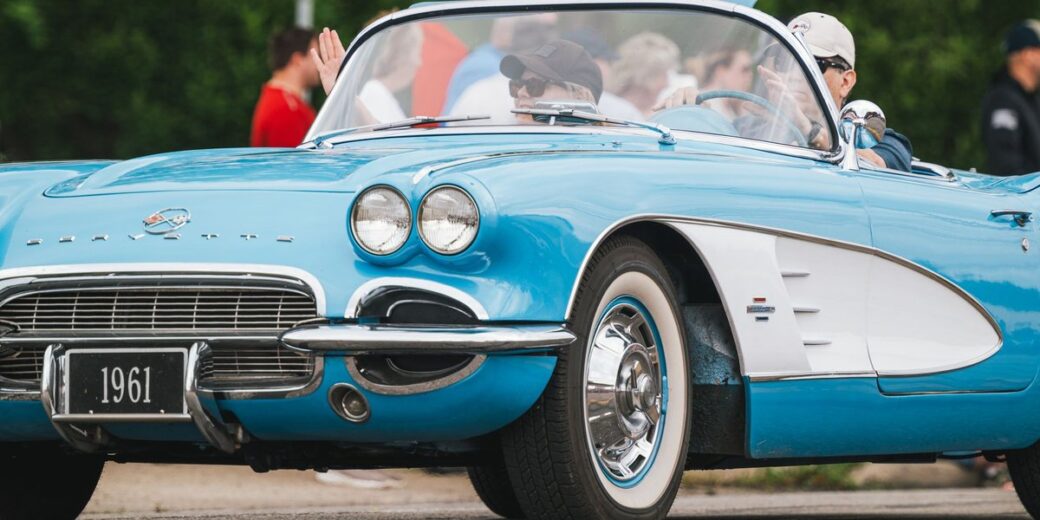
- Chevrolet built one 1961 Corvette body style: a two-seat convertible, with an optional removable hardtop.
- The “models” are engine and option combinations. Five 283 cubic-inch V8s were offered, from 230 hp to the 315 hp fuel-injected version.
- Base price was $3,934. Production was 10,939 cars, 1,580 of them fuel-injected. Some sources say 10,931, so treat the last digit with suspicion.
- New for 1961: a ducktail rear deck, four round taillights, a mesh grille and an aluminum crossflow radiator.
Table of contents
- One body, five engines
- The 1961 Corvette engine options
- What changed from 1960
- Transmissions
- Colors
- 1960 vs 1961 vs 1962
- Production numbers and why sources disagree
- Buying a 1961 Corvette
One body, five engines
Ask which 1961 Corvette models existed and the honest answer is one. Every car was a C1 two-seat convertible with a soft top, and buyers could add a removable hardtop. There was no coupe, no fastback, no trim-level ladder like Chevrolet used on the Bel Air.
What separated one 1961 Corvette from another was what sat under the hood and what the original buyer ticked on the order form. That’s the real answer to “1961 Corvette car models”: a spreadsheet of RPO codes, not a lineup of body styles.
The 1961 Corvette engine options
All five engines were variations of the 283 cubic-inch small-block V8. The spread between the base car and the top one was 85 horsepower.
| Horsepower | RPO | Induction |
|---|---|---|
| 230 hp | Base | Single four-barrel carburetor |
| 245 hp | 469 | Higher-output carbureted setup |
| 270 hp | 468 | Dual four-barrel carburetors |
| 275 hp | 353 | Rochester mechanical fuel injection |
| 315 hp | 354 | Fuel injection, high-lift solid-lifter cam |
The 315 hp car is the one people mean when they say “fuel-injected Corvette.” Chevrolet advertised it at roughly one horsepower per cubic inch, a number that sold magazines in 1961. Only 1,580 Corvettes left the factory with either injected engine, which is about 14 percent of the year’s output. The rest were carbureted, and most of those had the 230 or 245 hp engines.
If you’re comparing cars, the RPO code matters more than the horsepower figure. A restored car with a swapped engine still looks identical from the driver’s seat.
What changed from 1960
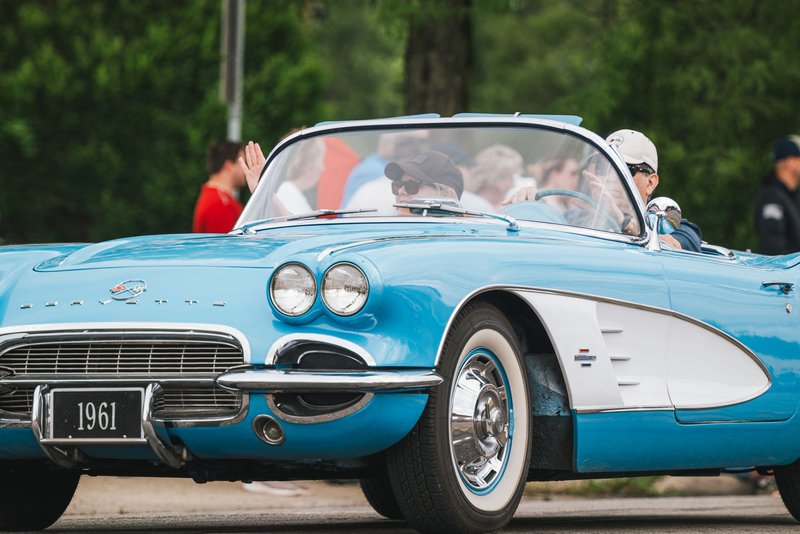
The 1961 car is the bridge between the old and new Corvette looks. For what else Detroit was selling in the year before, see 1960 car models. Up front, the toothy chrome grille gave way to a fine mesh. At the back, the big change was the tail. Designers cut the rear end off into a squared-off “ducktail” deck and swapped the old arrangement for four round taillights, a layout that carried on for decades.
Underneath, 1961 got an aluminum crossflow radiator, an improvement for cooling on the hotter engines. The car also kept its fiberglass body and 102-inch wheelbase, so it still drives and sizes up like a 1950s sports car with updated styling.
Transmissions
Three gearboxes were offered:
- Three-speed manual, standard.
- Four-speed manual, the choice for anyone who bought a high-output engine and actually drove it.
- Two-speed Powerglide automatic, available with the milder engines.
The four-speed is the desirable one today, and it’s the combination most often paired with the 270 hp and fuel-injected engines.
Colors
Seven exterior colors were offered:
- Ermine White
- Tuxedo Black
- Roman Red
- Fawn Beige
- Sateen Silver
- Honduras Maroon
- Jewel Blue Metallic
Jewel Blue Metallic is the one to know. It was a one-year color, so it exists only on 1961 cars, and that scarcity makes it a favorite among collectors. Unit counts per color circulate in several enthusiast guides, but they don’t always agree, so check any figure against a registry or the car’s documentation before you pay for rarity.
1960 vs 1961 vs 1962
| 1960 | 1961 | 1962 | |
|---|---|---|---|
| Engine | 283 V8 | 283 V8 | New 327 V8 |
| Rear end | Original styling | Ducktail, round taillights | Ducktail, round taillights |
| Grille | Toothy chrome | Mesh | Blacked-out mesh |
| Base price | $3,872 | $3,934 | $4,038 |
| Production | About 10,261 | 10,939 | About 14,531 |
The 1962 car is the last year of the C1 solid-axle look with the ducktail, but it brought the larger 327 engine, which is the main reason many buyers jump straight to it. For the rest of that year’s lineup, see 1962 car models. The 1961 sits in the middle: the final year of the 283 and the first of the new tail.
Production numbers and why sources disagree
You’ll see 10,939 in most places and 10,931 in some. The difference comes down to how sources count late-year builds and records, and nobody has settled it conclusively. 10,939 is the figure used by most reference guides, so that’s the one to cite.
Also watch for a myth: some pages claim 1961 had a split rear window. It didn’t. The split rear window arrived on the 1963 Sting Ray.
Buying a 1961 Corvette
Values vary widely. The Hagerty valuation tool shows how condition drives the price of a 1961 car, and the gap between a driver and a show-quality example is large. Fuel-injected cars with the right paperwork bring a premium over the carbureted ones.
Things worth checking before you buy:
- Matching numbers. The engine and block stamps should match the car’s records, especially on injected cars, where the swap temptation is strong.
- The frame. Steel frames rust, and the fiberglass body hides it.
- Fuel injection unit condition. Rebuilding a mechanical injection system is a specialist job. Find out whether it was done, and by whom.
- Color and trim. A Jewel Blue car should have the evidence to prove it started that way.
For background on where the Corvette fit into Detroit’s design history, MotorCities is a useful read. For a car this old, documentation is worth almost as much as the metal.

Marco Delantero
More from Marco DelanteroHow we reviewed this article
This article was researched against manufacturer records and editorially reviewed before publishing. We accept no payment for coverage. Some guides contain affiliate links; see our affiliate disclosure.