1986 was the year the sport bike stopped being a single-cylinder-count argument and became a full arms race. Liquid cooling was spreading, full fairings were normal, and the Japanese factories were trading horsepower and weight figures like a stock market. Meanwhile Harley-Davidson was rebuilding itself around a new engine, and the Europeans were fighting to stay relevant.
This guide covers the 1986 motorcycle models worth knowing, grouped by brand, with a table for each maker and notes on what it’s like to own one today.
Table of Contents
- What made 1986 different
- Honda
- Kawasaki
- Suzuki
- Yamaha
- Harley-Davidson
- BMW
- Italian and British bikes
- The best 1986 motorcycles by category
- Buying a 1986 bike today
What made 1986 different
Three things shaped the lineup.
The sport bike was now a category. Kawasaki’s GPz900R arrived in 1984 with a liquid-cooled 16-valve four. Suzuki answered in 1985 with the GSX-R750, a bike built around weight savings rather than outright displacement. By 1986 every Japanese brand had a fairing-equipped four-cylinder aimed at the track-day crowd, even if the term “track day” barely existed.
Cooling and valves multiplied. Air-cooled engines were giving way to liquid cooling, and Yamaha pushed five valves per cylinder on the FZ750. More valves meant higher revs and more power from the same displacement.
Cruisers got a modern engine. Harley-Davidson’s Evolution engine, introduced on the Big Twins in 1984, reached the Sportster in 1986. Oil leaks became an occasional problem rather than a personality trait.
Honda
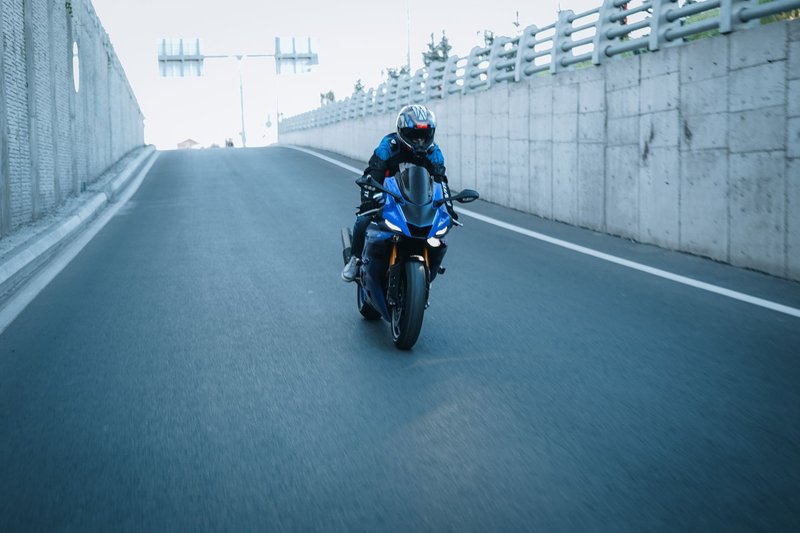
Honda’s 1986 range ran from scooters to touring bikes, but the interesting end was the V4 program. Honda bet on the V4 layout for its performance bikes while rivals stuck with inline fours.
| Model | Engine | Category | Notable trait |
|---|---|---|---|
| VF1000R | 998cc liquid-cooled V4 | Sport | Gear-driven cams, full fairing, a flagship built to win races |
| VFR750F | 748cc liquid-cooled V4 | Sport-touring | Debuted in 1986 and set the template for the Interceptor line |
| CBX750F | 747cc inline-four | Sport | Sixteen-valve four, sold mainly outside the US |
| Shadow 700 | V-twin | Cruiser | Honda’s answer to the Harley crowd |
| Rebel 250 | Single-cylinder-class small twin | Entry cruiser | Cheap, easy to ride, still everywhere on the used market |
The VF1000R is the one that makes collectors sweat. It was expensive, heavy for its class, and complicated, which is exactly why clean examples are scarce. The VFR750F is the quiet success: it was less dramatic on paper but more usable, and its V4 engine design stayed in production in various forms for decades. If you want a 1986 Honda you can actually ride on weekends, this is the one.
Check the V4 bikes for cam gear wear and old coolant neglect. Parts are findable but not cheap.
Kawasaki
Kawasaki spent the mid-80s doing what it does best: building bikes that are faster than they have any right to be.
| Model | Engine | Category | Notable trait |
|---|---|---|---|
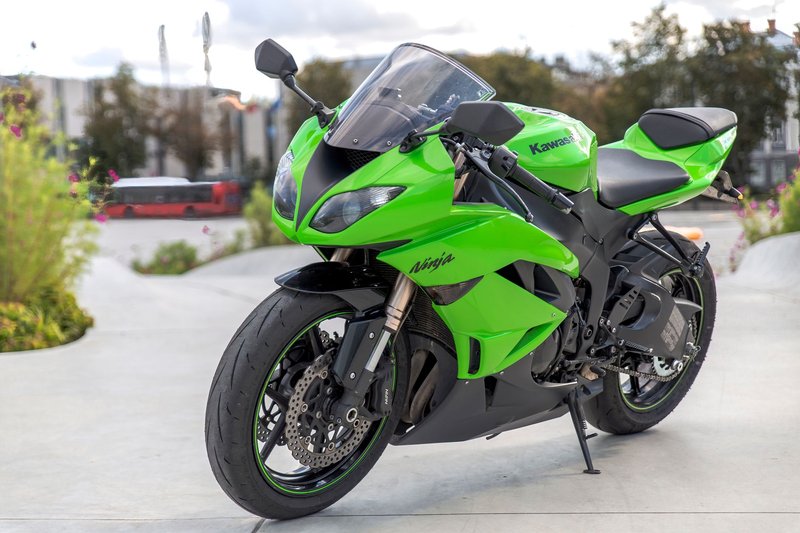
| GPz900R Ninja | 908cc liquid-cooled four | Sport | The 1984 design that reset the class, still being sold in 1986 |
| GPz1000RX | 997cc liquid-cooled four | Sport | Larger, more road-focused cousin of the Ninja |
| Ninja 600R (GPz600R) | 592cc liquid-cooled four | Sport | Mid-size Ninja with a sensible price tag |
| Ninja 250R (EX250) | 249cc twin | Entry sport | The first small Ninja, a beginner favorite for years |
| Concours (GTR1000) | 997cc four | Sport-touring | Introduced in 1986, shaft drive and a long production run |
The GPz900R is the one history remembers, and for good reason: it was the fastest production bike of its time and later became famous on screen. The Concours deserves more attention. It borrowed its engine from the earlier GPz1000 line, added shaft drive and a comfortable riding position, and stayed on sale for roughly two decades.
Suzuki
Suzuki’s 1986 line is dominated by one idea: lightness.
| Model | Engine | Category | Notable trait |
|---|---|---|---|
| GSX-R750 | 749cc oil-cooled four | Sport | Race-replica design that put weight first |
| GSX-R1100 | 1052cc oil-cooled four | Sport | Big-bore version arriving in 1986 |
| Katana 1100 | 1074cc four | Sport | Styled by the Target Design studio, polarizing then and now |
| LS650 Savage | 652cc single | Cruiser | Simple, light, long-lived |
The GSX-R750 debuted in 1985, so 1986 was its second year. It used oil cooling to keep weight down: oil is circulated to the cylinder head to carry heat away, with air handling the rest. The bike pushed the aluminum frame and race-style fairing into the mainstream. The GSX-R1100 followed in 1986 as the brute-force option.
If you’re comparing the two today, the 750 is the better handler and the 1100 is the better story.
Yamaha
Yamaha’s 1986 lineup splits between track-minded bikes and one gloriously impractical muscle machine.
| Model | Engine | Category | Notable trait |
|---|---|---|---|
| FZ750 | 749cc liquid-cooled four | Sport | Five valves per cylinder, forward-tilted cylinders |
| V-Max | 1198cc liquid-cooled V4 | Muscle cruiser | Drag-strip acceleration, a styling icon |
| FJ1200 | 1188cc four | Sport-touring | Large, fast, comfortable over distance |
| Radian | 600cc four | Standard | An unfussy streetbike with a cult following |
| XT600 | 595cc single | Dual-sport | Simple, tough and still affordable |
The V-Max was the headline act. Yamaha built it around a V4 with a feature called V-Boost, which opened the intake tracts at higher revs for a late surge of power. It handled like a drag racer, because it basically was one, and nearly forty years later it still looks like nothing else on the road.
The FZ750 is the quieter but more technically important bike: it brought five-valve cylinder heads to a production sport bike and sold the idea to the market.
Harley-Davidson
Harley’s 1986 story isn’t about speed. It’s about survival and rebuilding, and the company was in the middle of a quality turnaround.
| Model | Engine | Category | Notable trait |
|---|---|---|---|
| XLH Sportster 883 | 883cc Evolution V-twin | Cruiser | New Evolution engine, a low entry price |
| XLH Sportster 1100 | 1100cc Evolution V-twin | Cruiser | Bigger Sportster for riders who wanted more torque |
| FXST Softail | 1340cc Evolution V-twin | Cruiser | Hidden rear suspension that made a hardtail look |
| FLSTC Heritage Softail | 1340cc Evolution V-twin | Cruiser | New for 1986, retro styling with leather bags |
The Sportster matters because it was Harley’s accessible bike, the one younger riders could actually afford, and the Evolution upgrade made it more reliable. The Heritage Softail arrived in 1986 and leaned hard into nostalgia, a design strategy that Harley has barely changed since. The Softail frame hid its rear shocks under the transmission, so the bike looked like a rigid-frame classic of the 1940s while riding better.
Harley doesn’t show up on most “1986 motorcycle models” index pages, which is a gap. The company was clearly building bikes that year, and buyers still seek them out.
BMW
BMW pushed in two directions in 1986: the traditional flat-twin boxer and the newer K-series inline engines.
| Model | Engine | Category | Notable trait |
|---|---|---|---|
| K75 | 740cc liquid-cooled three | Standard / sport-touring | Smooth, compact triple with shaft drive |
| K100 | 987cc liquid-cooled four | Touring | The flat-lying “flying brick” layout |
| R80 / R100 series | Air-cooled boxer twin | Standard / touring | Traditional BMW feel, long-lived |
The K75 is the interesting one. It used a three-cylinder version of the K-series engine, which sat on its side with the crankshaft along the frame. The result was a narrow, smooth, low-vibration bike that suited commuting and long trips. It isn’t the fastest 1986 bike. It might be the most civilized.
Italian and British bikes
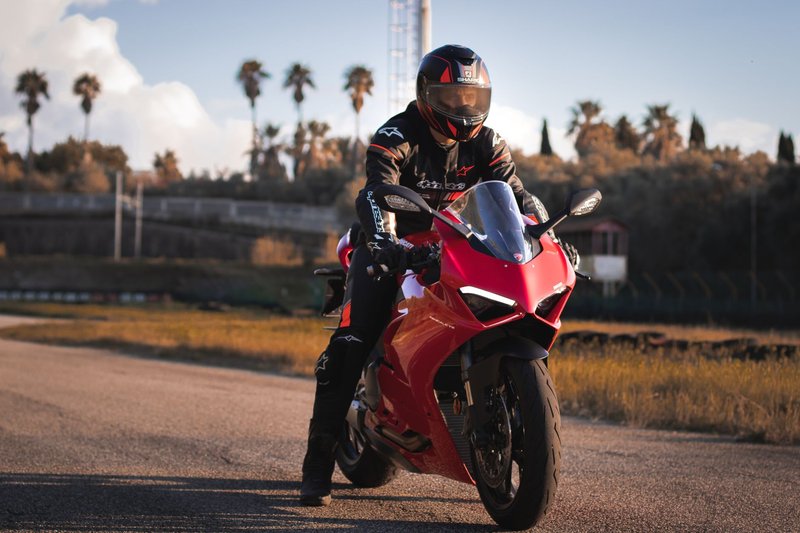
Smaller manufacturers had a tougher year. Benelli, Laverda, Moto Guzzi, Ducati and Triumph all appear in the data, but they were operating in a very different financial world.
- Ducati: Cagiva took over in 1985, and the Paso 750 appeared in this period as a fully-faired Ducati with a very different look. The bevel-drive twins had given way to belt-driven cams.
- Moto Guzzi: The transverse V-twins continued, with the Le Mans line remaining the performance flagship.
- Laverda: The company was nearing the end of its original run, producing large-capacity triples such as the RGS 1000.
- Triumph: The classic Meriden company had collapsed, but the Bonneville T140 continued in small numbers under licensed production in Devon.
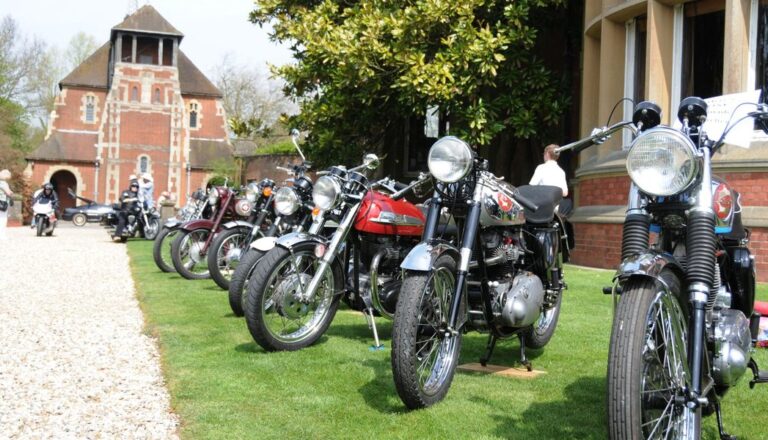
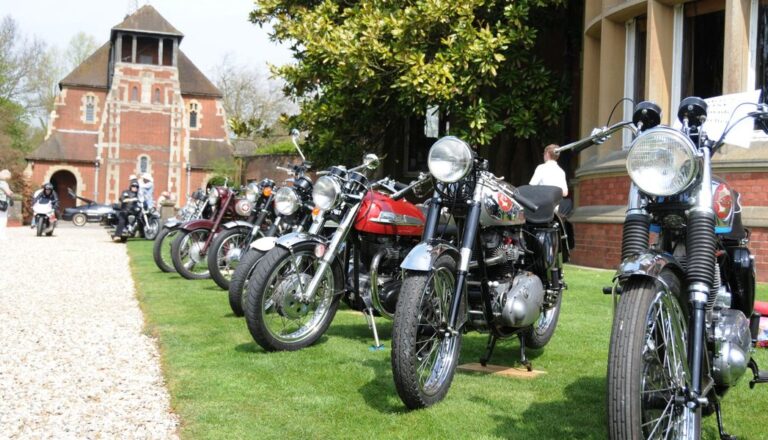
These bikes are lower-volume, harder to find and often more expensive to maintain than their Japanese rivals. They are also the bikes most likely to draw a crowd at a meet.
The best 1986 motorcycles by category
Here are the picks for specific uses.
- Best sport bike: Suzuki GSX-R750, for weight and race-bred handling.
- Best sport-touring bike: Honda VFR750F, for usability, and Kawasaki Concours as the longer-distance alternative.
- Best muscle bike: Yamaha V-Max, for sheer acceleration and presence.
- Best cruiser: Harley-Davidson Heritage Softail, for style, or Honda Shadow 700 for a cheaper alternative.
- Best collector’s bike: Honda VF1000R, for rarity and engineering.
- Best beginner bike: Kawasaki Ninja 250R or Honda Rebel 250.
- Best dual-sport: Yamaha XT600.
- Most underrated: BMW K75.
Buying a 1986 bike today
A bike from this year is now close to forty years old, and the age matters more than the badge.
Check the VIN first. Bikes built from the 1981 model year onward carry a standardized 17-character VIN, and the NHTSA VIN decoder can confirm basic details like make, model year and plant. A mismatched VIN is a reason to walk away.
Rubber ages faster than metal. Fuel lines, intake boots, brake hoses and seals are the usual victims. Budget for replacing all of them, even on a bike with low mileage. A garage queen that hasn’t run in a decade often needs more work than a regularly ridden bike.
Carburetors need attention. Almost every bike on this list is carbureted, and stale fuel gums up jets. Cleaning and rebuilding is routine, but it’s the first thing to price.
Electrical parts are the weak spot. Regulator/rectifiers fail on many Japanese bikes of the era, and a modern replacement is a common upgrade.
Values vary widely. Rough ranges only: common bikes such as the Rebel 250 and XT600 sell for modest amounts, popular sport bikes like the GSX-R750 and Ninja models run into the middle four figures and above for clean examples, and the VF1000R and well-kept V-Maxes command noticeably more. Condition, originality and documentation move prices more than the model year does.
Original paint, intact fairings and complete tool kits are the hardest things to find and the most expensive to replace. Pay for those, not for a fresh coat of black.
Whichever brand you favor, the 1986 motorcycle models offer something modern bikes can’t: mechanical honesty, distinct personalities and a riding experience with very little between you and the machine.

Sarah Thornton
More from Sarah ThorntonHow we reviewed this article
This article was researched against manufacturer records and editorially reviewed before publishing. We accept no payment for coverage. Some guides contain affiliate links; see our affiliate disclosure.