Most retrospectives on cars made in 1985 pick a lane: either eight halo cars and a soft-focus nostalgia trip, or a spreadsheet of sales figures with zero personality. Neither tells you the whole story of a year when Detroit finally hit a fuel-economy target it had been chasing for a decade, Japan was selling everything it could legally ship, and Italy built the most ridiculous cars of the decade almost out of spite.
TL;DR
- Best-selling car in America: Chevrolet Cavalier, 422,927 units — narrowly ahead of the Ford Escort’s 410,978.
- Actual best-selling vehicle overall: the Ford F-Series pickup, at 581,767 units. Cars weren’t even close.
- Halo car of the year: Ferrari Testarossa, $94,000 new, still the poster on every kid’s bedroom wall.
- Sleeper of the year: Buick Regal Grand National — 200 turbocharged horsepower hiding under GM’s most anonymous body style.
- Biggest flop: Cadillac Cimarron, a Chevy Cavalier in a tuxedo that nobody was fooled by.
- What to budget today: low five figures for a clean commuter survivor, six figures for a Testarossa or Countach, and a genuinely wide range for a Grand National depending on how honest the seller is about the paint.
Table of Contents
- Why 1985 Was the Turning Point for the Auto Industry
- The Halo Cars: 1985’s Performance Peak
- The Bestsellers: What America Actually Drove
- The Flops Nobody Misses
- What a 1985 Car Costs You Today
Why 1985 Was the Turning Point for the Auto Industry
1985 is the year the malaise era finally let go. The federal Corporate Average Fuel Economy standard for passenger cars had been climbing since the 1975 oil-shock legislation, and it hit its original target of 27.5 mpg in 1985 — a number Congress found so inconvenient that it rolled the standard back to 26 mpg for the following three years. Automakers had spent a decade downsizing engines and bolting on emissions equipment that strangled horsepower. By 1985, fuel injection, turbocharging, and better engine management meant you could finally have both a car that met the mileage rules and one that didn’t feel like it was dying at every stoplight.
Meanwhile, Japanese brands were selling every car they were legally allowed to. A voluntary export restraint negotiated with Washington capped Japanese shipments to the US, and by the mid-1980s that ceiling sat at roughly 2.3 million vehicles a year — a number Toyota, Honda, and Nissan hit reliably, which is why dealers were adding markups instead of discounts on anything small and reliable. Toyota’s response was to stop competing on price and start competing on cleverness, which is how a mid-engine two-seater ended up wearing a Corolla badge budget.
Europe, for its part, was building the last generation of analog performance cars before electronics took over steering and suspension entirely. Turbochargers were everywhere, from Saab’s 9000 sedan to Buick’s Regal, and the Frankfurt and Geneva motor shows that year both previewed cars that would define track-day nostalgia for decades. None of it was subtle. That’s what makes 1985 worth revisiting: it’s the last year performance meant displacement and boost pressure, not code.
The Halo Cars: 1985’s Performance Peak
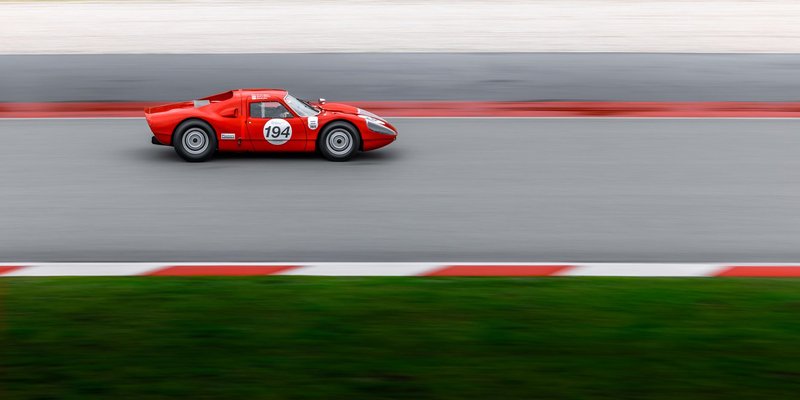
The Ferrari Testarossa arrived at US dealers for the 1985 model year priced from $94,000, and it looked like nothing else on the road — those side strakes existed to feed air to radiators mounted in the rear fenders, a packaging solution that also happened to make the car nine feet wide at the hips. It was, and remains, the car most people picture when someone says “80s Ferrari.”
Lamborghini’s answer was the Countach 5000 Quattrovalvole, introduced at the Geneva show that spring with a four-valve-per-cylinder head bumping displacement to 5.2 liters. European cars ran downdraft carburetors and made a claimed 455 horsepower; US-spec cars got Bosch K-Jetronic fuel injection to meet emissions rules and made do with 420. Lamborghini built only 631 of them. If you’ve ever wondered why the Countach poster outlived the actual car in cultural memory, it’s because most people who wanted one could never have gotten near the 631 that existed.
BMW, meanwhile, was setting up the car that would eventually eclipse both of them in enthusiast circles. The E30 M3 debuted at the 1985 Frankfurt Motor Show as a homologation special for Group A touring car racing — wider fenders, a reshaped C-pillar that dropped the drag coefficient from 0.38 to 0.33, and a four-cylinder engine borrowed from BMW’s motorsport division. It wouldn’t reach production until March 1986, which means the most influential 1980s BMW technically wasn’t a “car made in 1985” at all — just a promise made that year and kept the next.
Detroit’s contribution was less exotic and more interesting. Chevrolet gave the Corvette a new L98 engine with Tuned Port Injection for 1985, replacing the unloved Crossfire injection system and pushing output to 230 horsepower and 330 lb-ft of torque. Car and Driver clocked it at 150 mph and called it the fastest American production car on sale — a claim that would have been unthinkable five years earlier. And Buick, of all brands, built the Regal Grand National: a blacked-out, turbocharged 3.8-liter V6 making 200 horsepower and 300 lb-ft, wrapped in a body style your neighbor’s grandfather also drove. It embarrassed Corvettes at stoplights and looked completely unbothered doing it.
The Bestsellers: What America Actually Drove

Strip away the posters and the halo cars, and the actual best-selling car in America in 1985 was the Chevrolet Cavalier, with 422,927 units sold. The Ford Escort came second at 410,978. Neither car turned heads, and that’s the point — most people weren’t buying a statement, they were buying a commuter that started every morning and didn’t need a specialist mechanic. Zoom out further and cars weren’t even the top story: the Ford F-Series pickup outsold every passenger car in the country, moving 581,767 units and cementing a truck-first sales pattern that never really reversed.
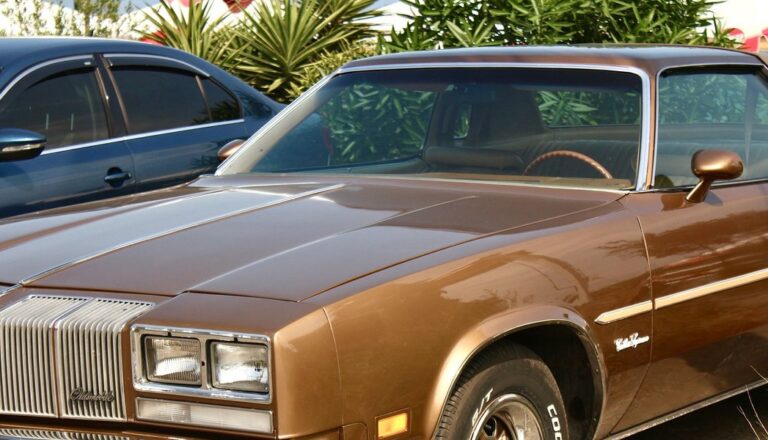
The Oldsmobile Cutlass Supreme and Ciera duo kept GM’s mid-size lineup near the top of the charts, riding on brand loyalty that had built up over decades of Cutlass being the default “nice car” for a huge swath of American buyers. Honda’s Accord, meanwhile, was quietly building the reputation that would let it eventually out-sell most of the Detroit sedans on this list — hemmed in by import quotas, Honda opened its Marysville, Ohio plant in 1982 specifically to build Accords on US soil without counting against the restriction, and by 1985 it was one of the more common cars on suburban streets outside the quota’s reach entirely. Every 1985 Honda model tells a part of that story, from flagship sedans to compact economy cars.
It’s worth remembering that 1985 wasn’t just a Detroit-versus-Japan story. Europe launched some of its most consequential mainstream cars that year too: Saab’s 9000 gave the brand its first real flagship sedan, Mercedes-Benz rolled out the W124 as the new E-Class, and SEAT’s Ibiza gave the newly Volkswagen-adjacent Spanish brand its first genuinely modern supermini. None of these sold in huge numbers stateside, but they set the template their brands followed for the next fifteen years.
The Flops Nobody Misses
The Cadillac Cimarron is the flop everyone reaches for first, and for good reason. It was a Chevrolet Cavalier with leather seats, a Cadillac badge, and a price tag thousands of dollars higher than the car it was built on. For 1985, GM tried to distance it visually from its Chevy sibling with a new grille and a “power dome” hood, but the changes were cosmetic patches on a car whose entire premise — badge-engineer your way into the entry-luxury segment — never worked. TIME later put it on a list of the worst cars ever built, writing that it represented “everything that was wrong, venal, lazy and mendacious about GM in the 1980s.” The Cimarron sold acceptably. It just never once fooled anybody.
The Yugo GV takes the opposite path to infamy: it succeeded briefly, then collapsed under its own reputation. Zastava’s tiny hatchback went on sale in the US on August 24, 1985, priced at $3,990 — the cheapest new car in the country by a wide margin. Dealers reported people buying them sight unseen; the wave of interest even earned a nickname, “Yugomania.” That enthusiasm didn’t survive contact with the car itself, and within six months the Yugo had become a punchline instead of a bargain. It’s still the reference point Americans reach for whenever they want to describe a car built down to a price with nothing else in mind — a cautionary tale among many car brands that vanished from the market.
What a 1985 Car Costs You Today
If you want a piece of 1985 in your garage, the range is enormous, and it depends entirely on which decade of the story you’re chasing.
The exotics have gone the way exotics go: up, and unevenly. A 1985 Ferrari Testarossa in good condition currently runs somewhere between the high five figures and low six figures depending on mileage, service history, and how many of the original tools and books survived — clean examples regularly clear $150,000 at auction, while tired ones with deferred maintenance can still be had for well under $50,000. Countach 5000QVs are rarer and priced accordingly; with only 631 built, condition and provenance matter more than they do for almost any other 1980s car.
The turbo Buicks occupy a strange middle ground. Only 2,102 Grand Nationals were built for 1985 specifically, making that year scarcer than the more famous 1987 GNX, but the GNX’s reputation pulls all Grand National pricing upward with it — expect a real spread between rough drivers and documented, low-mile survivors, and expect the gap to be wide enough that it’s worth getting a pre-purchase inspection rather than trusting a listing description.
The commuter cars are the honest bargain of the group. A Cavalier or Escort in solid, rust-free condition is cheap mostly because almost none of them survived — they were built to be used up, and owners obliged. That scarcity is starting to create a small collector niche of its own, the same way unremarkable Japanese economy cars from the same era have quietly gotten expensive as the good ones disappeared. If you want a genuinely inexpensive way into 1985 ownership, this is where the value is: not because the car is worth more, but because clean survivors are worth finding at all.
Buying any of these in 2026 means treating “1985” as a starting point for research, not a spec sheet. Ask for service records, check the usual rust spots for each specific model, and budget for a pre-purchase inspection from someone who’s worked on the platform before — the difference between a good 1985 car and an expensive mistake almost always comes down to what the seller didn’t mention.

Tyler Bridges
More from Tyler BridgesHow we reviewed this article
This article was researched against manufacturer records and editorially reviewed before publishing. We accept no payment for coverage. Some guides contain affiliate links; see our affiliate disclosure.