Table of Contents
- Why 1985 Was Honda’s Pivot Year
- 1985 Honda Accord
- 1985 Honda Civic
- 1985 Honda Civic CRX and CRX Si
- 1985 Honda Prelude
- 1985 Honda Ballade / CR-X Si (JDM Notes)
- Honda Legend: The First Flagship
- Honda Integra: The Sport Compact Blueprint
- Honda Today: The Kei Car Nobody in America Saw
- Trim and Engine Comparison
- What These Cars Are Worth Now
Why 1985 Was Honda’s Pivot Year
Every directory site will hand you a list of 1985 Honda models with half the spec fields marked “not on file.” What they won’t tell you is why that year mattered. Honda spent the first half of the 1980s proving it could build a competent, fuel-efficient economy car. In 1985, it started proving something else — that it could build a genuinely desirable one, and eventually a luxury one.
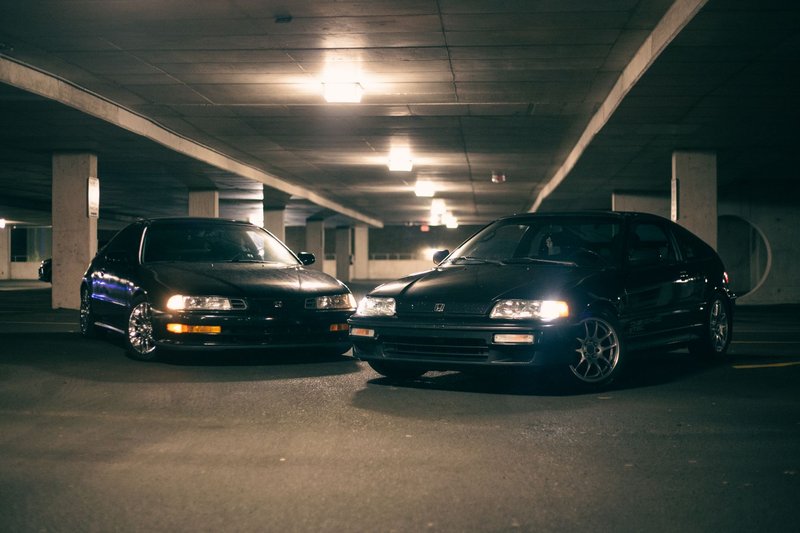
Three cars launched in 1985 that had nothing to do with Honda’s econobox reputation: the Legend, Honda’s first attempt at a proper luxury flagship; the Integra, the car that invented the “sport compact” as a category rather than a trim level; and the Today, a kei car that doesn’t matter much outside Japan but signals how aggressively Honda was expanding its lineup that year. Layer that on top of the CRX Si — already a cult object before the decade was half over — and 1985 reads less like a routine model year and more like the moment Honda decided it wasn’t just going to compete with Toyota and Datsun on price.
1985 Honda Accord
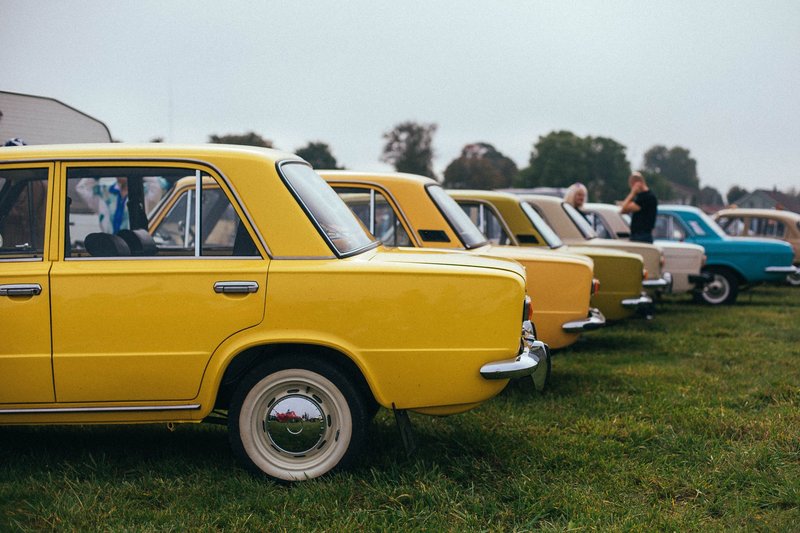
The third-generation Accord (launched for 1984, carried into 1985 largely unchanged) came in sedan and hatchback body styles, both riding a wheelbase stretched over the outgoing car for real back-seat room — a genuine complaint buyers had voiced about the second-gen. Power came from a 1.8-liter SOHC four making around 86 to 101 horsepower depending on carbureted versus fuel-injected (SE-i) tune, mated to a 3-speed automatic, 5-speed manual, or Honda’s unusual 4-speed automatic with a manually-lockable overdrive.
The SE-i trim, introduced for 1985, was the first Accord to get Honda’s PGM-FI electronic fuel injection as standard, along with leather, a driver’s-side airbag as an option, and power everything. That last detail is easy to miss: an airbag on a mainstream Japanese sedan in 1985 was ahead of where most of the segment sat, years before the U.S. mandated the technology across the board via what eventually became the modern federal vehicle safety standards enforced by NHTSA. The Accord wasn’t the car people bought for status. It was the car people bought because it started every morning and didn’t rattle at 80,000 miles, and that reputation is exactly what built Honda’s beachhead in the U.S. market through the rest of the decade.
1985 Honda Civic
The fourth-generation Civic, all-new for 1984 and carried through 1985, split into more body styles than any Civic generation before or since: a 3-door hatchback, 4-door sedan, 5-door “Wagovan” wagon with available real-time 4WD, and the 3-door CRX (covered separately below, since it earned its own identity almost immediately).
Engines ran from a 1.3-liter economy four in the base hatch up to a 1.5-liter in the Si and wagon variants. The Si trim, new for the Civic proper in 1985, brought a 91-horsepower fuel-injected 1.5 — a real jump over the carbureted 76-horsepower base engine — plus a rear spoiler, alloy wheels, and a tachometer that actually mattered because you’d use the whole rev range to get anywhere. The 4WD Wagovan is the model modern collectors chase hardest among the family-oriented Civics: Honda built relatively few, and it’s one of the earliest mainstream Japanese wagons offered with real all-wheel drive in the U.S. rather than a part-time system borrowed from a truck.
1985 Honda Civic CRX and CRX Si
The CRX gets its own section because by 1985 it had already stopped being a Civic variant in any meaningful sense. Honda built two distinct personalities into the same shell. The base CRX HF (High Fuel economy) ran a tiny 1.5-liter tuned for mileage over anything else, and the numbers were genuinely strange for a gas car of the era — EPA ratings north of 50 mpg highway, verified through the same testing regime the agency still runs today via fueleconomy.gov.
The CRX Si, introduced mid-decade, is the one people actually talk about. Fuel-injected 1.5-liter four, 91 horsepower, curb weight barely over 1,900 pounds, and a chassis tuned specifically for a driver who wanted to feel the road rather than float over it. It undercut a Volkswagen GTI on price while matching or beating it in a straight line, and it did that with better fuel economy than anything else in its performance bracket. The CRX Si didn’t need forced induction or a big-name badge to earn its cult following — it earned it by being light, direct, and honest about what it was for. That’s still the reason CRX Si values have outpaced almost every other economy car from this era at auction.
1985 Honda Prelude
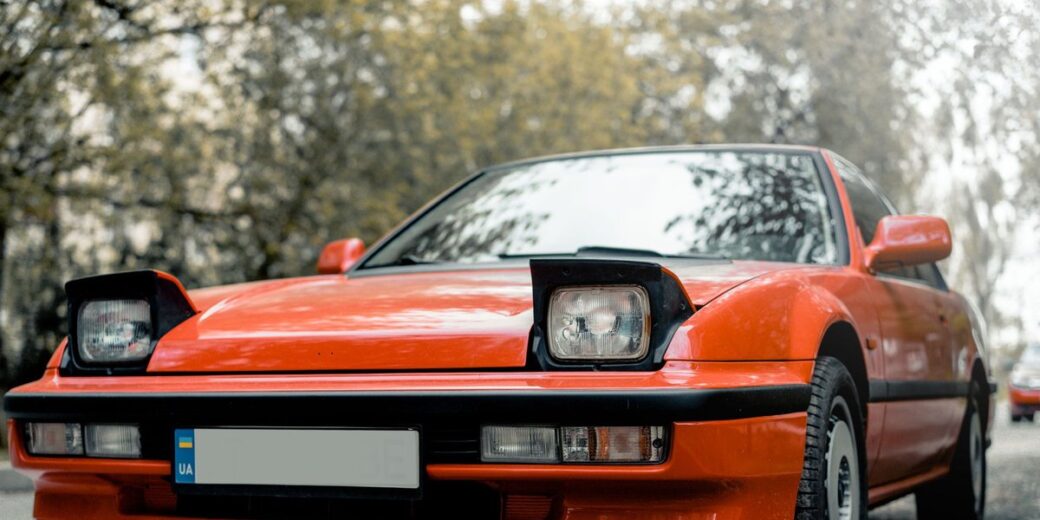
The second-generation Prelude, redesigned for 1983 and refined into 1985, is the car that introduced pop-up headlights and four-wheel steering conversations into Honda’s lineup, though the 4WS system itself didn’t arrive until the next generation. For 1985, the Prelude ran a 1.8-liter engine, offered in carbureted and fuel-injected (Si) form, the latter making 100 horsepower — a genuinely quick number for a coupe at this price point.
What made the Prelude matter wasn’t raw output. It was the driving position: one of the lowest hoodlines in its class, a nearly flat floor thanks to a double-wishbone front suspension design that let engineers push the engine lower and further back than a strut-based layout would allow. Car magazines of the era routinely praised the Prelude’s handling balance over rivals like the Toyota Celica, and that chassis engineering carried directly into the third-generation Prelude’s 4WS system a few years later.
JDM-Only Launches
The models below never crossed the Pacific in 1985. American buyers wouldn’t see versions of two of them for years, and the third never came at all. They belong on this list anyway, because leaving them off misses the actual story of Honda’s 1985.
Honda Legend: The First Flagship
Honda had never built a genuine flagship before the Legend launched in Japan in late 1985. Everything before it — Accord included — was positioned as a smart, efficient alternative to something bigger. The Legend was different on purpose: a 2.0-liter V6 (a Honda first for a passenger car), four-wheel independent suspension, and a level of sound insulation and interior trim Honda had never bothered with because it had never needed to compete with Toyota’s Crown or Nissan’s Cedric-adjacent luxury offerings.
The Legend mattered for a reason bigger than its own sales figures. It became the template for the Acura brand, launched in the U.S. in 1986 — a year that saw automotive design shifting across the American market — specifically to sell the Legend and Integra without cannibalizing Honda’s economy-car identity. Every Honda luxury effort since — from the original Legend through the modern Acura RLX — traces back to this 1985 launch.
Honda Integra: The Sport Compact Blueprint
The Integra debuted in Japan in February 1985 as a 3-door and 5-door hatchback riding a stretched Civic platform, with a DOHC 1.6-liter four (the ZC engine) producing a lively 130 horsepower in top JDM tune — genuinely quick for a compact of this era, and a preview of the high-revving DOHC engines Honda would become famous for through the VTEC era a few years later.
Where the Legend created Honda’s luxury identity, the Integra created something arguably more influential: the idea that a compact car could be marketed on driving engagement alone, without needing to be a two-seat sports car to earn enthusiast respect. That idea didn’t reach American buyers until the Integra launched stateside in 1986 as an early Acura product, but the DNA — a Civic-based platform pushed toward genuine performance rather than just fuel economy — started here.
Honda Today: The Kei Car Nobody in America Saw
The Today launched in Japan in 1985 as a kei car — the compact-but-legally-distinct category Japan taxes and regulates differently to keep urban car ownership affordable. Tiny 546cc engine, boxy two-box styling, and a price point aimed squarely at first-time buyers and second household cars. It never came to North America and never needed to; its job was volume in the domestic market, not export glory.
It’s easy to skip the Today entirely on a list like this, and frankly, it often is in retrospectives of old JDM cars. But it says something real about Honda’s strategy in 1985: the same company launching a flagship luxury sedan was simultaneously building one of the cheapest, smallest cars in its own domestic lineup. Few manufacturers stretched that far in a single model year.
Trim and Engine Comparison
| Model | Body Styles | Engine (top trim) | Output | Market |
|---|---|---|---|---|
| Accord | Sedan, hatchback | 1.8L SOHC I4 (SE-i, PGM-FI) | ~101 hp | Global, incl. U.S. |
| Civic | Sedan, hatchback, wagon | 1.5L SOHC I4 (Si) | 91 hp | Global, incl. U.S. |
| CRX / CRX Si | 3-door hatchback | 1.5L SOHC I4 (Si, PGM-FI) | 91 hp | Global, incl. U.S. |
| Prelude | 2-door coupe | 1.8L SOHC I4 (Si) | 100 hp | Global, incl. U.S. |
| Legend | 4-door sedan | 2.0L SOHC V6 | ~145 hp (JDM) | Japan (1985); U.S. 1986 as Acura |
| Integra | 3-door / 5-door hatchback | 1.6L DOHC I4 (ZC) | ~130 hp (JDM) | Japan (1985); U.S. 1986 as Acura |
| Today | 3-door hatchback (kei) | 0.55L I3 | ~28 hp | Japan only |
What These Cars Are Worth Now
The collector market on 1985 Hondas splits sharply by model. CRX Si examples in unmodified, low-mile condition now regularly clear five figures at specialty auctions — a number that would’ve sounded absurd to the people who bought them new as cheap alternatives to a GTI. Clean 4WD Civic Wagovans are close behind, driven by scarcity rather than performance reputation; Honda simply didn’t sell that many, and most got used up as daily haulers rather than preserved.
The Prelude Si and Accord SE-i sit in a different tier — genuinely good cars, but common enough in period that survivors don’t command CRX-money unless documentation and originality are exceptional. The Legend and Integra occupy a strange spot for American buyers specifically because the 1985 JDM versions never officially arrived here; what collectors chase instead are the 1986 Acura-badged U.S. debuts, which technically belong to the next model year but share the 1985 platform and engineering underneath.
None of these cars were expensive when new. That’s precisely why so few survived in good shape, and why the ones that did are worth paying attention to now.

Daniela Voss
More from Daniela VossHow we reviewed this article
This article was researched against manufacturer records and editorially reviewed before publishing. We accept no payment for coverage. Some guides contain affiliate links; see our affiliate disclosure.