Table of Contents
- Toyota in 1977: The Right Cars at the Right Time
- 1977 Toyota Corolla
- 1977 Toyota Celica
- 1977 Toyota Corona
- 1977 Toyota Carina
- 1977 Toyota Chaser
- 1977 Toyota Land Cruiser
- 1977 Toyota Pickup (Hilux)
- Full Lineup at a Glance
- Collector Value Today
Toyota in 1977: The Right Cars at the Right Time {#toyota-in-1977}
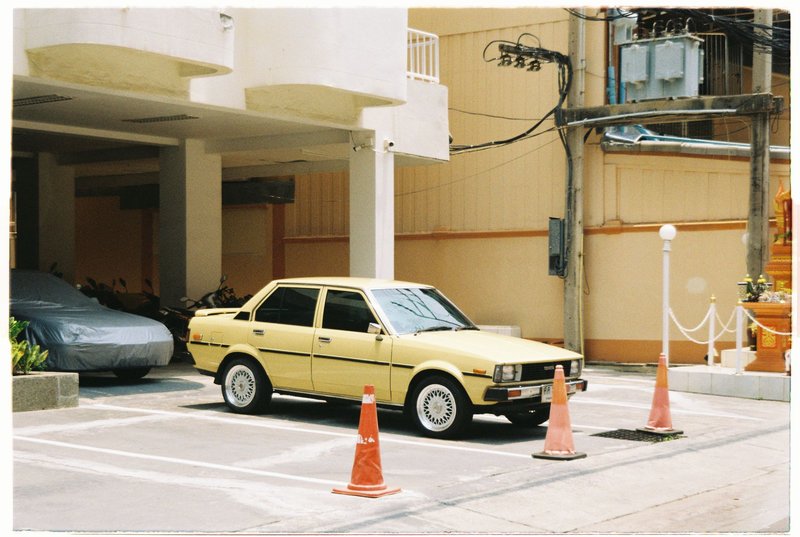
The 1973 oil crisis didn’t just raise gas prices — it restructured the American car market. By 1977, Toyota had quietly become the best-selling import brand in the United States, and it wasn’t an accident. While Detroit was still figuring out how to make small cars feel like cars instead of apologies, Toyota was already on its second generation of vehicles tuned for exactly the buyer Detroit kept losing.
The broader context matters for understanding what Toyota put on sale that year. The 1970s energy crises had made fuel economy a genuine purchase criterion for American buyers, not just a concern for economists. Toyota’s advantage wasn’t just efficiency — it was the combination of efficiency and build quality that American compacts of the era consistently failed to deliver.
The 1977 model year lineup reflects a company in an expansion phase: several core models were in the middle or near the end of their generations, with the engineers clearly already working on what came next. If you want to see where these cars came from, the 1976 Toyota lineup shows the generation that set the stage. Here’s what was on the showroom floor.
1977 Toyota Corolla {#corolla}
The Corolla was already the world’s best-selling car by nameplate in the mid-1970s, and the 1977 model shows exactly why. This was the fourth-generation Corolla (E30/E40 series), available in coupe, sedan, liftback, and wagon body styles — a range of options that few competitors at the price point could match.
Power came from the 2T-C 1.6-liter inline-four, producing around 75 horsepower in US-spec trim after emissions equipment. That number reads modestly, but the Corolla weighed roughly 1,900 lbs, so it drove with more urgency than the spec sheet implies. The five-speed manual was the enthusiast’s pick; a four-speed auto was available for buyers who wanted it.
The SR5 trim deserves mention: it added sporty touches — black accents, a rear spoiler on the liftback, bucket seats — that made it feel substantially different from the base model. Toyota was learning to sell aspiration, not just transportation.
Notable detail: The Corolla liftback’s roofline was directly influenced by the Celica and was sometimes marketed as a “sports car alternative” at a lower price. The positioning worked.
1977 Toyota Celica {#celica}
The Celica was in its first generation (A20/A35 series) and had become Toyota’s definitive sporty car for the American market. The 1977 model came in two configurations: the standard Celica GT coupe and the Celica GT liftback — both offered as genuine sports-car alternatives rather than badge-engineered sedans wearing a spoiler.
Under the hood, the US market got the 20R 2.2-liter inline-four producing approximately 96 horsepower. That engine had a reputation for longevity that bordered on legendary — these motors routinely hit 200,000 miles with basic maintenance. A five-speed manual was standard on the GT; the automatic was available but widely considered the wrong choice.
The GT package added stiffer suspension, a limited-slip differential on some models, and interior upgrades that distinguished it from the base trim. Compared to its American competition — think Mustang II or the Chevrolet Monza — the Celica offered sharper handling, better fuel economy, and the kind of fit-and-finish that made American buyers start questioning their domestic loyalties. Its closest Japanese rival was Nissan, whose 1970s Datsun lineup was mounting a serious challenge in the same sporty-compact space.
Notable detail: The 1977 Celica GT liftback is the model that Burt Reynolds drove in Smokey and the Bandit — albeit briefly. The Pontiac Trans Am got the starring role, but the Celica had the better reliability record.
1977 Toyota Corona {#corona}
The Corona was Toyota’s mid-size family car — a step above the Corolla in size and refinement, aimed squarely at buyers who wanted something more substantial without moving up to a full-size American sedan. The 1977 Corona sat in the T100/T110 generation and came as a two-door hardtop, four-door sedan, and five-door wagon.
The engine was the 18R-C or 20R 2.0-2.2 liter four-cylinder (market dependent), producing output in the 80–96 hp range. Ride quality was the Corona’s calling card — it was softer and quieter than the Corolla, deliberately positioned as the “comfortable” choice in the lineup. The wagon variant was particularly popular with American families who needed the space but wanted something more reliable than the domestic competition.
By 1977, the Corona was nearing the end of its US sales run; Toyota was preparing to shift focus to the Camry and the expanded Corolla line. But that pending retirement hadn’t dimmed the model’s competence — it remained a solid, well-sorted car.
1977 Toyota Carina {#carina}
The Carina was sold in export markets as a mid-size alternative to the Corolla that sat just below the Corona. In the US market, it received limited distribution; Toyota positioned it primarily for markets where the Corolla felt too small and the Corona too expensive.
The second-generation Carina (A40 series) used the 2T-C or 3K-C engines depending on market, offered in four-door sedan and two-door coupe body styles. The chassis was closely related to the Celica’s, which meant the handling was better than buyers typically expected from a family sedan — this was particularly true of the coupe.
The Carina never achieved the same recognition in North America that it did in Europe and Japan, but it was a genuinely capable car that often gets overlooked in retrospective coverage of the 1977 lineup.
1977 Toyota Chaser {#chaser}
New for the Japanese domestic market in 1977, the Chaser was positioned as a sportier, more driver-focused alternative to the Corona. Built on the same platform but with a fastback roofline and more aggressive interior, it was Toyota’s attempt to carve out a distinct identity for buyers who found the Corona too conservative.
The first-generation Chaser (X30 series) used the 12T or 18R engines (1.6–2.0 liter), and its closest real competitor in the Japanese market was the Nissan Bluebird U. The Chaser was never sold in the US market, but it matters in the full accounting of the 1977 Toyota lineup because it signals the direction Toyota was heading — toward a more segmented lineup with personality-driven models.
Collectors pursuing JDM Toyota history treat early Chasers as significant because they mark the beginning of what would eventually become the Mark II/Cresta/Chaser trio that defined Toyota’s personal luxury segment through the 1980s and 90s. For broader context on the JDM models that shaped this era, the full list of classic JDM cars covers the range of domestic-only machinery that rarely made it to Western showrooms.
1977 Toyota Land Cruiser {#land-cruiser}
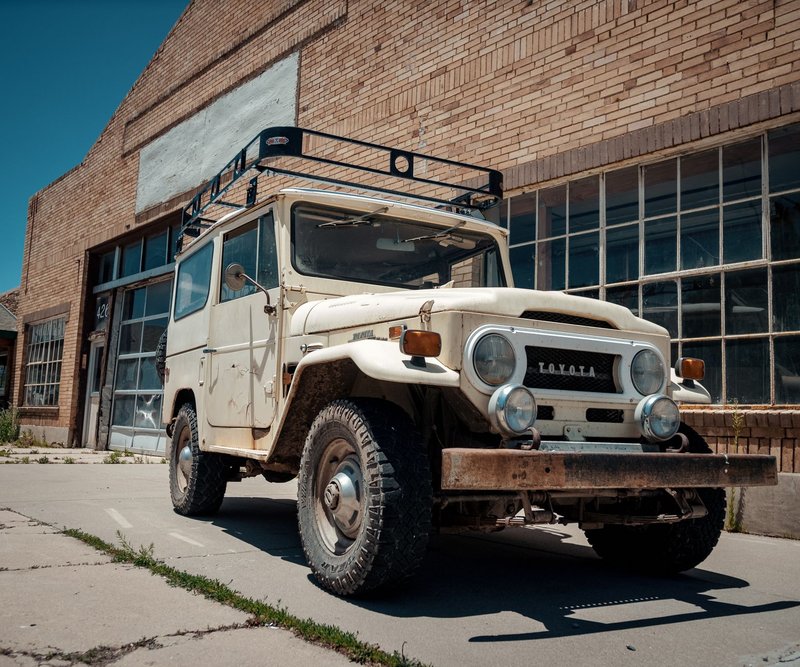
The Land Cruiser has never been a mass-market vehicle, but in 1977 it occupied a space that no other Japanese manufacturer had credibly entered: serious off-road capability in a package that could also function as a daily driver. The FJ40 series was still in production and remains the most recognizable Land Cruiser variant of the era — the short-wheelbase, boxy two-door that became an icon before the word was overused.
The FJ40 used the F-series 3.9-liter inline-six producing approximately 125 horsepower. That’s modest by modern standards, but the engine’s torque curve and the truck’s solid-axle geometry made it capable well beyond what the numbers suggest. The longer-wheelbase FJ55 wagon was also available — a genuine family vehicle that could tow, haul, and go places that other station wagons couldn’t.
By 1977, the Land Cruiser had earned a reputation among off-road enthusiasts that Toyota has spent the subsequent decades carefully maintaining. Ranchers, overlanders, and expedition travelers trusted them because they had reason to.
Notable detail: The FJ40’s windshield folds forward — a design feature inherited from military-grade utility vehicles that Toyota never bothered to engineer away because it was useful.
1977 Toyota Pickup (Hilux) {#pickup}
Toyota’s compact pickup — sold as the “Toyota Pickup” in the US market but known as the Hilux globally — was in its third generation by 1977. The short-bed regular cab was the dominant configuration, though an extended bed option existed for buyers who needed the cargo capacity.
The powertrain was the 20R 2.2-liter four-cylinder (96 hp), mated to a four-speed manual transmission. Four-wheel-drive variants were available through Toyota’s dealer network, and the SR5 trim package applied to the pickup essentially the same sporty upgrades it offered on the Corolla — chrome accents, sport seats, and a step-up in interior quality.
What made the 1977 Pickup notable wasn’t any single feature — it was the cumulative reputation for durability that Toyota’s trucks were building in this period. The BBC’s Top Gear later staged their famous attempt to destroy a high-mileage Hilux (failing to do so), but that reputation was being established in exactly this era, with exactly these trucks. American buyers who switched from domestic pickups in the late 1970s almost universally reported surprise at how long the Toyotas ran.
Full Lineup at a Glance {#lineup-table}
| Model | Segment | Body Styles | Engine | Est. HP | Key Fact |
|---|---|---|---|---|---|
| Corolla | Subcompact | Sedan, coupe, liftback, wagon | 2T-C 1.6L I4 | ~75 | World’s best-selling car by nameplate |
| Celica | Sports/Pony car | Coupe, liftback | 20R 2.2L I4 | ~96 | Known for engine longevity |
| Corona | Mid-size | Sedan, hardtop, wagon | 18R-C/20R 2.0–2.2L I4 | ~80–96 | Best ride quality in the lineup |
| Carina | Compact | Sedan, coupe | 2T-C/3K-C 1.4–1.6L I4 | ~70–80 | Celica-derived chassis |
| Chaser | Personal luxury | Fastback sedan | 12T/18R 1.6–2.0L I4 | ~80–100 | JDM only; precursor to Mark II lineup |
| Land Cruiser FJ40 | Off-road SUV | 2-door hardtop/soft-top | F-series 3.9L I6 | ~125 | Fold-forward windshield, solid axles |
| Land Cruiser FJ55 | SUV/Wagon | 4-door wagon | F-series 3.9L I6 | ~125 | Full-size family off-roader |
| Pickup (Hilux) | Compact truck | Regular cab, short/long bed | 20R 2.2L I4 | ~96 | 4WD option; SR5 trim available |
Collector Value Today {#collector-value}
Forty-plus years later, the 1977 Toyota lineup splits into roughly three tiers for collectors.
Top tier (appreciating fast): The FJ40 Land Cruiser has become seriously expensive. Clean, original examples in the US market now trade in the $40,000–$80,000 range, and well-restored trucks can exceed that considerably. The demand comes from the overlanding community, lifestyle buyers, and genuine enthusiasts — and all three groups are competing for a finite supply of solid examples. Rust is the primary enemy; inspect floors, rockers, and the frame before anything else.
Mid tier (affordable and rising): The Celica GT — particularly the liftback — has been gaining collector attention steadily since the early 2010s. Values are still accessible compared to the Land Cruiser, but clean examples are becoming harder to find and prices have moved accordingly. The SR5 trim commands a premium. The 20R engine’s reputation for durability means a high-mileage car with good service records isn’t automatically a red flag.
Sleeper tier (undervalued): The Corolla SR5 liftback is the one most collectors haven’t fully priced in yet. It’s a period-correct sports car alternative at a fraction of what comparable 1970s European coupes cost, and parts availability through Toyota’s still-extensive network makes restoration viable. The Pickup (Hilux) in base trim is similarly overlooked — survivors with low miles and original paint are genuinely scarce, and the story of Toyota truck durability is well understood by buyers who want to live it rather than just know about it.
For any 1977 Toyota, the practical advice is consistent: rust and deferred maintenance are the real threats, not mechanical complexity. These were conservatively engineered cars with well-supported parts ecosystems. If the structure is solid, the rest is solvable.

Tyler Bridges
More from Tyler BridgesHow we reviewed this article
This article was researched against manufacturer records and editorially reviewed before publishing. We accept no payment for coverage. Some guides contain affiliate links; see our affiliate disclosure.