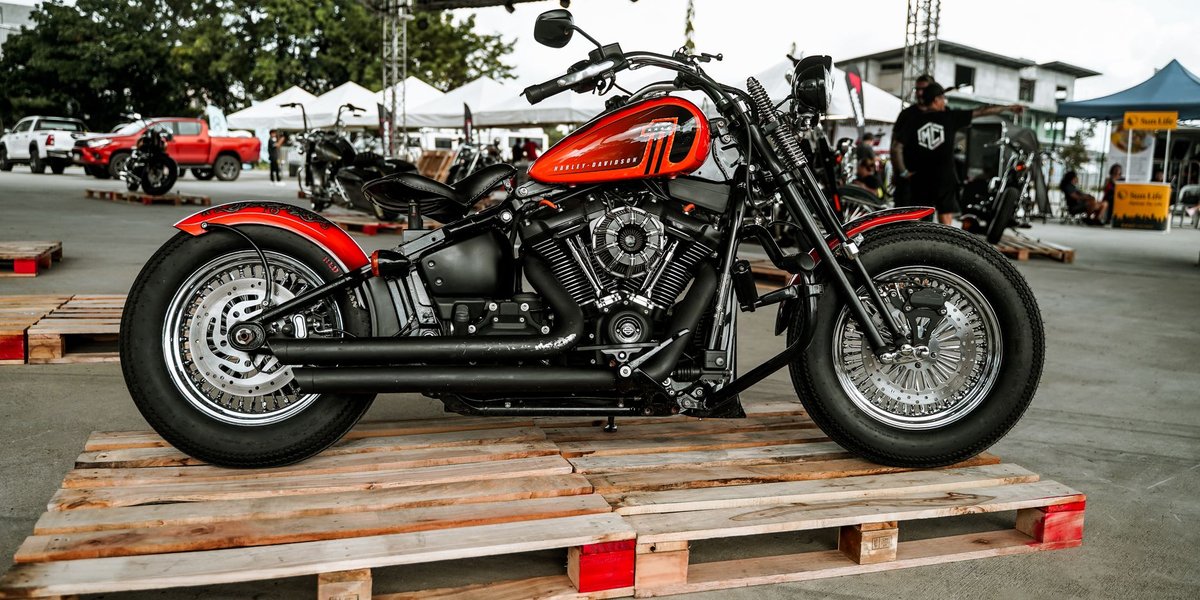
The 1963 Harley-Davidson catalog is one of the most interesting snapshots in the brand’s history, and not because anything dramatic happened that year. Quite the opposite. Milwaukee was two years away from the Electra Glide — the model that would define the modern Harley era — and still selling a lineup that looked much like it had in the mid-1950s. Big flathead Servi-Cars. Panhead twins. A Sportster that was starting to show its teeth. A handful of lightweights that H-D hoped would bring in younger riders.
It’s a lineup that spans two eras without quite belonging to either. And if you’re restoring one, researching one, or just want to understand what Harley was doing in the Kennedy years, here’s the full picture.
Table of Contents
- The Big Twins: FL and FLH Duo-Glide
- The Sportsters: XLH and XLCH
- The Racing Models: KR and KRTT
- The Servi-Car: G Model
- The Lightweights: Pacer, Scat, and Topper
- The Sprint: Harley’s Italian Connection
- 1963 at a Glance: Model Summary
- Where 1963 Fits in Harley’s Story
The Big Twins: FL and FLH Duo-Glide
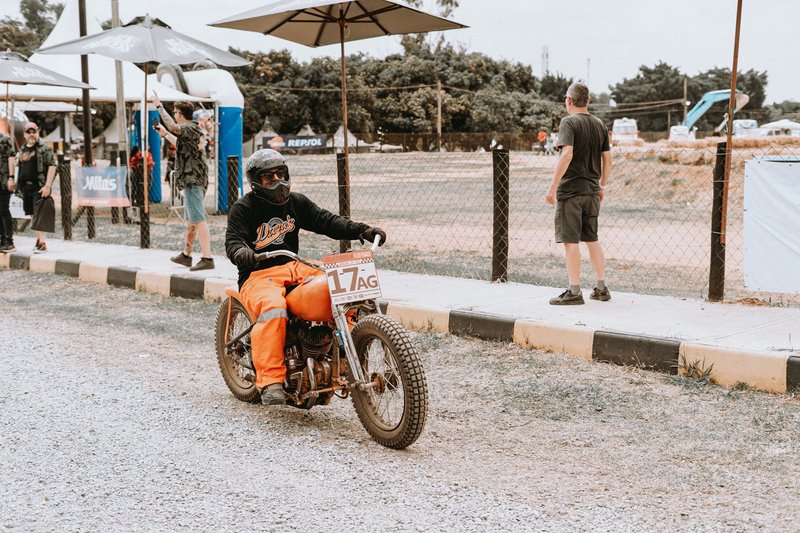
The centerpiece of any Harley lineup in 1963 was the Duo-Glide — named for its front and rear suspension setup, which H-D had introduced in 1958 to differentiate it from the old Hydra-Glide (front suspension only). By 1963, the Duo-Glide was available in four variants.
FL — The base model. Powered by the 74-cubic-inch (1,208cc) OHV Panhead V-twin, three-speed hand-shift transmission. This is the original “hand-clutch, foot-shift” configuration that older riders had known for decades.
FLF — Same 74ci Panhead, but with a foot-shift transmission, which was becoming increasingly standard as H-D moved toward more conventional controls.
FLH — The high-compression version of the Panhead, still with hand shift. Higher compression meant more power, and the FLH was the choice for riders who wanted to actually move. This is the one collectors typically chase.
FLHF — High-compression engine, foot-shift transmission. The fully modern configuration, by the standards of 1963.
All four ran H-D’s signature Panhead V-twin — so called for the rocker boxes that resemble upside-down cake pans. The engine had been in production since 1948 and was approaching the end of its life. In 1965, it would be replaced by the Shovelhead. In 1963, nobody knew that yet.
Standard output was approximately 55 horsepower on the high-compression FLH. These were big, heavy motorcycles — roughly 660–680 lbs fully equipped — and they were designed for long-haul comfort more than speed. The Duo-Glide’s rear suspension was a significant upgrade over the old hardtail frames, but by 1963 the unit still felt dated compared to British twins like the Triumph Bonneville.
No electric starter. That arrives with the Electra Glide in 1965. For now, you kick it.
The Sportsters: XLH and XLCH
The Sportster had been in production since 1957, and by 1963 it was getting its footing as a genuine performance machine. To understand the full context, it helps to look at the 1962 Harley-Davidson lineup — the Sportster was already maturing in that catalog, and the differences a year later are instructive.
XLH 900 — The standard Sportster, running a 55ci (883cc) OHV Ironhead V-twin. Electric start, larger fuel tank, full street equipment. The XLH was H-D’s answer to the rider who wanted something lighter and faster than the Duo-Glide without giving up practicality. Seat height was lower, weight was around 480 lbs, and the power-to-weight ratio was noticeably better than the big Pans.
XLCH — This is the one people remember. The “CH” designation is commonly interpreted as “Competition Hot” or “Cycle Hot” — H-D never officially defined it. The XLCH was stripped down: magneto ignition instead of a battery, smaller peanut tank, no electric start, no chrome extras unless you paid for them. It was 40 lbs lighter than the XLH, and in 1963 it was among the fastest production motorcycles you could buy in America.
The XLCH also made a distinctive sound that set it apart — the magneto ignition gave it a sharper, harder crack at startup versus the softer battery-fired XLH. Riders who knew, knew. The XLCH is the model that built the Sportster’s long-running reputation as a back-road machine.
Both models shared the same 883cc Ironhead engine architecture, though tuning differences gave the XLCH a slight edge in outright performance.
The Racing Models: KR and KRTT
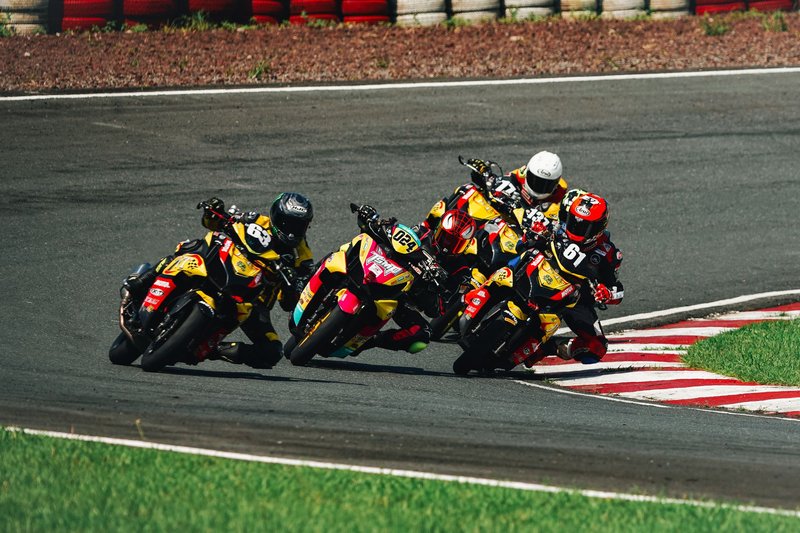
These weren’t street bikes. The KR and KRTT were built to race, specifically under AMA Class C rules, which until 1969 required side-valve (flathead) engines — a regulation that conveniently suited H-D’s older K-series motor and put OHV British bikes at a disadvantage.
KR — Flathead 45ci (750cc) racing engine, stripped to the essentials. Used on flat tracks and short ovals. Riders like Carroll Resweber had dominated national championships on KR-based machines through the late 1950s and early ’60s.
KRTT — The TT version, built for road racing and TT Steeplechase courses (mixed surface tracks with jumps). Same flathead engine, but with different frame geometry, suspension setup, and gearing suited for road courses. The KRTT ran at Daytona and at road circuits in a configuration that looks almost nothing like a touring bike.
By 1963, the KR program was under pressure. British bikes were getting faster, and the AMA’s flathead rule was creating political tension. But in 1963, the KRs were still competitive, and H-D’s factory racing team was still funded and serious.
Neither model was available to the general public in race-ready form. H-D sold them through dealers, but buyers understood they were getting a race bike, not a street machine.
The Servi-Car: G Model
G Servi-Car — This one requires a moment of explanation if you haven’t seen one. The Servi-Car was a three-wheeled vehicle: a motorcycle front end mated to a rear axle and a large cargo box between two rear wheels. It ran the flathead 45ci (750cc) side-valve engine — the same architecture used in the KR racers, but detuned for utility work.
H-D introduced the Servi-Car in 1932 and sold it for decades to police departments, gas stations, and small businesses. By 1963, its primary market was municipal police forces, who used it for parking enforcement. The officer would ride to a car, chalk the tire, and ride to the next one. The Servi-Car was slow and stable, not sporty.
It was also available with a tow bar that allowed a gas station attendant to tow it behind a car being delivered, then ride the Servi-Car back. Practical enough that it stayed in production until 1973, outlasting several “modern” models.
The G model in 1963 came with an electric start — one of the few H-Ds that year to have one — and an automatic transmission variant was available for municipal buyers.
The Lightweights: Pacer, Scat, and Topper
By the early 1960s, H-D’s management could see that Honda and other Japanese brands were pulling in buyers who had never considered a motorcycle before. The response was a range of small, approachable machines — built around a 165cc two-stroke engine that H-D had acquired from Aermacchi in Europe, plus a domestically developed scooter.
Pacer (Model BT) — A 175cc two-stroke single, street-legal, designed for casual riding. Light enough that a new rider could handle it without intimidation. The Pacer sat in H-D’s lineup as the entry point — the machine you’d buy if you wanted a Harley but couldn’t manage a Panhead.
Scat (Model BTH) — Same 175cc engine, but configured for dual-use riding. The Scat had higher ground clearance and knobby tires, making it workable on light off-road trails. Think of it as the scrambler variant before “scrambler” became a proper marketing category.
Topper Scooter (Model A/AU) — H-D’s attempt at the scooter market, using a 165cc two-stroke engine with a CVT (continuously variable transmission), enclosed bodywork, and a pull-rope start like a lawnmower. The Topper debuted in 1960 and was already showing weak sales by 1963. It was discontinued in 1965. In retrospect, it looks like exactly what it was: a conservative Midwestern company trying to copy the Vespa formula without quite understanding what made Vespas work.
None of these lightweights became beloved classics in the way the big twins did. But they represent a genuine, if awkward, effort by H-D to broaden its customer base.
The Sprint: Harley’s Italian Connection
Sprint (Model C) and Sprint H (Model CH) — These are the most unusual entries in the 1963 catalog. In 1960, Harley-Davidson acquired a controlling interest in Aermacchi, an Italian motorcycle manufacturer based in Varese. The Sprint was an Aermacchi design, built in Italy, and sold through H-D dealers in the U.S.
The Sprint used a 250cc OHV horizontal single-cylinder engine — air-cooled, four-stroke, completely different from anything else in H-D’s domestic lineup. It handled well, ran reliably, and got decent fuel economy. The Sprint H was the hotter version with a higher compression ratio and sportier tuning.
For riders who wanted a small, nimble machine and weren’t interested in the two-stroke lightweights, the Sprint was the answer. It was legitimate enough that H-D campaigned a race version (the CRTT) in AMA competition with real results.
The Aermacchi partnership lasted until 1978. By then, H-D had sold its stake, and the Italian operation became Cagiva. But in 1963, the Sprint was the most technically sophisticated small bike H-D sold — and one of the few that could compete seriously with European lightweight machines.
1963 at a Glance: Model Summary
| Model | Type | Engine | Displacement |
|---|---|---|---|
| FL Duo-Glide | Street | Panhead V-twin OHV | 74 ci (1,208cc) |
| FLF Duo-Glide | Street | Panhead V-twin OHV | 74 ci (1,208cc) |
| FLH Duo-Glide | Street (Hi-Comp) | Panhead V-twin OHV | 74 ci (1,208cc) |
| FLHF Duo-Glide | Street (Hi-Comp) | Panhead V-twin OHV | 74 ci (1,208cc) |
| XLH 900 Sportster | Street | Ironhead V-twin OHV | 55 ci (883cc) |
| XLCH Sportster | Street/Performance | Ironhead V-twin OHV | 55 ci (883cc) |
| KR | Racing (flat track) | Flathead V-twin | 45 ci (750cc) |
| KRTT | Racing (road/TT) | Flathead V-twin | 45 ci (750cc) |
| G Servi-Car | Utility (3-wheel) | Flathead V-twin | 45 ci (750cc) |
| Pacer (BT) | Lightweight Street | Two-stroke single | 175cc |
| Scat (BTH) | Lightweight Dual-Use | Two-stroke single | 175cc |
| Topper (A/AU) | Scooter | Two-stroke single | 165cc |
| Sprint (C) | Italian Single | OHV Horizontal single | 250cc |
| Sprint H (CH) | Italian Single (Hi-Comp) | OHV Horizontal single | 250cc |
Where 1963 Fits in Harley’s Story
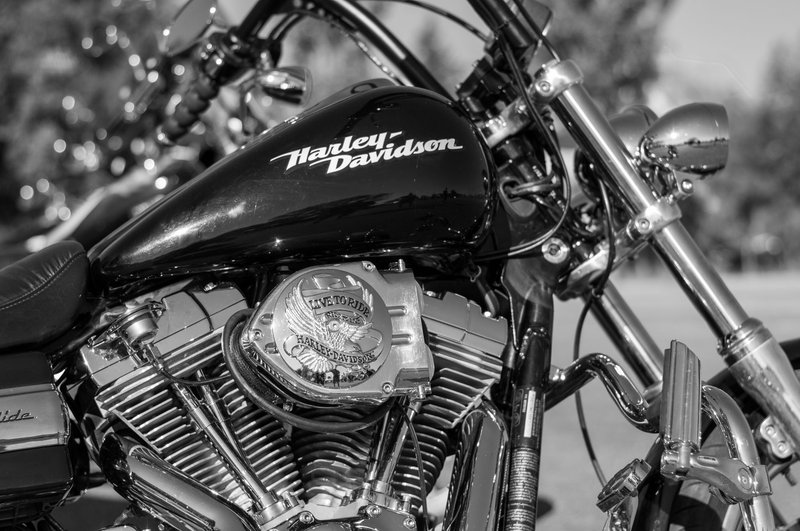
Nineteen sixty-three is easy to overlook in Harley history because nothing transformative happened that specific year. But that’s exactly what makes it worth understanding. The Panhead was in its final years — by 1965, the Shovelhead would replace it, and electric start would make the kickstart-only era feel ancient almost overnight. The Sportster was already becoming what it would remain for decades. The racing program was competitive but entering a period of transition. The lightweights were a bet that didn’t quite pay off.
It’s the last moment before H-D’s first major modernization push. The 1963 lineup is, in a very real sense, the peak of the “classic” Harley-Davidson product range — everything that had accumulated since the late 1940s, still running, still for sale, not yet replaced.
For restorers, 1963 models are desirable precisely because the Panhead was mature by then. Early Panheads had oil leak issues that were gradually addressed through the 1950s. A 1963 unit benefits from fifteen years of incremental refinement. The XLCH from that year is a legitimate performance machine by any era’s standard. And the Servi-Car, oddball that it is, is one of the more reliable vintage three-wheelers you’ll find.
The complete 1963 catalog is a window into a company that built exactly what it knew how to build — for better and worse — right before the pressure to change became impossible to ignore.
Marco Delantero
More from Marco DelanteroHow we reviewed this article
This article was researched against manufacturer records and editorially reviewed before publishing. We accept no payment for coverage.