The 2000s were the decade Cadillac stopped apologizing. Through the 1990s, the brand had been losing ground to BMW and Mercedes at an alarming rate — buyers wanted precision-engineered European luxury, and Cadillac was still selling soft, whalelike sedans that appealed mostly to people who remembered the Eisenhower administration fondly. Then, around 1999, GM gave Cadillac a blank check and a mission: become relevant again or become irrelevant forever.
What followed was the “Art and Science” era — a complete design overhaul built around sharp creases, angled surfaces, and a visual language that looked like nothing else on the road. The results were polarizing, fast, and, by most measures, successful. Here’s every model Cadillac produced during that decade, and what made each one matter.
Table of Contents
- The Design Philosophy Behind It All
- Cadillac DeVille (2000–2005)
- Cadillac Eldorado (2000–2002)
- Cadillac Seville (2000–2004)
- Cadillac Escalade (2000–2006, Second Gen 2007–2014)
- Cadillac CTS (2003–2007)
- Cadillac XLR (2004–2009)
- Cadillac SRX (2004–2009)
- Cadillac STS (2005–2011)
- Cadillac DTS (2006–2011)
- Cadillac BLS (2006–2010)
- The Performance Variants: CTS-V, STS-V, XLR-V
- The 2000s Cadillac Timeline
The Design Philosophy Behind It All {#design-philosophy}
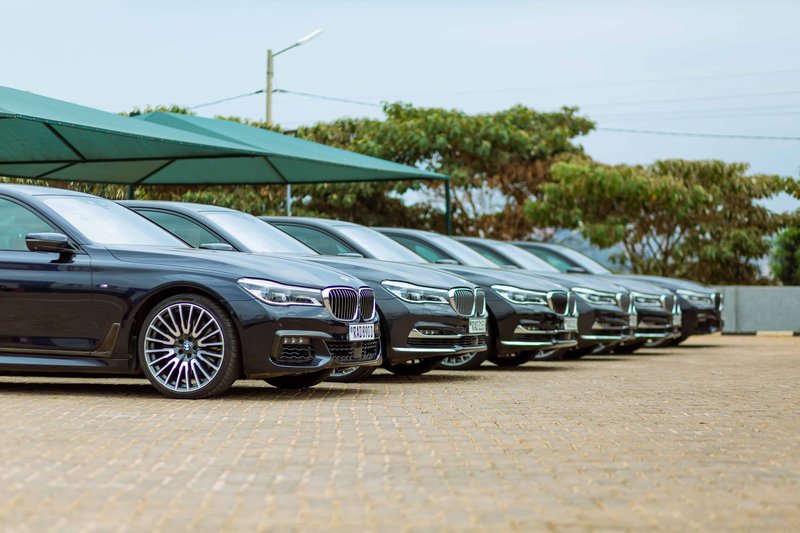
Before running through the models, it’s worth understanding the framework. The Art and Science design language — credited heavily to designer Simon Cox and championed internally by product czar Bob Lutz — was a deliberate repudiation of everything Cadillac had become. Gone were the rounded, softened edges. In came sharp creases, geometric surface cuts, and a visual aggression that read as modern rather than geriatric.
The philosophy wasn’t just aesthetic. Cadillac restructured its entire lineup around rear-wheel-drive platforms (or shared platforms with Sigma architecture) to compete mechanically with BMW’s 3 and 5 Series. The goal was to recapture buyers in their 40s and 50s who’d defected to German brands. Some models succeeded spectacularly. Others were transitional — bridges from the old world to the new.
Cadillac DeVille (2000–2005) {#deville}
The DeVille was Cadillac’s bread and butter for decades, and by the 2000s it had become the last holdout of the old formula: a large, front-wheel-drive luxury sedan with a smooth ride calibrated for buyers who prioritized isolation over engagement. The 2000 refresh brought cleaner styling, and the 4.6-liter Northstar V8 was genuinely strong for its era. But the DeVille was never pretending to be something it wasn’t.
It sold well through its production run precisely because not everyone wanted a sports-tuned suspension and a manual gearbox option. For traditional Cadillac buyers — the ones who wanted quiet, comfort, and a big back seat — it remained the right answer. It was replaced by the DTS in 2006, which carried on the same philosophy with updated sheetmetal.
Cadillac Eldorado (2000–2002) {#eldorado}
The Eldorado entered the 2000s as a legacy nameplate running out of road. A front-wheel-drive personal luxury coupe, the last generation had been in production since 1992 and looked every year of it by 2000. Cadillac kept it on sale for two final model years before discontinuing it in 2002 — not with a rebirth, but with a quiet exit.
The final Eldorados are genuinely rare now, and a collector piece for fans of the nameplate. But by 2002, the model had little to say that the newer CTS and XLR weren’t about to say much more loudly.
Cadillac Seville (2000–2004) {#seville}
More interesting than the DeVille, the Seville came in two flavors: the standard SLS (Seville Luxury Sedan) and the sportier STS (Seville Touring Sedan). The STS variant, with its firmer suspension tuning and slightly more aggressive power delivery from the Northstar V8, pointed toward where Cadillac was trying to go. Road feel was still soft by European standards, but compared to the DeVille it felt like a driver’s car.
The Seville nameplate was retired in 2004 when the STS became its own standalone model — a sign of the new Cadillac’s preference for three-letter alphanumeric names over traditional monikers.
Cadillac Escalade (2000–Present) {#escalade}
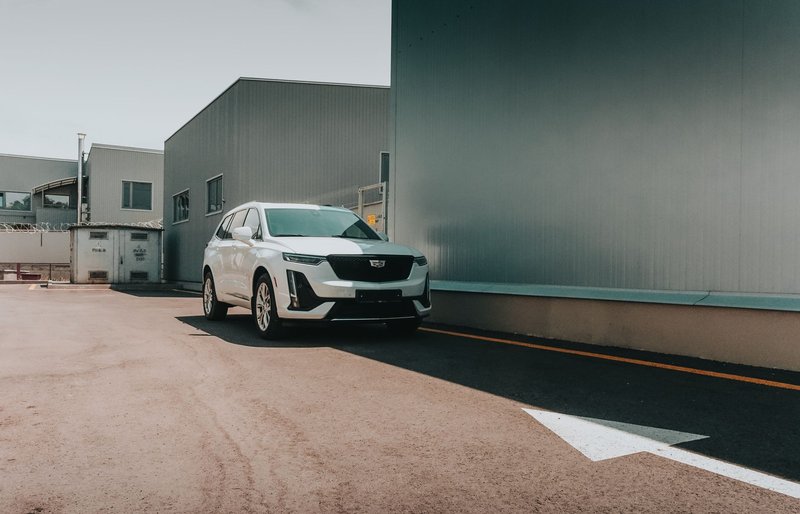
The Escalade is the model that arguably saved Cadillac’s commercial viability during the transition years. Launched in 1999, the second-generation Escalade arriving for 2002 was a proper redesign that turned the nameplate into a cultural institution.
By the mid-2000s, the Escalade was appearing in hip-hop videos, parked outside NBA arenas, and occupying the driveways of every professional athlete who didn’t want to drive a Range Rover. It was the aspirational SUV of the decade. The ESV (extended wheelbase) and EXT (pickup variant with a midgate cargo system) expanded the lineup into sub-niches that competitors couldn’t easily match.
Mechanically, it rode the GMT800 platform shared with the Chevy Suburban and Tahoe, which gave it that truck-based durability. The 6.0-liter V8 produced 345 horsepower in later trims — enough to move six tons of chrome and leather with reasonable authority. The third generation arrived for 2007 on the GMT900 platform, gaining independent rear suspension and a far more sophisticated interior that held up to German comparisons without embarrassment.
The Escalade didn’t win on engineering. It won on presence.
Cadillac CTS (2003–2007, First Generation) {#cts}
The CTS was the car that proved Cadillac was serious. Launched for the 2003 model year on the new rear-wheel-drive Sigma platform, it went directly after the BMW 3 Series with a sharp-edged body that looked like it had been designed by someone who’d studied fighter jets.
The first-gen CTS had rough edges — literally and figuratively. The interior quality lagged behind BMW and Mercedes, early cars had some reliability concerns with the 3.2-liter V6, and the ride/handling balance took some criticism for being too firm without being rewarding enough. But it established the template: rear-wheel drive, driver-focused, aggressive styling. Those reliability concerns with early models are worth bearing in mind — Cadillac’s track record in this area is part of what made the Art and Science era a genuine gamble, and the least reliable Cadillac cars list shows how much ground the brand had to recover.
The 2.8-liter and 3.6-liter V6 engines that arrived mid-cycle were more polished, and by the end of the first generation’s run the CTS had become a legitimate contender. It also spawned the CTS Sport Wagon and the CTS-V — which deserves its own section.
Cadillac XLR (2004–2009) {#xlr}
The XLR was Cadillac’s halo car — a two-seat retractable hardtop roadster built on the C5/C6 Corvette platform, priced north of $75,000 and aimed squarely at the Mercedes SL. It was gorgeous, it was distinctive, and it was the clearest statement Cadillac made that this was a new brand.
The base 4.6-liter Northstar V8 produced 320 horsepower, which was respectable but not exotic. The XLR-V that arrived for 2006 addressed this with a supercharged 4.4-liter V8 pushing 443 horsepower — enough to compete with the AMG versions it was up against.
Sales were always modest. The XLR never sold more than 3,000 units per year, and Cadillac quietly discontinued it in 2009 when the Corvette platform it shared became the seventh generation. But it remains one of the most visually striking American cars of the decade.
Cadillac SRX (2004–2009, First Generation) {#srx}
The SRX was Cadillac’s bet on the crossover/SUV market beyond the full-size Escalade. Built on the Sigma platform shared with the CTS and STS, the first-generation SRX was genuinely unusual: a mid-size luxury crossover with rear-wheel-drive underpinnings and, uniquely, a third-row seat option that gave it wagon-like practicality.
Buyers could spec it with either a 3.6-liter V6 or a 4.6-liter Northstar V8, and the all-wheel-drive system was well-implemented. It didn’t drive like anything else in the crossover segment — part luxury car, part tall station wagon, part genuine off-road capable vehicle (modestly, but still).
The first-generation SRX has been somewhat forgotten in favor of the front-wheel-drive second generation that arrived in 2010, which sold far better but gave up the dynamic character entirely. The original remains the more interesting machine.
Cadillac STS (2005–2011) {#sts}
The STS replaced the Seville nameplate and was Cadillac’s full-size rear-wheel-drive sport sedan — essentially the E-Class fighter to the CTS’s 3 Series. Built on an extended version of the Sigma platform, the STS came with a choice of a 3.6-liter V6 or 4.6-liter V8, and the rear-wheel-drive chassis gave it genuine driving dynamics that the old Seville could never claim.
The STS-V, arriving in 2006, took the concept to its logical extreme (more on that below). The standard STS itself was well-regarded, though it faced the persistent Cadillac problem of interior materials that didn’t quite match what BMW or Mercedes offered at the same price point. Still, as a driver’s car, it was closer to the European benchmark than Cadillac had been in decades.
Cadillac DTS (2006–2011) {#dts}
The DTS (DeVille Touring Sedan) was the direct successor to the DeVille and served the same purpose: large, comfortable, front-wheel-drive luxury for buyers who weren’t interested in track-day dynamics. The Northstar V8, available in standard or high-output form, provided effortless power. The ride was pillow-soft. The back seat was enormous.
It sold to a loyal demographic that has since largely moved to crossovers or left the new car market. The DTS was the last of the traditional Cadillac land yachts — a category that’s since been vacated entirely, for better or worse.
Cadillac BLS (2006–2010) {#bls}
The BLS is the most obscure Cadillac of the decade, and for American readers, possibly unknown entirely: it was never sold in the United States. Produced in collaboration with GM’s Saab division in Sweden, the BLS was a compact luxury sedan built on the same platform as the Saab 9-3 and aimed at European markets where Cadillac had essentially no presence.
Available with diesel and petrol engines (including turbocharged fours, which were unthinkable in American Cadillacs), the BLS was a pragmatic market entry rather than a prestige statement. It sold poorly and was discontinued in 2010 without ever achieving the foothold in Europe that GM had hoped for. It remains an interesting footnote: the Cadillac that barely anyone outside of Scandinavia actually drove.
The Performance Variants: CTS-V, STS-V, XLR-V {#performance-variants}
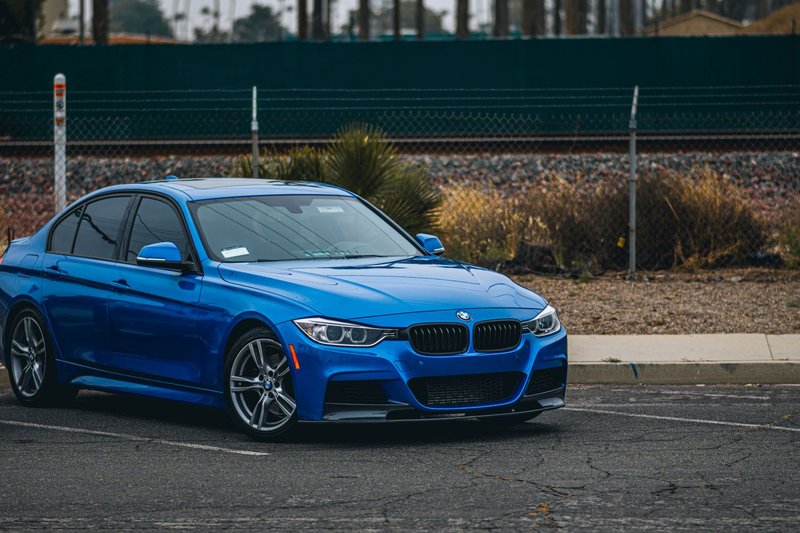
These three models deserve separate treatment because they represented something genuinely ambitious: Cadillac’s attempt to compete with AMG and M Division on pure performance terms.
CTS-V (2004–2007): The original CTS-V put a 5.7-liter LS6 V8 — the same engine from the Corvette Z06 — into the CTS body, producing 400 horsepower and a 0–60 time around 4.6 seconds. Paired with a six-speed manual as the only available transmission, it was a pure driver’s car. It set a Nürburgring lap record for production sedans in its class. The interior didn’t match the M3’s, and the chassis had some limitations, but the engine and the intent were both beyond argument. It also earned a place among the best American cars of the 2000s — a recognition that would have seemed unthinkable for a Cadillac just a decade earlier.
STS-V (2006–2011): The STS-V took a different approach: a supercharged Northstar V8 producing 469 horsepower, automatic transmission only (which disappointed some enthusiasts), and a focus on high-speed cruising rather than track-day heroes. Think of it as the AMG E63 answer rather than the M5 answer.
XLR-V (2006–2009): The supercharged 4.4-liter V8 producing 443 horsepower in a two-seat roadster was, by most accounts, a proper sports car. The transmission (five-speed automatic only) was the limiting factor. But the hardware was serious.
The 2000s Cadillac Timeline {#timeline}
| Model | Production Years | Platform | Drive |
|---|---|---|---|
| DeVille | 2000–2005 | K-body | FWD |
| Eldorado | 2000–2002 | E-body | FWD |
| Seville | 2000–2004 | K-body | FWD |
| Escalade | 2000–present | GMT800/900 | RWD/AWD |
| CTS | 2003–2007 (1st gen) | Sigma | RWD |
| CTS-V | 2004–2007 (1st gen) | Sigma | RWD |
| XLR | 2004–2009 | C5/C6 | RWD |
| XLR-V | 2006–2009 | C5/C6 | RWD |
| SRX | 2004–2009 (1st gen) | Sigma | RWD/AWD |
| STS | 2005–2011 | Sigma XL | RWD/AWD |
| STS-V | 2006–2011 | Sigma XL | RWD |
| DTS | 2006–2011 | K-body | FWD |
| BLS | 2006–2010 | Epsilon | FWD/AWD |
The 2000s Cadillac lineup tells two stories simultaneously. The front-wheel-drive models — DeVille, DTS, early Seville — were the brand’s past, serving a customer base that wanted refinement and comfort over sporting credentials. The rear-wheel-drive models — CTS, STS, SRX, XLR, and their V variants — were Cadillac making a claim about the future.
The claim worked, eventually. The CTS-V second generation (2009–2015) is widely considered one of the best performance sedans ever made by an American manufacturer. That car only existed because the awkward, ambitious first generation established the platform and the credibility. The 2000s were the decade Cadillac did the hard work of becoming a different brand — and the cars show every bit of that transition, rough edges and all.

Daniela Voss
More from Daniela VossHow we reviewed this article
This article was researched against manufacturer records and editorially reviewed before publishing. We accept no payment for coverage.