1976 was a year of automotive identity crisis. The muscle car era was gasping its last breaths, strangled by emissions regulations, rising insurance premiums, and the lingering shadow of the 1973 oil embargo. Detroit’s engineers were stuck in a brutal bind: federal regulators demanded cleaner, leaner engines just as buyers were finally coming back to showrooms. The result was a model year unlike any before it — horsepower numbers that would’ve embarrassed a 1969 Chevelle, but also some genuinely interesting cars that found their footing in the chaos.
Some 1976 models are forgettable compliance exercises. Others are the last of a bloodline, or the first of something new. Knowing which is which makes a real difference if you’re buying, restoring, or just obsessing. This guide covers the full range — American muscle, European sports cars, Japanese imports, and the economy cars that actually sold — with specs, original sticker prices where available, and honest takes on collector value today.
Table of Contents
- The State of the Industry in 1976
- American Muscle Cars
- American Pony Cars
- American Luxury and Full-Size
- Economy and Compact Cars
- European Sports Cars
- Japanese Models
- Which 1976 Cars Are Worth Collecting Today?
The State of the Industry in 1976
The 1973 OPEC oil embargo didn’t just spike gas prices — it permanently rewired what Americans wanted from their cars. By 1976, fuel economy wasn’t a nice-to-have, it was a marketing headline. Every manufacturer was chasing the new CAFE (Corporate Average Fuel Economy) standards that Congress had mandated in 1975, requiring fleets to hit 18 mpg by 1978 and 27.5 mpg by 1985.
The emissions crackdown hit power figures hard. A 1970 Chevelle SS 454 made 450 hp. The “same” engine in 1976 was down to around 215 hp — rated differently, yes, but undeniably slower. Catalytic converters became mandatory on all new cars for 1975 and carried over into 1976, locking manufacturers into unleaded fuel and the tuning compromises that came with it.
Not everything was grim. The mid-70s were actually a golden age for European sports cars in America, with models like the Lotus Esprit and Porsche 924 arriving fresh. Japan was also accelerating fast: Honda, Datsun, and Toyota were putting real engineering into compact platforms that American buyers were noticing for the first time.
American Muscle Cars
Chevrolet Corvette Stingray
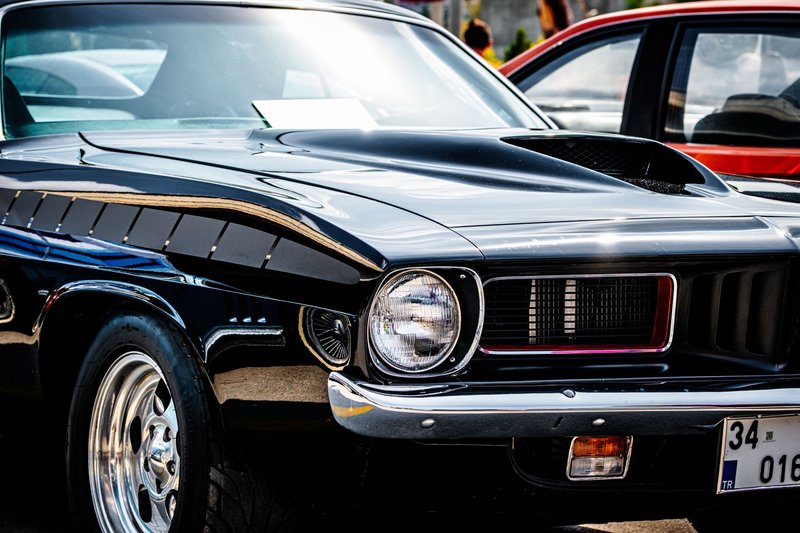
The 1976 Corvette was the last year with a removable rear window on the coupe — a small detail, but one that matters to collectors who know the lineage. Base price was $7,604, and Chevrolet built 46,558 units, the highest production year of the C3 generation to that point. The base L48 350 V8 made 180 hp; the optional L82 version bumped that to 210 hp. Neither number impresses on paper, but the L82 still pulls well at low rpm, and the fiberglass body means rust is never the enemy. These are among the most affordable entry points into classic Corvette ownership, with clean examples trading between $20,000–$40,000 depending on options and provenance.
Pontiac Firebird Trans Am
The 1976 Trans Am carried the 455 cu in V8 — but just barely. It was the last year for the big block in the Firebird, and Pontiac squeezed out 200 hp net from it. Only 46 Super Duty 455 cars were built, most of them destined for fleet or test use. The standard 455 HO made the same power in a more civilized package and is more commonly found. MSRP started around $5,500, and production of the full Firebird line hit roughly 110,775 units. The 1976 Trans Am sits in a strange spot for collectors: it’s the last of the big-block Firebirds, which matters, but the power numbers are the weakest of the run. Find a four-speed car with the 455 if you want the right combination. For more context on how this generation fits into the broader muscle car story, 70s muscle cars and why the era ended is worth a read.
Dodge Charger
The 1976 Charger wore the name on a much tamer body than its 1969 predecessor. It had moved to the B-body platform with a more formal roofline — what some enthusiasts call the “personal luxury” pivot. The base 318 cubic inch V8 made 150 hp. You could still order a 400 or the 440 Magnum, though the 440 was on its last legs, emissions-strangled to 200 hp. Base MSRP sat around $4,600. These are not the cars that command big auction prices; a clean 440 example with documented history is an interesting buy in the $15,000–$25,000 range, but the model lacks the cult following of the 1968–1970 Chargers.
Pontiac GTO
The 1976 GTO deserves a paragraph as a cautionary tale. Pontiac had rebadged the Ventura compact as the GTO in 1974, and by 1976 the nameplate was limping toward discontinuation. The 400 V8 made 200 hp. Production was roughly 2,800 units — a far cry from the 87,000 built in 1966. This is the kind of car where rarity and brand cachet fight each other: not enough people care about the 1976 GTO to drive up prices, but there aren’t enough of them to flood the market either. The best reason to own one is if you want a conversation piece and a genuine piece of muscle car history at the wrong end of the story.
American Pony Cars
Ford Mustang II Cobra II
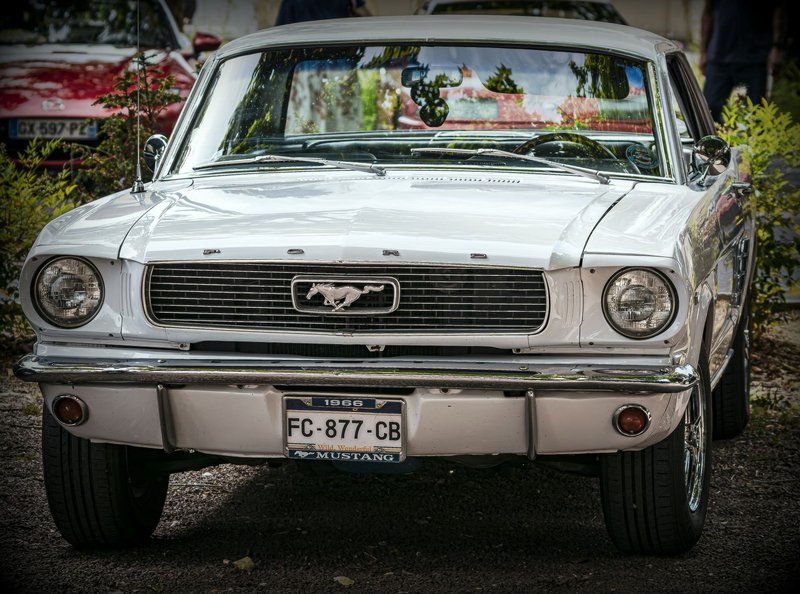
The Mustang II was universally mocked when it arrived in 1974, and the mockery is mostly fair — it was a Pinto platform with better clothes. But the 1976 Cobra II package is a different animal. Styled to evoke the original Shelby Cobras, it added stripes, spoilers, and a rear window louver that made it genuinely aggressive-looking. The engine options were still weak: a 2.3L four-cylinder or a 2.8L V6 were the available choices (the V8 didn’t return until the 302 in 1975, and it wasn’t offered in the Cobra II trim until later). MSRP for the Cobra II package was around $400 over the base coupe. These are cheap, plentiful, and increasingly collectible as the ’70s nostalgia wave hits — under $15,000 gets you a clean one.
Chevrolet Camaro
The second-generation Camaro soldiered on in 1976 without major changes, which was actually the right call. The platform was sorted, the looks were good, and buyers responded — Chevrolet moved 182,959 Camaros that year, a strong number for the era. The LT (Luxury Touring) trim was the volume seller, while the Type LT with the L82 350 V8 (165 hp) gave you the right combination of creature comforts and something worth driving. Base price was around $4,000 for the Sport Coupe. Second-gen Camaros are eternally popular on the resale market; a solid 1976 runs $18,000–$35,000 depending on spec, with Rally Sport and Z28 variants commanding more.
American Luxury and Full-Size
Cadillac Eldorado
The 1976 Eldorado convertible is a genuine collector target, and for a specific reason: Cadillac announced it would be the last American convertible, which triggered a buying frenzy. They built 14,000 of them (actually an inflated number — Cadillac gamed its own farewell by overproducing for the buzz). Base price was $11,049. Of course, American convertibles didn’t actually die in 1976 — Chrysler brought them back in 1982 — but the announcement worked. The 500 cu in V8 made 190 hp net. These cars are large, impractical, and exactly the sort of artifact that belongs in a collection. Clean examples with low miles routinely fetch $30,000–$60,000.
Lincoln Continental Mark IV
The Mark IV was Lincoln’s answer to the Cadillac Eldorado — a personal luxury coupe that prioritized presence over performance. The 460 V8 made 202 hp. MSRP started at $11,060, and Lincoln sold over 56,000 units. The “Bill Blass” and “Cartier” designer editions were legitimate fashion-house collaborations, which sounds absurd but actually produced some well-sorted interior color combinations. These are affordable classics today: $10,000–$20,000 buys a nice driver.
Economy and Compact Cars
Honda Civic CVCC
The 1976 Civic with the CVCC (Compound Vortex Controlled Combustion) engine was a landmark car — it was the first to meet EPA emissions standards without a catalytic converter, which Honda used as a direct marketing attack on American manufacturers. The engine produced 53 hp from 1.5 liters, which sounds trivial but moved the 1,500 lb car well enough. MSRP was around $3,000. These are historically important, but attrition has been brutal — finding a clean survivor is the challenge. Original CVCC Civics that have been properly preserved are starting to attract serious collector attention. Honda continued building on this foundation: by 1977, the lineup had expanded considerably, and the complete list of 1977 Honda car models shows how quickly the brand moved.
Volkswagen Golf (Rabbit)
Sold in North America as the Rabbit, the Golf was in its second year stateside in 1976. The 1.6L engine made 71 hp in U.S. spec, front-wheel drive was still a novelty to American buyers, and the hatchback body was practical in ways that most domestic compacts weren’t. Base price was around $3,499. The Rabbit GTI didn’t arrive until 1983 in the U.S., so the 1976 cars are standard fare — but early Rabbits in clean condition are increasingly collectible among VW enthusiasts. Parts support through the aftermarket community is solid.
AMC Pacer
The Pacer was genuinely strange in 1976 — wider than it was long by some measurements, with a greenhouse designed around a rotary engine that AMC ultimately never received from Wankel/GM. They fitted it with a straight-six instead. The 258 cu in six made 120 hp; the optional 304 V8 made 135 hp. MSRP was around $3,500 for the base model. The Pacer has developed a devoted cult following — partly ironic, partly sincere. Clean 1976 examples sell between $5,000–$18,000, with the rare wagon body commanding a premium.
European Sports Cars
Lotus Esprit
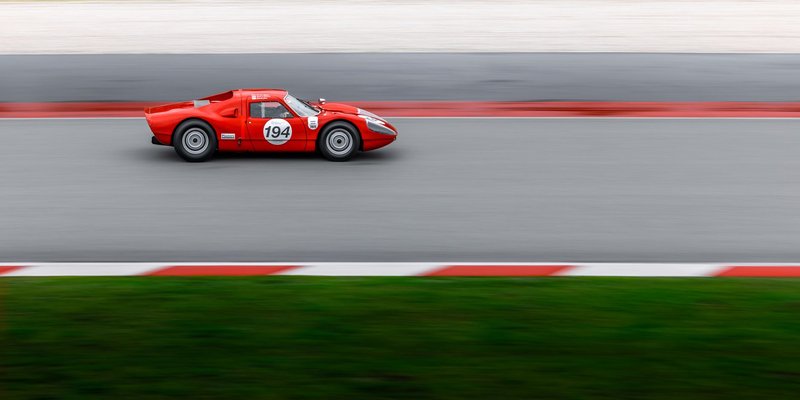
The Lotus Esprit debuted at the 1975 Turin Motor Show and went on sale in 1976 — one of the defining sports car moments of the decade. Designed by Giorgetto Giugiaro, it used a 2.0L twin-cam four making 160 hp in a mid-engine, fiberglass body weighing under 2,000 lbs. Base price in the UK was £5,844; U.S. pricing put it around $14,000. The S1 (first series) is the pure version — no turbo, no padding, no compromise. Production numbers were modest: a few hundred per year. The Esprit’s later fame from The Spy Who Loved Me came in 1977, but the 1976 S1 is the rarer, cleaner car. Expect to pay $35,000–$80,000 for a properly restored S1 today.
Porsche 912E
The 912E was a one-year anomaly. With the 914 discontinued and the full 911 lineup becoming expensive to produce, Porsche briefly revived the 912 name for 1976, slotting a Volkswagen 2.0L flat-four into the 911 bodyshell. It made 86 hp. This was not a proud moment for Porsche — the engine choice was cost-driven — but it gave buyers a 911-bodied car at $10,845, considerably less than the 911S. Only 2,099 were built, all for the U.S. market. The 912E occupies a niche but real collector category: 911 body, affordable entry price, but a powertrain that enthusiasts are divided on. Values have crept up to $25,000–$45,000 for clean examples.
Porsche 911S
While the 912E was the budget option, the 911S was the driver’s car. The 2.7L flat-six made 176 hp in U.S. trim (detuned from European spec by emissions equipment). MSRP was around $14,000. These are pre-impact-bumper cars — the U.S. 5-mph bumpers arrived in 1974, so by 1976 collectors are looking at what they call the “impact bumper” era, which the purist crowd views as less desirable than the earlier chrome-bumper cars. That creates a buying opportunity: 1976 911S models are priced below the 1973s while offering similar driving feel. Clean, documented examples fetch $60,000–$110,000.
Ferrari 400
The Ferrari 400 was the first Ferrari with a standard automatic transmission — a Turbo-Hydramatic sourced from GM — which horrified traditionalists but sold cars. The 4.8L V12 made 340 hp in European spec. MSRP was around £19,000 in the UK at launch. The 400 never gets the auction glory of the Dino or the Daytona, but it’s a proper V12 Ferrari at a fraction of the price: $50,000–$90,000 depending on condition and gearbox specification. The manual-gearbox car (designated “400GT”) commands more from collectors who can’t forgive the automatic. Ferrari’s engineering in this era was at a fascinating crossroads — the 1972 Ferrari lineup captures the models that immediately preceded it and shows how the brand’s philosophy was shifting.
Lamborghini Silhouette
The Silhouette was Lamborghini’s attempt at a Targa-top supercar using the Urraco’s V8. It made 265 hp from a 3.0L quad-cam eight, sat on a 96-inch wheelbase, and weighed around 3,000 lbs. Only 54 were ever built, making it among the rarest production Lamborghinis. The Silhouette’s brief production run (1976–1977) and tiny numbers make pricing erratic — when they appear at auction, they sell in the $120,000–$200,000 range. This is not a car you buy for ease of ownership; it’s a car you buy because nothing else is quite like it.
Japanese Models
Toyota Celica GT
The second-generation Celica arrived for 1976 with a longer, more angular body and the 2T-C 1.6L engine making 87 hp in U.S. spec. The GT trim added a rear spoiler and upgraded interior. MSRP was around $4,200. These were properly fun cars — rear-wheel drive, good steering feel, and a manual gearbox that made sense. Clean 1976 Celicas are increasingly hard to find due to rust (the floorpans are vulnerable), but when you do find them, prices are still reasonable: $8,000–$20,000 for a solid driver.
Datsun 280Z
The 280Z replaced the 240Z/260Z with a fuel-injected 2.8L inline-six making 149 hp — a modest step up in displacement but a meaningful one in real-world driveability. MSRP started at $7,499. The 280Z was more refined than the original 240Z and outsold it convincingly. These are the most affordable Z-car entry points today, with the caveat that rust is the universal enemy (check the rear hatch corners and the floorpans). A solid driver sits around $15,000–$30,000; a concours restoration commands more.
Honda Accord
The first-generation Honda Accord launched in 1976 as a 1977 model in the U.S., arriving with a 1.6L engine making 68 hp and a hatchback body. It was immediately recognized as doing something American compacts weren’t: fitting together well. Assembly quality was the talking point. Base price was $3,995. The first-generation Accord is historically significant but genuinely rare in survivor condition — these were driven hard for decades. A clean example is a find.
Which 1976 Cars Are Worth Collecting Today?
The honest hierarchy, based on trajectory and current market:
Strong buy: Lotus Esprit S1, Porsche 911S, Pontiac Firebird Trans Am 455, Corvette Stingray L82. These have real mechanical pedigree, growing appreciation, and tangible reasons for someone who knows the era to care.
Sleeper picks: Honda Civic CVCC (historically undervalued, rarity increasing), Datsun 280Z (peak of the Z-car run before emissions hurt it further), AMC Pacer (cheap entry, devoted community).
Avoid unless you love the car for itself: Dodge Charger (diluted brand cachet), Pontiac GTO (nobody’s favorite year), Mustang II in base trim (the market is there for specific variants like the Cobra II, but the underlying platform limits ceiling).
Wildcards: Cadillac Eldorado convertible (over-produced but still scarce and iconic), Lamborghini Silhouette (too rare to be liquid, but if you find a right-priced example, it’s untapped).
The best 1976 cars to buy share one trait: they were doing something distinct from the compliance shuffle that defined the era. The cars that were just trying to survive the new regulations are where the bodies are buried. The ones that pushed through anyway — the Esprit, the Trans Am, the first Accord — are the ones worth your time.

Marco Delantero
More from Marco DelanteroHow we reviewed this article
This article was researched against manufacturer records and editorially reviewed before publishing. We accept no payment for coverage.