The 2010s were a complicated decade for BMW. On one hand, they gave us the i8, the F80 M3, the 1M Coupe, and the M2 — cars that will be discussed for generations. On the other, BMW spent most of the decade adding complexity faster than buyers could absorb it: turbos everywhere, iDrive updates nobody asked for, and a reliability reputation that took a real hit.
This guide covers every major BMW series introduced or refreshed between 2010 and 2019. Not just a list — you’ll get the generation codes, what changed between refreshes, what each car was actually like to live with, and which ones make the best used buys today.
Table of Contents
- The BMW Naming System in the 2010s
- 1 Series (E82/E87/F20/F21)
- 2 Series (F22/F23/F45/F46)
- 3 Series (E90/F30)
- 4 Series (F32/F33/F36)
- 5 Series (F10/G30)
- 6 Series (F12/F13/F06)
- 7 Series (F01/G11)
- X Models: X1 through X7
- Z4 (E89)
- i3 and i8
- M Cars: The Full List
- Quick Reference Table
- Best Used Buys from the 2010s
The BMW Naming System in the 2010s {#naming-system}
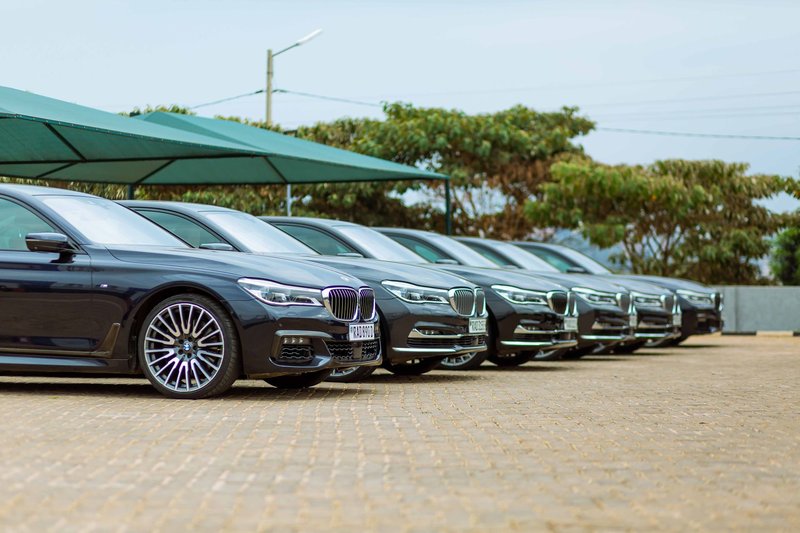
BMW uses internal chassis codes that enthusiasts care about more than marketing names. In the 2010s, BMW was mid-transition from the E-chassis generation (which carried over from the 2000s) to the F-chassis generation, and by 2016–2017, the first G-chassis models started appearing.
Here’s the shorthand: E = late 2000s generation, F = the dominant 2010s generation, G = end-of-decade refresh heading into the 2020s. If you’re shopping used BMWs from this era, the F-chassis cars are what you’ll mostly encounter. Some are excellent; some are maintenance nightmares depending on spec.
1 Series (E82/E87/F20/F21) {#1-series}
The decade opened with the E82 coupe and E88 convertible still in production — these are the rear-wheel-drive 1 Series coupes that share their platform with the M1 Coupe (more on that later). The E87 hatchback was also still around at the start of the decade.
In 2011, BMW replaced all of them with the F20 hatchback and F21 three-door. Critical change: the F20 generation switched to a front-biased architecture (though still rear-wheel drive), and the coupe body style was spun off into the new 2 Series. The F20 got a facelift in 2015 with revised styling and updated iDrive.
Engine options ran from the 114i with a 1.6-liter turbo to the 135i with a 3.0-liter straight-six. The six-cylinder F20 cars are the sweet spot — the four-cylinder versions feel ordinary by BMW standards.
2 Series (F22/F23/F45/F46) {#2-series}
BMW launched the 2 Series in 2014, pulling the coupe and convertible body styles out of the 1 Series lineup and giving them their own nameplate. The F22 coupe and F23 convertible are proper rear-wheel-drive cars; the F45 Active Tourer and F46 Gran Tourer that arrived in 2014–2015 are front-wheel-drive MPVs that share a platform with Mini — a decision that still divides opinion.
The M235i (and later M240i) is the car to pay attention to here. The M240i with the B58 engine — BMW’s 3.0-liter straight-six — makes 335 hp and can hit 60 mph in the low-4-second range. It’s the closest thing to the old M3 experience at a fraction of the price, and the B58 is genuinely one of the better engines BMW has built. If you’re drawn to the idea of a compact coupe with real performance credentials, the 2010s produced several comparable rivals worth knowing about for context on where the M240i sits in the broader market.
3 Series (E90/F30) {#3-series}
The 3 Series is BMW’s volume car, and the 2010s saw two full generations of it.
The E90 (saloon), E91 (touring), E92 (coupe), and E93 (convertible) were all still available at the start of the decade before the F30 replaced the saloon in 2012. The F31 touring and F34 Gran Turismo followed. The coupe and convertible variants were absorbed into the new 4 Series name.
The F30’s big mechanical news was the switch to turbocharged four-cylinder engines across most of the lineup — the naturally aspirated six-cylinders that defined earlier 3 Series were gone. The 328i became a 2.0-liter turbo; the 335i kept the straight-six. A facelift arrived in 2015 with LED headlights and updated steering. The G20 replacement launched in 2018, so late-decade 3 Series buyers got the G-chassis car.
Reliability note: the N20 four-cylinder (used in the 328i) has a known timing chain issue that has caused significant failures. If you’re buying an N20-powered F30, a pre-purchase inspection of the timing chain tensioner is non-negotiable.
4 Series (F32/F33/F36) {#4-series}
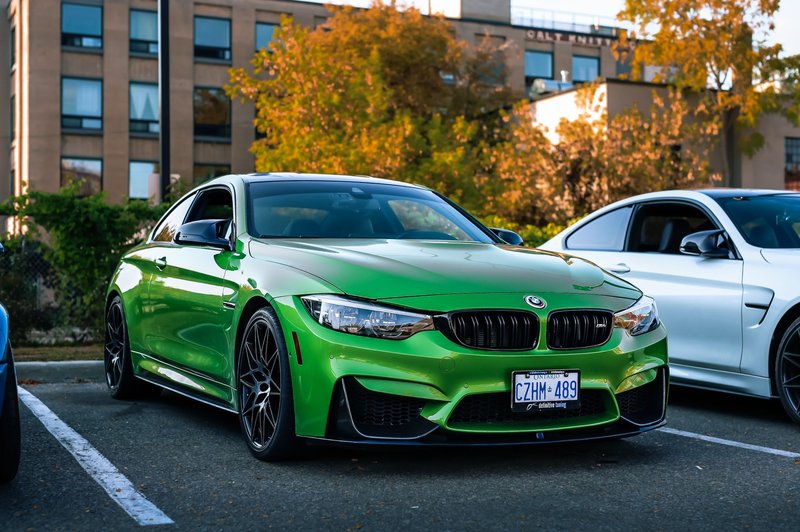
Launched in 2013, the 4 Series is essentially the coupe, convertible, and Gran Coupe variants of the F30 3 Series with a wider body and lower roofline. The F32 coupe, F33 convertible, and F36 four-door Gran Coupe cover the range.
The 435i with the N55 straight-six is the pick of the standard lineup. The M4 (covered in the M section) is the enthusiast variant.
5 Series (F10/G30) {#5-series}
The F10 5 Series launched in 2010 and ran until 2017, with a facelift in 2013. It came in saloon (F10), touring (F11), and Gran Turismo hatchback (F07) variants. Engine range spanned from the 518d diesel to the 550i with a 4.4-liter twin-turbo V8.
The G30 arrived in 2017 — lighter, cleaner design, and with the option of plug-in hybrid powertrains. The 530e is a legitimately practical hybrid for real-world driving.
The F10 M5 deserves its own mention. Powered by a 4.4-liter twin-turbo V8 producing 552 hp, it was a significant departure from the naturally aspirated V10 in the previous M5. Purists complained; anyone who drove it quickly stopped complaining.
6 Series (F12/F13/F06) {#6-series}
The F12 convertible, F13 coupe, and F06 Gran Coupe arrived in 2011–2012. These are big, heavy grand tourers — the 640i with the straight-six is the practical choice, the 650i with the V8 is the one that sounds right.
The M6 Gran Coupe (F06) is one of the more underrated BMWs of the decade: four doors, 560 hp V8, and a lower profile than the M5 with roughly similar performance. They’ve depreciated heavily, which makes them interesting used territory for buyers who can stomach the running costs. For perspective on how the M6 Gran Coupe stacks up against the prestige competition it was aimed at, the 2010s luxury car landscape gives a useful overview of where BMW’s flagship grand tourers sat in the segment.
7 Series (F01/G11) {#7-series}
The F01 generation opened the decade and received a facelift in 2012 before the G11 replaced it in 2015. The G11 brought BMW’s new modular engine architecture, a significant weight reduction through carbon fiber reinforced plastic in the body structure, and a gesture control system for iDrive that was more gimmick than feature at launch.
The 750i and 750Li with the 4.4-liter twin-turbo V8 are the mainstream flagships; the M760Li with a 6.6-liter V12 producing 601 hp arrived in 2016 for buyers who needed more.
X Models: X1 through X7 {#x-models}
BMW’s SUV lineup expanded significantly during the 2010s. Here’s the run-down:
X1 (E84 / F48): The E84 first-gen was available at the start of the decade. The F48 second-gen arrived in 2015 and controversially switched to a front-wheel-drive architecture — the same UKL platform as the Mini Countryman. It’s practical and competent; it’s not a BMW driver’s SUV.
X2 (F39): New nameplate launched in 2018. Sportier proportions than the X1, same front-drive UKL platform. Style over substance, but it sells.
X3 (F25 / G01): The F25 ran from 2010 to 2017 and is genuinely solid. The xDrive28i and xDrive35i cover most buyers. The G01 replacement arrived in 2017 and is lighter and more refined. The X3 M40i with the B58 engine is a legitimate driver’s SUV.
X4 (F26 / G02): BMW’s coupe-SUV crossover launched in 2014 as the X4 — essentially a fastback version of the X3. The G02 second-gen arrived in 2018.
X5 (E70 / F15 / G05): The E70 was still selling at the start of the decade. The F15 arrived in 2013 with a cleaner design and included the X5 M with a 567 hp twin-turbo V8. The G05 replaced it in 2018.
X6 (E71 / F16): The original E71 ran until 2014; the F16 took over with similar proportions and a cleaner face. The X6 M is monstrous in the best sense — it weighs over 5,000 lbs and will still run to 60 mph in 4.2 seconds.
X7 (G07): Brand new nameplate arriving in 2019. BMW’s first three-row SUV, competing with the Range Rover and Mercedes GLS. The M50i with a 523 hp V8 is a genuinely fast large SUV.
Z4 (E89) {#z4}
The E89 Z4 launched in 2009 and carried through the decade largely unchanged — BMW didn’t replace it with the G29 until 2018. It’s a proper roadster: rear-wheel drive, available with the straight-six, and a retractable hardtop that addresses the main weakness of a fabric roof.
The Z4 35is with the N54 twin-turbo straight-six is the high point of the E89 range. The G29 replacement, co-developed with Toyota (sharing a platform with the Supra), arrived just in time to close out the decade.
i3 and i8 {#i-models}
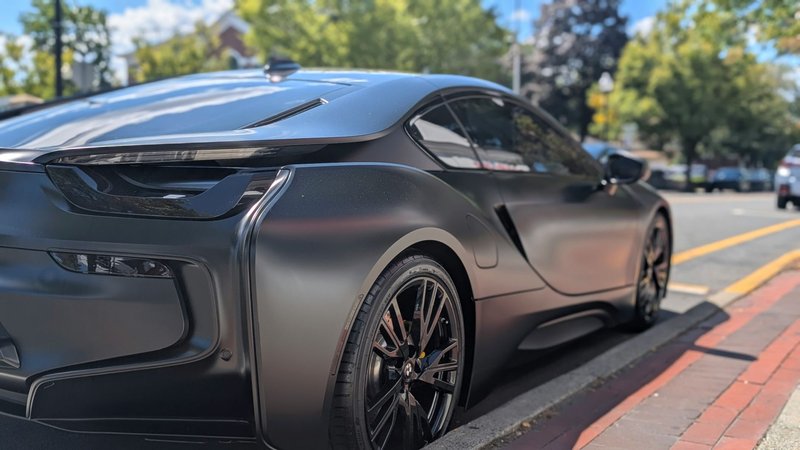
These two defined BMW’s 2010s electric ambitions, and they couldn’t be more different.
BMW i3 (2013): A city car with carbon fiber body construction and rear-wheel drive. Available as full electric or with a small range extender motorcycle engine. The body construction is genuinely impressive engineering — the passenger cell is carbon fiber reinforced plastic, the chassis underneath is aluminum. Range was initially modest (~80 miles), improved with the 2017 120 Ah battery update to around 150 miles real-world. It’s small, city-focused, and polarizing in design. The interior, though, is excellent — BMW used recycled and sustainably sourced materials throughout, and the dashboard design held up better than many cars of the era.
BMW i8 (2014): A plug-in hybrid sports car producing 357 hp from a combination of a 1.5-liter three-cylinder turbocharged engine and an electric motor. It looks like it belongs a decade in the future — the butterfly doors, the aerodynamic body kit, the LED lighting all age extremely well. It’s not particularly fast by pure sports car standards (0–60 in 4.2 seconds), and the 1.5-liter engine note doesn’t match the visuals. But as a statement of intent and as a touring sports car, it earned its place. The 2018 Roadster version added more power and a second electric motor. The i8 regularly appears on lists of the best sports cars of the 2010s — which says something about how well it aged as a design even if the performance numbers were modest by supercar standards.
M Cars: The Full List {#m-cars}
The M division had a prolific decade. Here are the significant ones:
1M Coupe (2011): Built on the E82 platform with the N54 twin-turbo straight-six from the 335i, producing 335 hp. Narrow-body, analog, communicative steering. Only 6,309 built worldwide. It’s already appreciating. If you can find one in good condition, the price is only going in one direction.
M3 / M4 (F80/F82, 2014): The F80 M3 and F82 M4 replaced the naturally aspirated V8 with a twin-turbo 3.0-liter straight-six (S55) producing 425 hp. Purists mourned the V8; the S55 is objectively a better track engine — more torque, more consistent power delivery, faster lap times. The Competition Package adds 19 hp and sharper dynamics. These are excellent driver’s cars.
M2 (F87, 2016): The M2 is the spiritual successor to the 1M. Smaller, lighter, rear-wheel drive, available only as a coupe. The original M2 uses a detuned version of the S55 engine from the M3. The M2 Competition (2018) gets the full S55. Both are excellent; the Competition is the one to have. According to BMW, the M2 Competition runs to 100 km/h in 4.2 seconds.
M5 (F10/F90): The F10 M5 with its twin-turbo V8 ran through most of the decade. The F90 replacement arrived in 2018 with 600 hp, all-wheel drive, and the ability to run in rear-wheel-drive mode for those who want it. The F90 is faster in every measurable way than every previous M5.
M6 (F12/F13/F06): Based on the 6 Series, with the same 4.4-liter twin-turbo V8 as the M5 producing 560 hp. The Gran Coupe variant is the practical one — four doors, M performance.
X5 M / X6 M (F85/F86): Both powered by the 4.4-liter twin-turbo V8 producing 567 hp. The X5 M is the better driver; the X6 M makes the statement.
Quick Reference Table {#quick-reference}
| Model | Generation | Years | Key Variant |
|---|---|---|---|
| 1 Series | F20/F21 | 2011–2019 | 135i (N55 straight-six) |
| 2 Series | F22/F23 | 2014–2019 | M240i (B58, 335 hp) |
| 3 Series | F30/F31 | 2012–2018 | 335i/340i (straight-six) |
| 4 Series | F32/F33/F36 | 2013–2019 | 435i/440i |
| 5 Series | F10/G30 | 2010–2019 | M5 (4.4L V8, 552 hp) |
| 6 Series | F12/F13/F06 | 2011–2018 | M6 Gran Coupe |
| 7 Series | F01/G11 | 2010–2019 | M760Li (V12, 601 hp) |
| X1 | E84/F48 | 2010–2019 | xDrive28i |
| X2 | F39 | 2018–2019 | xDrive28i |
| X3 | F25/G01 | 2010–2019 | X3 M40i (B58) |
| X4 | F26/G02 | 2014–2019 | X4 M40i |
| X5 | E70/F15/G05 | 2010–2019 | X5 M (567 hp) |
| X6 | E71/F16 | 2010–2019 | X6 M |
| X7 | G07 | 2019 | M50i (523 hp) |
| Z4 | E89 | 2009–2016 | Z4 35is |
| i3 | I01 | 2013–2019 | 120 Ah (150 mi range) |
| i8 | I12 | 2014–2019 | i8 Roadster (2018) |
| 1M Coupe | E82 | 2011 | Only trim (335 hp) |
| M2 | F87 | 2016–2019 | M2 Competition (S55) |
| M3 | F80 | 2014–2018 | Competition Package |
| M4 | F82/F83 | 2014–2019 | Competition Package |
| M5 | F10/F90 | 2011–2019 | F90 Competition (617 hp) |
Best Used Buys from the 2010s {#used-buys}
Not every 2010s BMW ages equally well on the used market. Here’s where the value actually is:
M2 Competition (F87, 2018–2019): The best driver’s BMW of the decade at a price that hasn’t appreciated to M3 levels yet. The S55 engine is proven, the car is small enough to be engaging on real roads, and finding one with reasonable miles is still possible. Buy a pre-purchase inspection.
M240i (F22, 2017–2019): The B58 engine is one of BMW’s best modern straight-sixes, and the M240i wraps it in a compact coupe that doesn’t have M car insurance costs. Depreciation has made them excellent value.
E89 Z4 35is: The N54 twin-turbo straight-six in a proper roadster. The E89 hasn’t hit the classic appreciation curve yet, which means you can still find clean examples at reasonable prices. That won’t last long.
F30 340i (2016–2018): The 340i uses the B58 rather than the older N55, and it’s notably better. Find one with the manual transmission and you have a legitimate everyday sports sedan at a fraction of new car cost.
Avoid: N20-powered 328i without a full timing chain service history. The failure mode is catastrophic and expensive, and many of these cars have high miles without documentation of that specific service. The N20 is not a bad engine if maintained — it just requires that specific maintenance, and many used examples haven’t had it.
The 2010s BMW lineup was vast enough to be genuinely confusing, but the through-line is clear: the best cars of the decade are the ones where BMW let the engineering lead — the M2, the 1M, the i8, the F80 M3. The cars where marketing led (the X2, the 6 Series GT, the i8’s positioning as a performance car when it’s really a GT) are the ones that feel like the decade’s missed opportunities. Knowing which is which is most of the battle.

Marco Delantero
More from Marco DelanteroHow we reviewed this article
This article was researched against manufacturer records and editorially reviewed before publishing. We accept no payment for coverage.