Most “90s Toyota” roundups pick a lane. Either it’s the Supra-Celica-MR2 fan fiction, or it’s a spec-dump reference table with forty entries and zero opinions. Neither tells you what you actually want to know: what Toyota built in that decade, what it was like to own, and whether it’s worth chasing down today.
The truth is Toyota’s 1990s lineup was two companies wearing one badge. In North America and Europe, it was building the most boringly competent cars on the planet — Camrys and Corollas that just would not break. In Japan, the same company was quietly shipping gullwing-door coupes, all-wheel-drive rally homologation specials, and turbocharged sedans that drift culture is still obsessed with. Almost none of that second category was ever sold outside Japan.
This roundup covers both halves: the daily drivers everyone remembers, the turbo icons that made Toyota’s performance reputation, the JDM oddities enthusiasts hunt for now, and the trucks that never really left. Where it matters, you’ll find what each one cost new, what clean examples run today, and what actually goes wrong with them.
Table of Contents
- Daily Drivers: The Mainstream 90s Toyota
- Performance Icons: Turbo and All-Wheel-Drive
- JDM Curiosities: The Ones You Never Saw Stateside
- Off-Road: The Land Cruiser Decade
- MSRP Then vs. Value Now
- Buying a 90s Toyota Today
- FAQ
Daily Drivers: The Mainstream 90s Toyota {#daily-drivers}
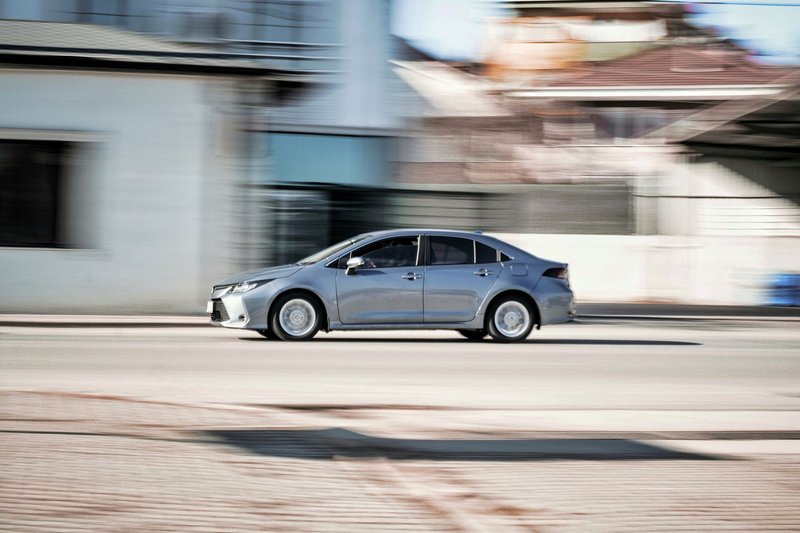
These are the cars that actually built Toyota’s reputation. Not glamorous, not collectible in most trims, but the reason “just buy a Toyota” became a piece of received wisdom that’s still repeated three decades later.
Camry (XV10, 1991–1996). The XV10 was the generation that made the Camry America’s best-selling car, and it did it by being aggressively unremarkable in the best sense — a wider, more substantial redesign built at Toyota’s Georgetown, Kentucky plant specifically to suit American tastes. The V6 option (the 3VZ-FE, later the 1MZ-FE) gave it enough shove that nobody cross-shopping a Honda Accord felt short-changed. There’s a reason these still turn up with 250,000 miles on the original transmission.
Corolla (E90/E100/E110, 1987–2000 spanning three generations). The 90s Corolla went through three distinct chassis codes, and each one got more refined without losing the formula: cheap to run, nearly impossible to kill. The AE101 and AE111 generations also underpin the JDM performance variants below — same bones, wildly different engines.
Tercel (L40/L50). Toyota’s entry point, and proof the company didn’t need a turbo or a V6 to make a car people trusted. Unglamorous, but it’s the reason a lot of first-time buyers became Toyota buyers for life.
Previa (1990–1997). The strangest-looking minivan of the decade — a mid-engine, cab-forward pod shape that Toyota built because it thought the boxy minivan format was played out. Some trims offered a supercharged 2.4-liter four and optional all-wheel drive, which is not a sentence you’d expect about a minivan. It sold in smaller numbers than the Sienna that replaced it, but it’s aged into a genuine cult object.
Performance Icons: Turbo and All-Wheel-Drive {#performance-icons}
This is where Toyota’s 90s reputation as an engineering house, not just a reliability brand, actually comes from.
Supra (A80, 1993–1998). The one everyone already knows, so here’s the part that gets skipped: Japanese-market A80s were factory-limited to 276 hp under a gentlemen’s agreement among Japanese manufacturers, while US and Canadian 2JZ-GTE models were rated at 326 hp and 315 lb-ft, run through a six-speed manual borrowed from the Supra’s Lotus-tuned suspension development. The 3.0-liter twin-turbo inline-six became legendary less for what it made stock and more for what it survives — the bottom end is routinely pushed past 800 hp on the stock block. That reputation is exactly why a clean, unmodified 1998 Supra sold for $242,000 at a Mecum auction; even ordinary turbo examples now trade in the $70,000–$120,000 range.
MR2 Turbo (SW20, 1990–1999). Toyota’s mid-engine answer to the Ferrari 348’s silhouette, at a fraction of the price. The US-spec Gen 2 3S-GTE turbo made 200 hp, enough for a 5.8-second 0-60 in a car that weighed around 2,900 lbs. It also earned a reputation for snap oversteer — lift off the throttle mid-corner and the mid-mounted mass would try to swap ends with you. Toyota addressed it across five running revisions between 1991 and 1999, and later Rev3–Rev5 cars on the correct staggered tires are genuinely predictable. Values today run $12,000–$30,000 for clean, unmodified cars, with late JDM Rev5 examples on the CT20b turbo commanding the top of that range.
Celica GT-Four (ST205, 1994–1999). Toyota needed 2,500 road cars to homologate its WRC rally program, and the ST205 is the result: full-time all-wheel drive, a Torsen center differential, and a turbocharged 2.0-liter 3S-GTE making 255 hp with genuine rally-derived hardware like anti-lag plumbing and a water-spray intercooler. The FIA’s own homologation record confirms the run was capped at those 2,500 units — which is exactly why so few surface for sale today.
Chaser Tourer V (JZX100, 1996–2000). A four-door sedan that looks like a company car and hides a 1JZ-GTE twin-turbo inline-six making a factory-rated 280 hp — widely believed to be closer to 300 on Japanese pump gas. Built on the same rear-wheel-drive platform as the Mark II and Cresta, with an R154 five-speed and a Torsen limited-slip diff standard on the Tourer V. It became the foundation of late-90s D1 Grand Prix drift culture, and it’s still the reason “sleeper JDM sedan” is a recognizable genre.
JDM Curiosities: The Ones You Never Saw Stateside {#jdm-curiosities}
This is the category no mainstream US-market list can cover, because none of these cars were ever federalized. They’re the reason JDM import culture exists.
Sera (1990–1995). A tiny front-wheel-drive coupe with a glass canopy roof and gullwing doors — Toyota’s own account of the car’s development traces the design back to the AXV-II concept and notes it was the first Japanese mass-production car with gullwing doors incorporating glass running to the roofline. Under the theatrics sat a modest 110-hp 1.5-liter four. Only 15,941 were built, and the doors alone are why McLaren F1 engineers reportedly studied one.
Starlet GT Turbo (EP82/EP91, 1989–1995). A 1.3-liter turbocharged hatchback making 133 hp in a car that weighed under 2,000 lbs — a genuinely feral power-to-weight ratio for something the size of a Yaris. Every turbocharged Starlet was JDM-only, and it’s become a cult hot-hatch alternative to the Honda Civic Si for people who want something rarer.
Caldina GT-T (1997–2002). Toyota’s answer to the question “what if a station wagon had the Celica GT-Four’s drivetrain.” All-wheel drive and a turbocharged four shared heavily with its Celica sibling, wrapped in a practical wagon body. It has a well-documented reputation for eating main bearings and shattering oil pump gears under hard use, which keeps prices lower than the mechanically similar Celica — a real consideration if you’re shopping one.
Sprinter Trueno (AE101/AE111, 1991–2000). The spiritual successor to the AE86 that drift fans worship, built on the same Corolla platform as the mainstream sedan above but fitted with the high-revving 4A-GE 20-valve four (the “Silvertop” and later “Blacktop” versions). It never got the AE86’s cult status in period, but the AE111 Blacktop is now catching up in enthusiast demand precisely because it’s the last naturally aspirated Corolla-based Trueno before Toyota moved on.
Off-Road: The Land Cruiser Decade {#off-road}
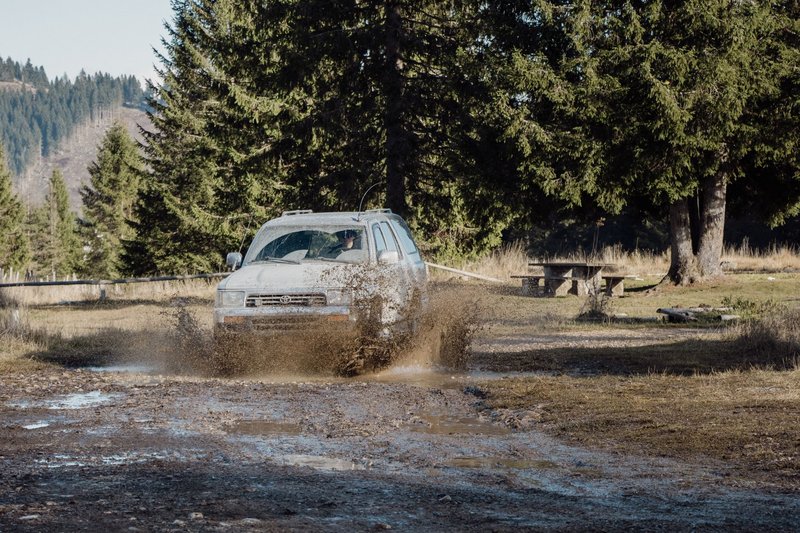
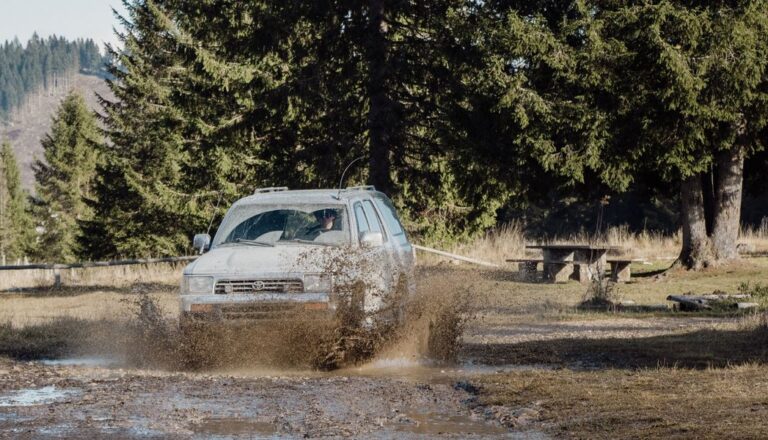
Land Cruiser 80 Series (J80, 1990–1997). This was the generation that moved the Land Cruiser to full-time four-wheel drive and coil springs at all four corners, while staying the last J-series with a solid front axle. Gas engines ranged from the 3F-E inline-six (about 155 hp) to the later 1FZ-FE; diesel markets got the naturally aspirated 1HZ and turbocharged 1HD-T/1HD-FT sixes. The 1HZ diesel in particular has a reputation among overlanders as close to indestructible, provided the cam belt gets replaced on schedule. It’s common to find 80 Series trucks with 300,000-plus miles on the original engine, and that reputation is exactly why clean examples now sell anywhere from $20,000 for a driver to $170,000 for a documented, low-mile FZJ80.
4Runner (2nd gen, 1990–1995). Built on the same ladder frame as the Hilux pickup, the second-generation 4Runner is the truck that convinced a generation of American buyers that “SUV” didn’t have to mean “unreliable.” It’s less collectible than the Land Cruiser today, mostly because Toyota built far more of them — which also makes it the more realistic project.
MSRP Then vs. Value Now {#value-table}
Rough figures — actual sale prices vary heavily by condition, mileage, and market. Treat this as a shape of the market, not an appraisal.
| Model | Years | MSRP New (approx.) | Value Today (approx.) |
|---|---|---|---|
| Corolla (base) | 1990s | $10,000–$13,000 | $2,000–$6,000 |
| Camry XV10 | 1991–1996 | $15,000–$22,000 | $3,000–$8,000 |
| MR2 Turbo (SW20) | 1990–1999 | ~$21,000 | $12,000–$30,000 |
| Celica GT-Four (ST205) | 1994–1999 | JDM-only, no US MSRP | $35,000–$60,000+ |
| Chaser Tourer V (JZX100) | 1996–2000 | JDM-only, no US MSRP | $20,000–$40,000+ |
| Supra Turbo (A80) | 1993–1998 | ~$40,000–$44,000 | $70,000–$180,000+ |
| Land Cruiser 80 Series | 1990–1997 | ~$30,000–$36,000 | $20,000–$60,000+ |
| Sera | 1990–1995 | JDM-only, no US MSRP | $8,000–$18,000 |
Buying a 90s Toyota Today {#buying-guide}
Mainstream cars in this list — Camry, Corolla, Tercel — are cheap and easy but also mostly used up. Rust and interior wear are bigger risks than the drivetrain at this point. The JDM cars are the opposite problem: mechanically sound platforms, but import compliance (the US 25-year rule), parts sourcing, and title paperwork are the real cost. Budget for a pre-purchase inspection from someone who’s specifically worked on 1JZ/2JZ/3S-GTE engines rather than a generalist shop — the failure points on these (turbo seals, coolant lines, timing components) aren’t the same as what a Camry mechanic sees all day.
For the Land Cruiser and 4Runner, service history on the cam belt and cooling system matters more than mileage. A 300,000-mile 80 Series with documented maintenance is a better buy than a 90,000-mile truck with no records.
FAQ {#faq}
What’s the most collectible 1990s Toyota? The A80 Supra Turbo, by a wide margin — auction results in the six figures for clean, unmodified examples put it ahead of every other car on this list, JDM exclusives included.
Why weren’t cars like the Sera or Chaser sold in the US? Toyota built its JDM lineup around Japan’s domestic market rules and tax bands (particularly engine displacement), and many of these models simply weren’t federalized for US crash and emissions standards. Most are only legal to import now because they’ve crossed the 25-year exemption threshold.
Is a 90s Toyota Corolla or Camry still a safe daily driver? Mechanically they can still run well past 200,000 miles, but 30-plus-year-old cars lack modern crash structures, current airbag and restraint systems, and stability control. They’re fine as a project or backup car; they’re not a realistic primary daily for most people.
Which 1990s Toyota is the best value entry point into JDM ownership? The Starlet GT Turbo or Sprinter Trueno — both are mechanically simpler and cheaper than the Supra, Chaser, or Celica GT-Four, while still delivering the turbocharged or high-revving JDM character enthusiasts are chasing.

Marco Delantero
More from Marco DelanteroHow we reviewed this article
This article was researched against manufacturer records and editorially reviewed before publishing. We accept no payment for coverage. Some guides contain affiliate links; see our affiliate disclosure.