The popular cars of 1987 fall into two lists that barely overlap. One is what people parked in their driveways: Escorts, Cavaliers, Accords. The other is what they taped to their bedroom walls: the Ferrari F40, the Porsche 959, a black Buick that embarrassed Corvettes. This post covers both, with specs, original prices and a verdict on which ones are worth chasing now.
Contents
- The 1987 backdrop
- What people bought
- What people lusted after
- Then vs now: values at a glance
- Which 1987 cars are worth buying today
The 1987 backdrop
Gas was cheap. The US Energy Information Administration puts the average price of a gallon of regular at under a dollar through the late 1980s, which is why V8 muscle crept back into showrooms after a decade of strangled emissions-era engines. Fuel economy rules still shaped what automakers built, though, and the federal CAFE standards kept pushing small front-drive cars to the top of the sales charts.
The other story was imports. Honda and Toyota were taking a growing slice of the market with cars that started every morning and didn’t leak. Detroit answered with aero-styled sedans and cheaper compacts, and the gap between “what the Big Three sold” and “what people actually wanted” was a running argument in every car magazine.
What people bought
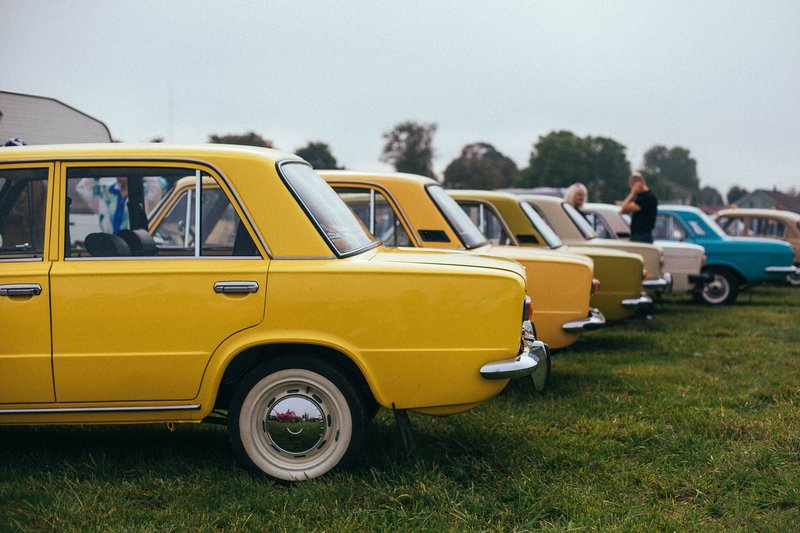
The best-selling passenger car in the US was the Ford Escort, at close to 400,000 units. Pickups sold in even bigger numbers (the Ford F-Series beat every car), but among cars the Escort had no rival. It was cheap, simple and sold in volume to people who needed a second car or a first one.
Here are the cars that made up most of the traffic in 1987.
Ford Escort. Roughly 1.9-liter four-cylinder, about 90 horsepower, front-wheel drive. Priced from around $6,000 for a stripped hatchback. It mattered because it proved a mainstream American compact could sell at import-scale volume. The sporty GT version added a bit of character, but most were basic commuters.
Chevrolet Cavalier. A 2.0-liter four with about 90 horsepower, or a 2.8-liter V6 in the Z24 making around 125. Starting in the neighborhood of $7,000. The Cavalier was GM’s volume answer to the Escort, sold as a coupe, sedan, hatch and wagon. Fleet buyers and first-time owners kept it near the top of the charts.
Honda Accord. The third-generation car, with pop-up headlights and a 2.0-liter four making 98 to 110 horsepower depending on the version. Prices ran from about $9,000 to more than $13,000 for the fuel-injected LX-i. It mattered because it was the car that made American buyers stop treating Japanese sedans as the budget option. Accords were also built in Ohio, which helped blunt the “import” label.
Toyota Camry. The Camry was redesigned for 1987 and moved from a boxy compact to a roomier family sedan with a 2.0-liter four making roughly 90 horsepower. It started around $9,000. The 1987 car is where the Camry’s reputation as the sensible default began.
Ford Mustang. More than a nostalgia pick. The Mustang had been refreshed for 1987 with a smoother front end, and the GT’s 5.0-liter V8 made 225 horsepower. A GT cost about $12,000 to $13,000. It sold well because it was the only affordable V8 coupe that looked fast standing still.
Nissan Sentra. All-new for 1987 with a 1.6-liter four around 70 horsepower and a sticker under $7,000 for the base model. It was the car you bought when you wanted the Japanese reliability reputation at Escort money.
Other regulars on the list: the Ford Taurus, which had arrived the year before and was already changing what a family sedan looked like, plus the Chevrolet Celebrity and Oldsmobile Cutlass. Detroit still dominated the volume tables, but nearly every Japanese entry in the top group was gaining.
What people lusted after
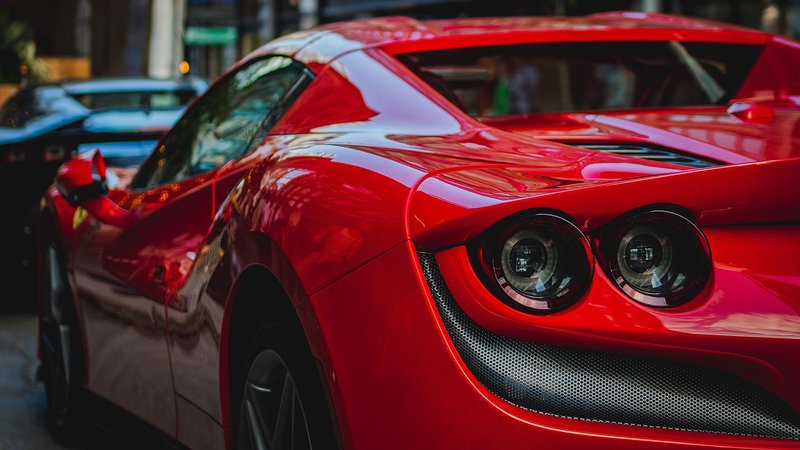
The posters told a different story. 1987 was a peak year for the performance halo car.
Ferrari F40. Unveiled in 1987 to mark Ferrari’s 40th anniversary. A 2.9-liter twin-turbo V8 made about 471 horsepower in a car with no power steering, no radio and sliding plexiglass windows. Top speed was 201 mph, the first production Ferrari to break 200. The factory price was around $400,000 in the US, and dealers’ markups pushed street prices far higher. It mattered because it was the last Ferrari Enzo Ferrari personally signed off on.
Porsche 959. A 2.85-liter twin-turbo flat-six making 444 horsepower, with all-wheel drive that shifted torque electronically and adjustable ride height. Top speed was about 197 mph. It sold for roughly $225,000 and was never officially sold in the US until years later. Think of it as a technology demonstrator that happened to be street legal.
Buick GNX. Buick built just 547 of them in 1987, all black, all based on the Grand National. The turbocharged 3.8-liter V6 was rated at 276 horsepower, a figure widely believed to be conservative. Original price: about $29,900. It could reach 60 mph in the mid-four-second range, which in 1987 meant it was beating Corvettes and Ferraris from a stoplight. Few cars have had a bigger gap between what they looked like (an old-school coupe) and what they did.
Mazda RX-7 Turbo II. The second-generation RX-7 with a turbocharged rotary making about 182 horsepower and sub-$20,000 pricing. It was the affordable sports car with an engine nobody else sold. It sits at the edge of this list because it’s the one many readers could actually afford.
Lotus Esprit Turbo. A wedge-shaped mid-engine car that, in its Giugiaro-designed form, looked like the future and handled like a go-kart. It had a loyal following, but build quality was famously uneven.
Then vs now: values at a glance
| Car | 1987 price (approx.) | Today (approx.) | Collector outlook |
|---|---|---|---|
| Ford Escort | $6,000 | Under $5,000 for most | Cheap, rarely collected |
| Chevrolet Cavalier Z24 | $9,000 | $5,000-$12,000 | Slow burn for clean examples |
| Honda Accord LX-i | $13,000 | $5,000-$15,000 | Strong for low-mile cars |
| Toyota Camry | $9,000 | Under $6,000 | Mostly daily drivers |
| Ford Mustang GT | $12,500 | $15,000-$30,000 | Steady and liquid |
| Buick GNX | $29,900 | $150,000 and up | Blue chip |
| Mazda RX-7 Turbo II | $19,000 | $15,000-$30,000 | Rising |
| Porsche 959 | $225,000 | Over $1.5 million | Top-tier |
| Ferrari F40 | $400,000 | Over $2 million | Top-tier |
These are ballparks, not appraisals. Condition, mileage and documentation move values by tens of thousands on the rarer cars.
Which 1987 cars are worth buying today
The F40 and 959 are out of reach for nearly everyone, and the GNX isn’t far behind. The practical picks are lower down.
The Mustang GT is the easy choice. Parts are everywhere, the 5.0 is easy to work on, and values have been climbing without the wild swings of the exotics.
The RX-7 Turbo II is the smart bet if you want something different. Rotary engines need care, so buy on service history, not the odometer.
A clean Accord or Camry won’t make you rich, but low-mile survivors are getting hard to find and they cost almost nothing to run.
The Escort and Cavalier only make sense if you want the cheapest possible time capsule. Most were driven until they died. The ones that survived are rare because nobody thought they were worth saving.
Summary
The popular cars in 1987 split cleanly in two. The best-sellers were Escorts, Cavaliers, Accords and Camrys, cars chosen on price and reliability, with the Escort leading at nearly 400,000 sales. The dream cars were the F40, 959 and GNX, which defined what performance could be in a decade of turbochargers. Today the best value sits in between: the Mustang GT and the RX-7 Turbo II give you a real piece of 1987 at a price that hasn’t left the planet.

Marco Delantero
More from Marco DelanteroHow we reviewed this article
This article was researched against manufacturer records and editorially reviewed before publishing. We accept no payment for coverage. Some guides contain affiliate links; see our affiliate disclosure.