Most lists of old Subaru models stop at the 1970s and leave out the cars people can actually buy: the turbo wagons, the Giugiaro coupe, the pickup with seats bolted in the bed. This one runs from 1958 to 2014, with a short buyer’s section at the end.
Contents
- TLDR
- Quick-reference table
- 1. Subaru 360 (1958-1971)
- 2. Subaru Leone (1971-1994)
- 3. Subaru BRAT (1978-1994)
- 4. Subaru Justy (1984-1994)
- 5. Subaru XT and XT6 (1985-1991)
- 6. Subaru Legacy RS (1989-1994)
- 7. Subaru SVX (1992-1997)
- 8. Subaru Impreza WRX (1993-2007)
- 9. Subaru Impreza 22B STi (1998)
- 10. Subaru Baja (2003-2006)
- Which old Subaru should you buy?
- What to check before you buy
TLDR
- Best first classic: the Legacy RS or an early WRX. Parts and know-how are everywhere.
- Best weird one: the BRAT. Cheap to run, easy to love, rust is the enemy.
- Best investment: the SVX is still undervalued; the 22B is out of reach for most people.
- Values below are rough, based on recent auction and classified trends. Condition swings them more than the model does.
Quick-reference table
| Model | Years | Layout | Rough value |
|---|---|---|---|
| 360 | 1958-1971 | Rear-engine two-stroke, RWD | $12,000-$30,000 |
| Leone | 1971-1994 | Flat-four, FWD or 4WD | $4,000-$15,000 |
| BRAT | 1978-1994 | Flat-four, 4WD pickup | $8,000-$25,000 |
| Justy | 1984-1994 | Three-cylinder, FWD or 4WD | $2,000-$7,000 |
| XT / XT6 | 1985-1991 | Flat-four turbo or flat-six | $4,000-$14,000 |
| Legacy RS | 1989-1994 | Turbo flat-four, AWD | $8,000-$25,000 |
| SVX | 1992-1997 | 3.3L flat-six, AWD | $6,000-$18,000 |
| Impreza WRX | 1993-2007 | Turbo flat-four, AWD | $10,000-$35,000 |
| 22B STi | 1998 | 2.2L turbo flat-four, AWD | $300,000+ |
| Baja | 2003-2006 | Flat-four, AWD pickup | $8,000-$16,000 |
1. Subaru 360 (1958-1971)
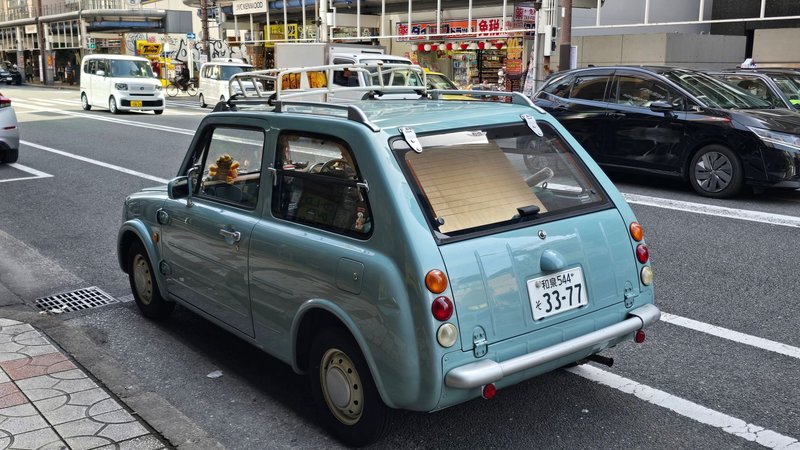
Subaru’s first production car weighed roughly 800 pounds. The 360 got its name from its 356 cc two-stroke engine, mounted in the back and good for around 16 to 25 horsepower depending on the year. It was built to Japan’s kei car rules, which rewarded tiny cars with tax and licensing breaks.
The shape earned it the nickname “Ladybug.” The doors hinged at the rear, a layout known as suicide doors, which tells you something about how seriously safety was treated in 1958. Subaru sold it in the US too, and Consumer Reports famously dismissed it. It’s now the cheapest way into Subaru history that still looks like the real thing.
2. Subaru Leone (1971-1994)
The Leone is where Subaru became Subaru. In 1972 it added a four-wheel-drive wagon, among the first mass-produced four-wheel-drive passenger cars. That formula (a flat-four, a wagon body, drive to all wheels) has barely changed in fifty years.
Leone is the Japanese name. In North America you knew it as the DL, GL, Brat’s sibling wagon, or simply “the Subaru.” Three generations covered the span, and the third gen (1984 onward) is the one most people find today. Rust took most early cars. Clean ones are rare and priced like it.
3. Subaru BRAT (1978-1994)
The BRAT is a Leone with a bed. Its name stands for Bi-drive Recreational All-terrain Transporter, which sounds like a committee made it up. The engineering story is better: US imports of light trucks carried a 25 percent “chicken tax,” so Subaru bolted two rear-facing seats into the bed and classified it as a passenger car.
Those jump seats are what everyone remembers. The T-top roof panels on later cars are the second thing. Power came from a 1.6 or 1.8L flat-four, so nobody bought one for speed. Prices have climbed steadily, and the best Subaru BRAT value today sits with clean, unmodified cars with intact bed floors. Check the bed seams and the rear suspension mounts first.
4. Subaru Justy (1984-1994)
The Justy was a cheap, tiny hatchback that cost almost nothing new and still costs almost nothing now. Its party trick was the engine: a 1.0L three-cylinder, later a 1.2L, paired in the US with an ECVT, an early continuously variable transmission years before CVTs were common. It was also one of the few small hatchbacks you could get with four-wheel drive.
Nobody has made the Justy a collector’s darling, and that’s the appeal. If you want a real piece of Subaru weirdness for the price of a used phone, this is it. The ECVT is the risk, because replacements are scarce.
5. Subaru XT and XT6 (1985-1991)
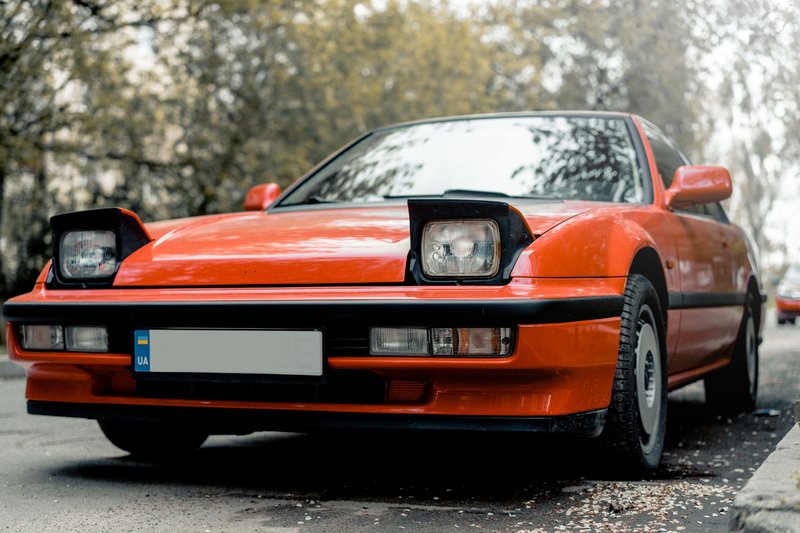
The XT looks like someone sketched a spaceship and then installed a flat-four. The wedge body had a drag coefficient of about 0.29, flip-up headlights, and a digital dash with a joystick-style pod for the climate controls. In Japan it was called the Alcyone.
The 1985 to 1987 cars used a turbo 1.8L. From 1988 the XT6 added a 2.7L flat-six, a smoother and more reliable engine that slotted well into an AWD chassis. XT6 cars are the better buy mechanically. Cars with the original interior intact are the better buy cosmetically. Finding both is the hard part.
6. Subaru Legacy RS (1989-1994)
The first-generation Legacy was the car that finally put Subaru in front of mainstream buyers, and the RS Turbo was the version that earned it respect. In 1989, a Legacy ran for 100,000 kilometers at an average of more than 220 km/h, setting an endurance record. Subaru has been quoting it ever since.
The turbo wagon and sedan have a following of their own: a 2.0L turbo flat-four, AWD, and a body that reads as a sensible commuter car at a glance. The Legacy is also the Subaru parts-bin hero. Many components carry over to later cars, so spares are easier to find than for the 1970s models.
7. Subaru SVX (1992-1997)
The SVX was designed by Giugiaro, the man behind the original Volkswagen Golf, and it shows. The most distinctive part is the “window-in-a-window”: the side glass is split so the lower section can drop down while the upper part stays fixed.
Under the hood, a 3.3L flat-six made around 230 horsepower, and it came with AWD and an automatic transmission only. That is why it never became a hero of the manual-swap crowd. It sold poorly when new, which explains both its rarity and its modest prices. Watch the electronics and the lower-glass seals, and expect small fiddly problems rather than catastrophic ones. It’s one of the most interesting old Subaru models you can buy cheaply.
8. Subaru Impreza WRX (1993-2007)
The Impreza arrived in 1992, and the WRX variant with a turbocharged 2.0L followed. Rally success through the 1990s, with Colin McRae winning the 1995 WRC drivers’ title, built its reputation. The US didn’t get a WRX until the 2002 model year, so American buyers got the 2.5 RS first and watched imports from afar.
The earlier “GC8” shape is the one to find. It’s lighter and simpler than what came after. Many have been modified, crashed, or both, so unmodified cars cost a premium. Head gaskets and ringland failures are the known weak points, so look for service records.
9. Subaru Impreza 22B STi (1998)
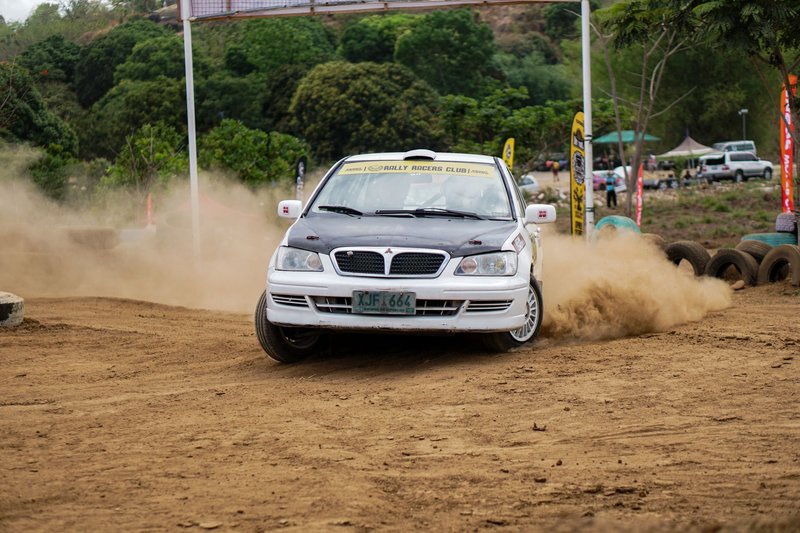
The 22B is the one on this list you won’t be buying. Subaru built about 400 of them in Japan to celebrate its third consecutive WRC manufacturers’ title. It used a widebody coupe shell and a 2.2L engine rated at 280 PS, the Japanese manufacturers’ gentleman’s agreement cap.
Prices begin around a quarter of a million dollars and have gone well beyond that. It matters here because it is the point at which an old Subaru stopped being a cheap used car and became an asset.
10. Subaru Baja (2003-2006)
The Baja took the BRAT’s idea and rebuilt it on the Legacy and Outback platform: a four-door crew cab with a short bed and an ‘Octagon’ of AWD parts underneath. Subaru hoped for 30,000 sales a year and managed roughly that total across the whole run.
It was always a niche, and the turbo version (2004-2006) is the one to look for. The bed is short, the cab is roomy, and the ownership experience is a Legacy’s. Head gasket failure on the non-turbo 2.5L is the most common complaint, so use that as a bargaining point.
Which old Subaru should you buy?
Pick by what you want from it:
- A weekend toy that costs little: Justy or Leone.
- A daily driver with some character: Legacy RS or SVX.
- Something that will hold value: BRAT or a clean WRX.
- A conversation starter: XT6 or Baja.
- A museum piece: 360, if you can find one.
What to check before you buy
Rust. Subarus from the 1970s to the 1990s rust at the rear arches, the sills, and the strut towers. In the BRAT, check the bed floor as well. Surface rust is a project. Structural rust is an ending.
Head gaskets. The 2.5L SOHC (EJ25) from the late 1990s to the mid-2000s is notorious for external coolant leaks. Earlier engines were more stable. Check for coolant smell, white residue, and overheating history.
Parts. Mechanical parts for the Legacy, Impreza and SVX engines are easy to find. Cosmetic parts and interior trim for the XT, Justy and 360 can take months to source, and often come from Japan.
Importing. The US allows imports of vehicles at least 25 years old without needing to meet current safety standards, per NHTSA rules on importing a vehicle. Emissions are covered separately by the EPA’s rules for imported vehicles, which exempt vehicles that are at least 21 years old. That puts late-1990s JDM Subarus within reach now, and the 22B has been eligible since 2023. Many other legendary Japanese performance cars are newly importable under the 25-year rule as well, expanding what you can choose from when shopping for classics in Japan.
Insurance. Many insurers offer classic or agreed-value policies for vehicles over 20 to 25 years old, often cheaper than standard coverage. Ask before you buy, not after.
The best old Subaru is the one with the cleanest body and the most paperwork. Mechanical problems are fixable. Missing metal isn’t.

Marco Delantero
More from Marco DelanteroHow we reviewed this article
This article was researched against manufacturer records and editorially reviewed before publishing. We accept no payment for coverage. Some guides contain affiliate links; see our affiliate disclosure.