1978 was the year Honda stopped pretending the four-cylinder CB750 was enough. They launched a 105-horsepower six-cylinder superbike, a water-cooled V-twin nobody asked for but everyone remembers, and a Gold Wing that was quietly turning into a sofa on wheels. If you own one of these bikes, are about to buy one, or just want to know what Honda’s full lineup looked like that year, this is the complete roster — every model, what it cost new, and what it’s worth now.
The bikes that year fall into clear families: the touring flagship, the new six-cylinder superbike, the CB standards that did the heavy lifting, the parallel twins, the oddball CX500, and a wall of dirt and mini bikes. Here’s all of it.
Table of Contents
- TLDR: which 1978 Hondas to actually care about
- The touring flagship: GL1000 Gold Wing
- The superbike: CBX six-cylinder
- The CB standards: 550, 750, and the rest
- Parallel twins: Hawk, Super Hawk, and Twinstar
- The wildcard: CX500
- Small street and commuter bikes
- Dirt and dual-sport
- Mini bikes: the CT70 and friends
- Quick spec and value table
- Buying a 1978 Honda: what to know
TLDR: which 1978 Hondas to actually care about {#tldr}
If you’re shopping and want the short version:
- Want the icon, and a return on it? The CBX — Honda’s six-cylinder. It’s the one collectors chase, and clean examples have climbed past $15,000.
- Want to ride it across the country? The GL1000 Gold Wing. Cheap to buy, bulletproof, parts everywhere.
- Want a usable classic that won’t bankrupt you? A CB550K or CB750K. The four-cylinder standards are the sweet spot for reliability and parts.
- Want something weird that’ll get questions at every gas stop? The CX500 V-twin.
Everything else below is either a budget runner, a dirt bike, or a mini bike with its own small but loyal following.
The touring flagship: GL1000 Gold Wing {#gold-wing}
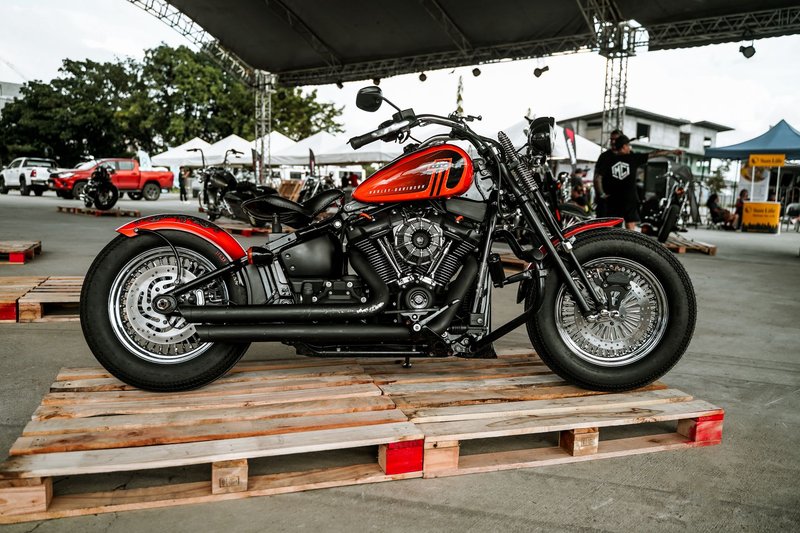
The 1978 GL1000 was the Gold Wing before it grew a fairing and a trunk. Just a naked, water-cooled, 999cc flat-four with shaft drive — a layout Honda borrowed more from cars than from bikes. It made roughly 80 horsepower and weighed a genuinely heavy 600-plus pounds wet, which is exactly why it rode like it was on rails.
This was the last year of the carbureted four-carb GL1000 in its earliest form before the line marched toward full dress touring. The flat-four engine is the story here: low center of gravity, dead-smooth at highway speed, and a reputation for running essentially forever. People still put six-figure mileage on these.
What it’s worth today: the GL1000 is the bargain of the bunch. Running, roadworthy examples regularly trade between $2,500 and $5,000, and even a clean one rarely breaks $7,000. For a 999cc shaft-drive tourer you can actually use, that’s a lot of motorcycle per dollar.
The superbike: CBX six-cylinder {#cbx}
The CBX is why people remember 1978. Honda dropped a 1,047cc inline-six into a street bike, hung all six exhaust headers out front in a fan that’s impossible to miss, and claimed 105 horsepower — supercar territory for a motorcycle in 1978. The engine is canted forward and splayed wide, and the whole thing was engineered partly to prove Honda could do it. According to Wikipedia’s CBX history, the design traced its DNA back to Honda’s six-cylinder Grand Prix racers of the 1960s.
It was never the best-handling bike of its era — that much engine up high has consequences — but as a statement of engineering it had no equal. The 1978 and 1979 models are the “raw” CBXs, before Honda softened the bike into a sport-tourer with a fairing in the early ’80s — a shift you can see clearly across the 1982 motorcycle models of that era.
What it’s worth today: this is the blue-chip 1978 Honda. Project bikes start around $6,000–$8,000, clean running examples sit in the $12,000–$18,000 range, and concours-grade or low-mileage bikes have sold north of $20,000. If you’re buying one as an investment, the early naked years are the ones to get.
The CB standards: 550, 750, and the rest {#cb-standards}
The CB four-cylinder standards were Honda’s bread and butter, and 1978 had a full spread of them. These are the bikes that taught a generation what a reliable Japanese four felt like.
- CB750K / CB750F / CB750A — The 736cc SOHC four in three flavors: the standard K, the café-styled F Super Sport with its 4-into-1 exhaust and bobbed tail, and the A “Hondamatic” with a two-speed semi-automatic transmission for riders who didn’t want to shift. The F is the most collectible of the three for its sportier looks.
- CB550K — The 544cc four, smaller and lighter than the 750 and arguably the better-balanced bike to ride. A favorite donor for café racer builds, which is both good (huge parts and aftermarket support) and bad (clean unmolested ones are getting harder to find).
- CB400 Hawk variants — Covered in the twins section below, since they’re parallel twins, not fours.
What they’re worth today: the CB550K and CB750K live in the same neighborhood — roughly $3,000 to $6,000 for a solid rider, more for a clean original. The CB750F Super Sport pulls a premium for its looks and can reach $7,000–$10,000 in good shape. The Hondamatic CB750A is the curiosity; it sells cheaper because most enthusiasts want to shift. Several of these badges eventually disappeared from the catalog entirely, as Honda’s roster of discontinued models shows.
Parallel twins: Hawk, Super Hawk, and Twinstar {#twins}
Below the fours, Honda ran a line of parallel twins aimed at riders who wanted something lighter and cheaper.
- CB400T Hawk and CB400A Hawk Hondamatic — A 395cc twin with a three-valve-per-cylinder head, modern for its day. The A version got the same two-speed semi-auto as the bigger Hondamatics.
- CB250T (Dream/Super Dream) — The 249cc little brother of the Hawk, sold more heavily outside the US. Same three-valve twin design scaled down. Honda’s CB250/CB400 documentation covers how closely these two shared architecture.
- CM185T Twinstar — Honda’s entry-level cruiser-styled twin, a 181cc bike built for new riders and commuters. Low seat, easy manners, nothing intimidating.
What they’re worth today: the twins are the affordable end. A running Hawk is often a $1,500–$3,500 bike, and the little Twinstar trades for even less. These are great first vintage bikes — cheap to buy, cheap to fix, and forgiving to learn on.
The wildcard: CX500 {#cx500}
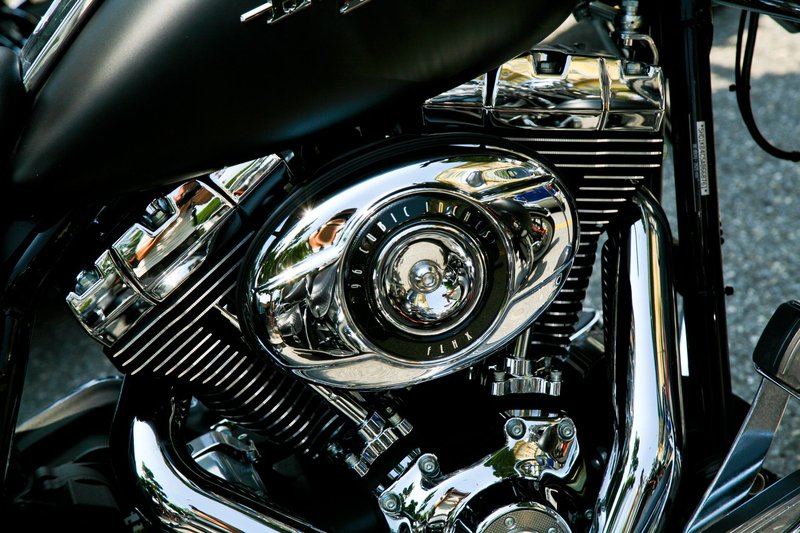
1978 was the launch year for the CX500, and it’s the most un-Honda Honda of the bunch. A 497cc liquid-cooled V-twin mounted transversely — cylinders poking out left and right — with shaft drive and pushrod valves instead of Honda’s usual overhead cams. It looked nothing like anything else in the lineup.
Early 1978 and 1979 CX500s became infamous for a stator and cam chain tensioner weakness that earned them the nickname “plastic maggot” in some circles, mostly for the styling. But the ones that have been sorted are genuinely tough, and the engine layout makes them a favorite base for modern custom and bobber builds today.
What it’s worth today: stock survivors run $2,000–$4,000, while well-built customs can ask more. The CX500’s quirky engineering makes it a conversation piece, and the strong custom-builder demand props up values for clean donor bikes.
Small street and commuter bikes {#small-street}
Honda’s 1978 lineup went all the way down to bikes you could learn on in an afternoon:
- CB125S — A 122cc single, the classic beginner street bike. Honda sold these by the truckload.
- CB400 / smaller CB singles and twins — Various displacement fillers across global markets.
- Express / NC50 mopeds — At the very bottom, Honda’s step-through and moped offerings for pure commuting.
These rarely command collector money, but a clean CB125S has a small following among people restoring their first bike. Expect $1,000–$2,500 for a tidy runner.
Dirt and dual-sport {#dirt}
Honda’s off-road catalog in 1978 was deep, spanning serious motocross machines to trail-friendly dual-sports:
- CR250R Elsinore — The motocross weapon. The 1978 CR250R was a competitive two-stroke racer, and clean original Elsinores have become genuinely collectible among vintage MX fans.
- XL250S / XL350 — Four-stroke dual-sports, the do-everything trail bikes that could be ridden to the woods and back.
- XL100 / XL125 / XL175 — The smaller four-stroke dual-sports for lighter riders and tighter trails.
- MR50 / MT and trail singles — Entry-level off-road bikes.
What they’re worth today: the CR250R Elsinore is the standout — vintage motocross collectors pay real money for clean, unmodified examples, sometimes $4,000–$8,000 and up for the right bike. The XL dual-sports are more usable than valuable, typically $1,500–$4,000 depending on condition and displacement. If you want to see how Honda’s off-road range stacked up against the rest of the field, the full list of 1978 motorcycle models puts the competition side by side.
Mini bikes: the CT70 and friends {#mini}
The mini bikes deserve their own corner because their values have done something nobody predicted.
- CT70 Trail 70 — The fold-handlebar mini that lived in a thousand garages and pickup beds. A 72cc four-stroke single, automatic-clutch, indestructible.
- CT90 Trail 90 — The bigger trail bike with a dual-range gearbox, beloved by hunters, farmers, and overlanders.
- Z50 Mini Trail — The little monkey bike, often a kid’s first motorcycle.
What they’re worth today: this is the surprise. Clean, original CT70s and Z50s have appreciated hard — nostalgia turned a $300 yard-sale bike into a $3,000–$5,000 collector item, with pristine examples going higher. The CT90 sits a notch below but is climbing on the strength of the adventure-bike crowd discovering them.
Quick spec and value table {#table}
| Model | Engine | Approx. Power | 1978 MSRP (est.) | Today’s value (good rider) |
|---|---|---|---|---|
| GL1000 Gold Wing | 999cc flat-four | ~80 hp | ~$2,900 | $2,500–$5,000 |
| CBX | 1,047cc inline-six | ~105 hp | ~$3,600 | $12,000–$18,000 |
| CB750F Super Sport | 736cc four | ~67 hp | ~$2,100 | $7,000–$10,000 |
| CB750K | 736cc four | ~67 hp | ~$2,000 | $3,000–$6,000 |
| CB550K | 544cc four | ~50 hp | ~$1,600 | $3,000–$6,000 |
| CB400T Hawk | 395cc twin | ~37 hp | ~$1,300 | $1,500–$3,500 |
| CX500 | 497cc V-twin | ~50 hp | ~$1,700 | $2,000–$4,000 |
| CB250T | 249cc twin | ~27 hp | ~$1,100 | $1,200–$3,000 |
| CM185T Twinstar | 181cc twin | ~16 hp | ~$800 | $1,000–$2,500 |
| CB125S | 122cc single | ~13 hp | ~$600 | $1,000–$2,500 |
| CR250R Elsinore | 248cc two-stroke | ~32 hp | ~$1,300 | $4,000–$8,000 |
| XL250S | 249cc single | ~20 hp | ~$1,200 | $1,500–$4,000 |
| CT70 Trail 70 | 72cc single | ~6 hp | ~$400 | $3,000–$5,000 |
Power figures and MSRPs are period estimates and vary by source and market; treat them as ballparks, not gospel.
Buying a 1978 Honda: what to know {#buying}
A few things separate a good buy from a money pit on these bikes.
Parts availability tracks popularity. The CB four-cylinder standards and the Gold Wing have deep aftermarket and reproduction support — you can rebuild one without hunting for unicorns. The CBX is the exception among the desirable bikes: its six-cylinder-specific parts (six carbs, six headers) are pricier and harder to source, so factor that into the purchase price.
Carbs are the universal villain. Almost every 1978 Honda that’s been sitting will need its carburetors cleaned or rebuilt. On a single or twin that’s an afternoon. On the CBX’s bank of six, it’s a job that can run into real money if you farm it out. Budget for it regardless of what the seller says.
Originality is where the money is. For the collectible bikes — CBX, CB750F, CR250R Elsinore, CT70 — original paint, original exhaust, and matching numbers move the value far more than a fresh aftermarket cosmetic job. For the riders — CB550, GL1000, CX500 — condition and mechanical health matter more than originality.
The cheap end is the smart entry. If this is your first vintage bike, a CB550K, a Hawk twin, or a GL1000 gets you a reliable, supportable classic for short money. Save the CBX hunt for when you know what you’re doing — and what you’re willing to spend.
The 1978 lineup is one of the most interesting full-model-years Honda ever put out, precisely because it spans a $400 mini bike and a $3,600 six-cylinder superbike under the same badge. Whatever you’re after, there’s a version of it wearing wings.

Sarah Thornton
More from Sarah ThorntonHow we reviewed this article
This article was researched against manufacturer records and editorially reviewed before publishing. We accept no payment for coverage. Some guides contain affiliate links; see our affiliate disclosure.