The 1940s split Moto Guzzi nearly in half. The first years belonged to the Italian Army, which bought thousands of horizontal-single dispatch bikes and sidecar haulers. The back half belonged to a factory clawing its way back from a bombed-out wartime economy, leaning on the same engines that had served in North Africa to win races and sell civilian singles again.
What ties the decade together is the engine architecture Carlo Guzzi had committed to back in 1921: a flat horizontal single-cylinder, cylinder pointing forward, with that distinctive external bacon-slicer flywheel spinning in the breeze. By the 1940s it was old-fashioned and Guzzi knew it. It was also reliable, easy to fix in a field, and cheap to build — which is exactly why it survived the war and came out the other side.
This is the full lineup, sorted the way the factory actually used these machines: military first, because that’s what the early decade was about, then the civilian roadsters, then the racers that put Mandello del Lario back on the map.
Table of Contents
- The Quick Version
- The Engine That Defined the Era
- The Military Machines
- The Civilian Singles
- The Racing Singles
- Spotting and Collecting a 1940s Guzzi
- What the Decade Left Behind
The Quick Version
If you only remember a handful of names from Moto Guzzi’s 1940s, make them these:
- Alce (1939–1945) — the standard 500cc Italian Army dispatch bike, the workhorse of the lineup.
- Superalce (1946–1957) — the overhead-valve postwar evolution of the Alce, sold to the new Italian armed forces well into the 1950s.
- TriAlce (1940–1943) — a three-wheeled military hauler, roughly 1,741 built, now one of the rarer wartime Guzzis.
- Airone 250 (1939 onward) — the mid-size civilian single that became one of Italy’s best-selling bikes of its class for two decades.
- GTW / GTV 500 — the touring roadsters that carried Guzzi’s sprung-frame engineering through the decade.
- Dondolino and Gambalunga — the postwar racing singles built from the same horizontal-engine DNA.
Everything below fills in the why.
The Engine That Defined the Era
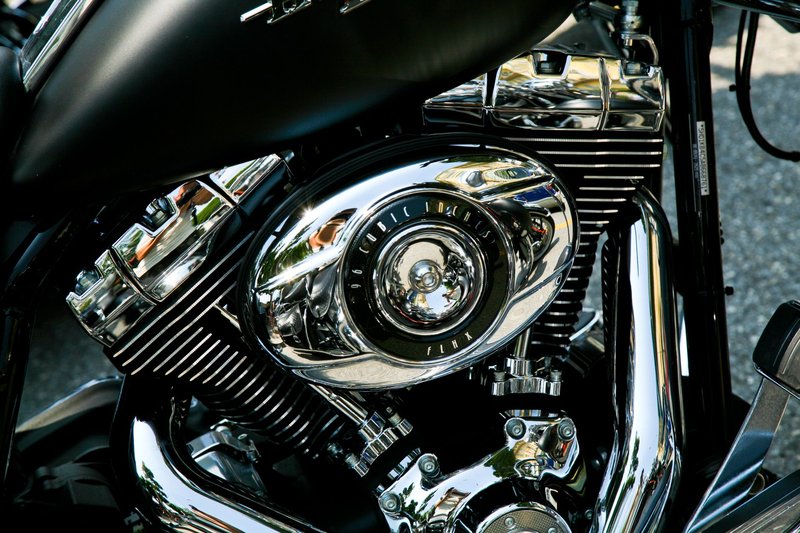
Every important 1940s Guzzi shares a layout: a single cylinder laid flat and pointing forward, fed by a unit or near-unit gearbox, with the flywheel mounted externally on the right. Most were 498–500cc; the Airone branch was a scaled-down 250.
Two valve configurations matter for telling the bikes apart. The older inlet-over-exhaust (IOE) arrangement — a side exhaust valve and an overhead inlet — powered the prewar and early-war machines like the GTV and the original Alce. By the mid-1940s Guzzi was moving the whole line to overhead valves (OHV), which is the dividing line between an Alce and a Superalce, and between a GTV and a GTW.
The horizontal single wasn’t fast on paper. What it gave you was a low center of gravity, smooth low-end pull, and an engine a conscript or a farmer could service with hand tools. That practicality is the whole reason these bikes outlasted the war.
The Military Machines
By 1940 the bulk of Guzzi’s output was going to the Regio Esercito, the Royal Italian Army. Three machines carried that load.
Moto Guzzi Alce
The Alce (“Elk”) was the standard issue dispatch and reconnaissance bike, built from 1939 through the end of the war. It used the 498cc horizontal single in inlet-over-exhaust form, producing around 13.2 hp — enough to push the heavy, rugged machine across North African sand and Balkan mud. Riders got a hand-change three-speed gearbox, sprung rear suspension that was advanced for a military bike of the era, and mounting points for a Breda machine gun on the sidecar versions.
The Alce is the bike most people picture when they think “wartime Guzzi.” Tens of thousands served, which is also why surviving examples turn up more often than the rarer variants.
Moto Guzzi Superalce
The Superalce is the Alce after the war learned its lessons. Introduced in 1946 and produced through 1957, it swapped the old IOE head for a proper overhead-valve top end, lifting output to roughly 18.9 hp from the same 500cc displacement. The new Italian Army and Carabinieri bought them in quantity, and the long production run means the Superalce is the most attainable military Guzzi for a collector today.
Moto Guzzi TriAlce
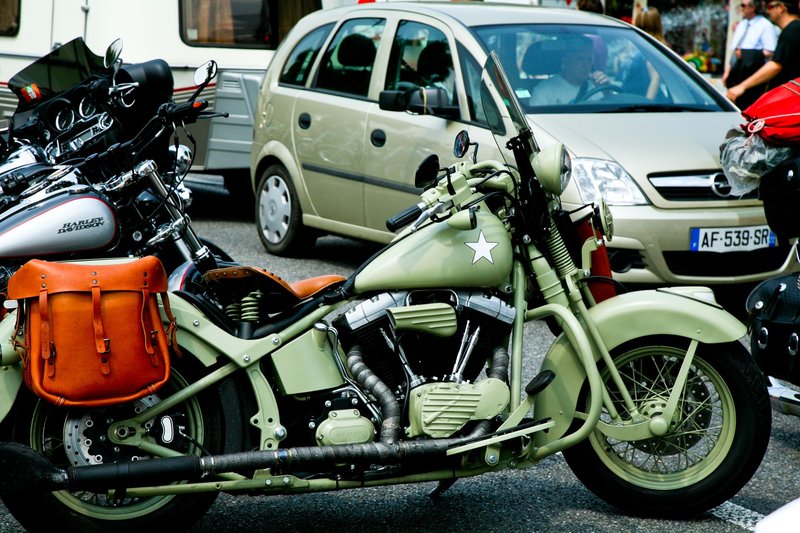
The TriAlce (“Three-Elk”) is the oddball, and the one specialists chase. Built from 1940 to 1943, it took the Alce front end and bolted it to a two-wheeled rear axle with a small cargo bed — a three-wheeled light hauler for moving ammunition, supplies, and the occasional mounted weapon across terrain a truck couldn’t reach. Roughly 1,741 were built before production stopped in 1943, according to the historical record on the model. That low number, plus heavy wartime attrition, makes a complete TriAlce one of the scarcer pieces of Guzzi history.
Quick comparison
| Model | Years | Engine | Valves | Power | Role |
|---|---|---|---|---|---|
| Alce | 1939–1945 | 498cc single | IOE | ~13 hp | Dispatch / recon |
| Superalce | 1946–1957 | 500cc single | OHV | ~19 hp | Postwar military |
| TriAlce | 1940–1943 | 498cc single | IOE | ~13 hp | Three-wheel hauler |
The Civilian Singles
Civilian production never fully stopped, and it came roaring back after 1945 as Italy needed cheap, fixable transport. Two model families carried the road bikes through the decade.
Moto Guzzi Airone 250
The Airone (“Heron”) arrived in 1939 as a 250cc horizontal single and became the bike that paid Guzzi’s bills. It was light, economical, and quick enough — and in postwar Italy, where a 250 was a serious motorcycle rather than a learner toy, it sold by the tens of thousands. The Airone stayed in production into the late 1950s, which tells you everything about how right the formula was. If you want a 1940s Guzzi you can actually ride regularly, this is usually the recommendation.
Moto Guzzi GTV and GTW 500
The 500cc tourers are where you can watch Guzzi’s engineering evolve in real time. The GTV carried the older inlet-over-exhaust 498cc engine and the sprung frame Guzzi had pioneered — rear suspension on a roadster when most rivals still ran rigid tails. The GTW updated the recipe with the overhead-valve head and refined suspension, becoming the more capable touring single of the pair.
These were the bikes for someone covering real distances on Italian roads: comfortable, torquey, and built to be rebuilt rather than replaced. The GTW in particular is the civilian counterpart to the Superalce’s wartime-to-peacetime engine story, and it sits comfortably alongside the other classic Italian motorcycles that defined the country’s road-going golden age.
Astore
Late in the decade Guzzi began developing the Astore (“Goshawk”) as the 500 single’s next step — a more refined touring machine that would carry the horizontal-engine roadster idea into the 1950s. Most of its production sits just past 1949, but its design work belongs to the late 1940s and it’s a natural endpoint for the civilian line. The Astore went on to share showrooms with the best motorcycles of the 1950s, proving the late-1940s engineering had legs well beyond the decade that birthed it.
The Racing Singles
Here’s the part that surprises people: while the Alce hauled ammunition, the same basic engine was being tuned to win Grand Prix and the Isle of Man TT. Racing is what kept Guzzi’s name prestigious through a decade that should have crushed it.
Moto Guzzi Dondolino
The Dondolino (“Rocking Chair,” a nod to its ride character) was a 500cc racing single built around the horizontal engine in a light, sprung frame. It was effectively a customer racer — a bike a privateer could buy and campaign — and it kept Guzzi competitive in the immediate postwar racing scene when full factory budgets were thin.
Moto Guzzi Gambalunga
The Gambalunga (“Long Leg,” named for its long-stroke engine) was the sharper factory racer that grew out of the same lineage, pushing the 500 single’s performance harder for top-level competition. Together the Dondolino and Gambalunga proved the old horizontal layout still had race-winning life in it — a point Guzzi would ride all the way to its dominant 350cc World Championship run in the following decade.
Spotting and Collecting a 1940s Guzzi
A few things separate the easy buys from the unicorns:
- Valve gear tells the year. An inlet-over-exhaust head points to prewar or early-war (Alce, GTV); a clean overhead-valve setup points to 1946 and later (Superalce, GTW). It’s the fastest way to date a 500 single at a glance.
- Military bikes were rebuilt constantly. Wartime and postwar armies overhauled these machines for decades, so “matching numbers” is a high bar. Many honest Superalce examples are assemblies of correct-but-mixed parts, and that’s normal for the type.
- Rarity isn’t linear with value. A TriAlce is far rarer than an Alce, but the buyer pool is also smaller and more specialized. Condition, completeness, and documented history move prices more than headline production numbers — verify any provenance claim against marque registries before you pay a premium.
- The Airone is the rider’s choice. Parts are comparatively findable, the 250 single is forgiving, and you won’t feel guilty putting miles on a bike that was built by the tens of thousands. For more on the broader family these engines belong to, Moto Guzzi’s own company history traces the horizontal single straight through this era.
- Know where Guzzi sits among its peers. Pinning down a 1940s single is easier once you can place the marque against the wider field of classic motorcycle brands and their founding years, which helps you spot misattributed parts and dubious badges before money changes hands.
What the Decade Left Behind
The 1940s could have ended Moto Guzzi. The factory at Mandello del Lario sat in a country that lost the war it had built bikes for, with an engine design already two decades old. Instead the decade became proof of concept for everything the brand stood for. The horizontal single that hauled supplies across North Africa was the same engine that won races in 1947 and sold Airones to commuters in 1949.
That’s the throughline. Practical enough for an army, reliable enough for a privateer racer, cheap enough for a postwar buyer — one engine, three jobs, a whole decade. The bikes that survived are worth knowing not because they were the fastest of their day, but because they show how a stubborn, sensible piece of engineering can carry a company through the worst years it will ever see.

Marco Delantero
More from Marco DelanteroHow we reviewed this article
This article was researched against manufacturer records and editorially reviewed before publishing. We accept no payment for coverage.