The 1960s were the years Cadillac decided to grow up. The decade opened with cars still wearing the towering, rocket-inspired tailfins of 1959, and it closed with the crisp, sheer-sided Eldorado that drove its front wheels instead of its rear ones. Ten years, one brand, and a complete reinvention of what American luxury looked like.
If you’re shopping, restoring, or just trying to sort out which de Ville is which, here’s the whole lineup — model by model, with original sticker prices, the engines under those long hoods, and a straight answer on what these cars trade for today.
Table of Contents
- The Decade at a Glance
- Series 62 and the Calais
- Coupe de Ville
- Sedan de Ville
- Eldorado (Biarritz and the 1967 FWD Landmark)
- Fleetwood Sixty Special
- Fleetwood Brougham
- Series 75 Limousines
- Year-by-Year Timeline
- Most Collectible Today
The Decade at a Glance
Two engines did almost all the work across the 1960s Cadillac range. The 390-cubic-inch V8 carried the early years, making 325 horsepower in standard trim. In 1963 Cadillac introduced a redesigned, lighter V8 of the same 390 displacement, then bumped it to 429 cubic inches for 1964, where it stayed through 1967 making 340 horsepower. For 1968 came the big one: a 472-cubic-inch V8 with 375 horsepower, the largest production passenger-car engine in the world at the time.
The styling story is just as clean. Fins shrank every year. The 1960 cars still had them tall and sharp; by 1965 the body lost its rounded shoulders for a squared, formal look; by 1969 the Cadillac was all straight lines and long horizontal sweep. Cadillac was hardly alone at the top of the market, either — it traded buyers with a whole field of 1960s luxury cars from Lincoln, Imperial, and the European imports. Prices ran from roughly $5,000 for an entry Series 62 to around $13,000 for a Fleetwood 75 limousine — serious money when a new Chevy Bel Air cost about $2,500.
Series 62 and the Calais
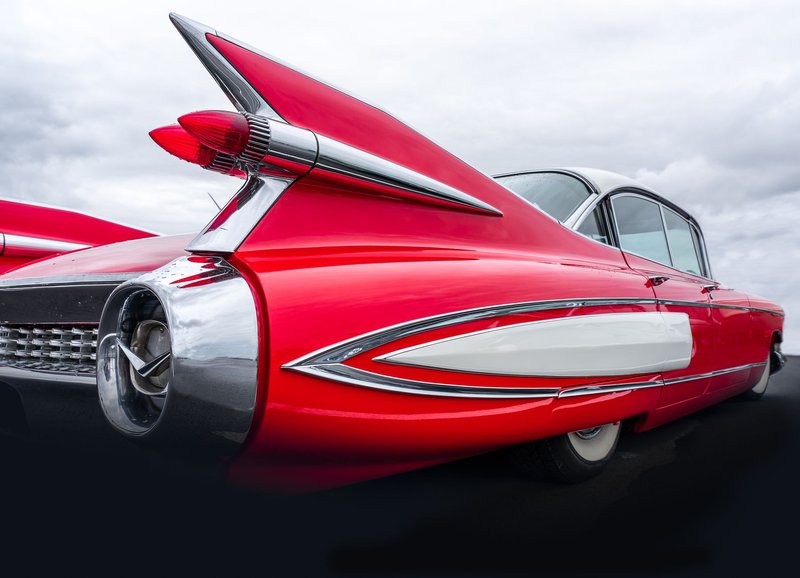
The Series 62 was the foundation of the line — Cadillac’s “affordable” full-size car, if a $5,000-plus luxury barge counts as affordable. It anchored the range from the start of the decade until 1964, offered as a hardtop coupe, a sedan, and a convertible. A 1960 Series 62 coupe started around $5,080. The cars rode on a 130-inch wheelbase and used the 390 V8.
In 1965 Cadillac retired the Series 62 name and replaced the base trim with the Calais. Same idea — the price-leader hardtop and sedan — but with the new squared-off body. The Calais never had the cachet of the de Ville sitting one rung above it, which is exactly why clean examples can still be found for sensible money today. It’s the smart entry point into 1960s Cadillac ownership.
Coupe de Ville
The Coupe de Ville was the two-door that defined the era’s image: a low, wide, pillarless hardtop that looked like it cost more than it did. Through the decade it sat a step above the base car in trim and price, usually running a few hundred dollars more than the equivalent Series 62 or Calais coupe.
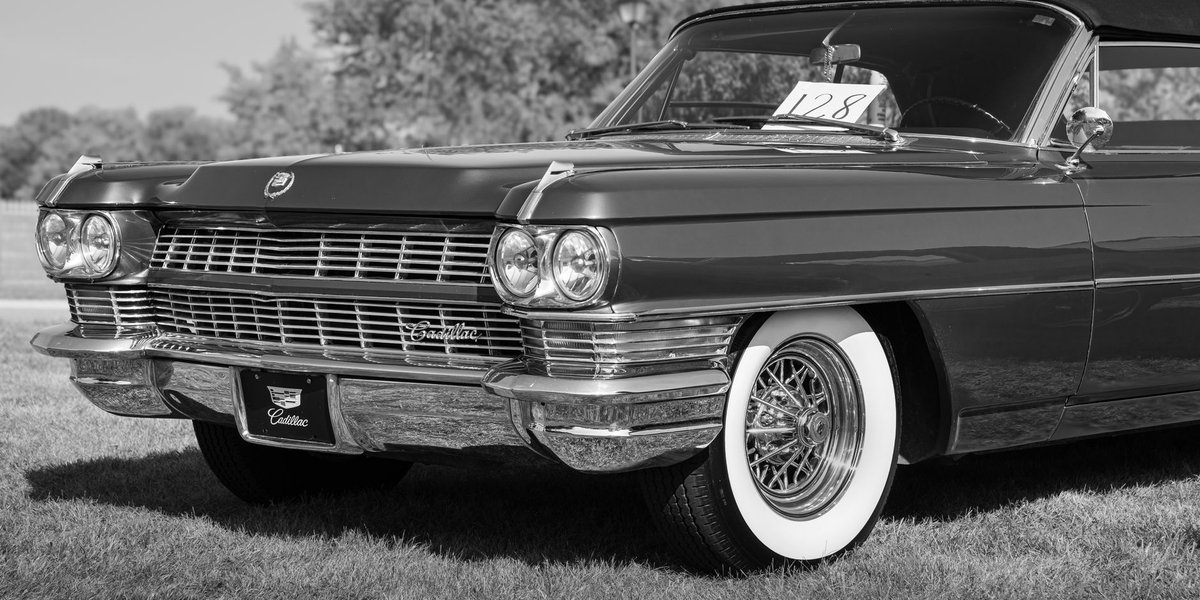
The 1965 Coupe de Ville is the one enthusiasts point to. It was the first year of the crisper restyle, it carried the 429 V8 making 340 horsepower, and it stickered around $5,400. The proportions landed just right that year — long, clean, formal without being heavy. The 1967 and 1968 cars are arguably even better resolved, with the stacked headlamps and that enormous 472 engine arriving for ’68.
Sedan de Ville
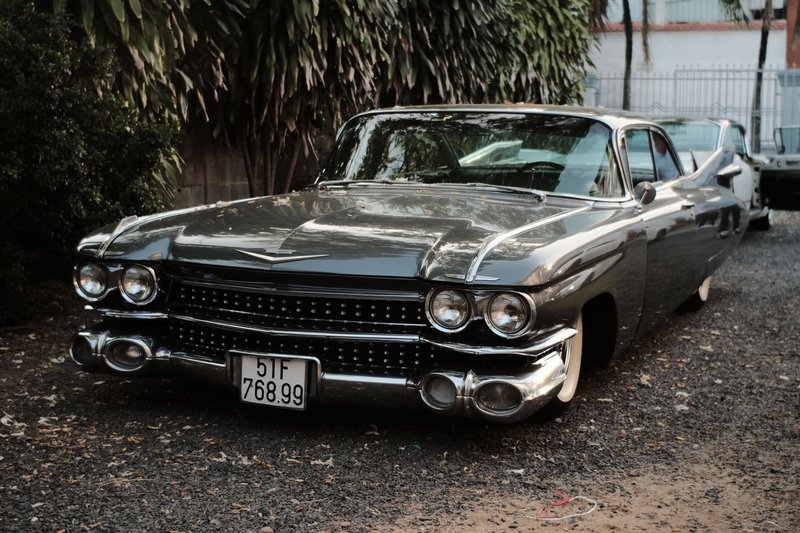
The four-door companion to the Coupe de Ville, the Sedan de Ville was the volume seller of the whole Cadillac line — the car that actually paid the bills in Detroit. It came as both a pillared four-window and a hardtop six-window sedan in the early years, which is the kind of detail that trips up first-time buyers reading old brochures.
Mechanically it’s identical to the coupe: same 390-then-429 V8, same chassis, same trim. It just adds two doors and a back seat built for genuine adults. Because Cadillac built so many, the Sedan de Ville is the most attainable of the de Ville cars now, and parts are easier to find than for the rarer convertibles. It also holds up well against the broader field of classic American sedans, where four-door comfort rarely came wrapped in this much chrome.
Eldorado
The Eldorado was always the halo car, and the 1960s gave it two completely different identities.
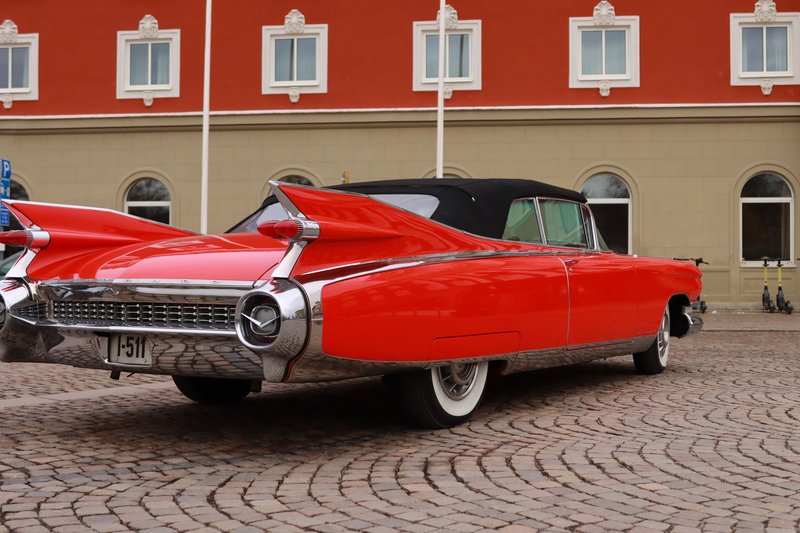
Through the early and mid-decade, the Eldorado was a top-trim convertible — the Biarritz — loaded with everything Cadillac offered and priced to match, often well north of $6,500. It shared its body with the rest of the line but wore unique brightwork and the longest options list in the catalog. The Eldorado had already become a status symbol by the late 1950s, sitting near the top of the most desirable popular cars in 1957, and that reputation only deepened through the new decade. These are rare, expensive, and the ones collectors chase hardest.
Then came 1967, and Cadillac changed the rules. The 1967 Eldorado was a personal luxury coupe built on a front-wheel-drive platform shared with the Oldsmobile Toronado — the first front-drive Cadillac and one of the most significant American cars of the decade. Hidden headlamps, a razor-sharp roofline, and a flat floor thanks to the missing driveshaft tunnel. Car and Driver’s road tests of the period treated it as a genuine engineering event, and it remains the single most important 1960s Cadillac to know.
Fleetwood Sixty Special
The Fleetwood Sixty Special was the owner-driven flagship sedan — longer, plusher, and more formal than a Sedan de Ville, but a car you’d still drive yourself rather than hand to a chauffeur. It rode a stretched wheelbase and added Fleetwood-exclusive trim, often including a slightly more upright, dignified roofline.
Pricing put it among the most expensive Cadillac sedans, commonly $6,000 to $6,500 across the decade. The Sixty Special is the connoisseur’s 1960s Cadillac sedan: not as common as a de Ville, not as ostentatious as a limousine, and genuinely lovely to sit in.
Fleetwood Brougham
Starting in 1965, Cadillac offered the Fleetwood Brougham as the dressed-up version of the Sixty Special. The Brougham package added a padded vinyl roof, extra ornamentation, and upgraded interior appointments — wool broadcloth or leather, deeper carpet, and rear-seat luxuries.
It became the name Cadillac would lean on for its plushest sedans for decades afterward, but in the 1960s it was specifically the high-trim Sixty Special. If you find a ’60s Cadillac sedan with a vinyl top and the Fleetwood wreath-and-crest everywhere, you’re probably looking at a Brougham.
Series 75 Limousines
At the very top sat the Series 75 — the long-wheelbase Fleetwood limousine and formal sedan. These rode a 149.8-inch wheelbase, seated up to nine, and came with a divider window for the chauffeur. They were the cars that carried presidents, CEOs, and funeral processions.
A Series 75 limousine could top $13,000 new, more than double a Coupe de Ville. Cadillac built relatively few each year, and because so many lived hard commercial lives, well-preserved examples are scarce. They’re the most imposing 1960s Cadillacs you can buy, and surprisingly affordable now relative to their original price — though the running costs of a 19-foot luxury car are exactly what you’d expect.
Year-by-Year Timeline
- 1960 — Last of the tall, sharp tailfins. 390 V8, 325 hp. The 1959-derived look at its final, most flamboyant.
- 1961 — Sharply restyled with shorter, lower fins and a more angular body. A genuine break from the rocket era.
- 1962 — Mild update; cleaner front end, fins trimmed further.
- 1963 — All-new lighter 390 V8. Squared, formal grille and crisper shemetal.
- 1964 — Engine grows to 429 cubic inches, 340 hp. Turbo Hydra-Matic transmission arrives.
- 1965 — Major restyle. Series 62 becomes the Calais; the Fleetwood Brougham debuts. Stacked vertical headlamps, squared body.
- 1966 — Refinements on the ’65 look. Variable-ratio power steering offered.
- 1967 — The front-wheel-drive Eldorado launches — the decade’s landmark car.
- 1968 — The 472-cubic-inch V8 arrives, 375 hp; hidden wipers and a longer hood.
- 1969 — Cleanest, most horizontal styling of the decade. Headlamps move back to horizontal pairs.
Most Collectible Today
If you’re buying with one eye on value, here’s the honest ranking.
The 1967–1968 Eldorado is the blue-chip pick — historically important, distinctive, and steadily appreciating. Good drivers trade in the $20,000–$35,000 range, with show-quality cars climbing well past that. The early Eldorado Biarritz convertibles are rarer still and bring the strongest numbers of any ’60s Cadillac, frequently $40,000 and up for excellent examples, because convertibles plus low production plus the Eldorado name is exactly the formula the market rewards.
Below that, de Ville convertibles (both coupe and the rarer drop-tops) are the sweet spot: desirable, usable, and generally $25,000–$45,000 for a strong car, less for a solid driver. Hagerty’s classic-car valuation tools track these trends closely and are worth a look before you commit.
The value buys are the Calais, Sedan de Ville, and Sixty Special sedans — every bit as comfortable and well-built, just less glamorous than a coupe or convertible. Clean, sorted examples can still be found in the $12,000–$22,000 range. For a first classic Cadillac, a well-kept mid-decade Sedan de Ville gives you the full 1960s experience without the collector premium.
Whatever you land on, buy the best example you can afford and inspect the body and floors hard. These cars are mechanically simple and the big V8s are nearly indestructible, but rust repair and chrome restoration on a 19-foot Cadillac is where budgets go to die.

Marco Delantero
More from Marco DelanteroHow we reviewed this article
This article was researched against manufacturer records and editorially reviewed before publishing. We accept no payment for coverage.