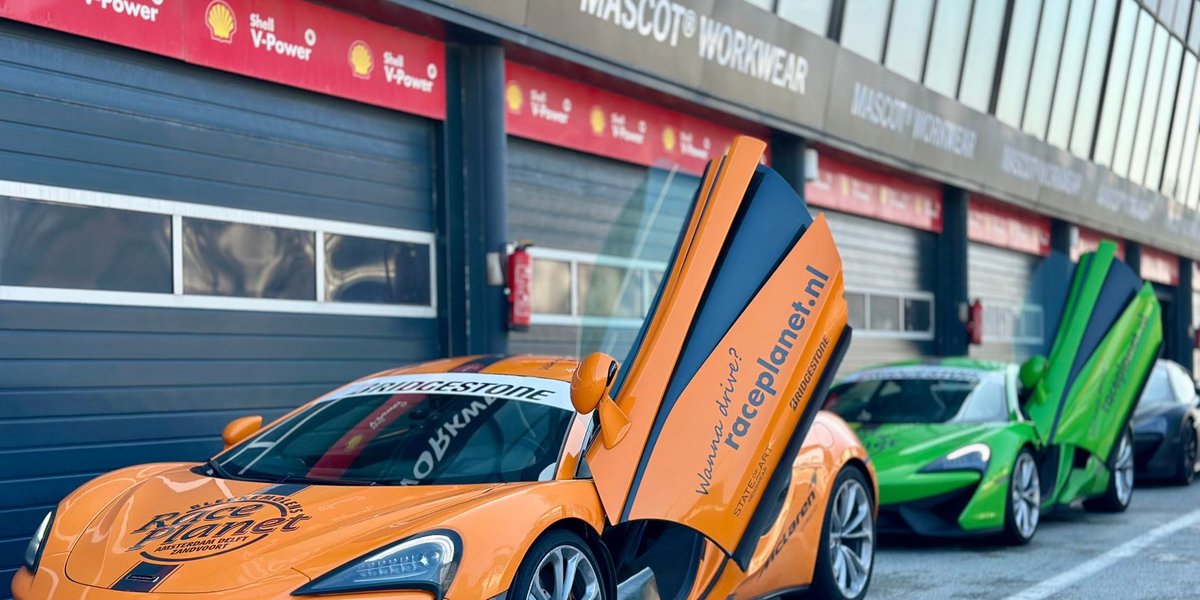
McLaren’s 2024 catalog is smaller than it looks on paper, and that’s the point. Four cars carry the volume lineup, each one aimed at a different buyer with a different idea of what a supercar should do. There’s a grand tourer that pretends it isn’t one, a plug-in hybrid that signals where the brand is headed, and two versions of a 740-horsepower coupe that exist mostly to scare Ferrari.
Below is the full 2024 roster with real prices, the engine in each car, and the numbers that matter. Then a per-model breakdown, what changed from the cars these replaced, and which one we’d actually buy.
Table of Contents
- The verdict (TLDR)
- 2024 McLaren lineup at a glance
- McLaren GTS
- McLaren Artura
- McLaren 750S
- McLaren 750S Spider
- The limited editions and the W1
- How the prices stack up against Ferrari, Lamborghini, and Porsche
- Decoding the names: why GTS, why 750S
The verdict
If you want the best 2024 McLaren for the money, it’s the 750S. It’s the sharpest-driving car in the range, the V8 is one of the great engines of the era, and at roughly $324,000 it undercuts a Ferrari 296 GTB while making more peak power. Get the Spider if you can live with the small weight and price penalty; the folding hardtop costs you almost nothing in rigidity.
Buy the Artura if you want the hybrid future and a lighter, more usable daily supercar. Buy the GTS if you actually plan to drive across a country, not just to a cars-and-coffee. Skip the hand-wringing about which is “best overall” — these are four different tools.
| If you want… | Buy the… |
|---|---|
| The purest, fastest driver’s car | 750S |
| Open-air driving with almost no compromise | 750S Spider |
| Hybrid tech and everyday usability | Artura |
| Real luggage space and touring range | GTS |
2024 McLaren lineup at a glance
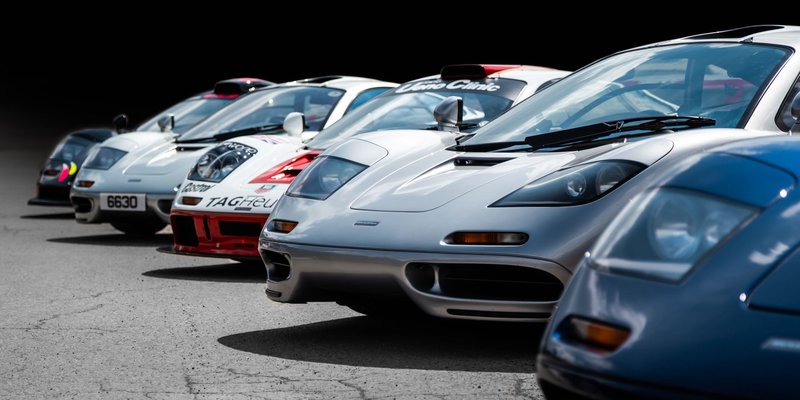
Here’s the entire core 2024 model year in one table. Prices are base MSRP before options, which on a McLaren add up fast.
| Model | Starting MSRP | Engine | Horsepower | 0–60 mph | Top speed |
|---|---|---|---|---|---|
| GTS | ~$225,000 | 4.0L twin-turbo V8 | 626 hp | 3.2 sec | 203 mph |
| Artura | ~$233,000 | 3.0L twin-turbo V6 + e-motor | 671 hp | 3.0 sec | 205 mph |
| 750S | ~$324,000 | 4.0L twin-turbo V8 | 740 hp | 2.7 sec | 206 mph |
| 750S Spider | ~$343,000 | 4.0L twin-turbo V8 | 740 hp | 2.8 sec | 206 mph |
Two engine families do all the work here: the long-serving flat-plane-crank 4.0-liter V8 in the GTS and 750S, and the newer hybridized V6 in the Artura. Everything in this lineup sits on a carbon-fiber tub, which is why even the GTS weighs less than a base 911 despite being a far more exotic car.
McLaren GTS
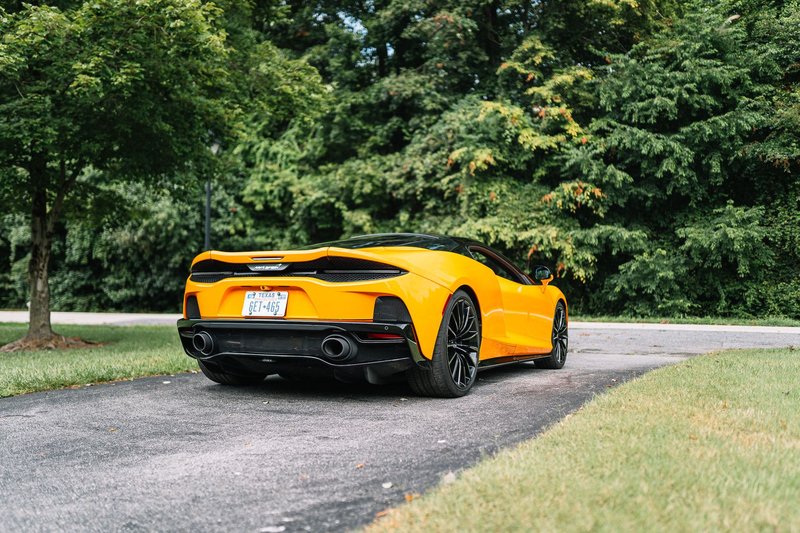
The GTS is the grand tourer that doesn’t want to admit it. Where Bentley and Aston build their GTs around weight and leather, McLaren went the other way: at around 3,300 pounds it’s lighter than most hot hatchbacks, and it’ll still hit 60 in 3.2 seconds.
The trick is the luggage. There’s a 5.3-cubic-foot rear deck behind the engine, heated so your bags don’t cook, plus a frunk up front. Combined, you can pack for a real trip — something no other car in the McLaren range can claim. The 4.0-liter V8 here is detuned to 626 horsepower and the suspension is softer, so it rides where a 750S would beat you up.
What changed: The GTS replaced the GT, and the headline is power — up from 612 to 626 horsepower, with retuned dampers and a quicker throttle response. It’s a polish, not a reinvention.
Who it’s for: The buyer who flies into a city, wants a supercar for the week, and refuses to ship luggage separately. At ~$225,000 it’s also the cheapest way into a new McLaren.
McLaren Artura
The Artura is the most important car McLaren currently sells, because it’s the one telling you where the company is going. It pairs a new 3.0-liter twin-turbo V6 with an axial-flux electric motor for a combined 671 horsepower, and it’s the first McLaren you can drive on electric power alone — roughly 11 miles of silent, emissions-free range, enough to slip out of a neighborhood without waking anyone.
That hybrid system also fills in the V6’s low-end torque instantly, so there’s no turbo lag off the line. The car hits 60 in 3.0 seconds. McLaren built it on an all-new carbon platform (the MCLA) specifically designed to package batteries, which is why the Artura weighs only about 220 pounds more than a comparable non-hybrid despite hauling around a battery pack.
The broader context: most supercar makers are now adding electrified assistance, and Ferrari’s 296 GTB and Lamborghini’s Revuelto both went hybrid for the same reasons — instant torque and emissions compliance. The Artura is McLaren’s entry in that fight.
Who it’s for: The early-adopter buyer who wants the newest engineering, a usable daily, and the option to creep through a city on electrons. At ~$233,000 it’s priced just above the GTS.
McLaren 750S
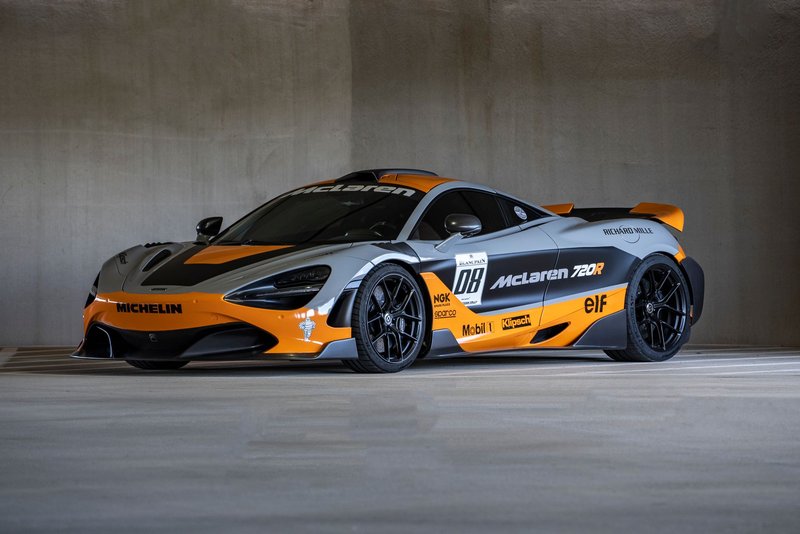
This is the one. The 750S takes the V8 to 740 horsepower, drops weight to about 2,815 pounds dry, and turns 60 in a claimed 2.7 seconds. It’s the lightest car in its class and it feels it — the steering is still hydraulically assisted, which is increasingly rare and a large part of why McLarens talk to your hands the way few modern cars do.
The 750S keeps McLaren’s signature trick: hydraulically linked suspension instead of conventional anti-roll bars, which lets it ride softly on a highway and then go flat through a corner. Push hard and it’ll out-handle cars with twice the marketing budget.
What changed: The 750S replaced the 720S, and roughly 30% of the parts are new. Power climbed from 710 to 740 horsepower, the car shed about 30 pounds, the nose got stiffer springs, and the gearing is 15% shorter for sharper acceleration. It’s the most thorough mid-cycle update McLaren has done.
Who it’s for: The driver. If your weekend involves a track day or an empty mountain road and you measure cars in lap times, this is the McLaren to own.
McLaren 750S Spider
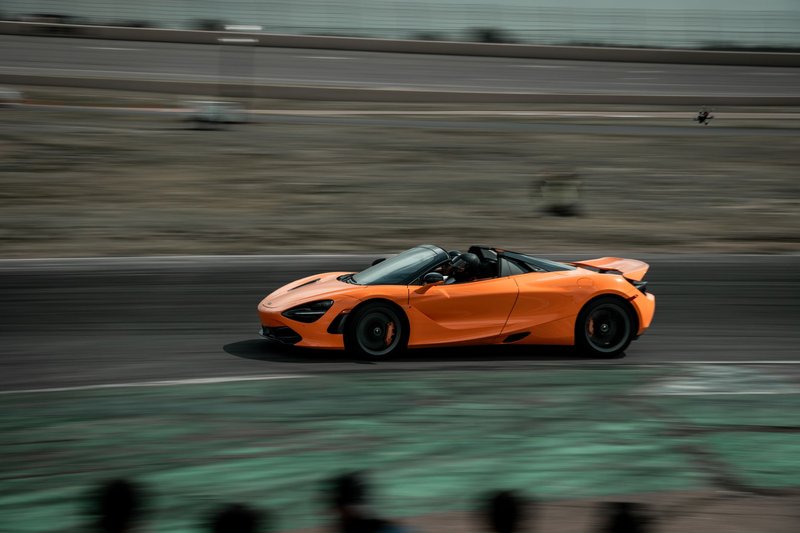
The Spider is the 750S with a retractable hardtop, and the remarkable part is how little you give up. The carbon tub doesn’t need the roof for structural rigidity, so there’s no added bracing and no meaningful stiffness loss. You pay about 108 pounds in extra weight and a tenth of a second to 60 mph — 2.8 seconds versus 2.7.
The roof folds in 11 seconds at speeds up to 31 mph, and there’s a separate rear window you can lower independently to let the V8 in even with the top up. Top speed stays at 206 mph closed, 194 with the roof down.
Who it’s for: Anyone who wants the 750S experience plus open-air drama and can absorb the roughly $19,000 premium. For most buyers in warm climates, the Spider is the smarter choice — the performance penalty is academic.
The limited editions and the W1
McLaren’s halo and limited-run cars sit above this lineup and are mostly sold out or allocation-only, but they’re part of the 2024 story. The Elva roadster and the track-and-road Senna were earlier Ultimate Series cars that still define the brand’s extremes. For 2024, the big news is the W1 — McLaren’s new flagship hypercar and the spiritual successor to the legendary P1, a hybrid V8 hypercar built in strictly limited numbers and priced into seven figures. You won’t cross-shop it with a 750S; it exists to plant a flag.
How the prices stack up against Ferrari, Lamborghini, and Porsche
Numbers only mean something in context, so here’s where the 2024 McLarens land against their natural rivals:
- 750S vs Ferrari 296 GTB: The McLaren makes more peak power (740 vs 819 combined hp for the hybrid Ferrari, but 740 from the V8 alone vs the Ferrari’s V6) and is lighter, while typically costing less once you account for Ferrari’s options pricing. The 296 counters with hybrid torque and a more theatrical interior.
- Artura vs Lamborghini… nothing, really: Lamborghini’s entry hybrid is the V12 Revuelto, which costs roughly twice as much. The Artura’s closest hybrid rival is the Ferrari 296, and it undercuts it on price.
- GTS vs Porsche 911 Turbo S: The Porsche is far cheaper (~$230,000 well-equipped) and more practical day-to-day, but the GTS offers exotic mid-engine layout, a carbon tub, and the kind of street presence a 911 can’t match.
The pattern: McLaren competes on lightness and power-per-dollar, not on badge prestige or interior plushness. That’s been the brand’s thesis since the MP4-12C, and the 2024 cars stay true to it.
Decoding the names: why GTS, why 750S
McLaren’s naming reads like a code because it is one. The 750S number refers to power in PS, the metric horsepower unit McLaren uses internally — 750 PS converts to roughly 740 hp. So the 720S made 720 PS, the 765LT made 765 PS, and the logic holds across the range. The S means “Sport,” McLaren’s badge for the focused-but-road-legal models.
GTS and GT drop the number because they’re touring cars, sold on comfort and luggage rather than a horsepower headline. The S in GTS, again, signals the sharper, more powerful version of the original GT. Artura breaks the pattern entirely with a real name — a portmanteau of “Art” and “Futura” — because McLaren wanted its first series-production hybrid to feel like a clean break, not the next number in a sequence.
Once you know the code, the lineup stops looking random. It’s a power figure, a body style, and a hint at how hard the car wants to be driven — all in three or four characters.

Daniela Voss
More from Daniela VossHow we reviewed this article
This article was researched against manufacturer records and editorially reviewed before publishing. We accept no payment for coverage. Some guides contain affiliate links; see our affiliate disclosure.