The 1990 Corvette is the year the C4 finally got interesting. Chevy bolted a 375-horsepower DOHC engine into the body that had been cruising around since 1984, redesigned the dashboard, added a driver airbag, and quietly built one of the most collectible Corvettes of the decade. Three configurations rolled out of Bowling Green that year, and if you’re shopping a 35-year-old C4 right now, knowing which one you’re looking at changes everything about what you should pay.
Here’s the full breakdown: every model, what’s under the hood, how many were built, and what they’re actually worth in 2026.
Table of Contents
- TLDR: The Three 1990 Corvette Models
- 1990 Corvette Base Coupe
- 1990 Corvette Convertible
- 1990 Corvette ZR-1
- Base vs. ZR-1: Side by Side
- 1990 Corvette Colors and Options
- What Made 1990 a Pivotal Year
- What They’re Worth Now
- What to Look For When Buying
TLDR: The Three 1990 Corvette Models
Chevrolet built 23,646 Corvettes for the 1990 model year across three configurations:
- Base Coupe — 16,016 built. The 245-hp L98 small-block, removable hardtop, the volume seller. The one you’ll find most often and the cheapest entry point.
- Convertible — 7,630 built. Same L98 engine, open top, a premium then and now.
- ZR-1 — roughly 3,049 built (folded into the coupe total). The “King of the Hill” with the Lotus-developed 375-hp LT5 V8. The one collectors actually chase.
If you want a driver, get a clean Base Coupe. If you want the icon and you can afford the entry fee, the ZR-1 is the only 1990 Corvette that’s genuinely appreciating.
1990 Corvette Base Coupe
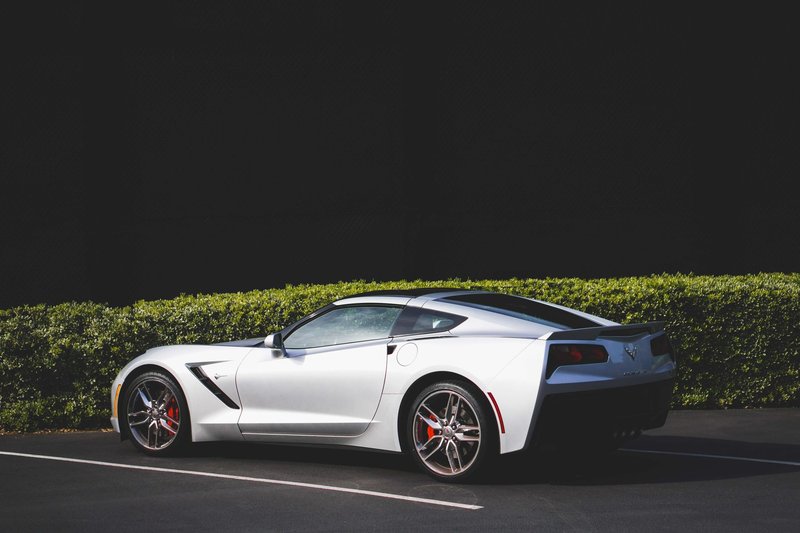
The Base Coupe was the everyman 1990 Corvette, and 16,016 buyers took one home. Power came from the 5.7-liter L98 V8, a tuned-port-injection small-block making 245 horsepower and 340 lb-ft of torque (250 hp if you specified the optional performance axle and exhaust). Zero to 60 landed in the low-to-mid six-second range, which in 1990 was genuinely quick for the money.
What separates the 1990 coupe from the 1989 car isn’t the engine. It’s everything around the driver. Chevy threw out the old all-digital dashboard and replaced it with a hybrid analog-digital cluster: a real analog speedometer and tach flanking a digital readout. A driver’s-side airbag became standard, which meant a redesigned steering wheel and a center console that finally looked like it belonged in a $30,000 car. If you’re cross-shopping the prior year, it’s worth seeing how the C4 stacks up against the rest of the 1989 Chevrolet lineup and what each is worth today before deciding which model year suits you.
The coupe came with the lift-off targa roof panel, four-wheel disc brakes, and the FX3 Selective Ride Control was available if you wanted to dial in the suspension stiffness from the cockpit. The base price was $31,979 — about $78,000 in today’s money. This is the model that defines what a “normal” 1990 Corvette feels like, and it’s the smart buy if you want to drive the thing rather than store it. It also earns its place among the best coupes ever built across every era, which says a lot about how well the C4 shape has aged.
1990 Corvette Convertible
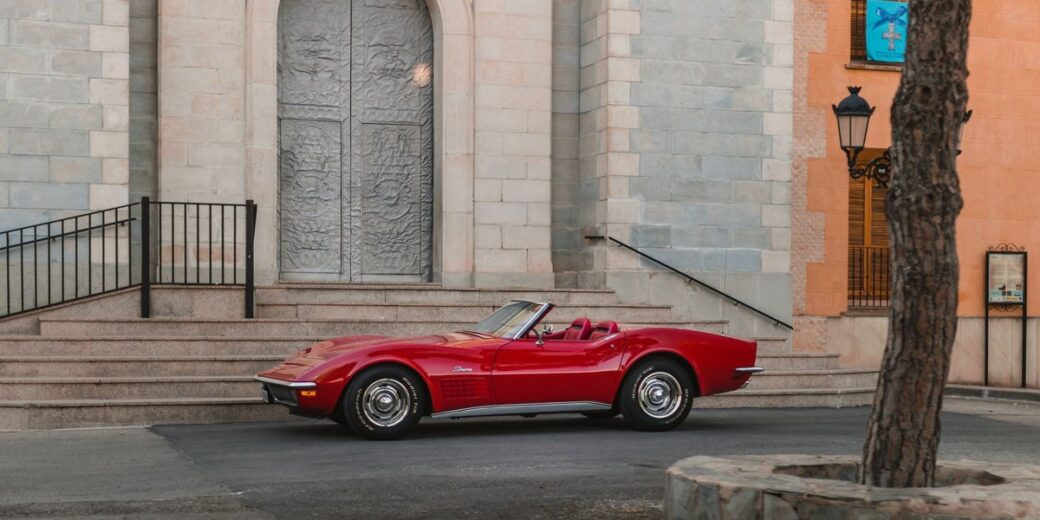
The Convertible used the identical 245-hp L98 drivetrain as the coupe, so performance was a wash. What you paid for was the roof, or the lack of one. Chevy built 7,630 convertibles in 1990, and they carried a base price of $37,264 — a meaningful jump over the coupe.
The folding soft top stows under a body-color hard tonneau cover, giving the dropped-top car a clean, finished look that a lot of 1980s convertibles never managed. Structurally the convertible is a touch softer than the coupe, the usual trade-off for cutting the roof off a car, but the C4’s stiff backbone chassis handled it better than most.
For buyers today, the convertible occupies an odd middle ground. It’s rarer than the coupe but lacks the ZR-1’s mechanical pedigree, so values track closely with the coupe rather than commanding a big premium. If open-air driving is the point, this is your car. If you’re buying for the badge, keep reading.
1990 Corvette ZR-1
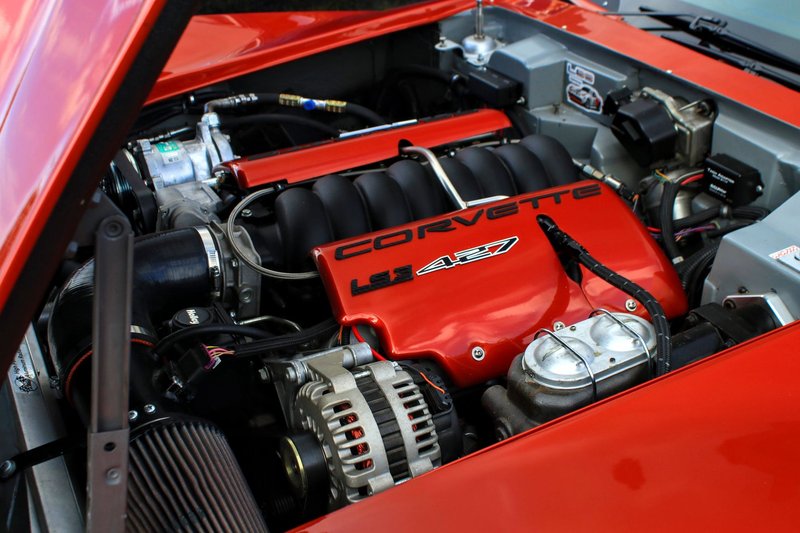
This is the one. The ZR-1 was the reason Corvette people circled 1990 on the calendar, and it remains the only 1990 model that gets collectors out of bed.
The heart of it is the LT5, a 5.7-liter all-aluminum V8 with double overhead cams and four valves per cylinder — a completely different engine from the pushrod L98. Chevrolet didn’t have the in-house expertise to build a DOHC V8, so the design was farmed out to Lotus, then Chevy-owned, and the engines were assembled by Mercury Marine in Oklahoma. The result: 375 horsepower and 370 lb-ft of torque, numbers that made the ZR-1 one of the fastest production cars in the world at launch. Top speed brushed 180 mph.
The LT5 had a party trick worth knowing about: a “valet key” switch that, when turned, locked out the secondary intake runners and second injector per cylinder, capping output to keep the car tame. Turn the key back, and all 375 horses were available.
Spotting a real ZR-1 matters because Chevy gave it subtle bodywork changes. From the doors back, the ZR-1 is wider to clean up airflow, with convex rear bodywork and rectangular taillights instead of the round units on the base car. Underneath, it rode on bigger 17-inch wheels and fatter tires. Production was tight — roughly 3,049 units for 1990 — and the option alone cost about $27,000 on top of the base coupe, pushing the sticker past $58,000. That was supercar money in 1990, and it bought supercar performance that still holds up against the best American sports cars of the 1990s.
Base Coupe vs. ZR-1: Side by Side
| Spec | Base Coupe | ZR-1 |
|---|---|---|
| Engine | 5.7L L98 V8 (pushrod) | 5.7L LT5 V8 (DOHC) |
| Horsepower | 245 hp | 375 hp |
| Torque | 340 lb-ft | 370 lb-ft |
| 0–60 mph | ~6.0 sec | ~4.9 sec |
| Top speed | ~150 mph | ~180 mph |
| Production | 16,016 | ~3,049 |
| Base price (1990) | $31,979 | ~$58,995 |
| Rear bodywork | Round taillights, standard width | Square taillights, wider tail |
| Wheels | 16-inch | 17-inch |
The takeaway: the ZR-1 isn’t a trim package with a badge. It’s a substantially different car wearing a similar shape, and the LT5 engine alone justifies its standing.
1990 Corvette Colors and Options
Chevrolet offered nine exterior colors for 1990:
- Arctic White
- Black
- Bright Red
- Competition Yellow
- Steel Blue Metallic
- Quasar Blue Metallic
- Charcoal Metallic
- Turquoise Metallic
- Polo Green Metallic
Bright Red and Black were the volume sellers, which is exactly why the rarer metallics — Turquoise and Quasar Blue especially — can add interest for a collector hunting something that doesn’t show up at every cars-and-coffee.
On the options sheet, the ones that matter to buyers today are FX3 Selective Ride Control (adjustable damping), the performance axle ratio, the removable body-color roof panel versus the transparent acrylic panel, and on the ZR-1, the desirable factory specifications were largely standardized. Improved anti-lock brakes (Bosch ABS) were fitted across the range, a genuine upgrade over earlier C4s.
What Made 1990 a Pivotal Year
A few model years get remembered, and most don’t. 1990 gets remembered for stacking real changes into a single year:
- The ZR-1 hit full stride. It technically launched mid-1989, but 1990 was the first complete year of production and the moment it entered the public imagination.
- The driver airbag arrived, forcing the new steering wheel and a modernized interior.
- The dashboard went analog-digital, ditching the polarizing all-LCD cluster the C4 had worn since 1984. Enthusiasts had complained about it for years; Chevy finally listened.
- Brakes got better. The improved ABS system made the 1990 a safer, more confident car at speed than the models just before it.
Put together, 1990 is the year the C4 grew up. The chassis was already good. This is when the cabin and the halo model caught up to it. The ZR-1 also helped the Corvette stand tall against the wider field of the best cars of 1990, a year when the competition was sharper than people remember.
What They’re Worth Now
Values swing hard depending on which model you’re chasing and what condition it’s in. As of 2026, here’s the realistic landscape:
- Base Coupe: Driver-quality cars trade roughly $8,000–$14,000. Clean, low-mileage examples with full service history push toward $18,000–$22,000. These are still attainable classics.
- Convertible: Track slightly above coupes, generally $10,000–$20,000 depending on condition and mileage.
- ZR-1: A different market entirely. Decent drivers start around $25,000–$30,000, and low-mileage, well-documented examples regularly clear $40,000–$50,000+. The ZR-1 has been quietly appreciating while base C4s stayed flat.
For a current read on the market, auction results on sites like Bring a Trailer are the most honest gauge of what people actually pay — far better than asking prices on classified listings. Mileage, documentation, and originality move the number more than anything else.
What to Look For When Buying
A 35-year-old Corvette can be a bargain or a money pit. The difference is in the inspection.
On any 1990 C4:
- Check the ABS and the digital dash. The Bosch ABS system and the hybrid cluster are known weak points; warning lights and dead pixels are common and repairs aren’t always cheap.
- Look for opti-spark and ignition gremlins on high-mileage L98 cars, and budget for cooling-system attention.
- Inspect the targa roof seals and weatherstripping. Leaks are common and a wet C4 interior leads to electrical headaches.
- Confirm service history. A documented car is worth meaningfully more than an undocumented one in the same condition.
ZR-1 specific:
- The LT5 is robust but specialized. It’s a low-failure engine when maintained, but few independent shops know it well, and parts run more than the L98’s. Find a verified maintenance trail and a mechanic who’s actually touched an LT5 before you buy.
- Verify it’s a real ZR-1, not a base car with ZR-1 cosmetics. Check the wider rear bodywork, the square taillights, the 17-inch wheels, and the build documentation. A genuine ZR-1 commands a huge premium, so fakery exists.
Buy the best example you can afford rather than the cheapest one you can find. With these cars, deferred maintenance always costs more than the discount that hid it.
The Bottom Line on 1990 Corvettes
The 1990 Corvette gave buyers three distinct cars: an attainable, well-rounded Base Coupe, an open-top Convertible for the same drivetrain in the sun, and the LT5-powered ZR-1 that put Corvette back on the world supercar map. For a daily-drivable classic, the coupe is the value play. For an investment-grade C4 that’s still climbing, the ZR-1 stands alone. Whichever one you chase, 1990 is the C4 model year where everything finally clicked into place.

Marco Delantero
More from Marco DelanteroHow we reviewed this article
This article was researched against manufacturer records and editorially reviewed before publishing. We accept no payment for coverage. Some guides contain affiliate links; see our affiliate disclosure.