McLaren sells four cars in 2025, plus a fifth that costs more than most houses and is already sold out. That’s the whole story in one sentence, and it’s also why the lineup is more interesting than it looks. There’s no SUV here. No four-door anything. Just a hybrid V6 daily-drivable supercar, a twin-turbo V8 flagship, a softer grand tourer, and the W1 — the spiritual heir to the F1 and the P1, all 1,275 PS of it.
Most pages that cover this range just dump specs into a table and walk away. This one tells you what each car is actually for, because a 750S and an Artura attract very different people even though they sit two feet apart in the showroom.
Table of Contents
- The Quick Comparison
- TLDR: Which McLaren Should You Buy?
- Artura & Artura Spider
- 750S & 750S Spider
- GTS
- W1
- Which McLaren Is Right for You?
The Quick Comparison
Here’s the entire 2025 range at a glance. Prices are approximate US starting figures and move with options fast.
| Model | Engine | Power | 0–60 mph | Starting Price |
|---|---|---|---|---|
| Artura / Artura Spider | 3.0L twin-turbo V6 hybrid | 690 hp | ~3.0 sec | ~$237,000 |
| GTS | 4.0L twin-turbo V8 | 626 hp | ~3.2 sec | ~$345,000 |
| 750S / 750S Spider | 4.0L twin-turbo V8 | 740 hp | ~2.7 sec | ~$331,000 |
| W1 | 4.0L twin-turbo V8 hybrid | 1,275 PS (~1,258 hp) | ~2.7 sec | ~£2,000,000 |
A few things jump out. The GTS is the least powerful car here but not the cheapest — you’re paying for comfort and luggage space, not lap times. The 750S undercuts the GTS on price while crushing it on power, because the 750S is built to thrill and the GTS is built to travel. And the W1 isn’t really competing with any of them; it’s competing with history.
TLDR: Which McLaren Should You Buy?
- Want one McLaren you can actually live with? The Artura — quiet enough for the morning commute, electric-only for short hops, savage when you ask.
- Want the purest driver’s car in the range? The 750S — lightest, most focused, the one enthusiasts argue is the best McLaren in years.
- Want to do a thousand miles in a weekend? The GTS — softer suspension, a real boot, and a V8 that doesn’t beg you to speed.
- Want to own a piece of McLaren legend and have £2M spare? The W1 — if you have to ask, the 399 build slots are gone anyway.
Artura & Artura Spider
The Artura is the McLaren you buy if you want one and only one. It’s the entry point to the range, but “entry-level supercar” undersells what’s happening under the rear deck. This is McLaren’s first series-production hybrid, built on an entirely new carbon-fiber tub called the McLaren Carbon Lightweight Architecture. A twin-turbo 3.0-liter V6 — not the brand’s familiar V8 — pairs with an axial-flux electric motor for a combined 690 hp.
The numbers matter, but the character matters more. The Artura will creep through a parking garage in near-silence on battery power, then detonate to 60 mph in roughly three seconds when you flatten the throttle. The 2024 update pushed power up and sharpened the throttle response, and the Spider added a retractable hardtop that drops in about 11 seconds at speeds up to 31 mph.
Who it’s for: the buyer who wants supercar theater without supercar drama. It’s the most usable car McLaren makes that still wears the proper badge. If your McLaren is going to see real road miles, this is the one.
750S & 750S Spider
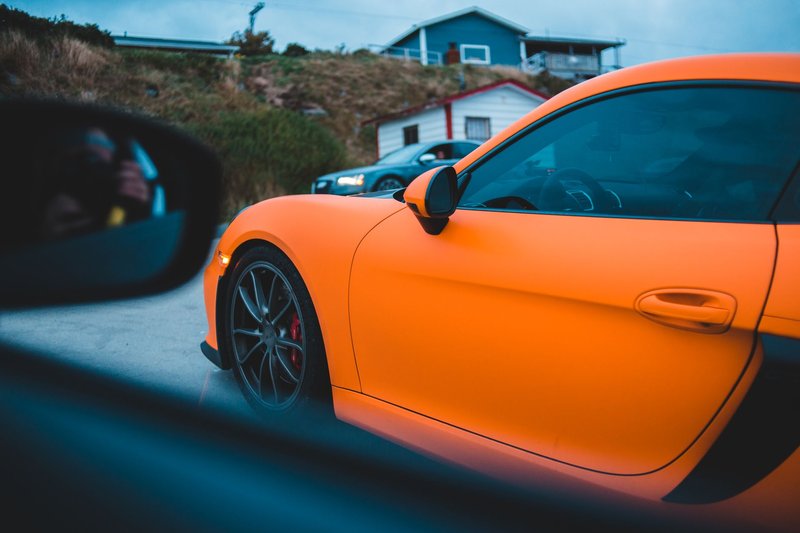
If the Artura is the sensible choice, the 750S is the heart’s choice. It replaced the 720S and didn’t reinvent it so much as refine every edge. The 720S itself was one of the cars that defined McLaren’s most prolific decade, so the 750S inherits a serious bloodline. The 4.0-liter twin-turbo V8 makes 740 hp, the whole car shed weight (McLaren claims it’s the lightest series-production car in its class), and the result is a 0–60 time of around 2.7 seconds and a top speed north of 200 mph.
What the spec sheet won’t tell you: this is the car McLaren purists point to when someone claims the brand lost its way. It’s loud, hydraulically-steered, and communicative in a way the rivals from Maranello and Sant’Agata have largely engineered out. That analog feel is why several McLarens still show up on lists of the best sports cars of the 2010s. The Spider weighs only 49 kg more than the coupe thanks to that carbon tub, so you lose almost nothing by going topless.
Who it’s for: the driver who already owns a fast car and wants one that talks back. The 750S isn’t trying to be comfortable. It’s trying to be the best McLaren you can buy that doesn’t require a seven-figure check, and it largely succeeds.
GTS
The GTS is the odd one out, and that’s the point. “GTS” stands for grand-touring-spider in spirit if not in name — this is the McLaren built to cover distance rather than carve apexes. The same 4.0-liter twin-turbo V8 is detuned to 626 hp, the suspension is softer, and crucially, there’s storage: a front trunk plus a rear load bay over the engine, giving you a usable 570 liters total. For a mid-engine supercar, that’s enormous.
Don’t read “grand tourer” as “slow.” Sixty arrives in about 3.2 seconds, which would have been hypercar territory not long ago. The GTS just delivers it with more ride compliance and less drama, so you arrive 600 miles later without your spine filing a complaint.
Who it’s for: the buyer who wants exotic looks and a V8 howl but plans to actually go places. If you’ve ever looked at a 750S and thought “but where do the bags go,” McLaren built the GTS for you.
W1
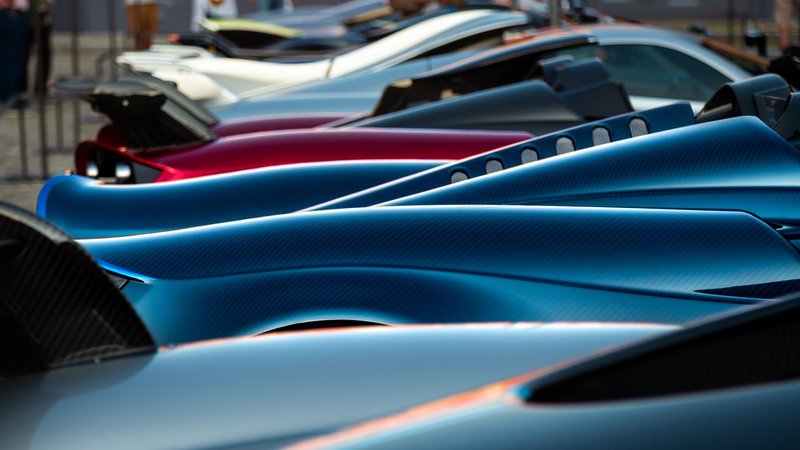
This is the one the news pages can’t stop writing about, and for once the hype is earned. The W1 is McLaren’s new flagship hypercar — the third in the lineage that runs from the legendary 1990s F1 through the 2013 P1. That P1 emerged from McLaren’s road-car renaissance — a story you can trace through the brand’s full 2010s model run — and the W1 picks up exactly where it left off. McLaren is building exactly 399 units, all of them already accounted for, at roughly £2 million each.
The hardware is staggering. A new 4.0-liter twin-turbo V8 works with a radial electric motor for a combined 1,275 PS — about 1,258 hp — sent to the rear wheels alone. There’s active aerodynamics, a ground-effect floor, and a deployable rear wing McLaren calls the “Active Long Tail.” McLaren quotes 0–62 mph in 2.7 seconds and a 217 mph top speed, with downforce figures that put it firmly in the road-legal-but-track-obsessed category. You can read McLaren’s own breakdown of the W1’s hybrid powertrain and aero on the configurator.
Who it’s for: the collector. The W1 isn’t transportation; it’s an appreciating asset with a steering wheel. Its significance is what it represents — McLaren betting its hypercar future on a hybrid V8 rather than chasing full-electric, a deliberate choice that says a lot about where the brand thinks driving is headed.
Which McLaren Is Right for You?
Strip away the badges and the price tags, and the 2025 lineup sorts cleanly by intent.
Buy the Artura if you want a supercar that disappears into your life — the hybrid V6 makes it the only McLaren here you’d genuinely commute in. Buy the 750S if the drive is the entire point and you want the most engaging car the brand has built in a decade. Buy the GTS if you want the look and the noise but refuse to sacrifice the ability to pack a weekend bag.
And the W1? You don’t choose the W1. The W1 chooses you, assuming you were one of the 399 collectors McLaren called first. For the rest of us, it’s the halo that makes the other three glow a little brighter.
The smart money in this range is the 750S for drivers and the Artura for owners — and if your garage has room for both, you’ve basically reverse-engineered why McLaren keeps building cars this way.

Marco Delantero
More from Marco DelanteroHow we reviewed this article
This article was researched against manufacturer records and editorially reviewed before publishing. We accept no payment for coverage.