Ford’s 1997 car lineup was a strange mix. One end had a 305-hp Mustang Cobra. The other had an Escort that made 88 horsepower and asked for very little. In between sat a Taurus that had just been redesigned to mixed reviews, a Crown Victoria that police departments bought by the thousand, and two cars, the Thunderbird and the Probe, that were playing their last season.
This guide covers every 1997 Ford car sold in the US: what each one was, what changed that year, what tends to break, and what a used one costs now. Trucks and SUVs sold far better (cars were only about 36% of Ford Division sales), so the car side of the showroom is smaller than you might remember.
Contents
- The 1997 Ford car lineup at a glance
- 1997 Ford Escort
- 1997 Ford Contour
- 1997 Ford Taurus
- 1997 Ford Crown Victoria
- 1997 Ford Mustang
- 1997 Ford Thunderbird
- 1997 Ford Probe
- Where cars fit in Ford’s 1997 lineup
- Buying a 1997 Ford car today
- Summary
The 1997 Ford car lineup at a glance
Prices are approximate 1997 base figures. Horsepower is the factory rating.
| Model | Body styles | Engines (hp) | Approx. base price | Verdict |
|---|---|---|---|---|
| Escort | Sedan, 3-door hatchback, wagon | 1.9L four (88) | $12,000 | Cheap, tired, disposable |
| Contour | 4-door sedan | 2.0L four (125), 2.5L V6 (170) | $16,000 | Best-handling Ford sedan of the decade |
| Taurus | Sedan, wagon | 3.0L V6 (145 or 200), 3.4L V8 in SHO (235) | $19,000 | Roomy, divisive, SHO is the one to want |
| Crown Victoria | 4-door sedan | 4.6L V8 (190-200) | $21,000 | Rear-drive, body-on-frame, nearly indestructible |
| Mustang | Coupe, convertible | 3.8L V6 (150), 4.6L V8 (215), Cobra 4.6L V8 (305) | $17,000 | The collector pick |
| Thunderbird | 2-door coupe | 3.8L V6 (145), optional 4.6L V8 | $19,000 | Final year, cheap and forgettable |
| Probe | 2-door hatchback | 2.0L four (118), 2.5L V6 (164) | $16,000 | Mazda-built, underrated, rare now |
Ford also sold the tiny Aspire in 1997, a Kia-built subcompact with a 63-hp 1.3L engine. It was its last year, and few survive.
1997 Ford Escort
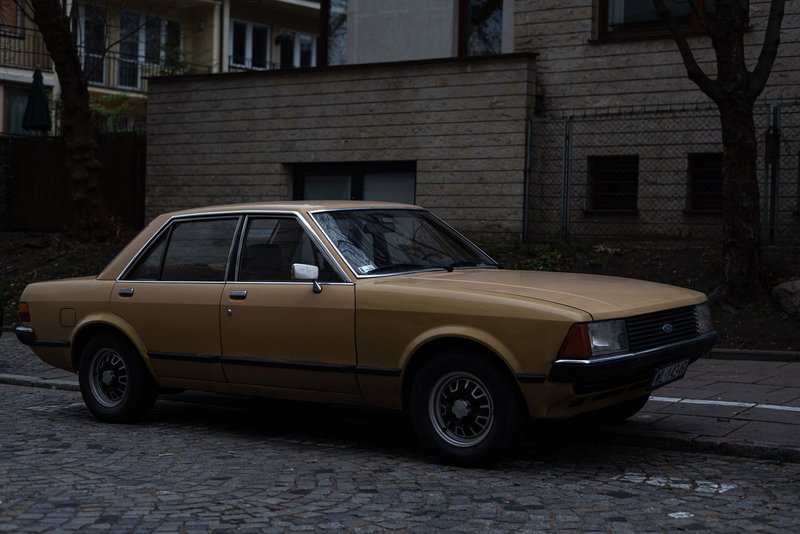
The Escort was Ford’s volume small car and one of the bestselling cars in America for years. For 1997 it was a carryover: a 1.9L four-cylinder with 88 horsepower, a five-speed manual or four-speed automatic, and a body that had been fresh in 1991. The sporty 2.0L ZX2 coupe didn’t arrive until the 1998 model year, so a 1997 Escort is the plain one.
Known problems. The 1.9L is durable if you keep up with oil changes, but timing belt neglect on the related Zetec-equipped cars is a classic killer, and the 1.9’s own weak points are age-related: leaking valve cover and rear main seals, worn motor mounts, failed ignition modules, and an automatic transmission that gets harsh past 150,000 miles. Rust on rocker panels and wheel arches finishes off many survivors.
Cost today. Most sell for $1,500 to $3,500, and a clean low-mileage example can reach the higher end. Nobody collects these. You buy one as a cheap commuter or a ironic daily driver, and you check the underside for rust before anything else.
1997 Ford Contour
The Contour is the best car Ford sold to people who didn’t know they wanted a good car. It shared its platform with the Mercury Mystique and the European Mondeo, and it handled like it. The suspension was tuned for European roads, the steering was quick, and the chassis stayed composed in corners where a Taurus would lean and wallow.
Two engines were offered in 1997: a 2.0L Zetec four-cylinder making 125 hp, and the 2.5L Duratec V6 at 170 hp. The V6 is the better fit for the chassis. Trim levels ran from base GL through LX and SE.
You’ll see the name “Contour SVT” in searches for this year, but the SVT Contour didn’t exist yet. Ford’s Special Vehicle Team version, with a 195-hp V6, a manual-only gearbox and a stiffer suspension, arrived for 1998. A 1997 Contour is the same car without the SVT parts.
Known problems. The big ones are electrical and cosmetic: failing window regulators, interior trim that peels and cracks, and a tendency for front lower control arm bushings to wear out early. V6 cars can develop leaks at the water pump, and automatic transmissions are the weak link, with hard shifts or slipping common by 120,000 miles. The 2.0L four is generally the longer-lived engine.
Cost today. Expect $1,500 to $4,000. Clean V6 manuals are the ones enthusiasts hunt, and they’re getting harder to find.
1997 Ford Taurus
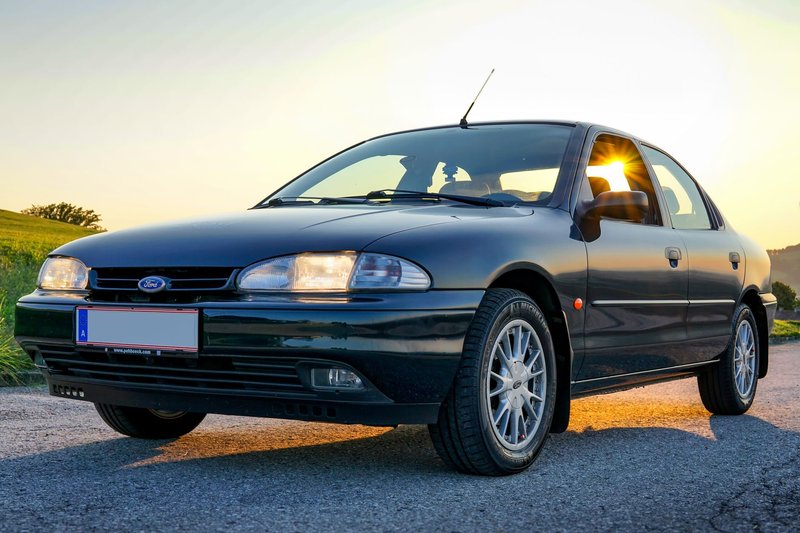
The Taurus was redesigned for 1996 with an oval-everything theme that dealers loved and many customers didn’t. By 1997 the controversy had cooled, and the car was still a very competent family sedan: big cabin, a standard wagon option for people who needed it, and a ride that soaked up highway miles.
Engines: the base 3.0L Vulcan V6 made 145 hp, and the 3.0L Duratec V6 (on the LX and available elsewhere) made 200 hp. The standout was the Taurus SHO, which had a 3.4L V8 built by Yamaha, producing 235 hp, matched to an automatic only in this generation. The earlier manual SHO was gone. The SHO is the Taurus most collectors care about.
Known problems. The Vulcan V6 has a decent reputation, though head gasket failures on the 3.8L Windsor in the earlier Taurus were a separate story. The more common complaints on 1997 cars are automatic transmission failure (the AX4N unit in particular), cracked plastic intake components, failing power window motors, and rust in the rear subframe area. The SHO’s Yamaha V8 has expensive-to-fix timing components and parts are harder to find.
Cost today. Regular Tauruses go for $1,500 to $3,500. A clean SHO can pull $5,000 or more, and the gap is widening as survivors dwindle.
1997 Ford Crown Victoria
The Crown Victoria is the one that outlasted everything. It was the last true full-size American sedan: body-on-frame, rear-wheel drive, with a 4.6L SOHC V8 making 190 hp (200 with dual exhaust). The platform, shared with the Mercury Grand Marquis and Lincoln Town Car, ran in much the same form until 2011.
Trims included the base, LX and the upscale LX with extra features. The Police Interceptor variant was the other half of the story: Ford’s own marketing leaned on the car’s police reputation for decades, and used ex-cop cars are everywhere.
Known problems. The 1997 car is old enough that plastic intake manifolds from the early run of the 4.6L are a known weak point, though cracking became a larger issue with later years. Watch for failing blend door actuators in the climate control, worn front suspension bushings, leaking power steering racks and soft air-spring rear suspension on cars equipped with it. Ex-fleet cars may have severe idle hours and abuse on the odometer’s side that the mileage doesn’t reveal.
Cost today. Typical prices run $2,500 to $6,000, and low-mileage, one-owner examples sell higher. Highway comfort for the money is hard to beat.

1997 Ford Mustang
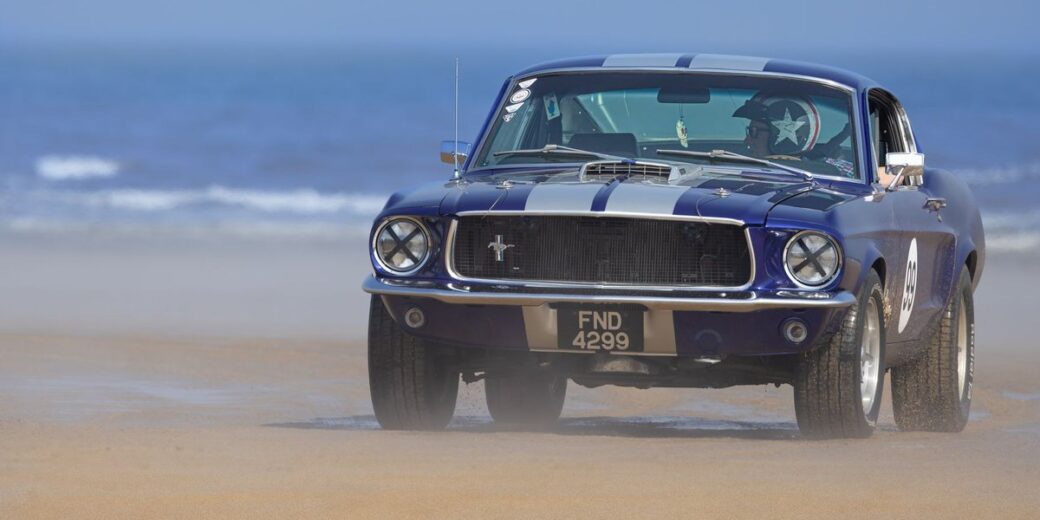
The Mustang was in its fourth generation, the SN95 platform that began in 1994. For 1997 there were three powertrains:
- Base: 3.8L V6, 150 hp.
- GT: 4.6L SOHC V8, 215 hp.
- SVT Cobra: 4.6L DOHC V8, 305 hp.
Body styles were a coupe or a convertible. The V6 car was the volume seller, and rental fleets were full of them.
The Cobra is the headliner. Its all-aluminum four-cam V8 was a step above the GT’s engine and gave it a genuine edge on Camaro and Firebird rivals. The Cobra also got a 5-speed manual only, a rear differential upgrade, bigger brakes and stiffer suspension.
Pricing is where online sources contradict one another, with some specs sites listing two different base prices for the same year. The sensible way to read it is by trim: a V6 coupe started around $17,000, the GT roughly $21,000 and the Cobra $25,000-plus when new.
Known problems. V6 cars suffer from timing cover and head gasket issues at high mileage, and the 4.2L V6 that replaced the 3.8L in later years is a different engine. GTs commonly develop leaking plastic coolant elbows, intake manifold gasket leaks, blown rear main seals and worn clutch hydraulics. The T-45 and T-5 manual gearboxes are fine for stock power but don’t like abuse. Rear lower control arms and the front K-member also wear. Many were modified, so look for signs of hard use.
Cost today. V6 cars cost $3,000 to $7,000. GTs run $6,000 to $12,000 for clean examples, and SVT Cobras with good records and low miles sell between $15,000 and $30,000. The Cobra is the only one that behaves like a proper collector car.
1997 Ford Thunderbird
The Thunderbird closed out its 1989 generation in 1997. It was a long, rear-drive personal coupe built on the same bones as the Cougar, and it stood in the middle of the Ford lineup as an affordable cruiser. The base engine was a 3.8L V6 with 145 hp, and the 4.6L V8 was a pricier option on the LX trim.
Ford killed it after the 1997 model year when sales no longer justified the platform. The Thunderbird name wouldn’t return until the retro two-seater of 2002.
Known problems. Typical aging issues on these coupes include 3.8L head gasket failure, intake manifold leaks and an automatic that wears under heavy use. Rust at the rear wheel arches is common on cars from salt states.
Cost today. Most go for $1,500 to $4,000. They’re cheap, and one in good shape with low miles is a sleeper pick for someone who wants old-school rear-drive comfort for pocket change.
1997 Ford Probe
The Probe is the car many Ford fans overlook. It was built alongside the Mazda MX-6 at a Mazda plant in Michigan, which meant Mazda mechanicals under a Ford badge. The base model used a 2.0L four-cylinder rated at 118 hp, and the Probe GT had a 2.5L V6 with 164 hp.
The Probe went out of production after 1997, replaced by nothing. In its heyday it was a front-drive, two-door hatchback with a low roofline and a sharp enough chassis to be genuinely fun. The V6 GT is the car you want.
Known problems. The Mazda KL V6 is generally robust but suffers from timing belt demands and neglect, and the automatic is the weaker choice. Interior plastics crack, and power window issues and dash pop-up lighting problems appear on higher mileage cars.
Cost today. Prices run $2,000 to $5,000, and clean GTs are getting scarce because many were driven hard or crashed. If you find a straight one, buy it.
Where cars fit in Ford’s 1997 lineup
Ford’s car side was a minority even in 1997. Only about 36% of Ford Division sales were cars. The rest were trucks, vans and SUVs: the F-Series (the bestselling vehicle in America), the Explorer, Ranger and Expedition. The car lineup was split between aging platforms (Escort, Thunderbird, Crown Victoria) and the newer designs (Contour, Taurus, Mustang).
That split explains a lot. Money was going to the F-150 redesign and the Expedition, which launched for 1997. Cars got updates when it was cheap. The Probe and Thunderbird disappeared because the sales numbers weren’t there, and the Escort was due for a replacement that wouldn’t come until the Focus arrived in 2000.
Buying a 1997 Ford car today
Every car on this list is now more than 25 years old, so condition counts for more than the badge.
Best picks.
- Mustang SVT Cobra: the one that holds value. Look for stock cars with service records.
- Mustang GT: the best balance of price and fun. Skip modified cars unless the work is documented.
- Taurus SHO: rare, quick for its time, and priced fairly. Budget for a specialist if the timing components need work.
- Crown Victoria: the practical choice. A well-kept Crown Vic can still do 200,000 miles with basic care.
- Contour V6 manual: the cheap handling car, if you can find a clean one.
What to check before buying.
- Rust. Rockers, wheel arches, rear subframes and floor pans. Surface rust is fine. Holes are not.
- Transmission behavior. Automatics from this era slip, flare and shift hard. Drive the car and make sure each gear engages cleanly.
- Cooling system. Plastic components get brittle. Check hoses, coolant elbows and radiator end tanks.
- Service history. Timing belts on the Probe’s V6, and timing chain components on the SHO, are costly if skipped.
- Recalls. Run the VIN through NHTSA’s recall lookup to see any open safety recalls. Ford issued several on cruise control switches during this period, and a fire risk tied to those parts affected many vehicles.
- Fuel economy. Compare real-world figures against the EPA’s fueleconomy.gov ratings for the specific engine and transmission.
Summary
The 1997 Ford car lineup ran from cheap commuter to genuine performance car. The Mustang Cobra is the collector’s choice, the Crown Victoria is the durable choice, and the Contour and Probe are the underrated ones. The Escort, Taurus and Thunderbird are cheap transport, with the SHO as the exception. If you’re shopping for a 1997 Ford car, pick the model that fits how you’ll use it, then spend your money on the cleanest example you can find.

Marco Delantero
More from Marco DelanteroHow we reviewed this article
This article was researched against manufacturer records and editorially reviewed before publishing. We accept no payment for coverage. Some guides contain affiliate links; see our affiliate disclosure.