Search “Austin old models” and you’ll mostly hit the same thing: an exhaustive spreadsheet of every car the Austin Motor Company built between 1906 and 1989. Useful if you’re cross-checking a chassis number. Useless if you actually want to know which old Austin is worth owning, what it’ll cost you, and what’ll bite you on the inspection.
This is the other list. Not all 100-plus models — just the ones that matter to a collector or a first-time classic buyer. The Baby Austin that put Britain on wheels. The chrome-grilled saloons your grandfather learned to drive in. The Mini that needs no introduction but gets one anyway. For each, you get the short history, why it’s collectible, the specific rust traps and weak points, and a realistic 2026 price range.
A quick note on the name. “Austin” here is Herbert Austin’s British marque, founded at Longbridge near Birmingham in 1905 — not the city in Texas. If you landed here looking for barbecue, wrong list.
Table of Contents
- TLDR: The Quick Picks
- Austin Seven (1922–1939)
- Austin A30 and A35 (1951–1959)
- Austin A40 Farina (1958–1967)
- Austin Cambridge and Westminster (1954–1969)
- Austin Mini (1959–1969)
- Austin-Healey 3000 (1959–1967)
- Austin Allegro (1973–1982)
- Price Comparison Table
- How to Buy Your First Old Austin
TLDR: The Quick Picks
Short on time? Here’s the verdict before the detail.
- Best entry-level classic: Austin A30/A35. Cheap, simple, a proper ’50s car with parts support, and you can do most of the work yourself.
- Most iconic / blue-chip: Austin Seven. The car that motorized Britain. Prices have legs and the club scene is enormous.
- Best to actually drive every day: Austin Mini. Goes anywhere, parks anywhere, and the world will smile at it.
- Most fun per pound: Austin-Healey 3000. A real sports car with a real exhaust note, if your budget stretches.
- Cheap and underrated: Austin Cambridge/Westminster Farina saloons. Big, dignified, and still affordable.
- Buy with your head, not your nostalgia: Austin Allegro. A talking point, not an investment — but cheaper than the jokes suggest.
Now the detail.
Austin Seven (1922–1939)
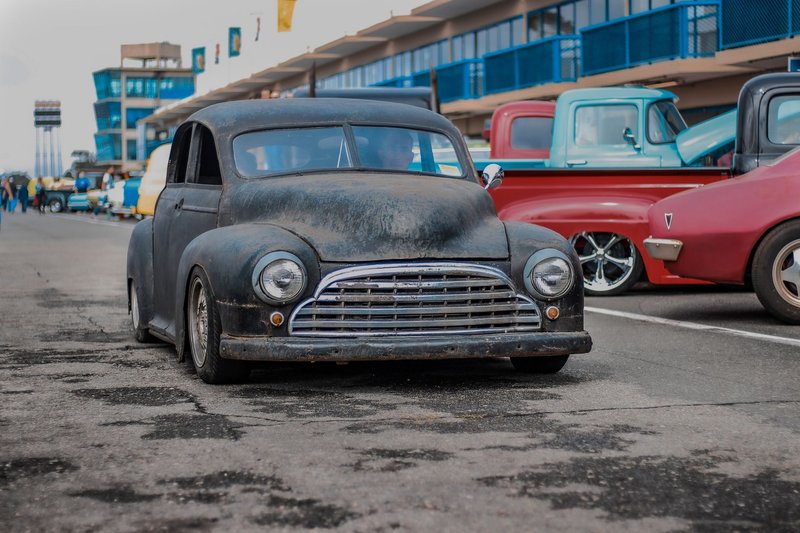
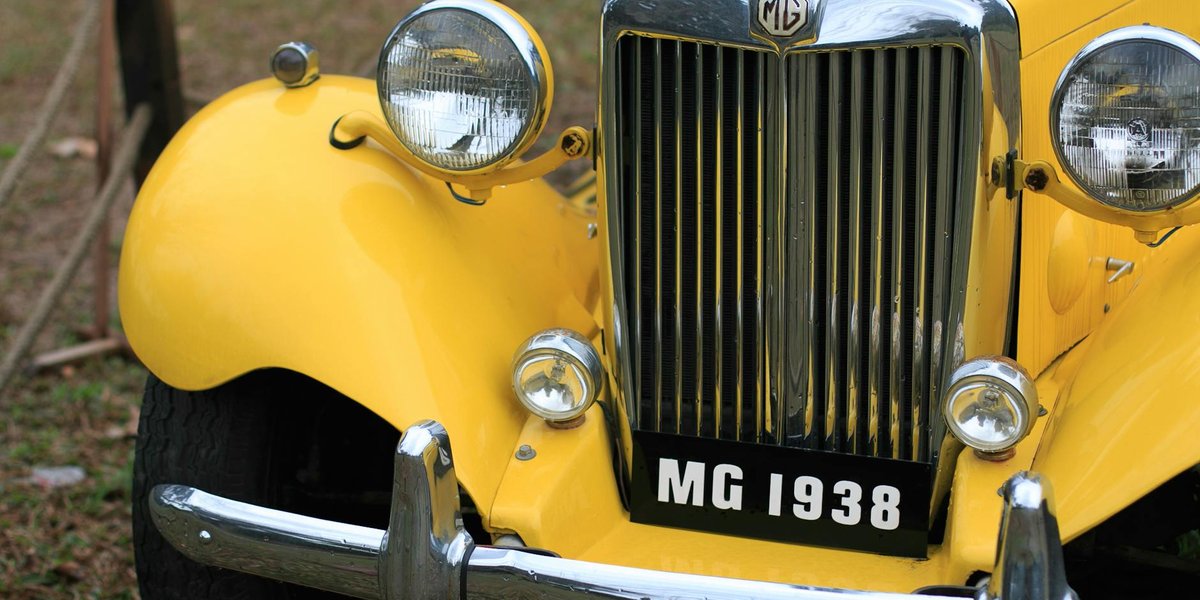
The Austin Seven is the reason there’s a list to write at all. Before it, a small car in Britain usually meant a flimsy cyclecar held together with optimism. Herbert Austin gambled the company on a properly engineered miniature — four cylinders, four wheels, a real chassis — and sold roughly 290,000 of them. It did for Britain what the Model T did for America and the Beetle did for Germany: it put ordinary families behind a steering wheel.
It mattered beyond Longbridge, too. The Seven was licensed and copied worldwide — the first BMW, the Dixi, was a licensed Austin Seven, and the first car Jaguar’s founders bodied was a Seven-based Swallow. So a small Birmingham saloon is, quite literally, an ancestor of two of the most prestigious marques alive. By the late 1930s it was a fixture of the pre-war motoring landscape, sitting comfortably among the other popular cars of 1938 that defined affordable family transport on both sides of the Channel.
For a collector, the appeal is club support and sheer character. The Vintage Sports-Car Club and the 750 Motor Club have kept Sevens running and racing for decades, so parts and knowledge are everywhere. Many were converted into “specials” — home-built sports racers — over the years, which means you’ll see everything from concours saloons to boat-tailed track toys.
What to look for: the wooden body frame rots where you can’t see it, so prod the floor and door bottoms. The three-speed gearbox (early cars) has no synchromesh at all — expect to learn double-declutching. Brakes are mechanical and modest; this is a 50 mph car, drive it like one.
Realistic range: a usable saloon starts around £6,000–£9,000, with the prettier two-seaters and good specials climbing past £15,000. Pre-war chummy tourers in nice order can reach £18,000–£20,000.
Austin A30 and A35 (1951–1959)
The A30 was Austin’s answer to the post-war Morris Minor, and the first Austin built as a monocoque — no separate chassis, lighter and cheaper. The A35 that followed in 1956 got the bigger 948cc A-series engine and that cheerful larger rear window. If you’ve ever wanted a ’50s British car that won’t bankrupt you, start here.
The A-series engine under the bonnet is the same family that powered the Mini, so it’s about the best-supported small engine in classic motoring. Tuning parts, gaskets, brake bits — all off-the-shelf. It’s a car you can genuinely learn to maintain on, which is exactly why it makes such a sane first classic.
The A35 also has a quietly serious motorsport pedigree. Lightweight and tossable, it became a giant-killer in historic saloon racing and still turns up grinning its way around the back of grids today. It earned that reputation racing against the lithe 1950s sports cars of its day, embarrassing far more exotic machinery through sheer agility.
What to look for: rust in the front floors, sills, and the rear spring hangers. Mechanically they’re tough, but check for crunchy synchro and a smoky engine on the overrun. Brakes are drums all round and need regular adjustment.
Realistic range: a solid driver A35 sits around £4,000–£7,000, making it one of the cheapest ways into a charismatic ’50s classic. Show-quality cars reach £9,000–£11,000.
Austin A40 Farina (1958–1967)
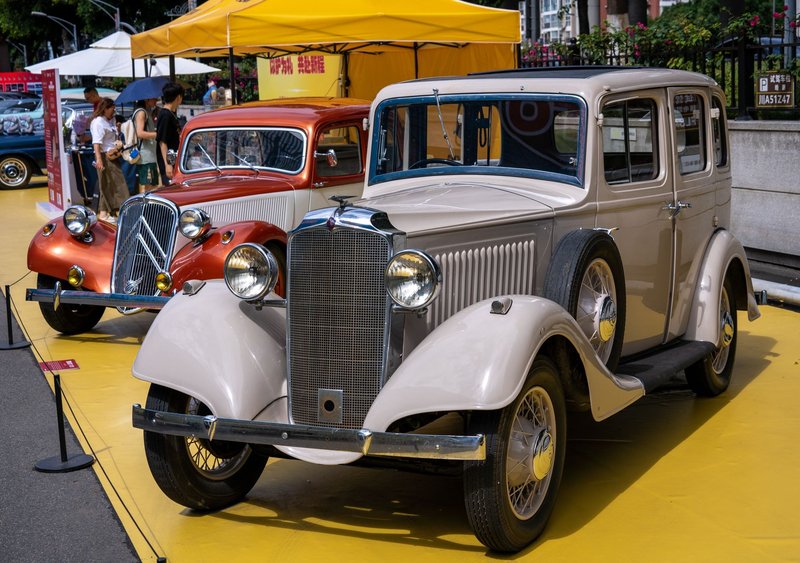
Here’s the trivia that earns the A40 Farina its spot: that crisp two-box shape, styled by Italy’s Pininfarina, is widely credited as the original hatchback layout — the Countryman version had an opening rear tailgate years before the word “hatchback” entered the language. A small Austin quietly invented a body style the entire industry would later live by.
Underneath it’s pure A35 — the same A-series engine and running gear — so it shares all the easy-ownership upsides. What you’re buying is the styling and the historical footnote, wrapped around mechanicals you can fix in a weekend.
What to look for: same A-series rust map as the A35, plus the tailgate seals on Countryman models, which leak and rot the boot floor. Trim is harder to find than mechanical parts, so buy a complete car.
Realistic range: £3,500–£6,500 for a good usable example. The MkII Countryman in nice order is the one to chase.
Austin Cambridge and Westminster (1954–1969)
The big Farina saloons are the most underrated old Austins going. The Cambridge (A55/A60) and the six-cylinder Westminster were the dependable family barges of late-’50s and ’60s Britain — think tail fins, column gear change, and a bench seat you could fit the whole street on. They’re the cars that taxi’d a generation to weddings.
They’re collectible now precisely because they were so ordinary then: most were used up and scrapped, so survivors are getting scarce while prices stay low. You get a lot of dignified, chrome-laden classic for the money, and the Westminster’s smooth 2.6/3.0-litre C-series six makes it a genuinely relaxed long-distance cruiser.
What to look for: rust in the rear arches, sills, and around the headlamps. The Westminster six is strong but check for oil-pressure issues. Interior trim and brightwork are the hard parts to source.
Realistic range: a tidy Cambridge can be had for £4,000–£7,000; a good Westminster for £6,000–£10,000. Few classics give you this much presence per pound.
Austin Mini (1959–1969)
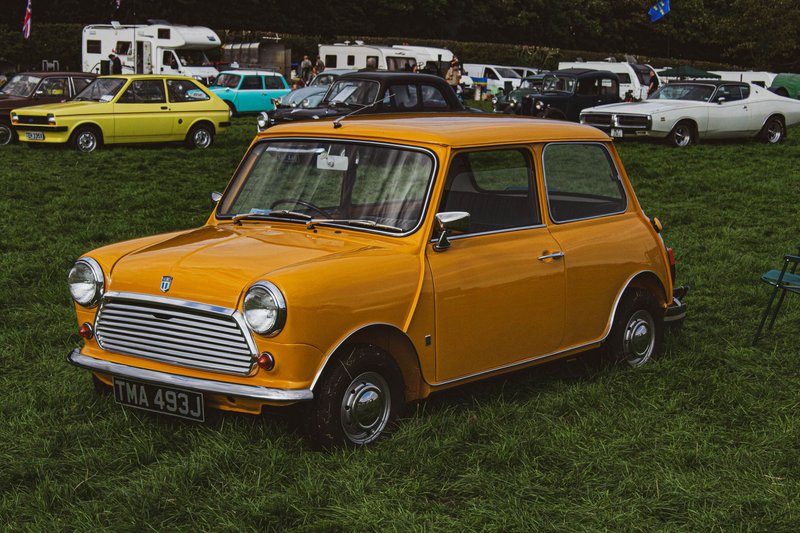
The Mini doesn’t need this list, but the list needs the Mini. Alec Issigonis’s packaging trick — engine mounted transversely, gearbox in the sump, wheels shoved into the corners — gave a 10-foot car the interior of something far bigger, and that front-wheel-drive layout became the template for almost every small car since. It also went rallying and won the Monte Carlo, three times, against cars with double the engine.
In its early years it wore both Austin and Morris badges (Austin Seven and Morris Mini-Minor) before “Mini” became a marque of its own. So an early Austin-badged Mini is a legitimate, and increasingly prized, old Austin.
What to look for: rust, everywhere — floors, subframes, A-panels, the lot. A cheap Mini is almost always a welding bill in disguise. Verify the badge and chassis details if you’re paying a premium for an early Austin Seven/Se7en car or a genuine Cooper.
Realistic range: a driver-quality ’60s Mini runs £8,000–£14,000; genuine early Cooper models and concours cars climb well into five figures and beyond.
Austin-Healey 3000 (1959–1967)
If you want a sports car rather than a saloon, this is the one with the soul. The “Big Healey” 3000 paired a burly 2.9-litre straight-six with low-slung roadster looks and a snarl that still draws a crowd. It rallied hard, sold well in America, and remains the blue-chip Austin sports car — values to match. Set it against the wider field of 1960s sports cars and the Big Healey still earns its place near the top for sheer presence.
It’s not a soft classic. The exhaust runs low, the cabin gets hot, and you sit close to the road in the best possible way. People keep them because nothing modern feels quite like one. The Austin-Healey Club has strong international support, and parts supply for these is genuinely excellent thanks to decades of restoration demand.
What to look for: structural rust in the sills and chassis outriggers (this is a body-on-chassis car and corrosion is expensive here), plus tired overdrive units. Buy the best you can afford — restoration costs dwarf the gap between a rough and a good one.
Realistic range: project cars start around £20,000, good drivers £35,000–£55,000, and concours MkIII Phase 2 cars push past £70,000.
Austin Allegro (1973–1982)
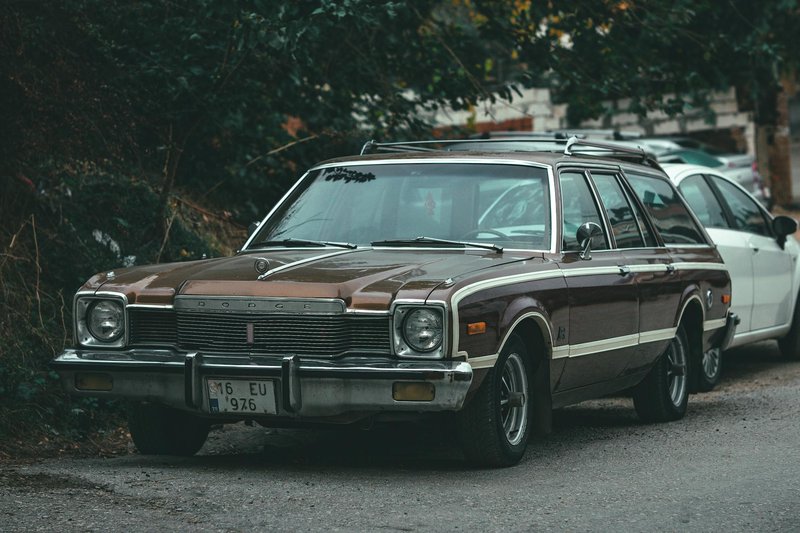
The Allegro gets included partly to be honest about Austin’s later years. Built under British Leyland, it became a punchline — remember the infamous square “Quartic” steering wheel, and the reputation for build quality that helped sink BL. It is not, by any sane measure, an investment.
But it’s a real piece of 1970s Britain, and that’s becoming valuable in its own odd way. Survivors are now rare enough that they draw crowds at shows, precisely because nobody kept them. As an ironic, cheap, conversation-starting classic, the Allegro delivers — and the 1300 is genuinely pleasant to potter around in once sorted.
What to look for: rust in the front subframe mounts and sills, plus tired Hydragas suspension that’s gone flat. Trim and the Quartic wheel (early cars only) are getting hard to find.
Realistic range: £2,500–£5,000 for a usable example. The cheapest entry on this list, and the best value if you measure value in conversations started.
Price Comparison Table
| Model | Years | Engine | Approx. price (good driver) |
|---|---|---|---|
| Austin Seven | 1922–1939 | 0.7L 4-cyl | £6,000–£15,000 |
| Austin A30 / A35 | 1951–1959 | 0.8/0.9L 4-cyl | £4,000–£7,000 |
| Austin A40 Farina | 1958–1967 | 0.9/1.1L 4-cyl | £3,500–£6,500 |
| Austin Cambridge / Westminster | 1954–1969 | 1.5L 4-cyl / 2.6–3.0L 6-cyl | £4,000–£10,000 |
| Austin Mini | 1959–1969 | 0.8/1.0L 4-cyl | £8,000–£14,000 |
| Austin-Healey 3000 | 1959–1967 | 2.9L 6-cyl | £35,000–£55,000 |
| Austin Allegro | 1973–1982 | 1.1–1.7L | £2,500–£5,000 |
Prices reflect typical UK market figures for good, usable examples in early 2026; concours and rare variants sit well above these. Always value the car in front of you, not the table.
How to Buy Your First Old Austin
A few hard-won rules that apply across the range.
Buy the body, not the engine. Every Austin here uses well-supported, easily rebuilt mechanicals. What you can’t easily fix is a rotten monocoque or chassis. A running car with bad metal is a worse buy than a non-runner with a solid shell. Bring a magnet and a torch, and crawl underneath.
Join the club before you buy, not after. The Austin marque has some of the best club support in the classic world — the Federation of British Historic Vehicle Clubs links dozens of marque and model registers. Members will often look over a car for you and know exactly which seller to avoid.
Get the cheapest car you can be proud of. The A30/A35 and Cambridge exist precisely so you can own a genuine classic without a five-figure outlay. Start there, learn the ropes, and graduate to a Seven or a Healey once you know what you’re doing.
Budget for sorting, not just buying. Whatever the purchase price, set aside a grand or two for the recommissioning a long-dormant car always needs — fuel system, brakes, perished rubber. Factor it in and you won’t resent the car later.
The Austin Motor Company is gone, folded into the alphabet soup of British Leyland and finally retired in 1989. But the cars are very much alive, and the cheapest interesting one on this list costs less than a set of alloys for a modern hatchback. Of the old Austin models out there, the smart first buy is an A35: simple, supported, and just charming enough to make you fall for the marque properly.

Marco Delantero
More from Marco DelanteroHow we reviewed this article
This article was researched against manufacturer records and editorially reviewed before publishing. We accept no payment for coverage.