TLDR
McLaren built exactly one car in 1964: the M1A, its first purpose-built Group 7 sports racer. It also raced a second car that year, the Zerex Special, a modified Cooper that Bruce McLaren bought from Roger Penske and never officially called a McLaren. Customer copies of the M1A were built by Elva as the McLaren-Elva Mark 1, and the M1B and M1C followed in 1965 and 1966.
Table of Contents
- The short version
- The Zerex Special, the car that came first
- The M1A, McLaren’s first real sports racer
- Zerex Special vs M1A at a glance
- The McLaren-Elva Mark 1 customer cars
- Where the sources disagree
- Why the 1964 cars matter
The short version
Search for 1964 McLaren car models and you’ll find a lot of single-car pages and auction listings, but nobody lays out the full year in one place. Here it is.
Bruce McLaren Motor Racing Ltd was founded in 1963, and 1964 was its first season as a constructor. Two cars carried the effort:
- The Zerex Special (also called the Cooper-Zerex, the Cooper Oldsmobile and the “Jolly Green Giant”), a rebuilt Cooper that McLaren acquired from Roger Penske.
- The M1A, also called the Mark 1, the first car McLaren designed and built from scratch as a Group 7 sports racer.
Only the second one is a McLaren in the strict sense. Only the first one won a lot of races in 1964.
The Zerex Special, the car that came first
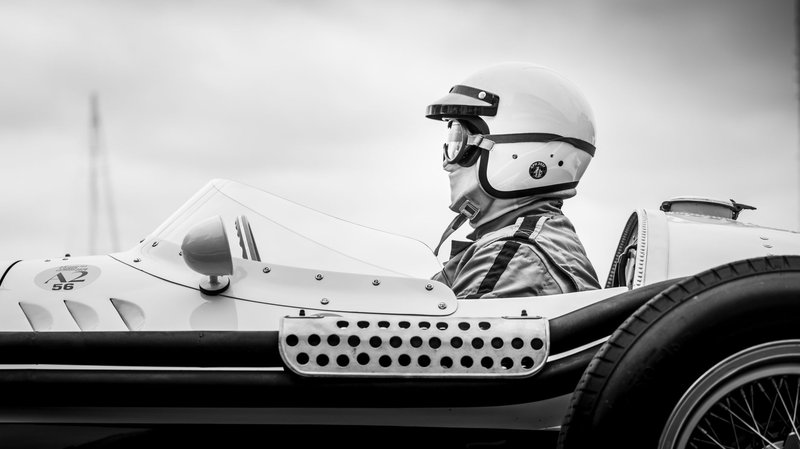
Penske’s car started life as a Cooper, and McLaren turned it into something much bigger. The Cooper’s small-displacement Climax engine was gone. In its place went an aluminium Oldsmobile V8 prepared by Traco, the California engine shop that built a lot of American road-racing power in this period. Sources put the V8’s size anywhere from 3.5 to 4.5 litres, and the output at about 310 hp.
The paint is where the nickname comes from. The car ran in the green of its Zerex antifreeze sponsorship, which is how it became the Jolly Green Giant. McLaren himself preferred “Cooper Oldsmobile” and didn’t treat it as one of his own cars.
It was quick. The Zerex Special won at Mosport in June 1964 and at Brands Hatch, beating established sports-racing fields on both sides of the Atlantic. The bruce-mclaren.com archive lists the car under all three of its names, which tells you something about how loosely the identity was handled even at the time.
The M1A, McLaren’s first real sports racer
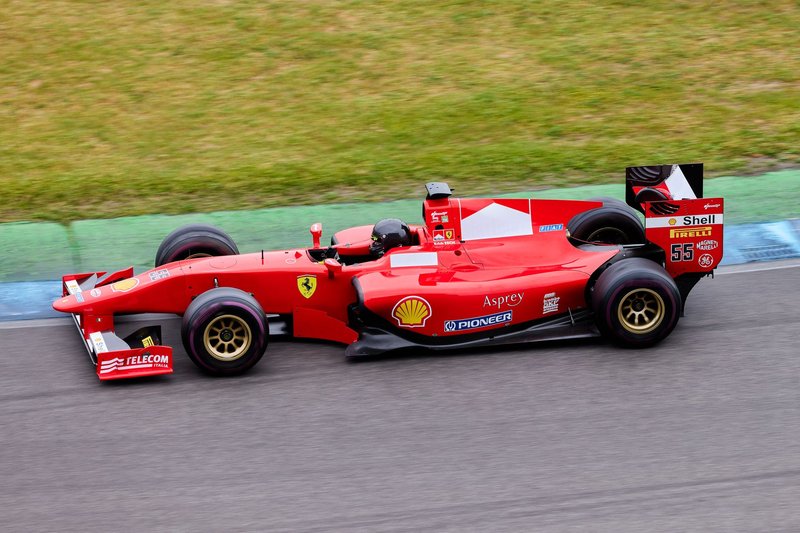
The M1A took the Zerex idea and built it properly. It had a purpose-made tubular spaceframe chassis, a Traco-Oldsmobile V8, and a Hewland gearbox. The target was Group 7, the FIA’s lightly regulated sports-racing category, which in North America meant the big-engined cars that would soon become Can-Am.
The M1A made its debut at the Canadian Grand Prix at Mosport, a sports car race despite the name. It was reported as the fastest car on track that weekend, but pit-lane problems held it back to third overall. Motor Sport Retro’s profile of the M1A covers the car’s design in more detail.
Third on debut, with a car that had only just been finished, is the kind of result that makes more sense in hindsight. The basic layout stayed with McLaren for years.
Zerex Special vs M1A at a glance
| Zerex Special | M1A (Mark 1) | |
|---|---|---|
| Origin | Modified Cooper bought from Roger Penske | Purpose-built McLaren design |
| Chassis | Rebuilt Cooper-based spaceframe | Tubular spaceframe |
| Engine | Traco-Oldsmobile V8, about 310 hp | Traco-Oldsmobile V8, about 310 hp |
| Engine size | 3.5 to 4.5 litres, depending on source | 3.5 to 4.5 litres, depending on source |
| Gearbox | Hewland | Hewland |
| Weight | Roughly 550 to 830 kg, depending on source | Roughly 550 to 830 kg, depending on source |
| Notable 1964 results | Wins at Mosport (June) and Brands Hatch | 3rd on debut at the Canadian Grand Prix, Mosport |
The weight range is a real spread, not a rounding issue. That’s a gap of nearly 300 kg for a car that only needed to be light to be fast, and no source explains it.
The McLaren-Elva Mark 1 customer cars
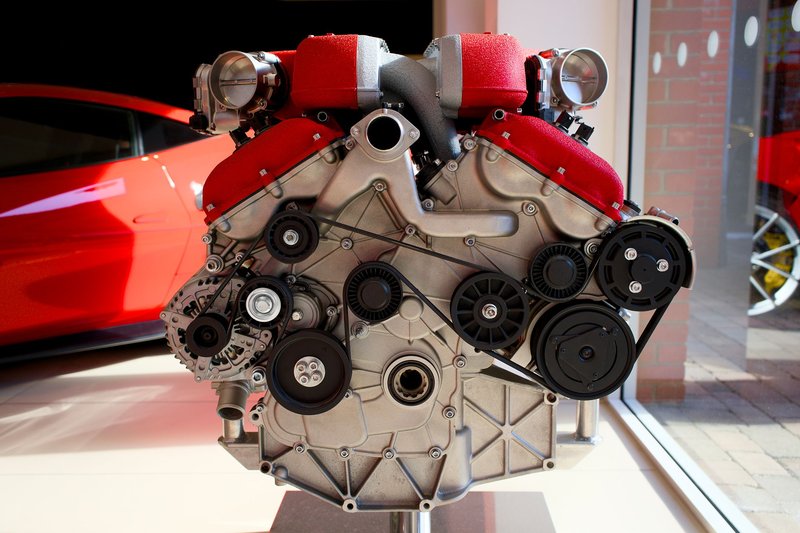
McLaren didn’t have a factory to build customer cars, so Elva, one of the many small British sports car makers of the period, did it. Frank Nichols of Elva Cars was commissioned to build replicas of the M1A, sold as the McLaren-Elva Mark 1. These are the cars you’ll see at auction today, and RM Sotheby’s catalogue entry for a 1965 McLaren-Elva Mark 1A shows how much of their value now rests on chassis-level ownership history.
The line didn’t stop there. The M1B arrived in 1965 and the M1C in 1966, both developments of the same basic design with bigger, more American engine options. They sold to privateers and kept McLaren’s name in front of customers while the factory moved on to bigger projects.
Where the sources disagree
The honest answer to several 1964 McLaren questions is “it depends who you ask.”
- Production count. Totals for the McLaren-Elva Mark 1 are given as 24, 27 or about 50. Nobody reconciles them. The differences probably reflect whether a source counts only the M1A-spec cars, the M1B too, or unfinished chassis.
- Engine size. The Traco-Oldsmobile V8 is listed anywhere from 3.5 to 4.5 litres. The engine was developed in stages, so different sources may be describing different points in its life.
- Weight. Figures run from roughly 550 kg to 830 kg.
- M1A date. Some sources place the M1A’s appearance in 1963, others in 1964. The 1964 date is the one that fits the Mosport debut and the founding of the company, so that’s the one used here.
- Zerex dates. Even the bruce-mclaren.com archive is inconsistent on whether the Zerex Special’s first wins at Mosport and Brands Hatch came in 1963 or 1964. The June 1964 Mosport win is the most consistent version across sources.
If you’re citing a specific number, name the source. There isn’t a single agreed figure.
Why the 1964 cars matter
Everything McLaren became starts with these two cars. The Zerex Special proved a lightweight chassis with a big American V8 could beat the established sports-racing field. The M1A turned that into a design McLaren could build, refine and sell.
The same approach, a lightweight chassis around a large V8, carried straight into the M6A and the all-conquering McLaren Can-Am cars of the late 1960s, and Bruce McLaren won the 1967 Can-Am title in an M6A. The company made its Formula 1 debut in 1966. None of that happens without 1964 and a green Cooper that its own builder didn’t want to call a McLaren.

Marco Delantero
More from Marco DelanteroHow we reviewed this article
This article was researched against manufacturer records and editorially reviewed before publishing. We accept no payment for coverage. Some guides contain affiliate links; see our affiliate disclosure.