TLDR
- Easiest to own today: 1949 Ford or a 1940-41 Chevrolet Special DeLuxe. Parts are everywhere and any competent shop can work on them.
- Best driver: 1949 Oldsmobile 88, the first small-body, big-engine Olds.
- Best looker: 1941 Packard Clipper, or a Fleetline fastback if you want the pre-war silhouette stretched into the post-war years.
- Rarest in the group: the 1948 Tucker. Only 51 exist.
Table of Contents
- Why 1940s sedans split into two different cars
- Pre-war sedans (1940-42)
- The wartime gap
- Post-war sedans (1946-49)
- Comparison table
- Buying a 1940s sedan today
Why 1940s sedans split into two different cars
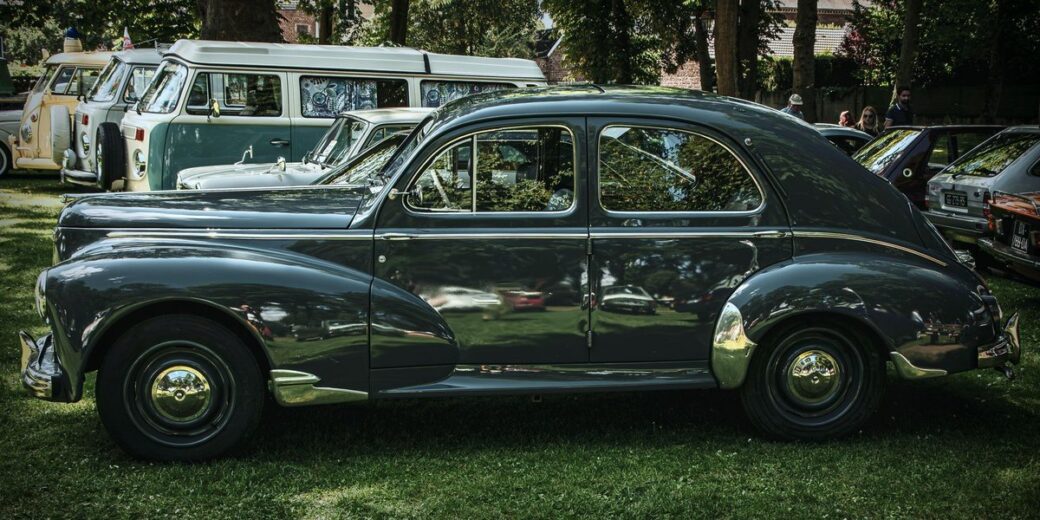
Two cars from the same decade can look like they were built a generation apart. A 1940 sedan has separate fenders, running boards on some models, a upright grille and a trunk that’s mostly a bulge. A 1949 sedan has one smooth body from nose to tail, with the fenders folded into the sides.
The war caused that. Automakers stopped building civilian cars in early 1942 and spent the next three and a half years making aircraft engines, tanks, jeeps and munitions, as the Smithsonian’s National Museum of American History documents in its collections on wartime industry. When the factories converted back, the 1941 designs were already stale, and a few companies had the new slab-sided styling ready to go.
So 1940s sedans fall into three buckets: the pre-war cars, the stopped clock, and the post-war cars. Here’s what mattered in each.
Pre-war sedans (1940-42)
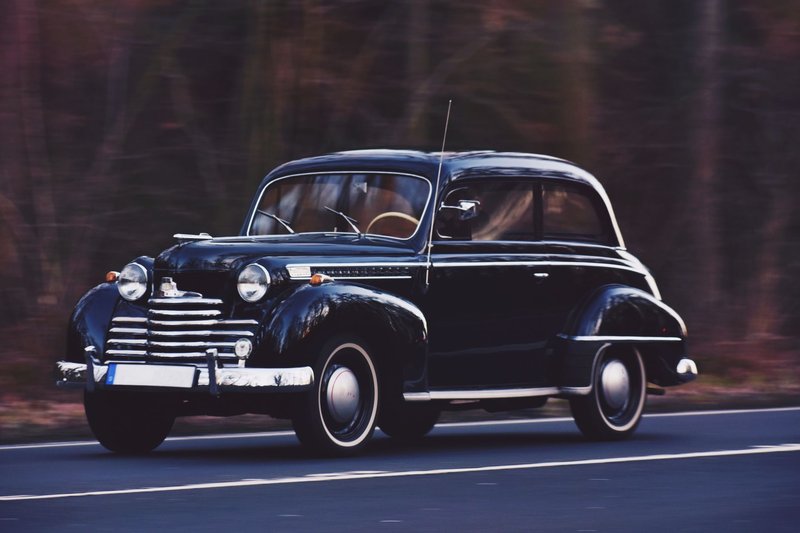
1940 Chevrolet Special DeLuxe
Chevrolet was the best-selling American brand and the Special DeLuxe was the volume car. Its 216.5 cubic inch “Stovebolt” inline-six made about 85 horsepower, and the body styles included the two-door Town Sedan and the four-door sedan. Prices sat under $800. That sounds like nothing now, but it was a big chunk of a year’s income for most families.
The Town Sedan is the one to know. It’s a two-door with a trunk, a fixed rear quarter and a roofline that was still upright rather than streamlined. It’s also the Chevy that shows up at auction most often, because so many were built.
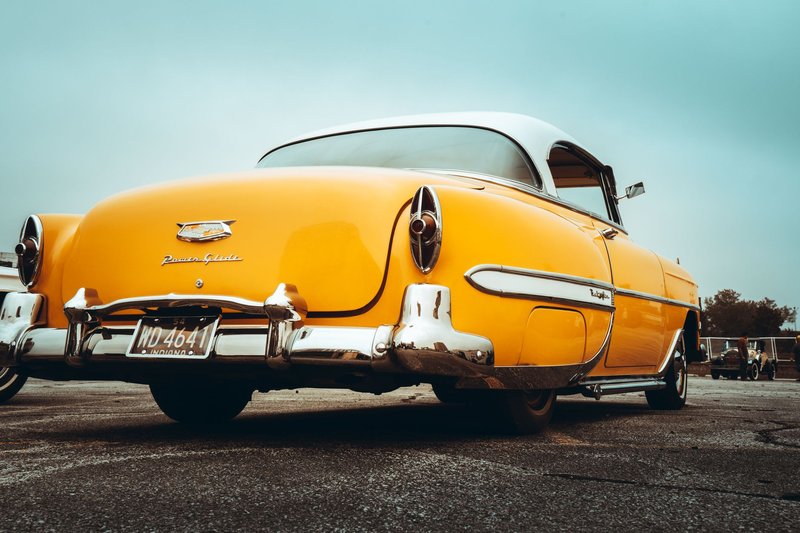
1940 Ford DeLuxe and Super DeLuxe
Ford answered with the flathead V8, the engine that had made it cheap to own a V8 since 1932. In 1940 it made 85 horsepower from 221 cubic inches. Ford offered it in the DeLuxe line, with the Super DeLuxe adding trim and the Tudor and Fordor sedan bodies that most people bought.
Chevrolet had the smoother six. Ford had the V8 sound and the hot-rodders. That split in character still shows in the owners’ clubs today.
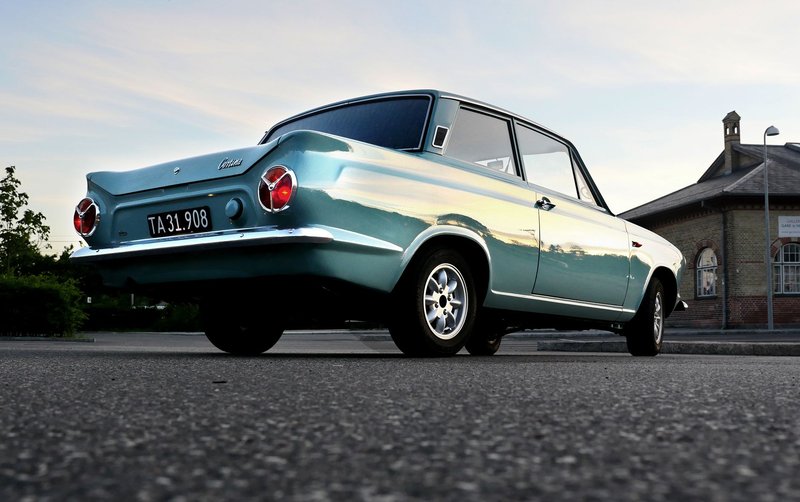
1940 DeSoto S7
DeSoto sat in Chrysler’s middle tier, above Plymouth and Dodge and below Chrysler itself. The S7 ran a 228 cubic inch flathead six rated at 100 horsepower, with Chrysler’s hydraulic brakes and, on some trims, a semi-automatic transmission option called Simplimatic available that year. It’s an undersold car. It looks like a Chrysler for less money, and the cars that come to auction are often well-kept originals.
1941 Cadillac Series 75
The Series 75 was Cadillac’s long-wheelbase Fleetwood-bodied line, built for chauffeured owners and funeral directors alike. Under the hood was a 346 cubic inch V8 with about 150 horsepower, a number that no Ford or Chevy owner could touch. The sedan is a seven-passenger car with a division window on many examples. It’s huge, it’s heavy, and it drives like a Pullman car. If you’re after the grandest sedan of the decade, this is it.
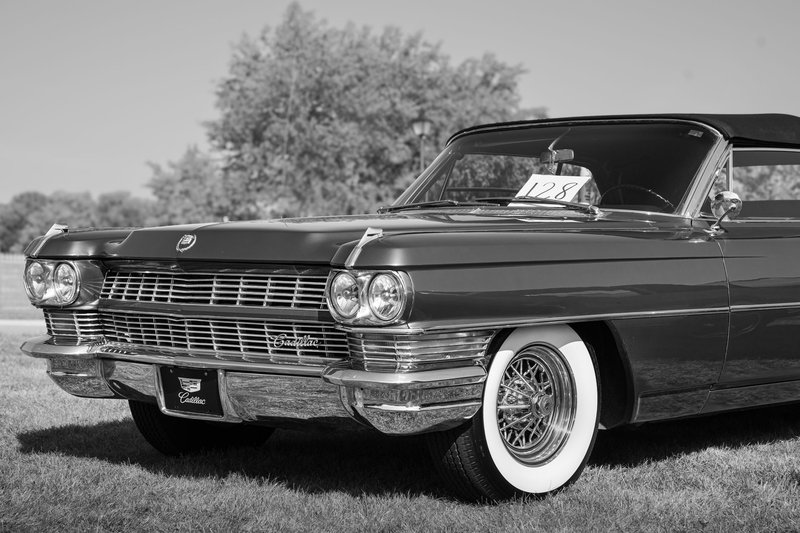
1941 Packard Clipper
Howard “Dutch” Darrin designed the Clipper, and it was the most forward-looking American sedan of 1941. The fenders were blended into the body, the headlights sat inside them, and the straight-eight (282 cubic inches, 125 horsepower) did the work. Packard’s six-cylinder Clipper was also offered. Everything else on the road that year looked a step behind it.
Packard kept building the Clipper after the war, with only minor changes through 1947, which is why post-war Clippers still look so much like their 1941 selves. For more on Packard’s model evolution, see a chronological guide to Packard models.
1941-42 Studebaker Commander and Champion
Studebaker was the independent that kept trying. The 1941 Champion, with a small 169.6 cubic inch six, was cheap, light and economical, while the Commander took a larger six and carried more chrome. Studebaker’s 1941 and 1942 cars are the ones most people mean when they search for “1940s Studebaker,” and they still turn up at modest prices.
The wartime gap
Civilian car production didn’t merely slow down. It stopped. The last cars of the 1942 model year came off the lines in the first weeks of the year, and the government rationed tires, gasoline and new-car sales. A handful of cars were built for essential workers, but by and large, if you didn’t have a car by 1942, you waited.
The result: the 1946 models were mostly 1942 cars with a fresh set of badges. The truly new designs didn’t arrive until 1947 and 1948.
Post-war sedans (1946-49)
1946-48 Chevrolet Stylemaster and Fleetmaster
Chevrolet’s first post-war cars were warmed-over 1942 designs, and customers took them anyway. There was a waiting list. Ford faced the same situation, reusing its 1942 design with minimal changes, as detailed in 1946 Ford history and specs. The line was refreshed for 1948 and again for 1949, when the Fleetline’s fastback shape, with a roofline that sloped all the way to the rear bumper, became the face of the model. The Stovebolt six was at 216 cubic inches and 90 horsepower by 1949.
1947 Studebaker Champion
Studebaker beat Detroit’s big three to the new look. The 1947 Champion, styled by a team that included Virgil Exner and was done under Raymond Loewy’s studio, had a rounded body, a wraparound rear window on the coupe, and a look so new that people joked about not being able to tell which way it was going. The 80 horsepower Champion six was no performer, but the car was a sales hit and an early marker of the post-war style.
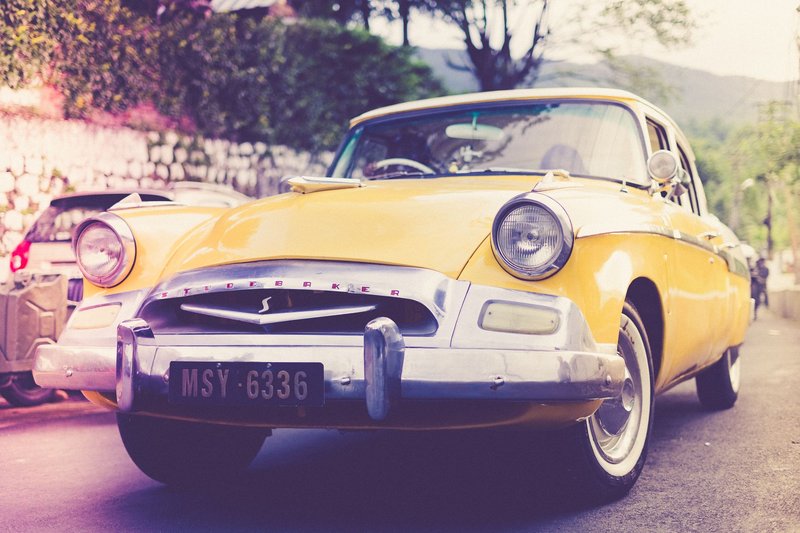
1948 Hudson Commodore
Hudson’s “step-down” design put the passengers down inside the frame rails, with the floor recessed between them. The result was a low center of gravity, a car that handled well for its size, and a roofline lower than any rival’s. The Commodore Six used a 262 cubic inch six rated at about 121 horsepower. The Hudson also made a good NASCAR car, which says something about the chassis.
1948 Tucker 48
The Tucker is the sedan nobody could actually buy. Preston Tucker’s rear-engined, flat-six car had a center headlight that turned with the steering and a padded dash, and only 51 of them were built before the company folded. It isn’t a car you collect so much as a story you tell, but it belongs in any honest list of 1940s sedans.
1949 Ford
The 1949 Ford is the car that saved the company. It was the first all-new Ford since the war, with a slab-sided “shoebox” body, independent front suspension and a choice of a 226 cubic inch six at 95 horsepower or the 239 flathead V8 at 100. Ford sold more than a million of them in 1949.
It’s the car most people picture when they say “classic post-war American sedan,” and it’s the one to buy if you want a 1940s sedan you can actually keep running.
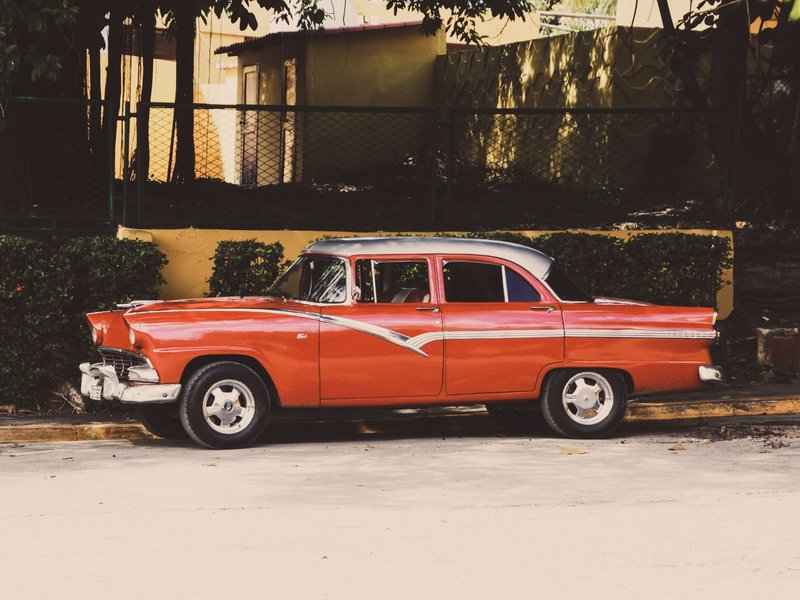
1949 Oldsmobile 88
Oldsmobile put its new overhead-valve Rocket V8, 303 cubic inches and 135 horsepower, into the lighter 76-series body. The pairing gave the sedan performance that matched cars costing far more, and the 88 went on to win several of the early NASCAR races. Cadillac introduced its own overhead-valve V8 the same year, at 331 cubic inches and 160 horsepower. Together those two engines are the point where the decade stops being flathead and starts being modern.
Comparison table
| Car | Era | Engine | Power | Body notes |
|---|---|---|---|---|
| Chevrolet Special DeLuxe (1940) | Pre-war | 216.5 ci inline-six | ~85 hp | Two- and four-door sedans |
| Ford DeLuxe (1940) | Pre-war | 221 ci flathead V8 | 85 hp | Tudor and Fordor sedans |
| DeSoto S7 (1940) | Pre-war | 228 ci flathead six | 100 hp | Four-door sedan |
| Cadillac Series 75 (1941) | Pre-war | 346 ci V8 | ~150 hp | Long-wheelbase Fleetwood |
| Packard Clipper (1941) | Pre-war | 282 ci straight-eight | 125 hp | Integrated fenders |
| Studebaker Champion (1947) | Post-war | 169.6 ci six | 80 hp | Rounded, low body |
| Hudson Commodore (1948) | Post-war | 262 ci six | ~121 hp | Step-down floor |
| Ford (1949) | Post-war | 226 ci six / 239 ci V8 | 95 / 100 hp | Slab-sided, fenderless |
| Chevrolet Fleetline (1949) | Post-war | 216 ci six | 90 hp | Fastback |
| Oldsmobile 88 (1949) | Post-war | 303 ci Rocket V8 | 135 hp | Overhead-valve V8 |
Buying a 1940s sedan today
Prices vary a great deal by model, condition and region. Running, presentable Chevrolets and Fords generally cost the least, while Cadillac Series 75s and well-restored Packards bring much more, and the Tucker is in a different universe entirely. Check recent sale results from Hagerty before you set a budget, since the market moves.
What to check:
- Rust. Rocker panels, floor pans, trunk floors and the area below the rear window. Steel from this era rusts from the inside out.
- Parts. Chevrolet, Ford and Studebaker are well supported by reproduction suppliers. Packard, Hudson and DeSoto trim is another story, so budget time for finding pieces.
- Brakes and wiring. Many cars still carry original 6-volt electrical systems and drum brakes. Both are upgradeable, and many owners switch to 12-volt for reliability.
- Engine condition. Flatheads are prone to overheating if the cooling passages are clogged. Older Chevrolet sixes can have poured babbitt bearings, which don’t take abuse.
- Fuel. These engines were built for leaded gasoline. Most run fine on modern fuel with an additive, but hardened valve seats are a common rebuild upgrade.
Match the car to the use. A 1949 Ford or a 1940 Chevrolet Special DeLuxe will do club tours and weekend drives without drama. A Packard Clipper or a Series 75 is a car you commit to. For a deeper look at what these cars cost to maintain, the Library of Congress holds period advertising and photographs that show how each model was sold, which helps when you’re trying to tell original trim from someone’s guess.

Marco Delantero
More from Marco DelanteroHow we reviewed this article
This article was researched against manufacturer records and editorially reviewed before publishing. We accept no payment for coverage. Some guides contain affiliate links; see our affiliate disclosure.