In 1988, Toyota sold a lineup with no weak link. A $7,000 Tercel, a V6 Camry, a turbocharged Supra, a mid-engine MR2 and a Land Cruiser with a 4.0L inline-six all sat on the same showroom floor. The 1988 Toyota car models cover nearly every kind of buyer, and a surprising number of them are still on the road.
This guide groups the US-market lineup by type, gives each model’s engine and character, and ends with which ones make sense to buy now. Prices are approximate original sticker figures; check fueleconomy.gov for the EPA numbers on any specific car.
- 1988 Toyota lineup at a glance
- TLDR
- Economy cars: Tercel, Corolla and Corolla FX
- Mid-size: Camry sedan and wagon
- Luxury: Cressida
- Sports cars: Supra, MR2 and Celica
- Trucks and SUVs: 4Runner, Land Cruiser, Pickup and Van
- US models versus the rest of the world
- Which 1988 Toyota is worth buying today
1988 Toyota lineup at a glance
| Model | Type | Main engine | Approx. power | Drive |
|---|---|---|---|---|
| Tercel | Economy hatchback / wagon | 1.5L four | 62 hp | FWD, 4WD wagon |
| Corolla | Economy sedan / hatchback | 1.6L four | 90 hp | FWD |
| Corolla FX16 GT-S | Hot hatch | 1.6L DOHC 16-valve four | about 110 hp | FWD |
| Camry | Mid-size sedan / wagon | 2.0L four, 2.5L V6 | 115 hp / 153 hp | FWD |
| Cressida | Luxury sedan / wagon | 3.0L DOHC inline-six | 190 hp | RWD |
| Supra | Sports coupe | 3.0L inline-six, turbo option | 200 hp / 230 hp | RWD |
| MR2 | Mid-engine sports car | 1.6L DOHC four | about 112 hp | RWD |
| Celica | Sport coupe / liftback | 2.0L four, turbo All-Trac | 115 to 190 hp | FWD, AWD |
| 4Runner | Compact SUV | 2.4L four, 3.0L V6 | 116 hp / 145 hp | 4WD |
| Land Cruiser | Full-size SUV | 4.0L inline-six | 155 hp | 4WD |
| Pickup | Compact truck | 2.4L four, 3.0L V6 | 116 hp and up | RWD, 4WD |
| Van | Mid-engine minivan | 2.2L four | low-power | RWD, 4WD |
TLDR
- Best used buy for pure reliability: the Camry or Corolla, if you find one that wasn’t neglected.
- Best collector bet: the Supra Turbo, the MR2 and the Land Cruiser.
- Best all-rounder with value upside: the 4Runner and the Celica All-Trac.
- Watch for head gaskets on the six-cylinder and V6 engines, and rust on anything that lived in the snow belt.
Economy cars: Tercel, Corolla and Corolla FX
Tercel. The cheapest Toyota you could buy, usually well under $8,000. The 1.5L four made around 62 hp, which sounds like a joke until you remember the car weighed about as much as a refrigerator. It came as a two-door hatchback, a four-door sedan and the quirky 4WD wagon, which was one of the few affordable small cars with a real low range. Nobody collects Tercels. That is exactly why a clean one is such a good cheap runabout.
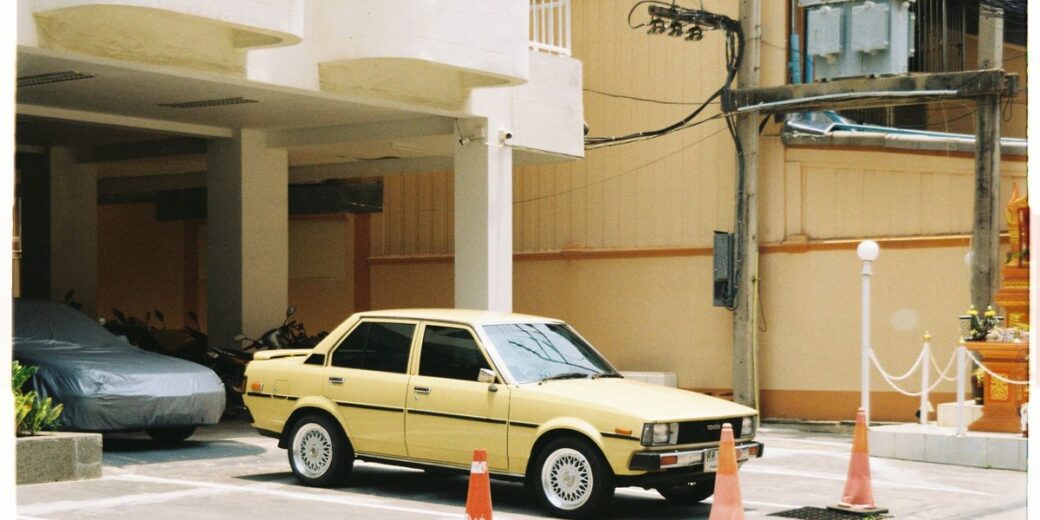
Corolla. The 1988 Corolla was the front-drive AE82 generation. The 1.6L four put out roughly 90 hp, and body styles included a sedan, a hatchback and the wagon-like Corolla FX. Trims ran from the basic Deluxe to the SR5 and LE. It was the sensible answer, and it still is. Parts are cheap, and the engine tolerates abuse.
Corolla FX16 GT-S. This is the one to care about. Toyota put a 1.6L DOHC 16-valve 4A-GE in a front-drive hatchback and made about 110 hp. It ranks among the strongest 1980s hatchbacks, using the same engine family as the rear-drive AE86 Corolla that drifters worship, minus the back-wheel drive. Good ones are rare now, because most were driven hard and left to rust.
Mid-size: Camry sedan and wagon
The second-generation Camry (V20) had been out since 1987, and 1988 brought the headline change: a new 2.5L DOHC V6 making 153 hp. That engine turned a competent family car into a quiet, fast one. The standard 2.0L four, rated at around 115 hp, remained the volume seller.
The Camry came as a four-door sedan and a wagon, with DX, LE and V6 trims. The 1988 Camry specs matter mostly for the V6, because it needs a little more attention than the four-cylinder. Early 3VZ-based V6 engines from this era are known for head-gasket trouble, so ask for service records. The four-cylinder cars are the ones that routinely pass 250,000 miles.
Luxury: Cressida
The Cressida was Toyota’s flagship in the US before Lexus existed. It was also the last of its kind: a rear-drive luxury sedan with a 3.0L DOHC inline-six (7M-GE) rated at 190 hp. Both a four-speed automatic and a five-speed manual were offered in some years, and the car came loaded: power everything, a digital dash option, leather and a premium sound system. Original pricing landed in the low-to-mid $20,000s.
Within a year the company announced Lexus, and the Cressida’s reason to exist faded. The 1988 car is a smooth, understated cruiser, and values are still low. Like the other 7M engines, it is sensitive to head-gasket failure, so check for coolant loss and milky oil.
Sports cars: Supra, MR2 and Celica
Supra. The third-generation (A70) Supra is the star of the 1988 lineup. The naturally aspirated 3.0L inline-six made 200 hp, and the 7M-GTE turbo version made about 230 hp. It was a heavy, grand-touring coupe more than a sharp-edged sports car, and a 1988 Supra Turbo cost close to $27,000, serious money then. It has since become the clearest collector pick in the entire list, especially with the manual gearbox.
MR2. The first-generation (AW11) MR2 was a small mid-engine two-seater. The 1.6L 4A-GE sat behind the seats and made about 112 hp in a car that weighed roughly 2,300 pounds. It drove like a go-kart with a Toyota badge. Prices at launch were in the low-to-mid teens. The T-bar roof is a known source of leaks, and rust at the rear quarters is the other thing to check.
Celica. The fifth-generation Celica (T160) was front-drive, except for the new GT-Four All-Trac Turbo, which paired a turbocharged 2.0L 3S-GTE making 190 hp with full-time all-wheel drive. The rest of the range used 2.0L engines: the ST and GT with around 115 hp, and the GT-S with the 3S-GE at roughly 135 hp. Coupe, liftback and convertible versions existed. The All-Trac Turbo is the rare one, and its homologation-special lineage makes it more valuable than the rest of the Celica family combined.
Trucks and SUVs: 4Runner, Land Cruiser, Pickup and Van
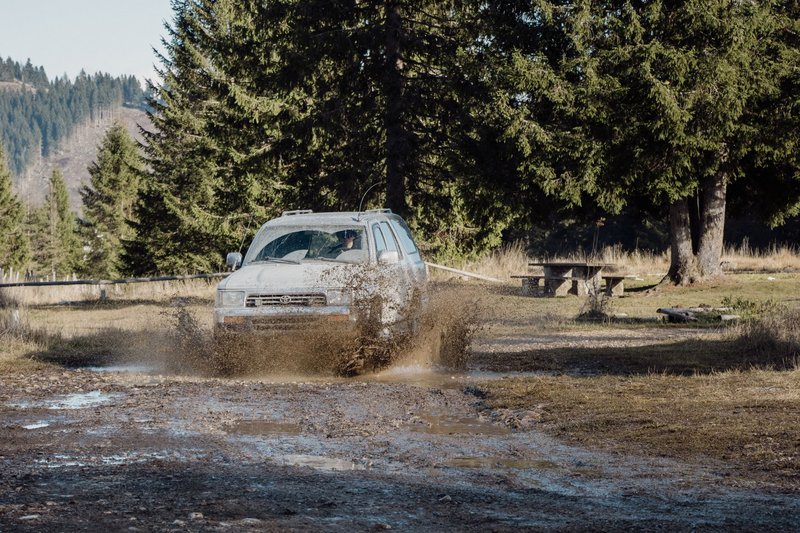
4Runner. The first-generation 4Runner was a Hilux pickup with a fiberglass rear canopy that lifted off. The 2.4L 22R-E four made 116 hp, and the optional 3.0L V6 made around 145 hp. It came with a 4WD system and a solid rear axle, and it is the reason the nameplate has a cult following today. The V6 is the one to be careful with because of head gaskets; the four-cylinder engine is nearly unkillable.
Land Cruiser. The FJ62 Land Cruiser used a 4.0L inline-six (2F) making 155 hp, bolted to a four-speed automatic or a five-speed manual, with part-time four-wheel drive. It was a four-door wagon with a third row optional, built like a bank vault and priced accordingly, well past $20,000. It is slow, thirsty and astonishingly durable, and prices for clean examples have climbed sharply.
Pickup. Toyota’s compact truck came in regular and extended cabs, 2WD and 4WD, with the 22R/22R-E four as the base engine and the 3.0L V6 as the upgrade. It is the same hardware that sits under the 4Runner. Old Toyota trucks are a legend for a reason, and good ones now cost more than their specs justify. Note the 22R’s timing chain and the frame rust that has ended many of them.
Van. The Toyota Van (Van Wagon) put its engine under the front seats, which gave it an odd driving position and a rear-biased feel. A 4WD version was offered in 1988. It was the vehicle people bought for large families, and it’s the most overlooked car on this list. Few survive in good shape.
US models versus the rest of the world
Toyota’s naming outside the US can confuse anyone searching for a specific car.
- Corolla II and Corsa. In Japan and several export markets, the car sold in the US as the Tercel was marketed as the Corolla II or the Corsa, sharing basic mechanicals with the US car.
- Australia. The 1988 Camry was sold there too, but with market-specific trims and engines, and local-assembly details differ from the American cars. Australian listing sites such as Carsguide often mix those variants with US-spec data, which is why spec sheets for the same model can disagree.
- Japan. The home market also had cars the US never got, including the Crown, Mark II, Chaser and Century—many of which appear in comprehensive guides to old JDM cars. Those do not belong in a US-spec comparison.
If a spec doesn’t match what you see here, the car likely came from a different market. Check the VIN and the build plate before buying parts.
Which 1988 Toyota is worth buying today
Collector appeal. The Supra Turbo, the MR2, the Celica All-Trac Turbo and the Land Cruiser FJ62 have the strongest enthusiast followings, and clean examples keep rising in value. The FX16 GT-S is the sleeper in this group.
Daily driver. A Camry four-cylinder or a Corolla is the cheapest way to own a 1988 Toyota. Parts are everywhere, the engines are simple, and almost every shop can fix them.
Off-road and weekend. The 4Runner and the Pickup are the best choice. Mechanically they are straightforward, and the aftermarket is huge.
What to check on any of them. Rust is the main killer, so look at the frame rails, rocker panels and rear quarters. On the six-cylinder and V6 engines, check for coolant loss. Verify the timing belt or chain history. Check the NHTSA database for any open recall using the VIN, since a 38-year-old car may have skipped work that was owed.
A 1988 Toyota will not impress anyone with a spec sheet. What it offers is something more useful: a car that was designed to last, and mostly did.

Marco Delantero
More from Marco DelanteroHow we reviewed this article
This article was researched against manufacturer records and editorially reviewed before publishing. We accept no payment for coverage. Some guides contain affiliate links; see our affiliate disclosure.