Search “Slovak car brands” and you hit a wall fast. There isn’t one. No Slovak equivalent of Skoda, Dacia, or Lada — no domestic marque with a badge and a bloodline stretching back decades. What you’ll find instead is stranger, and more interesting once you dig into it: a country of 5.4 million people that builds more cars per capita than anyone on the planet, wearing nobody’s badge but its own workforce.
TL;DR
- Slovakia has no indigenous car brand. Every vehicle built there wears a foreign badge.
- Four manufacturers run full assembly plants today: Volkswagen Group (Bratislava, since 1991), Stellantis (Trnava, since 2003), Kia (Žilina, since 2006), and Jaguar Land Rover (Nitra, since 2018). Volvo’s plant near Košice starts mass production in 2027.
- Despite owning none of it, Slovakia produces more cars per person than any country on earth — about 182 vehicles per 1,000 residents in 2024, and roughly 993,000 cars total.
- Skoda, actually built across the border in the Czech Republic, is the real best-seller on Slovak roads, holding over 20% market share.
- The closest thing to a homegrown Slovak car brand is the Klein Vision AirCar — and it’s a flying car, not a road car.
Table of Contents
- Why Slovakia Never Built Its Own Car Brand
- Volkswagen Slovakia — Bratislava
- Kia Slovakia — Žilina
- Stellantis Slovakia — Trnava
- Jaguar Land Rover — Nitra
- Volvo Cars — Košice (Arriving 2027)
- So Which Brand Actually Wins in Slovakia?
- The One Homegrown Exception: The AirCar
Why Slovakia Never Built Its Own Car Brand
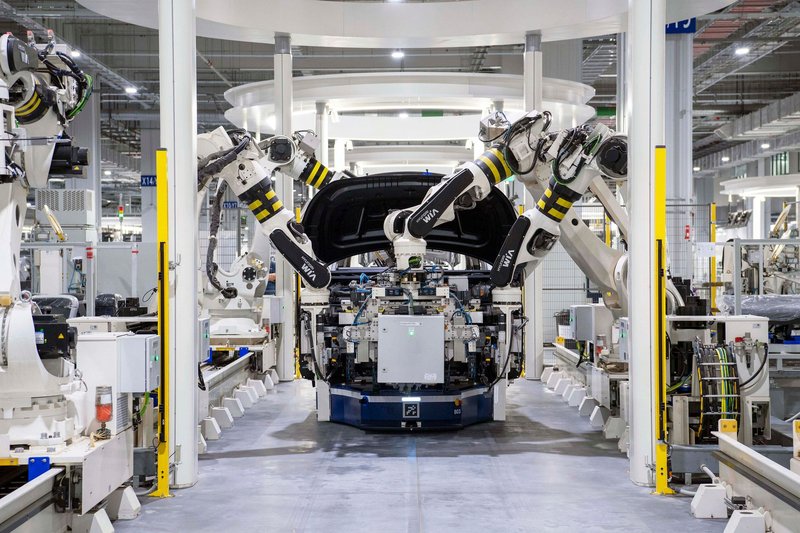
Under communist Czechoslovakia, the automotive heritage went to the Czech half of the country. Skoda was built in Mladá Boleslav, Tatra in Kopřivnice — both firmly on the Czech side of a border that didn’t formally exist yet. Slovakia’s industrial assignment was heavier and grimier: steel, arms, machinery. When the country split from Czechoslovakia in 1993, it kept none of the badge equity. Skoda stayed Czech.
What Slovakia did have was cheap, skilled labor, a spot on the map wedged between Germany and Eastern Europe’s supply chains, and a government willing to hand out tax breaks to anyone who’d build a factory. Volkswagen took the bet first, in 1991, before the ink on Czechoslovak privatization was even dry. Every manufacturer that followed did the math the same way: plant capacity is worth more than brand ownership if you’re a small country trying to industrialize fast.
The result, three decades later, is an auto industry that accounts for roughly 13% of Slovakia’s GDP and employs around 165,000 people directly, according to the EU’s Cedefop research agency — an outsized share for one sector, and a dependency some economists have started calling Slovakia’s own version of “Detroit syndrome.” None of that output carries a Slovak name.
Volkswagen Slovakia — Bratislava
Founded in 1991 in Devínska Nová Ves, a Bratislava suburb, this was the plant that started it all — and it’s still the strangest one on the list. It’s the only factory in the world assembling vehicles for four separate brands on shared lines: the VW Touareg and Passat, Audi Q7 and Q8, Porsche Cayenne (with an electric Cayenne joining the mix in 2026), and the Skoda Superb.
Around 11,500 people work there directly, with several thousand more on contract. Building a Porsche and a Skoda on adjacent stations isn’t a gimmick — it’s the plant’s actual competitive edge, since it can shift capacity between premium and mainstream models as demand swings.
Kia Slovakia — Žilina
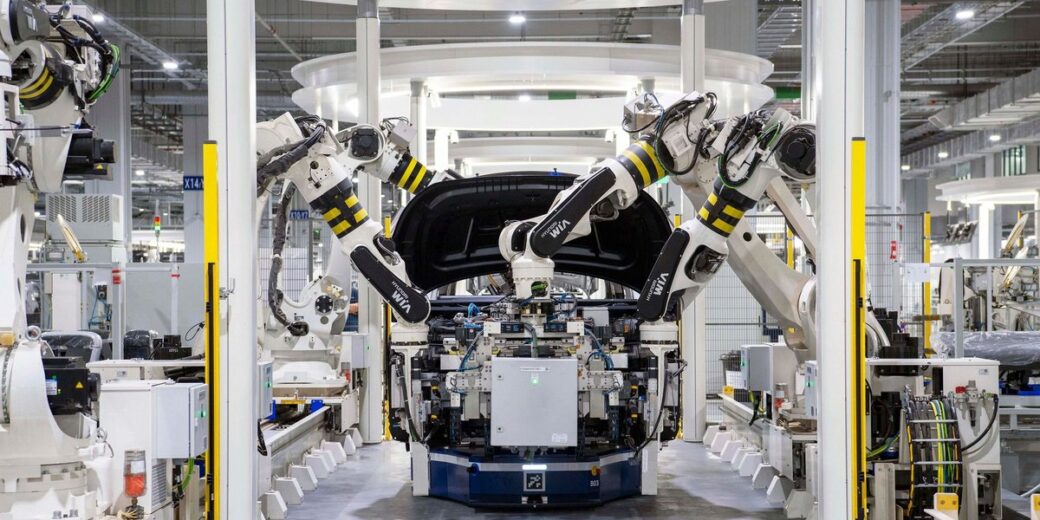
Kia broke ground in Žilina in 2004 and rolled its first car off the line in 2006 — its first plant outside Asia and its first in Europe. Roughly 3,700 people work there, running more than 600 robots across the assembly halls.
The plant has built the entire Ceed family (hatchback, wagon, GT, plug-in hybrid variants), three generations of the Sportage, and, more recently, the EV2 — Kia’s second fully electric model assembled in Europe and its first built in Slovakia.
Stellantis Slovakia — Trnava
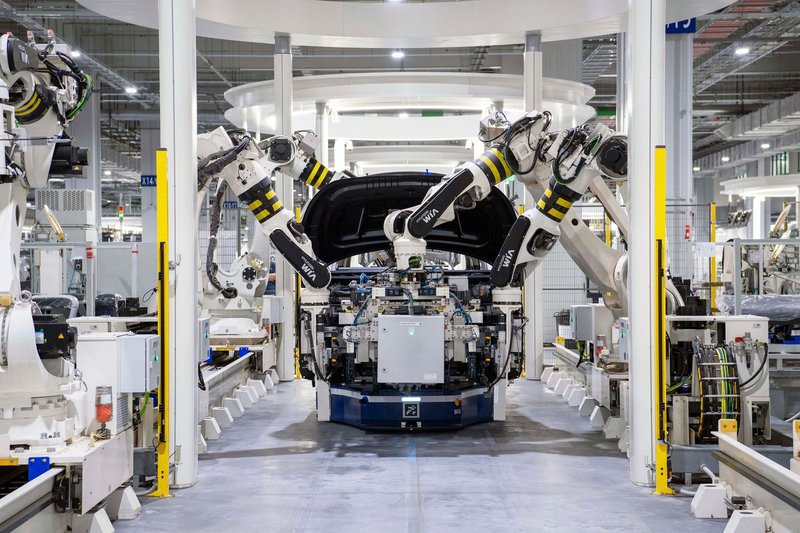
PSA Peugeot Citroën opened this plant in Trnava in 2003; it now sits under the Stellantis umbrella alongside Peugeot, Citroën, and Opel. Around 3,300 people work there. The lineup has shifted more than the other plants’ — Peugeot’s 207 and 208 ran here for years, and today the lines mostly turn out the Citroën C3, the C3 Aircross, and the newly added Opel Frontera.
Jaguar Land Rover — Nitra
The newest of the full-scale plants, and the only greenfield build on this list — engineers describe it as turning an actual farm field into a factory between 2015 and 2018. JLR sank around €1.4 billion into it. Roughly 4,800 people work there now, up from an initial 1,500 at launch.
One detail worth knowing if you’re shopping: despite the “Jaguar Land Rover” name, Nitra doesn’t build a single Jaguar. It’s Land Rover only — the plant is the exclusive global home of the Defender, alongside the Discovery.
Volvo Cars — Košice (Arriving 2027)
Volvo broke ground near Košice, in Slovakia’s less industrialized east, in February 2023 — its first new European plant since 1965. The €1.2 billion investment is expected to create around 3,300 jobs and give the site a capacity of 250,000 vehicles a year once it’s running flat out.
Pre-series test production started rolling through the line in 2026; full mass production is scheduled for 2027. The plant will build Volvo’s next generation of electric vehicles first, with the Polestar 7 SUV joining the schedule in 2028. It’s also designed from the ground up as EV-only — no combustion line to retrofit later.
So Which Brand Actually Wins in Slovakia?
Here’s the twist: none of the five brands assembled inside Slovakia’s borders is the country’s actual best-seller. That title belongs to Skoda, built across the border in Czech plants, which held over 20% of the Slovak new-car market through 2025. The Octavia was the single best-selling model in the country for the third year running, with the Fabia close behind it. Toyota and Kia round out the top three.
So the brand Slovaks buy the most isn’t the brand Slovakia builds the most of. Kia assembles tens of thousands of cars a year in Žilina and still can’t out-sell a Czech sedan built somewhere else entirely.
The One Homegrown Exception: The AirCar
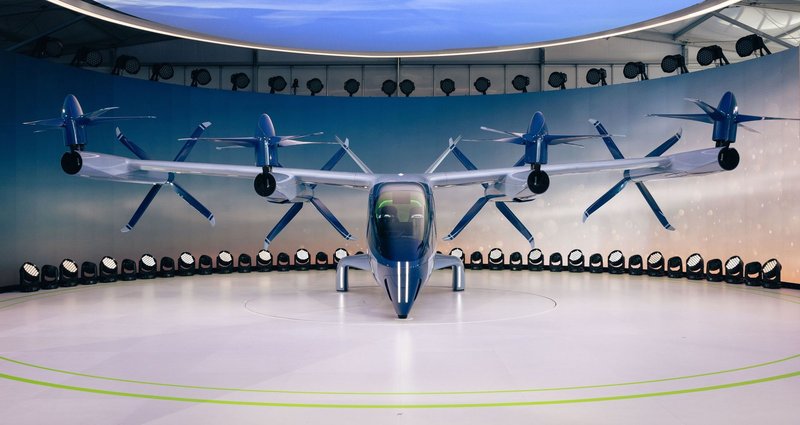
If you want an actual Slovak-designed, Slovak-built vehicle, you have to leave the highway. Klein Vision, founded by Slovak engineer Štefan Klein, designed and built the AirCar — a two-seat vehicle that drives on four wheels and, with foldout wings and a tail boom, takes off as a fixed-wing aircraft. The Slovak Transport Authority granted it a Certificate of Airworthiness in January 2022 after more than 70 hours of flight testing, powered by a 1.6-liter BMW engine, with a claimed top speed near 300 km/h in the air.
It converts from road car to airplane in under three minutes. Klein Vision licensed the underlying technology to a Chinese manufacturer in 2024, which tells you where the commercial ambitions are heading. It’s not a car brand in the Golf-badge sense of the word, and it’s not something you’ll see in a dealership lot. But of everything on this list, it’s the only vehicle Slovakia can call its own from the ground up.
That’s the honest answer to “Slovak car brands”: there isn’t one on the road, and there might never be. What Slovakia built instead is infrastructure — plants, a trained workforce, and a government playbook for attracting the next one. Volvo’s arrival in Košice just proves the model still works, three decades after Volkswagen wrote it.

Marco Delantero
More from Marco DelanteroHow we reviewed this article
This article was researched against manufacturer records and editorially reviewed before publishing. We accept no payment for coverage. Some guides contain affiliate links; see our affiliate disclosure.