Ask three BMW people what the brand built in 1994 and you’ll get three different answers, because 1994 wasn’t one lineup — it was a handover. The old 7 Series was on its way out, the new one was rolling off the line in April, the 3 Series Compact was brand new, and the range-topping 8 Series was quietly building some of the rarest BMWs of the decade. No single spec sheet or Wikipedia page puts the whole year together. This one does.
Table of Contents
- The Quick Rundown
- Why 1994 Was a Turning Point for BMW
- 3 Series (E36): The Volume Seller
- 3 Series Compact: BMW’s First Hatchback Since the ’70s
- 5 Series (E34): The Old Guard’s Final Full Year
- 7 Series (E38): An All-New Flagship Arrives
- 8 Series (E31): The Halo Cars
- Buying a 1994 BMW Today
The Quick Rundown
If you just want the roster: the 3 Series (E36) ran 318i, 318iS, 325i, 325iS and 325iC, joined in March by the all-new 318ti Compact hatchback. The 5 Series (E34) closed out its run with the 525i and 530i. The 7 Series switched generations mid-year — the old E32 gave way to the new E38 in 740i, 740iL and 750iL form. And the 8 Series (E31) held its ground with the 840Ci and the rare, manual-only 850CSi. Eight nameplates, four series, one year of genuine transition.
Why 1994 Was a Turning Point for BMW
Most model years are incremental. 1994 wasn’t. BMW retired the E32 7 Series — a car that had anchored the flagship spot since 1986 — and put the E38 into production that April, with the German market getting its hands on it that June. The E38 wasn’t a facelift; it was a clean-sheet car with a new platform, a new dashboard architecture, and eventually the first factory sat-nav system BMW ever offered.
Down in the volume-selling 3 Series, BMW made dual front airbags standard equipment across the range — years before U.S. regulators required driver and passenger airbags in every new passenger car, a mandate that didn’t take full effect until the 1998 model year. Traction control (badged ASC+T) was on the options list, not yet standard, and wouldn’t become common on six-cylinder E36s for a few more years.
And in March, BMW did something it hadn’t done since the 2002 Touring era: it built a hatchback. The 3 Series Compact wasn’t a trim level. It was a shorter, cheaper, semi-trailing-arm alternative to the sedan, aimed at buyers who wanted the badge without the price.
3 Series (E36): The Volume Seller
The E36 was already two years into its run by 1994, and this was the year the lineup felt fully sorted. On the four-cylinder end sat the 318i sedan and the 318iS — the coupe, with a twin-cam 1.8-liter making roughly 138 horsepower in U.S. trim, a genuine jump over the single-cam sedan engine it shared a displacement with.
The six-cylinder cars did the heavy lifting for BMW’s reputation. The 325i, 325iS coupe, and 325iC convertible all used the 2.5-liter M50 inline-six with individual throttle bodies and VANOS variable valve timing, good for 189 horsepower and 181 lb-ft of torque in U.S. spec — numbers that don’t sound dramatic today but felt genuinely quick against anything else in the class in 1994. The straight-six’s smoothness, more than any single spec, is what built the E36’s reputation as the car to buy in this segment.
The 325iC convertible deserves a mention on its own: BMW kept a fully lined power soft-top and a proper back seat, at a time when rival convertibles were making bigger compromises to get there.
3 Series Compact: BMW’s First Hatchback Since the ’70s
Launched in Europe in March 1994 under the internal code E36/5, the 3 Series Compact took the E36 sedan’s floorpan and front end, bolted on a simplified rear suspension to cut cost, and topped it with a hatchback body nobody at the local dealer had seen from BMW in two decades.
The launch engine was a 1.8-liter four making around 140 horsepower in European tune — enough to make the badge-snob argument moot, since it genuinely moved. It wasn’t a slow-selling curiosity, either: over its run the Compact would expand to six-cylinder and diesel variants, but 1994’s four-cylinder version is the one that proved the concept. American buyers had to wait a little longer — the Compact reached U.S. showrooms as the 318ti for the following model year — which is worth knowing if you’re hunting for a 1994-built example on this side of the Atlantic.
5 Series (E34): The Old Guard’s Final Full Year
The E34 wasn’t new in 1994 — it had been on sale since 1988 — but it was still BMW’s mid-size flagship, and 1994 was effectively its last full model year before the E39 took over. Two engines carried the range: the 525i, using the same 2.5-liter, 189-horsepower M50 six found in the 325i, and the 530i, powered by a 3.0-liter V8 making 215 horsepower.
The 530i is the more interesting car in hindsight. It was BMW’s first V8-powered 5 Series and a preview of the engine architecture that would carry through the following decade, offering a quieter, torquier alternative to the six for buyers who wanted the extra cylinder count without stepping up to the 7 Series.
7 Series (E38): An All-New Flagship Arrives
This is the headline event of BMW’s 1994. Production of the new E38 began that April, with the German market getting first access that June — replacing the E32, a car that had defined BMW’s flagship for eight years. The E38 launched with the 740i and long-wheelbase 740iL, both running a 4.0-liter V8 rated at 282 horsepower, alongside the range-topping 750iL, powered by a 5.4-liter V12 making roughly 320 horsepower.
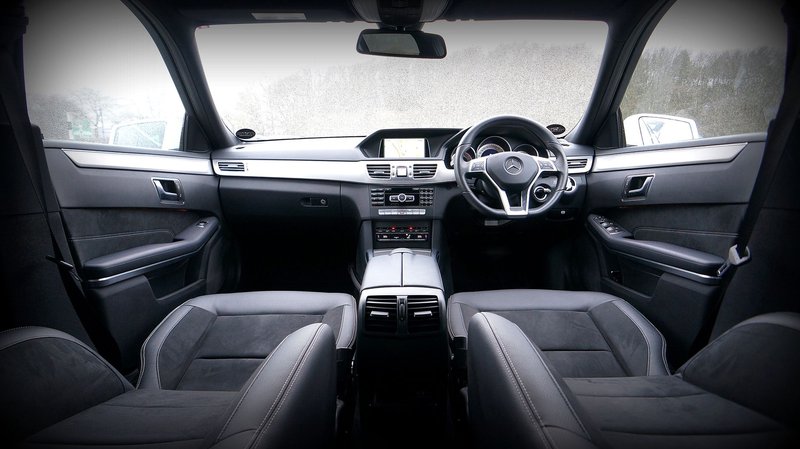
What made the E38 matter wasn’t just the new engines. It was the first 7 Series built around a genuinely modern electronics architecture, and it set the template — understated exterior, heavyweight engineering underneath — that BMW’s flagship sedans still follow. American buyers would see the E38 arrive as a 1995 model, so a U.S.-market “1994 7 Series” in the classic sense means the outgoing E32, not the new car built that spring.
8 Series (E31): The Halo Cars
While the 7 Series was changing everything, the E31 8 Series carried on as BMW’s low-volume flagship coupe, and 1994 happens to be the year it produced its most collectible variant. The 840Ci ran a 4.0-liter V8 making around 286 horsepower — the accessible end of the 8 Series range, if “accessible” is the right word for a six-figure-new grand tourer.
The 850CSi is the one enthusiasts talk about. BMW’s M division took the 8 Series’ 5.0-liter V12 platform and fitted a bespoke 5.6-liter unit (internally the S70B56) tuned to 375 horsepower and 406 lb-ft, paired exclusively with a 6-speed manual — no automatic was ever offered. BMW built just 1,510 of them worldwide, and only about 225 reached North America. That combination of hand-built V12, manual-only gearbox, and genuine scarcity is why the 850CSi now sits well above the rest of the 8 Series range in collector value.
Buying a 1994 BMW Today
Three decades on, “which 1994 BMW” really means “which decade of maintenance.” The E36 six-cylinders (325i/iS/iC) are the easiest entry point — parts are plentiful, the M50 engine is genuinely tough, but check for VANOS rattle on cold start and rust in the rear subframe mounts, a known E36 weak spot. The 318i/318iS four-cylinders are cheaper still and mechanically simpler, though less prized by collectors.
The E34 525i and 530i are underrated used buys: fewer people are chasing them than the more famous E39 that followed, which keeps prices sane, but budget for cooling-system work — the plastic radiator end tanks and expansion tanks from this era get brittle with age regardless of mileage.
E38 7 Series and E31 8 Series cars are a different calculus. They were expensive, complex flagships when new, and thirty years of electronics, air suspension components (on later 7 Series variants), and V12 maintenance haven’t gotten cheaper. A 750iL or 850CSi can be bought for surprisingly little money and then cost multiples of the purchase price to sort out — go in with a pre-purchase inspection from a BMW specialist, not a general mechanic.
If you’re chasing a European-spec car — an early 318ti Compact, say, or a JDM-spec model — 1994-built examples are now old enough to clear U.S. Customs’ 25-year import exemption, which waives full EPA and DOT compliance for vehicles built at least 25 years ago, calculated from the exact month of manufacture. It’s the reason you’re starting to see grey-market E36 Compacts and Euro-spec 8 Series cars show up at auction in the U.S. that never officially sold here.
Whichever series you’re after, the same rule applies: buy the service history, not just the car. A documented 1994 BMW with stamps and receipts is worth meaningfully more than a clean-looking one with none — and on a 30-year-old car, that paper trail is the difference between a weekend project and a money pit.

Daniela Voss
More from Daniela VossHow we reviewed this article
This article was researched against manufacturer records and editorially reviewed before publishing. We accept no payment for coverage. Some guides contain affiliate links; see our affiliate disclosure.