Table of Contents
- TLDR
- How a Military Vehicle Became a Status Symbol
- Hummer H1 (1992–2006)
- Hummer H2 (2003–2009)
- Hummer H3 (2005–2010)
- Every Old Hummer, Side by Side
- Why GM Killed the Brand in 2010
- What to Know Before Buying a Classic Hummer
- The EV Revival Nobody Saw Coming
TLDR
Three generations wore the Hummer badge before GM shut the brand down in 2010: the H1 (1992–2006), a barely-tamed military Humvee for people who wanted their SUV to have actually crossed a river once; the H2 (2003–2009), the Suburban-based version that turned Hummer into a household name and a punchline in the same decade; and the H3 (2005–2010), a smaller, cheaper, genuinely more livable truck that arrived just as gas prices made the whole brand look like a bad bet. GM pulled the plug after a sale to a Chinese buyer collapsed. The name came back in 2022 as an electric GMC, with none of the original diesel drama.
How a Military Vehicle Became a Status Symbol
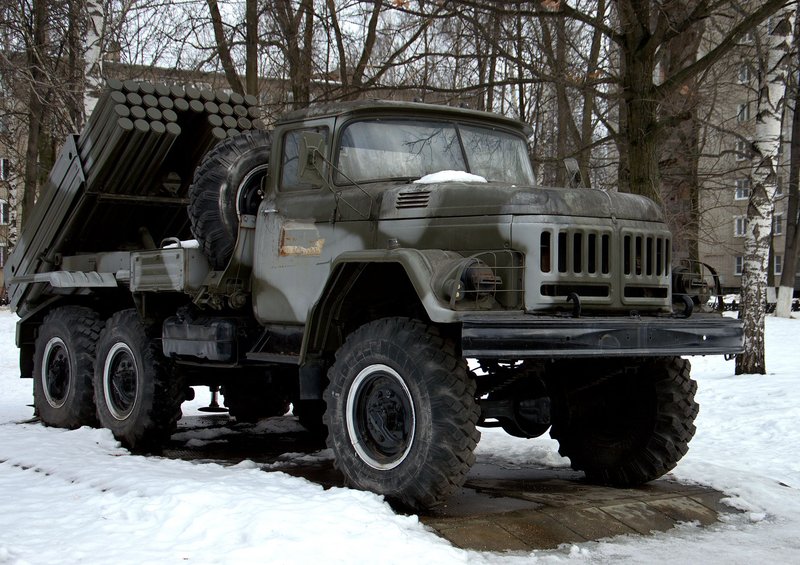
The Hummer H1 exists because Arnold Schwarzenegger saw a convoy of M998 Humvees on a highway near a film set in 1990 and would not let it go. He tracked down the National Guard unit driving them, then spent two years lobbying AM General — the defense contractor that built the military version — to sell him a civilian one. AM General eventually agreed, and in 1992 Schwarzenegger bought the first two Hummers off the line.
That origin story matters because it explains what the H1 actually was: not a vehicle designed for suburban driveways that got tough styling bolted on, but an unmodified military platform that GM later acquired the rights to and sold to civilians almost as-is. Every Hummer that followed drifted further from that starting point, and the drift is the whole story of the brand.
Hummer H1 (1992–2006)
The H1 is 7 feet wide, weighs north of 7,000 pounds, and was never meant to be comfortable. Early trucks ran a 6.5L diesel V8 making 160 horsepower — glacially slow, but capable of fording 30 inches of water and climbing a 22-degree grade without breaking a sweat. AM General and later GM offered it as a four-door wagon, an open-top, and a pickup, and buyers paid a premium that started around $60,000 and climbed well past six figures for later trucks.
The final model year, 2006, produced the H1 Alpha: a run of roughly 300 trucks fitted with GM’s 6.6L Duramax turbodiesel and an Allison transmission, the same drivetrain combo used in heavy-duty pickups. It was the most refined H1 GM ever built, and because so few exist, it’s also the version collectors chase hardest today.
Hummer H2 (2003–2009)
The H2 is where Hummer stopped being a military surplus curiosity and became a genuine cultural moment. GM built it on the same GMT800 platform underneath the Chevy Tahoe and Suburban, which meant real seats, real air conditioning, and a curb weight that made the H1 look svelte by comparison at over 6,400 pounds.
Power came from GM’s Vortec 6.0L V8 through 2007, then a 6.2L version for 2008 and 2009, both paired with a four-speed automatic. None of it was built for fuel economy — EPA ratings hovered in the low teens on a good day — and that mismatch between size and mileage became the H2’s defining tension as gas prices climbed through the mid-2000s.
In 2005, GM added the H2 SUT: a version with a midgate that folded down to turn the back seat into open pickup bed, giving it genuine cargo capacity without losing the SUV shape. It’s the rarer of the two H2 body styles and the one enthusiasts tend to seek out specifically.
Hummer H3 (2005–2010)
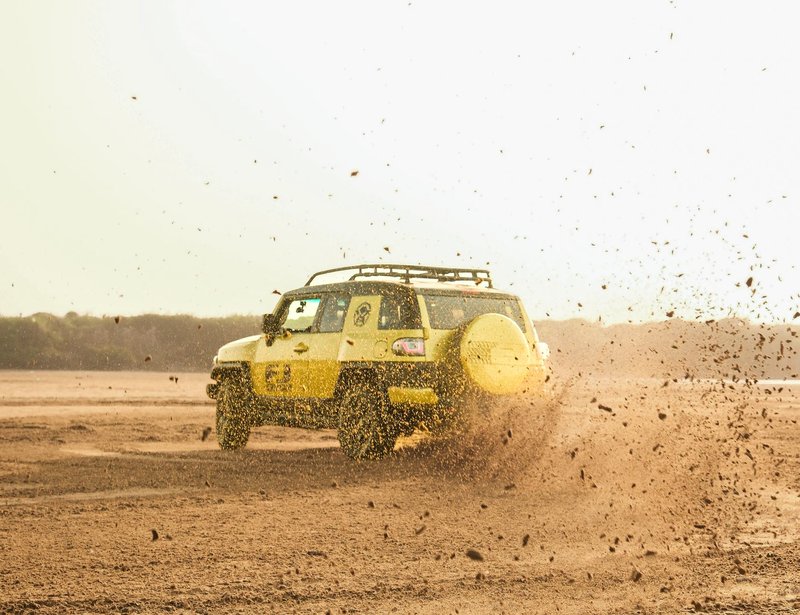
The H3 is the Hummer built by people who’d read the sales reports. Sized closer to a Jeep Wrangler than an H2, it rode on GM’s midsize truck platform — the same underpinnings as the Chevy Colorado — and launched with a 3.5L inline-five making 220 horsepower, later bumped to a 3.7L inline-five in 2007 that pushed output to 242 horsepower.
It was still a genuinely capable off-roader, with locking differentials and real approach angles available on the Adventure and Alpha trims, but it was also the first Hummer that didn’t feel absurd parked at a grocery store. In 2009, GM added the H3T, a compact pickup version with an optional 5.3L V8 — one of only two model years it existed before the brand folded, which makes clean H3Ts the sleeper collectible of the whole lineup.
Every Old Hummer, Side by Side
| Model | Years | Engine(s) | Body Style | Defining Feature |
|---|---|---|---|---|
| H1 | 1992–2006 | 6.5L diesel V8, later 6.6L Duramax turbodiesel; 5.7L gas V8 option | Wagon, open-top, pickup | Nearly unmodified military Humvee sold to civilians |
| H1 Alpha | 2006 only | 6.6L Duramax V8 + Allison automatic | Wagon | ~300 built; the most refined and most collectible H1 |
| H2 | 2003–2009 | 6.0L Vortec V8 (’03–’07), 6.2L Vortec V8 (’08–’09) | 4-door SUV | Suburban-based; the brand’s commercial peak |
| H2 SUT | 2005–2009 | Same as H2 | SUV with fold-down midgate bed | Half SUV, half pickup |
| H3 | 2005–2010 | 3.5L inline-5 (’06), 3.7L inline-5 (’07–’10) | Compact SUV | Smallest, most efficient, most affordable of the three |
| H3T | 2009–2010 | 3.7L inline-5, optional 5.3L V8 | Compact pickup | Only two model years; the rarest H3 variant |
Why GM Killed the Brand in 2010
Hummer’s collapse tracks almost exactly with the 2008 fuel price spike and the recession that followed. A brand built entirely around size and displacement had no answer for $4-a-gallon gas, and sales cratered across all three model lines simultaneously. GM, already restructuring under bankruptcy, announced in mid-2009 that it would either sell Hummer or shut it down.
A deal briefly looked real: Chinese heavy-equipment maker Tengzhong agreed to buy the brand. Chinese regulators refused to approve the sale, and with no other buyer willing to take on a money-losing SUV division, GM confirmed in February 2010 that Hummer would be discontinued outright, according to NBC News. Hummer would join the ranks of storied American automotive brands that couldn’t survive the 2008 recession. Production had already been idled that January, as CNN reported at the time, and the last dealership closed its doors by that May.
What to Know Before Buying a Classic Hummer
Every generation of old Hummer is a used vehicle now, and each one comes with its own set of headaches worth knowing before you shop a listing.
H1: Budget accordingly. Clean examples run from the high $40,000s for early diesels to well over $150,000 for a documented Alpha. Parts are scarce because AM General built so few, and the 6.5L diesel is known for head gasket failures if it’s run hot. Fuel economy sits around 10 mpg regardless of condition — that’s not a symptom, that’s just the truck.
H2: Prices land in a wide $15,000–$40,000 band depending on mileage and whether it’s an SUT. Frame rust is the recurring complaint on trucks that saw winter road salt, and the factory air suspension gets expensive to repair once it starts leaking. Fuel economy is the same story as the H1 — low teens on a good tank.
H3: The most livable and most affordable entry point, typically $8,000–$20,000. The 3.5L inline-five had timing chain issues early in production, largely resolved by the 3.7L update in 2007, so a 2007-or-newer H3 is the safer buy. It’s also the only old Hummer that gets mileage in the high teens.
Across all three, run the VIN through NHTSA’s recall database before you commit, and get a pre-purchase inspection from a shop that’s actually worked on a Hummer — general mechanics often haven’t.
The EV Revival Nobody Saw Coming
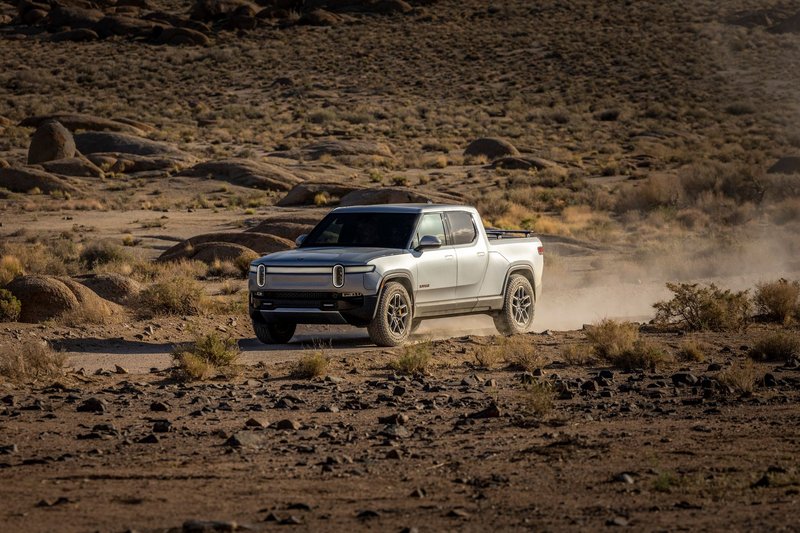
Twelve years after the last H3 rolled off the line, GM brought the name back — not as its own brand this time, but as a model under GMC. The 2022 GMC Hummer EV launched as a pickup with over 1,000 horsepower, a claimed 3-second 0-60 time, and a party trick called CrabWalk that lets all four wheels steer for diagonal movement. An SUV version followed in 2023.
It shares almost nothing mechanically with the old trucks — there’s no V8, no diesel clatter, and the EPA rates the current Hummer EV pickup at 53 MPGe combined, according to fueleconomy.gov, a number that would have been unthinkable to anyone who owned an H2. What survives is the attitude: still enormous, still built to be seen, still selling size as the whole point. The engine under the hood changed. The reason people buy it didn’t.

James Kowalski
More from James KowalskiHow we reviewed this article
This article was researched against manufacturer records and editorially reviewed before publishing. We accept no payment for coverage. Some guides contain affiliate links; see our affiliate disclosure.