TLDR
1981 was the year Japan’s superbike wars went nuclear, BMW invented the adventure bike category almost by accident, and Britain’s motorcycle industry took its last real swing before folding. The models worth knowing: Suzuki’s GSX1100S Katana, Kawasaki’s fuel-injected GPz1100, Honda’s CB900F, the BMW R80 G/S, Yamaha’s XV750 Virago, and — holding the line for Europe — the Moto Guzzi Le Mans III and the Meriden-built Triumph Bonneville T140. Most run $3,000–$9,000 in decent shape today; the Katana and early G/S command more.
Table of Contents
- Why 1981 Is the Hinge Year
- The Superbike Wars: Sport Models
- The Bike That Invented a Category: BMW R80 G/S
- The UJM Peaks, Then Starts to Fade
- Cruisers Get Their Own Lane
- Europe’s Last Real Stand
- What These Bikes Are Worth Now
- Which One’s Actually Worth Chasing
1981 doesn’t get talked about the way 1969 or 1976 does in motorcycle history. No single bike from that year has its own Wikipedia-famous mythology the way the Honda CB750 or the Kawasaki Z1 do. But spend an afternoon with the model years on either side of it and 1981 looks less like a quiet year and more like the year the ground shifted under everyone’s feet — Japan pushed fuel injection and superbike displacement further than anyone had, BMW backed into inventing a whole new motorcycle category, and Britain’s last independent manufacturer was down to a worker-owned co-op building the same basic twin it had built for two decades.
Why 1981 Is the Hinge Year
By 1981, the “Universal Japanese Motorcycle” — the air-cooled, DOHC, across-the-frame four that Honda, Yamaha, Suzuki, and Kawasaki had all converged on through the late ’70s — was at its technical ceiling. Displacement had crept past a liter, horsepower was closing in on 100, and the next gains weren’t coming from bigger engines. They were coming from electronics, aerodynamics, and chassis work.
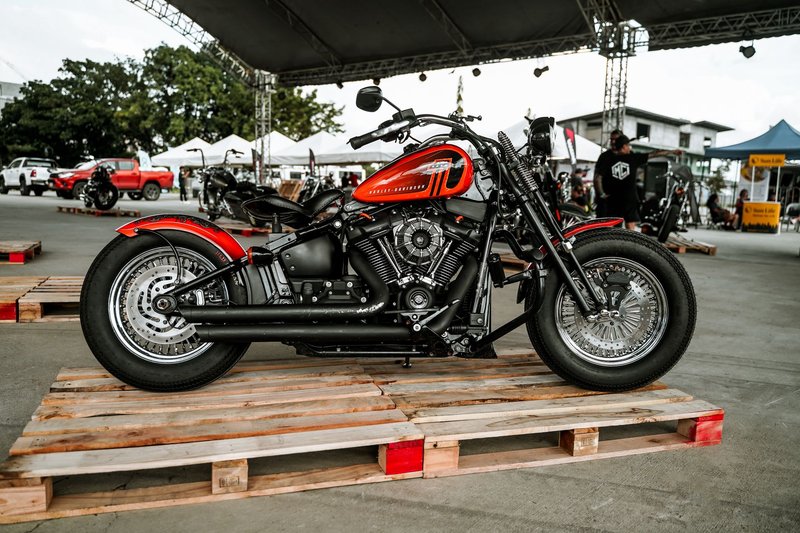
Emissions rules were part of what pushed the industry there. Federal emissions standards for new motorcycles took effect with the 1978 model year and tightened again for 1980, and every manufacturer selling into the US had to route around them — some with better carburetion, a few with fuel injection years before it became standard. You can see the effect directly in Triumph’s 1981 lineup: tightening emissions rules forced the Meriden Bonneville off its old Amal carburetors and onto German-made Bing units for the US market, a small mechanical footnote that tells you how much regulatory pressure was reshaping bikes that, on the surface, looked unchanged from 1975.
Meanwhile, style was becoming a selling point on its own. Suzuki hired outside designers to make the Katana; BMW discovered, almost by accident, that a tall dual-sport with long travel suspension had a market nobody had named yet. 1981 is the year those two impulses — more sophisticated engineering, and design as differentiation — both show up at once.
The Superbike Wars: Sport Models
This is where 1981 earns its reputation, even if the reputation is quiet. Three bikes define the category.
Suzuki GSX1100S Katana. Nothing else on this list looked like the Katana in 1981, and honestly, not much looks like it now. Suzuki commissioned Target Design — Hans Muth, Hans Georg Kasten, and Jan Olof Fellström — to build a shape around the GSX1100E’s mechanicals, and they used wind tunnel testing to get there rather than just sketching something aggressive and hoping. The result: a 1,074cc air-cooled four making a claimed 111 hp at 9,500 rpm, wrapped in a fuel tank and tail unit that ditched every convention about where a motorcycle’s mass should visually sit. It scandalized dealers who’d never seen anything like it on a showroom floor, then became the bike people specifically asked for.
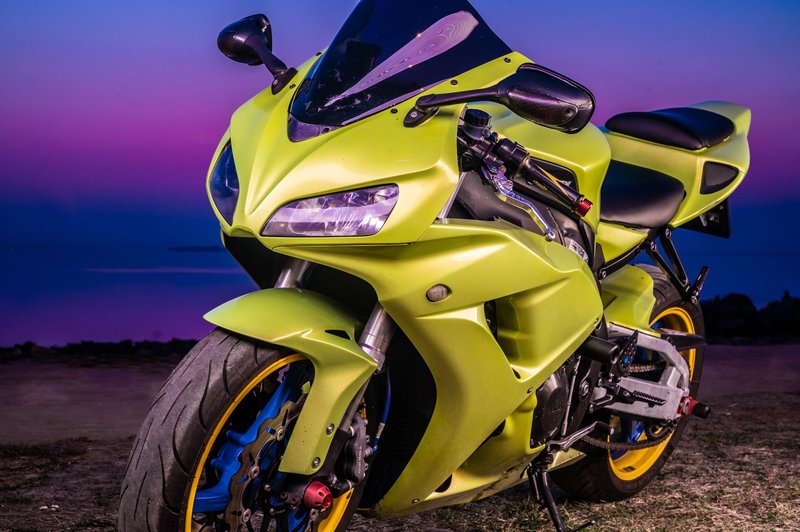
Kawasaki GPz1100 (B1). Kawasaki’s answer to “how do we beat carburetors” was to skip them. The 1981 GPz1100 B1 was the first 1,100cc Kawasaki, and it came with a Bosch-derived, Nissan-built electronic fuel injection system rather than carbs — good for a claimed 105 hp. It wasn’t trouble-free: the injectors sat directly against the head and cooked themselves with engine heat, a problem Kawasaki didn’t fully solve until relocating them into the intake boots for 1982. Enough original B1 fuel-injection systems failed over the decades that most surviving bikes have been converted back to carburetors, which makes an unmolested EFI original a genuinely rare find today.
Honda CB900F. The steadier, more conventional entry: a 901cc DOHC inline four making 95 hp, built to go head-to-head with the Kawasaki KZ1000 and Suzuki GS1000 in the increasingly crowded liter-plus class. It wasn’t trying to reinvent anything — it was Honda doing the fundamentals extremely well, which in 1981 was still enough to compete.
The Bike That Invented a Category: BMW R80 G/S
If you had to pick one 1981 motorcycle with a legitimate claim to changing the industry permanently, it’s this one. BMW’s R80 G/S — “Gelände/Straße,” off-road/street — had launched in 1980 as a genuine oddity: a 798cc boxer twin with long-travel suspension and shaft drive, weighing in at 420 lb in a class where competitors ran under 300. Nobody had combined that much displacement with that much suspension travel and called it a dual-sport before.
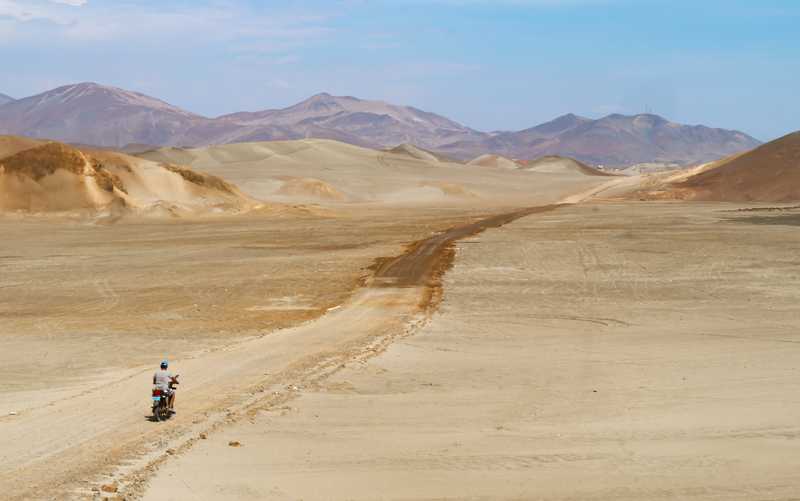
1981 is when the bet paid off in public. French rider Hubert Auriol rode an R80 G/S to overall victory at that year’s Paris-Dakar Rally — the first win at the event for a multi-cylinder motorcycle, beating purpose-built enduro singles at their own game. Auriol would repeat the win in 1983, and BMW riders took it again in 1984 and 1985. The R80 G/S didn’t just succeed commercially — it created the template every adventure bike since has followed, from the R1250GS down to the mid-size ADV bikes crowding dealer floors now.
The UJM Peaks, Then Starts to Fade
The standard, do-everything Japanese four hit its high-water mark around 1981, then started giving ground to more specialized bikes almost immediately after.
Kawasaki’s Z1000J, new for 1981, actually shrank displacement to 998cc from the outgoing KZ1000’s 1,015cc — a small but telling sign that manufacturers were starting to tune engines for character and regulation compliance rather than just chasing bigger numbers. Suzuki’s GS1100E and Yamaha’s XS1100 carried the older formula into its final seasons: big air-cooled fours, triple-digit horsepower, upright ergonomics, no pretense about being anything other than a fast, comfortable standard. BMW’s R100RS, meanwhile, showed the sport-touring alternative — a proper fairing, a boxer twin instead of an inline four, and a price tag (about $7,275 new in 1981) that positioned it well above the Japanese competition.
None of these were bad bikes. They were just the last generation before the market split decisively into sportbikes, cruisers, and touring machines — categories that, by the mid-’80s, had stopped overlapping the way they did in 1981.
Cruisers Get Their Own Lane
Yamaha XV750 Virago. Yamaha’s first V-twin cruiser arrived in 1981, and it mattered for reasons beyond the engine layout. It was one of the earliest mass-produced motorcycles with mono-shock rear suspension, at a time when most cruisers still ran twin shocks borrowed straight from the standard-bike parts bin. The 750 established a formula — low seat, V-twin thump, styling pulled from American cruiser tradition rather than European sport bikes — that Yamaha would expand into the 920 and, eventually, the whole Virago line. It’s the moment the Japanese manufacturers stopped treating cruisers as a Harley-flavored afterthought and started building them as a real, separately engineered category.
Europe’s Last Real Stand
Moto Guzzi Le Mans III. The Le Mans line had been Moto Guzzi’s answer to Japanese sportbikes since 1976, and the Mk III, arriving for 1981, kept the formula intact: an 844cc air-cooled V-twin mounted transversely, shaft drive, and a riding position that made no apologies for being uncomfortable at anything under 70 mph. It sold on character rather than spec-sheet numbers, which was, by 1981, becoming the only card Italian manufacturers had left to play against Japanese engineering budgets.
Triumph Bonneville T140. By 1981 Triumph wasn’t really a company anymore in the conventional sense — it was the Meriden Workers’ Cooperative, a group of former employees who’d taken over the factory in 1973 rather than watch it close, still building the same basic 750cc parallel twin they’d been refining since the late 1960s. The 1981 model year brought three separate Bonneville variants and the carburetor swap forced by emissions rules, a last flurry of variety before the co-op ran out of capital. Meriden would close for good in 1983. Knowing that gives every 1981 Bonneville a slightly different weight — it’s not just a classic British twin, it’s one of the last ones built before the lights went out on the original company.
What These Bikes Are Worth Now
Values vary hard by condition and originality, but as a rough guide: an R100RS in decent rider condition runs $3,500–$7,500, with clean low-mile examples pushing higher. GPz1100s and GS1100Es generally land in the $3,000–$6,000 range unless they’re documented low-mileage survivors. The Katana commands a premium over most of its UJM contemporaries — clean examples routinely clear $8,000–$12,000 because the styling never stopped being desirable, even when the mechanicals underneath were shared with less glamorous Suzukis. Early R80 G/S models, especially anything with credible Paris-Dakar provenance or the Paris-Dakar-replica trim, sit at the top of the pile and can exceed that.
The general rule with any of these: paperwork and originality matter more than raw mileage. A well-documented bike with its original carbs (or, on the GPz1100, its original — if rebuilt — fuel injection) will outsell a lower-mile bike with a mystery history every time.
Which One’s Actually Worth Chasing
If you want the bike with the best story, it’s the BMW R80 G/S — it created a category that’s now the best-selling segment in motorcycling, and you can still buy an original. If you want the bike that turns heads without you saying a word, it’s the Katana. If you just want to ride something genuinely quick and well-sorted from the era without paying a design premium, the CB900F or GS1100E will do that for less money than either of the halo bikes above. And if you want a piece of a company’s actual last stand, the 1981 Bonneville T140 is as close as it gets — built by the people who used to just work there, right up until the factory ran out of road two years later.

Sarah Thornton
More from Sarah ThorntonHow we reviewed this article
This article was researched against manufacturer records and editorially reviewed before publishing. We accept no payment for coverage. Some guides contain affiliate links; see our affiliate disclosure.