TLDR
1960 was the year the American compact car stopped being a rumor and started being a showroom fixture. The Chevrolet Corvair, Ford Falcon, and Plymouth Valiant all launched within months of each other, while Detroit’s full-size lineup was still finishing out the tailfin era before Bill Mitchell and the rest of GM’s studios started sanding the fins down for 1961. Below is a manufacturer-by-manufacturer rundown of the year’s real lineup — no 1964 Mustangs sneaking in because a listicle needed a recognizable name.
Table of Contents
- The Story of 1960
- Chevrolet
- Ford
- Plymouth and Dodge
- Pontiac
- Buick and Oldsmobile
- Cadillac
- Studebaker
- British and European Imports
- Which 1960 Models Are Worth Something Today
The Story of 1960
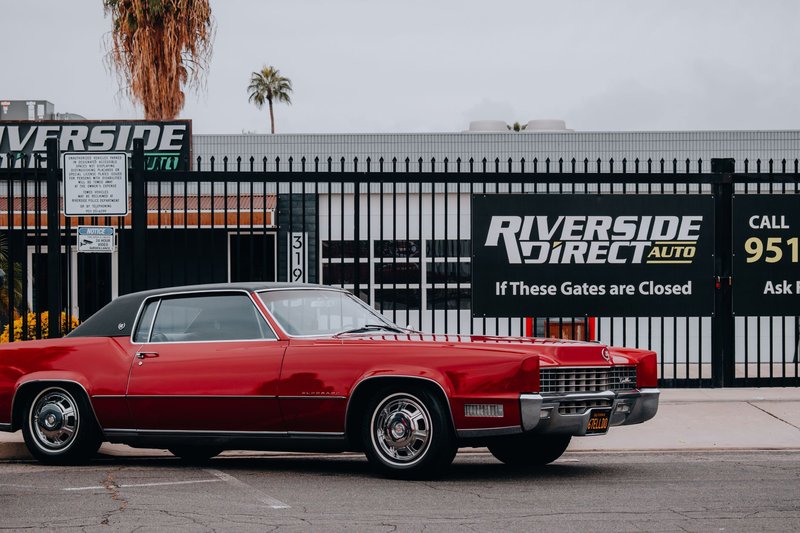
Two things happened to American cars in 1960, and they were pulling in opposite directions.
The first was the compact car boom. Volkswagen’s Beetle had spent the back half of the ’50s quietly eating into Big Three sales, and Detroit finally answered with three ground-up compacts, all released for the 1960 model year: the Chevrolet Corvair, the Ford Falcon, and the Plymouth Valiant. None of them looked or drove like anything else on a Chevrolet, Ford, or Plymouth lot. That was the point.
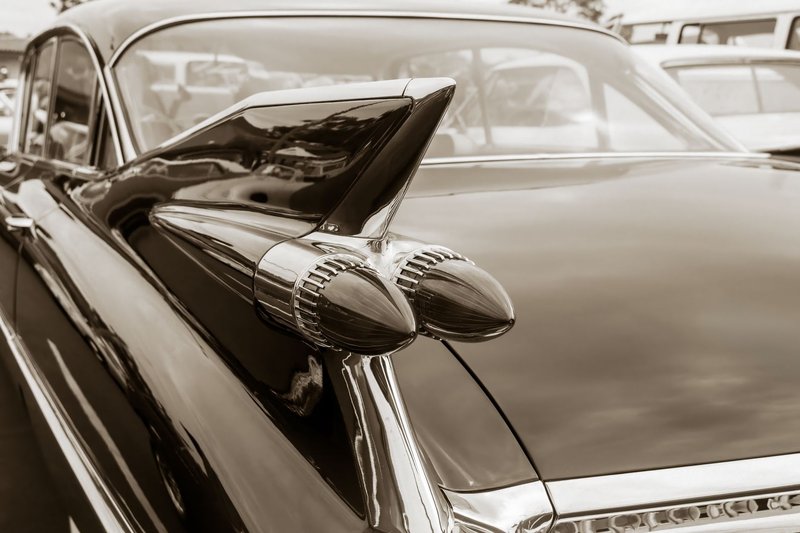
The second was the last gasp of the full-size chrome era. Cadillac, Chevrolet, and Pontiac were all still wearing tailfins in 1960 — smaller than 1959’s excess, but present — because the design decisions for the 1960 model year had been locked in before anyone knew how the public would react to ’59’s peak. By 1961, the fins were gone almost everywhere. 1960 is the last model year you can point to and say “yes, that’s a finned American car,” while also being the first year you can point to a compact and say “that’s the future.”
Chevrolet
Chevrolet ran three distinct lines in 1960, which is unusual — most divisions had one platform with trim variants. Chevy had three separate cars sharing a badge.
- Corvair — Chevrolet’s answer to the Beetle, and the strangest car GM built that decade. Rear-engined, air-cooled flat-six, unibody, fully independent suspension. The base 500 and step-up 700 sedans used a 140-cubic-inch (2.3-liter) flat-six making 80 horsepower, paired with a three-speed manual, four-speed manual, or two-speed Powerglide automatic. Nothing else on a Chevrolet lot drove remotely like it, and that novelty — plus Ed Cole’s insistence on doing it his way — is exactly what a few years later would draw Ralph Nader’s fire in Unsafe at Any Speed, but in 1960 it was simply the most talked-about new car in America.
- Impala / Bel Air / Biscayne — The full-size lineup carried over the 1959 body’s basic shape but toned down the batwing fins into something more restrained, with a cleaner grille and less two-tone excess. Engines ranged from the 235-cubic-inch inline-six up through 348-cubic-inch V8s pushing past 300 horsepower in Tri-Power trim.
- El Camino — In its first generation (introduced for 1959), the car-truck hybrid continued for 1960 on the full-size platform, aimed squarely at Ford’s Ranchero.
Ford
- Falcon — Ford’s compact answer, and the sales leader of the three new compacts by a wide margin — over 435,000 sold in its debut year. Conventional front-engine, rear-drive layout (unlike the Corvair), riding a 109.5-inch wheelbase with a 144-cubic-inch inline-six making 90 horsepower. Robert McNamara championed it as the anti-Corvair: cheap to build, cheap to fix, nothing exotic under the skin. That conservatism is exactly why it outsold the Corvair and the Valiant combined.
- Fairlane / Fairlane 500 — Ford’s mid-size full-frame sedan, shrunk slightly from 1959 and squared off with a cleaner greenhouse. Available with six-cylinder or V8 power up to a 352-cubic-inch V8.
- Galaxie — New for 1960, replacing the top-trim Fairlane 500 Galaxie designation with its own model line, styled with a more formal, squared-off roofline than the outgoing car and topping out with the 360-horsepower 352 “Special” V8.
- Thunderbird — The third-generation “Square Bird,” in its final year of that body style before the 1961 Bullet Bird redesign. Available as a hardtop or convertible with a standard 352 V8.
Plymouth and Dodge
- Valiant — Plymouth’s compact, and arguably the most mechanically interesting of the three, though Chrysler initially sold it as its own marque rather than under the Plymouth name. Its 170-cubic-inch Slant Six was canted 30 degrees to lower the hoodline and improve oil control on hard cornering — an engine so durable it stayed in Chrysler production into the 1980s. Base prices ran from roughly $2,030 to $2,550 depending on trim, with a 106.5-inch wheelbase and a three-speed manual or push-button TorqueFlite automatic.
- Fury / Belvedere / Savoy — Plymouth’s full-size line got Virgil Exner’s “Forward Look” fins in their final, most restrained form before the 1961 redesign dialed them back sharply.
- Dart — New for 1960, Dodge’s full-size entry replacing the Coronet as the volume leader, sharing Plymouth’s body shell but with Dodge-specific trim and its own fin treatment.
- Dodge Dart Phoenix / Matador / Polara — Trim tiers atop the Dart lineup, with the Polara carrying Dodge’s largest engine options, including a 383-cubic-inch V8.
Pontiac
- Catalina, Ventura, Star Chief, Bonneville — Pontiac’s full-size range for 1960 wore a toned-down version of the “Wide-Track” stance the division had introduced the year before, with a lower beltline and less ornamentation than 1959. Wide-Track wasn’t just marketing copy — Pontiac genuinely widened the track width over the shared GM B-body, and it noticeably improved handling, a detail road testers of the era called out specifically.
- Engines spanned the 389-cubic-inch V8 in multiple states of tune, up to Tri-Power carburetion setups making close to 348 horsepower in the Bonneville.
Buick and Oldsmobile
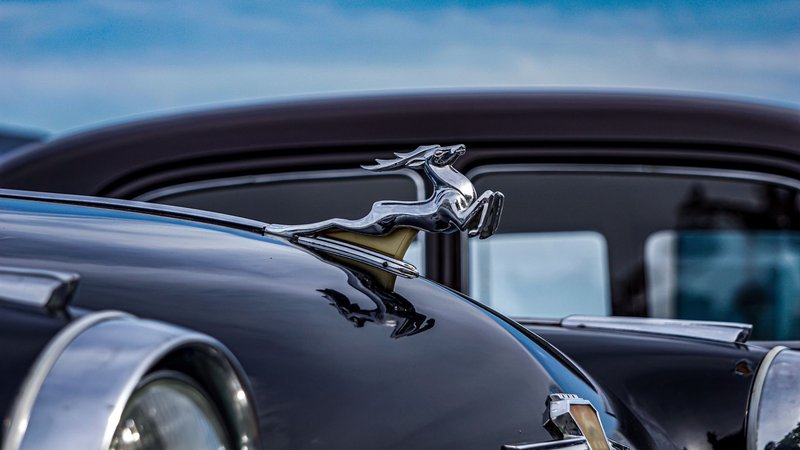
- Buick LeSabre, Invicta, Electra — Buick’s 1960 lineup dropped much of the “sweepspear” side trim that had defined the brand through the ’50s in favor of a cleaner flank, though the fins remained, canted outward at the tips.
- Oldsmobile 88, Super 88, 98 — Oldsmobile’s full-size cars for 1960 carried Rocket V8 power (up to 394 cubic inches in the 98) with a more restrained rear-fin treatment than the division had used in 1959, foreshadowing the flatter decklids coming across GM for 1961.
Cadillac
- Series 62, DeVille, Fleetwood 60 Special, Eldorado — 1960 was the last model year Cadillac ran genuinely prominent fins before the sharp cutback in 1961. The Eldorado Biarritz convertible, the range-topping model, paired a 390-cubic-inch, 345-horsepower V8 with power everything and a starting price north of $7,400 — nearly double a loaded Series 62. Only about 1,280 Biarritz convertibles were built for the year, which is a large part of why it commands the highest prices of any 1960 Cadillac today.
Studebaker
- Lark — South Bend’s bet-the-company compact, one model year ahead of the Big Three’s entries (the Lark launched for 1959). For 1960 it got a longer wheelbase option on four-door models, a new Skybolt Six alongside the existing V8, and modest trim revisions. It’s the car that arguably proved to Detroit that a genuine compact could sell, months before the Corvair, Falcon, and Valiant hit lots.
- Hawk — Studebaker’s sporting coupe carried over largely unchanged, riding the same basic body shell introduced back in 1953, by 1960 looking distinctly like a design from another decade next to the year’s new metal.
British and European Imports
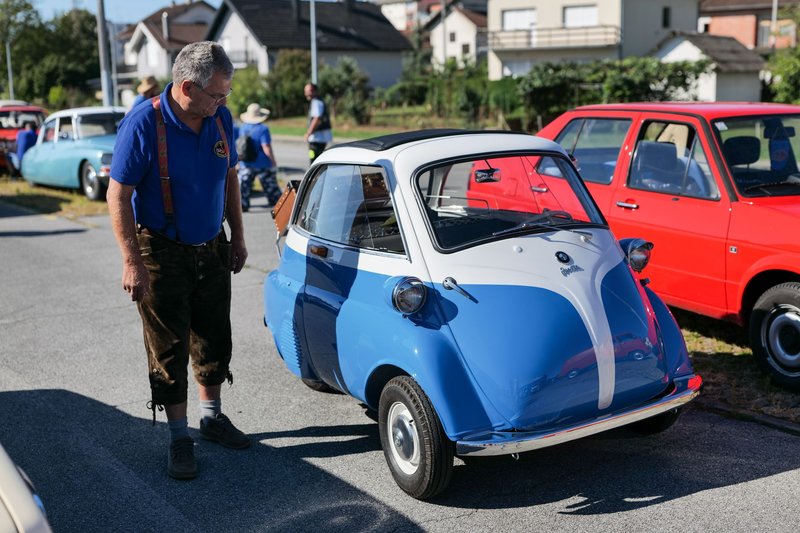
American showrooms in 1960 weren’t just Big Three and Studebaker. Import dealers — often small, independent operations — were moving a meaningful number of European cars, and their presence is part of why Detroit rushed the compacts to market.
- Volkswagen Beetle (Type 1) — Still the import benchmark, essentially unchanged mechanically from prior years, with U.S. sales climbing past 150,000 for the year.
- Renault Dauphine — A rear-engined French compact that briefly ranked as the second-best-selling import in the U.S. before reliability complaints caught up with it.
- MG A / Austin-Healey Sprite — The small British roadsters that gave American buyers an entry point into sports-car ownership at a price a Corvette buyer would find laughable.
- Jaguar Mark IX / XK150 — On the other end of the import spectrum, Jaguar’s saloon and sports car represented the aspirational tier — leather, wood, and a twin-cam six that made domestic engines look agricultural by comparison.
Which 1960 Models Are Worth Something Today
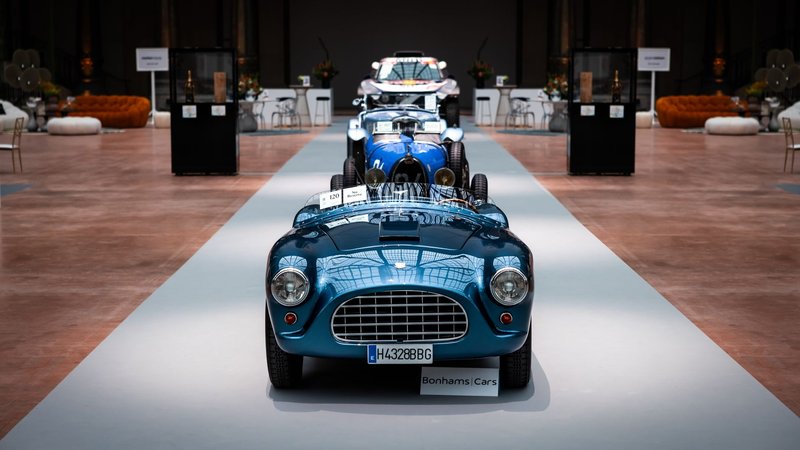
Not every 1960 model aged into a collector car — plenty of full-size Biscaynes and Savoys were simply used up and scrapped. But a handful stand out in today’s market:
- Cadillac Eldorado Biarritz — Low production numbers and full luxury spec make this the blue-chip 1960 American car, regularly the top seller among 1960-model listings at major auctions.
- Chevrolet Corvair (early, unmodified) — The Nader controversy actually suppressed values for decades; clean, first-year Corvairs have quietly become more sought-after as the swing-axle debate has receded into history and the engineering oddity has become the appeal.
- Studebaker Lark — The affordable end of the hobby. According to Mecum Auctions’ public sale results, recent Lark sales have ranged from around $5,500 for driver-quality cars up past $20,000 for well-restored examples, with a documented high-water sale of $57,200 for an exceptional car.
- Plymouth Valiant — Undervalued relative to its engineering significance; the Slant Six alone has a cult following among people who’ve owned one and simply never had it fail.
None of these are seven-figure Duesenberg money. That’s the appeal — 1960 sits at the exact point where genuinely interesting engineering (rear-engine Corvairs, canted Slant Sixes, Wide-Track handling) is still attainable, before the muscle car era of the mid-’60s pushed prices into a different league entirely.

Marco Delantero
More from Marco DelanteroHow we reviewed this article
This article was researched against manufacturer records and editorially reviewed before publishing. We accept no payment for coverage. Some guides contain affiliate links; see our affiliate disclosure.