Table of Contents
- Why 1976 Was a Turning-Point Year for Dodge
- Dodge Aspen — The New Compact
- Dodge Dart — The Last One
- Dodge Monaco and Royal Monaco — The Flagship
- Dodge Coronet — Also Out the Door
- Dodge Charger — Riding on the Coronet’s Bones
- Dodge Trucks — Ramcharger and the D-Series
- Dodge Vans — Tradesman and Sportsman
- Collector Notes: What’s Worth Chasing
Dodge sold seven distinct product lines in 1976, and the two most important weren’t even competing with each other — they were replacing each other. The Dart went out. The Aspen came in. Everything else on the lot, from the Monaco sedan to the Tradesman van, was busy adapting to a new set of federal rules that had nothing to do with styling and everything to do with what was happening under the hood.
If you’re trying to identify a car in a driveway, price out a restoration, or just understand why 1976 shows up so often in Mopar forums, here’s every model Dodge built that year, what made it what it was, and what to actually look for if you’re shopping one now.
Why 1976 Was a Turning-Point Year for Dodge
Two regulatory deadlines collided with Dodge’s product cycle in 1976, and you can see the fingerprints on nearly every car in the lineup. Federal standards tightened nitrogen oxide limits to 0.4 grams per mile for the 1976 model year, which is the direct reason Chrysler’s V8s spent the middle of the year growing a strange black box bolted to the intake — the Lean Burn computer, more on that below.
At the same time, Federal Motor Vehicle Safety Standard 105-75 took effect on January 1, 1976, raising the bar on braking performance. The standard didn’t technically mandate disc brakes, but it made drums so much harder to certify that manufacturers switched anyway. That’s why front discs, once an option box you had to check, became standard equipment across nearly the whole Dodge line this year.
Layer a compact-car generational handoff on top of that — the Dart out, the Aspen in — and 1976 becomes one of the most consequential single years in Dodge’s history, even though nothing in the lineup looked particularly radical from the curb.
Dodge Aspen — The New Compact
The Aspen wasn’t a facelift of the Dart. It was an entirely new platform, and Dodge treated it like one — enough that Motor Trend named it Car of the Year for 1976, a rare honor for a compact from a Detroit brand that wasn’t chasing a halo image. The car came in three trims: base, Custom, and SE (Special Edition), and three body styles: sedan, sport coupe, and station wagon, with the coupe riding a slightly shorter 108.7-inch wheelbase against 112.7 inches for the sedan and wagon.
Engine choices were simple by design — a 3.7-liter (225 cubic inch) Slant Six rated at 100 horsepower as the standard, with a 5.2-liter (318 cubic inch) V8 as the step-up. Pricing spanned roughly $3,335 to $4,415 depending on trim and body style, and Dodge moved 189,900 of them for the model year — a strong start for a car meant to anchor the brand’s compact segment for the next decade.
The catch, and it’s a well-documented one among Mopar owners, is that the Aspen’s first-year build quality didn’t match its press coverage. Early cars were prone to front fender rust, stalling issues tied to the choke and carburetor calibration, and hood latch and brake problems serious enough to trigger recalls. None of that stopped the Aspen (and its Plymouth Volaré twin) from selling well through the late ’70s, but it’s exactly why a clean, rust-free ’76 is harder to find than the production numbers would suggest.
Dodge Dart — The Last One
1976 closed out an eight-year run for the fourth-generation Dart, and Dodge didn’t send it off quietly — it sent it off cheap and reliable, which was the whole point of the car in the first place. The lineup had narrowed by this point, built around the Swinger Special two-door and the Dart Special Edition, with the workhorse Slant Six and small-block V8 powertrains that had made the Dart a taxi-fleet and first-car staple for a decade.
Sales had slipped to their lowest point since 1963, but “lowest point” for the Dart still meant roughly 100,000 units — a testament to how deep the car’s reputation for durability ran even as Dodge was actively steering buyers toward its replacement. Once the Aspen proved it could hold showroom traffic, there was no reason to keep building two compacts side by side, and the Dart nameplate didn’t return.
That handoff is exactly why the ’76 Dart matters to collectors now: it’s the last chance to buy the platform in its most sorted, longest-developed form, before Chrysler started over with a car that needed a few years to shake out its problems.
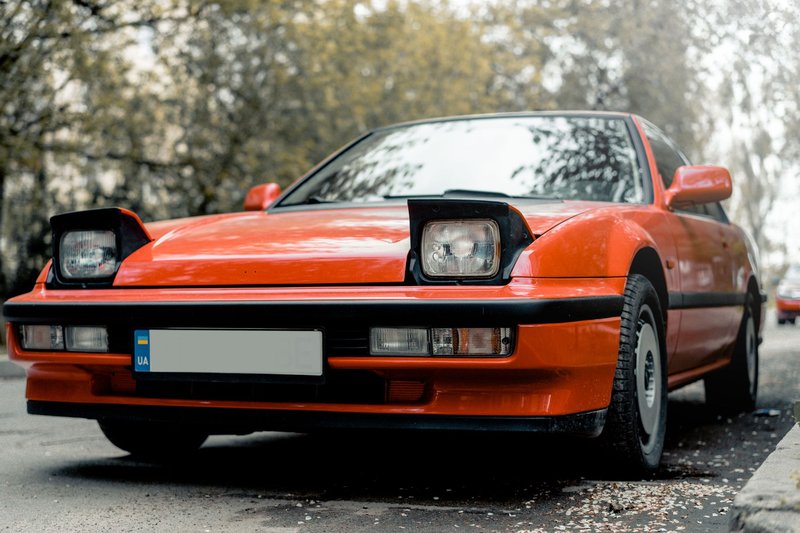
Dodge Monaco and Royal Monaco — The Flagship
At the top of the passenger-car range sat the Monaco, restyled for 1975 and carried into 1976 as Dodge’s full-size flagship, sold in Monaco and posher Royal Monaco trim, up through a Royal Monaco Brougham at the peak of the range. This was the car aimed at buyers who wanted a Chrysler New Yorker’s presence without the Chrysler badge or the Chrysler price.
Base V8 power came from a 5.2-liter (318 cubic inch) engine making around 150 horsepower, with a 5.9-liter (360 cubic inch) V8 rated near 170 horsepower available as a step up. The engine most associated with the ’76 Monaco, though, is the 6.6-liter 400 — the one that received Chrysler’s new Lean Burn system partway through the model year, producing around 210 horsepower and 305 lb-ft of torque with the electronic spark control box mounted right on top of the air cleaner.
Lean Burn was Chrysler’s answer to the NOx limits above: instead of a catalytic converter, it used an early analog computer to fine-tune ignition timing and run a leaner air-fuel mixture, cutting emissions without the fuel-economy penalty a catalyst could bring. It’s also the single most common headache on a surviving ’76 big Dodge — the control units failed often even when new, and most cars on the road today have had the system deleted or bypassed by an owner who got tired of stalling at stoplights. If you’re evaluating one, that’s the first thing to ask about.
Dodge Coronet — Also Out the Door
The Coronet doesn’t get the same nostalgia treatment as the Dart, but 1976 was its last year too, and the two nameplates exited Dodge’s lineup almost in lockstep. By this point the Coronet had been trimmed down to four-door sedans and station wagons only — no coupe, no muscle-car pretensions left in the name — with a Slant Six 225 or 318 V8 under the hood and a 25.5-gallon fuel tank that hinted at how much car it was hauling around.
The Coronet Brougham sat at the top of the range, with velour or vinyl seating, a center armrest, shag carpeting, and deluxe wheel covers standing in for the performance cues the nameplate carried a few years earlier. When the Coronet name disappeared after this model year, its sedan-and-wagon role effectively folded into the Monaco line, closing out a badge that dated back to 1949.
Dodge Charger — Riding on the Coronet’s Bones
The Charger stuck around for 1976, but it had drifted a long way from the muscle-car identity the name built in the late ’60s. Built on the same mid-size platform as the Coronet, the ’76 Charger was sold as a personal luxury coupe, competing more directly with cars like the Chevrolet Monte Carlo than with anything it used to race against.
Buyers could still option a Charger with the brand’s larger V8s, but the car’s mission had shifted to comfort and styling — vinyl roofs, opera windows, and plush interiors — over quarter-mile numbers. It’s a useful reminder that “1976 Dodge Charger” and “muscle car” aren’t interchangeable phrases; if you’re hunting for the version with real performance credentials, you want a much earlier build year. The 1970s muscle Chargers are what gave the name real performance credentials.
Dodge Trucks — Ramcharger and the D-Series
Dodge’s truck side in 1976 centered on the D-Series pickups — D100, D200, and D300, spanning half-ton through one-ton duty — offered in Sweptline standard-bed and Club Cab configurations across short and long wheelbases. Power ran from the Slant Six up through a range of V8s, giving buyers a genuine choice between an economical work truck and one built to tow.
Sitting alongside the pickups was the Ramcharger, Dodge’s two-door full-size utility that had launched in 1974 to compete with the Chevy Blazer and Ford Bronco. It shared its front sheet metal and drivetrains with the D100, which made it easy to service and easy to option up with the same big-block engines available in the pickup line.
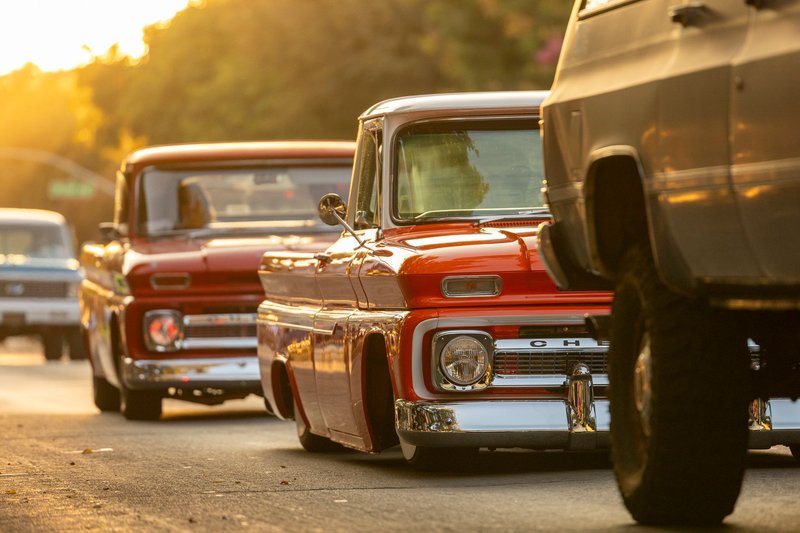
Dodge Vans — Tradesman and Sportsman
Rounding out the lineup were Dodge’s full-size vans, split into the cargo-focused Tradesman and the passenger-oriented Sportsman, built across B100, B200, and B300 weight classes in both short- and long-wheelbase forms. A 3/4-ton B200 Tradesman or Custom Sportsman was the default choice for contractors, church groups, and anyone else who needed to move people or cargo in volume, and the same Slant Six and V8 options from the car and truck lines carried over here too.
These vans don’t get much attention from collectors today, but they’re a straightforward window into how much of Dodge’s 1976 output wasn’t cars at all — fleet and commercial buyers were a real part of the business, not an afterthought.
Collector Notes: What’s Worth Chasing
If you’re shopping a 1976 Dodge specifically, a few things matter more than trim level:
- Rust is the real enemy. Aspens in particular are known for fender and rear-quarter rust that started while the cars were still under warranty. Check those spots before anything else.
- Ask about the Lean Burn system on any big-block Monaco. A car with the original control box still functioning and unmodified is rarer than one that’s been converted to a standard electronic or points ignition — decide which you actually want before you shop.
- Dart and Coronet parts are still relatively easy to source, since both platforms sold in huge numbers across multiple years; Aspen and Charger parts, especially trim and interior pieces specific to ’76, are noticeably tighter.
- Production numbers favor the Aspen and Dart for availability — nearly 190,000 Aspens and around 100,000 Darts built means there are simply more of both surviving than Monacos, Coronets, or Chargers from the same year.
None of the 1976 Dodge lineup was built to be a collector car. That’s part of why the survivors are interesting now — they’re a snapshot of a company mid-transition, hedging between the compact it was discontinuing and the one it was betting on, while every engine in the building was being re-tuned to meet a federal deadline. Whichever one you’re looking at, you’re looking at a car built during one of the most compressed periods of change Dodge ever went through.

Marco Delantero
More from Marco DelanteroHow we reviewed this article
This article was researched against manufacturer records and editorially reviewed before publishing. We accept no payment for coverage. Some guides contain affiliate links; see our affiliate disclosure.