The 1970s had a split personality when it comes to speed. The decade opened with the last, loudest gasp of the muscle car era — 450-horsepower big-blocks that Detroit built before anyone forced them to care about emissions. Then the 1973 oil embargo hit, insurance companies started treating big-block coupes like liabilities, and the EPA’s tightening standards gutted horsepower ratings almost overnight. A 1970 Chevelle SS 454 made 450 hp. A 1975 version, if it had still existed, would’ve been lucky to clear 250.
While America throttled back, Europe kept its foot down. Lamborghini, Ferrari, and Porsche spent the decade chasing 180 mph with wedge-shaped bodies and no regard for anyone’s fuel bill. That’s why any honest “fastest of the 1970s” list has to cover both worlds — the quarter-mile brawlers of 1970 and ’71, and the autobahn missiles that kept climbing while Detroit’s numbers fell. Pick a lane and you’re only telling half the story.
This list ranks all 16 by top speed, since that’s the number that separates a quick car from a genuinely fast one — a Hemi ‘Cuda can outrun a Ferrari Daytona to 60 mph and still lose badly by the time both cars run out of road.
Table of Contents
- TLDR
- How We’re Ranking These
- 16. Pontiac GTO Judge Ram Air IV
- 15. Buick GSX Stage 1
- 14. Plymouth Road Runner 440+6
- 13. Chevrolet Chevelle SS 454 LS6
- 12. Chevrolet Corvette LT-1
- 11. Jaguar E-Type Series III V12
- 10. Dodge Challenger R/T Hemi
- 9. Plymouth Hemi ‘Cuda
- 8. Porsche 930 Turbo
- 7. De Tomaso Pantera GTS
- 6. Maserati Bora
- 5. Aston Martin V8 Vantage
- 4. Lamborghini Miura SV
- 3. Ferrari Daytona 365 GTB/4
- 2. Ferrari 512 BB
- 1. Lamborghini Countach LP400
- Comparison Table
- The Oil Crisis Killed One Kind of Fast
TLDR
The Lamborghini Countach LP400 tops this list at roughly 179 mph, edging out the Ferrari 512 BB and the Daytona. But if straight-line acceleration off the line is what you actually care about, the Hemi ‘Cuda and its Mopar siblings still win — several of them hit 60 mph quicker than any Italian car on this list, they just ran out of breath past 150 mph. Full data and story on all 16 below, plus a side-by-side table if you just want the numbers.
How We’re Ranking These
Every entry gets the same four numbers: 0-60 mph, quarter-mile time, top speed, and horsepower, plus the engine that made it happen. A quick note on the muscle car numbers — factory horsepower ratings from 1970 and 1971 were notoriously conservative. Automakers under-rated engines to dodge insurance surcharges and racing sanctioning limits, so a “370 hp” GTO could plausibly make 400-plus at the wheel. Where that gap matters to the story, we call it out.
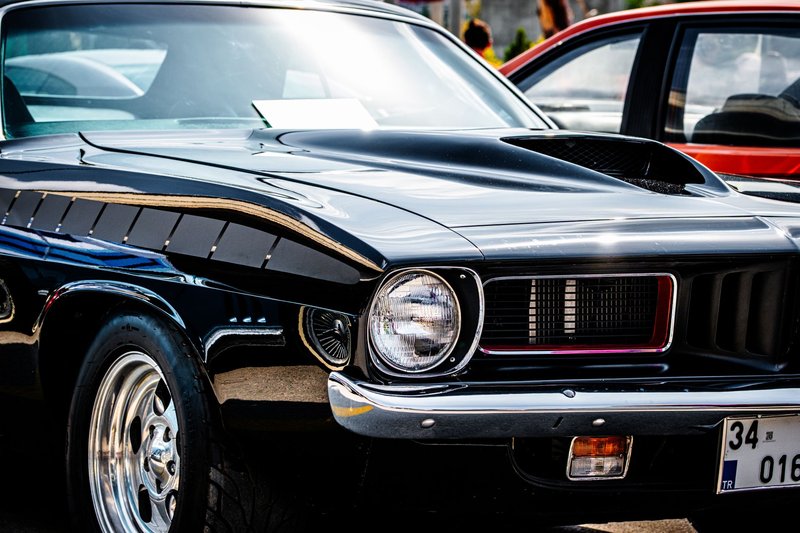
16. Pontiac GTO Judge Ram Air IV
0-60: 5.8 sec | Quarter-mile: 13.9 sec | Top speed: 118 mph | Horsepower: 370 hp | Engine: 400 cu in Ram Air IV V8
The Judge was never about outright top speed — it was about noise, attitude, and a wing you could see from space. Pontiac’s Ram Air IV used round-port heads and a longer-duration cam than the standard Ram Air III, and it revved harder for it, even if the peak numbers looked similar on paper. Fewer than 200 Judges left the factory with this engine in 1970, which is part of why an original, numbers-matching example now sells for muscle car money that would’ve bought a small house in 1970.
15. Buick GSX Stage 1
0-60: 5.5 sec | Quarter-mile: 13.38 sec @ 105 mph | Top speed: 120 mph | Horsepower: 360 hp (rated) | Engine: 455 cu in Stage 1 V8
Buick rated the GSX Stage 1 at 360 hp and 510 lb-ft of torque, and even that torque figure understated what the car actually did at the strip. Car and Driver’s 1970 test ran a stock Stage 1 to a 13.38-second quarter-mile — quicker than the Hemi ‘Cuda the magazine tested the same year. Buick wrapped that torque in Saturn Yellow or Apollo White paint with black GSX stripes, which is a strange combination of “grandpa’s brand” and “actually terrifying” that only the muscle car era could produce.
14. Plymouth Road Runner 440+6
0-60: 5.7 sec | Quarter-mile: 13.8 sec | Top speed: 130 mph | Horsepower: 390 hp | Engine: 440 cu in Six-Barrel V8
Three two-barrel Holley carburetors sitting on top of a 440, tuned so the outer two only opened under hard throttle — that’s the “6” in 440+6. It gave the Road Runner Hemi-adjacent performance for a lot less money and, crucially, a lot less insurance premium, since it wasn’t officially a “Hemi” on paper. Plymouth even put a cartoon roadrunner on the horn button that made a “beep-beep” sound, which tells you everything about how seriously the brand wanted you to take this car and how seriously the car actually performed.
13. Chevrolet Chevelle SS 454 LS6
0-60: 5.7 sec | Quarter-mile: 13.44 sec | Top speed: 135 mph | Horsepower: 450 hp | Engine: 454 cu in LS6 V8
The LS6’s 450 hp is the highest factory rating any GM muscle car engine ever officially carried, and it stood for over three decades before GM’s later LS7 and supercharged engines finally passed it. Solid lifters, 11.25:1 compression, and a Holley 800-cfm carb turned the 454 into the benchmark every other 1970 big-block got compared against. It needed premium fuel and a tolerant insurance agent — 1970 was the last year both were easy to find.
12. Chevrolet Corvette LT-1
0-60: 5.7 sec | Quarter-mile: 14.2 sec | Top speed: 137 mph | Horsepower: 370 hp | Engine: 350 cu in LT-1 V8
While the big-blocks got the headlines, Chevrolet’s small-block LT-1 Corvette proved you didn’t need cubic inches to be quick — it revved to 6,500 rpm on solid lifters and 11:1 compression, running the quarter almost as fast as cars with 100 more cubic inches. It’s also the Corvette that best survived the horsepower collapse: by 1972, the LT-1 was gone and Corvette output was sliding toward triple digits, but the 1970 version still had teeth.
11. Jaguar E-Type Series III V12
0-60: 6.4 sec | Quarter-mile: 14.9 sec | Top speed: 146 mph | Horsepower: 272 hp (SAE net) | Engine: 5.3-liter V12
Jaguar dropped a brand-new V12 into the aging E-Type body for 1971 and stretched the wheelbase to fit it, turning a car that debuted in 1961 into something that could still embarrass younger machinery a decade later. It was the first V12 in a series-production British road car since before the Second World War, and the smoothness of it — almost no vibration even near redline — became the E-Type’s calling card in its final years before Jaguar replaced it with the XJ-S.
10. Dodge Challenger R/T Hemi
0-60: 5.8 sec | Quarter-mile: 13.5 sec | Top speed: 148 mph | Horsepower: 425 hp | Engine: 426 cu in Hemi V8
Fewer than 100 Challengers left the factory with the 426 Hemi in 1970, which is a big part of why an original convertible sold at auction for over $3 million in 2014. The Hemi’s hemispherical combustion chambers let it breathe better at high rpm than any other Mopar big-block, and Dodge’s marketing leaned hard into the intimidation factor — the elephant-sized valve covers alone told you this wasn’t the base engine.
9. Plymouth Hemi ‘Cuda
0-60: 5.6 sec | Quarter-mile: 13.1 sec @ 107 mph | Top speed: 150 mph | Horsepower: 425 hp | Engine: 426 cu in Hemi V8
Same engine as the Challenger, but the ‘Cuda’s shorter wheelbase and lighter overall weight made it the quicker Mopar of the two, and its 13.1-second quarter-mile made it the fastest American production car in a straight line in 1970 by most magazine tests of the era. This is also the car that best illustrates the “underrated horsepower” problem — dyno pulls on restored, numbers-matching Hemi ‘Cudas have shown output closer to 480-500 hp at the crank, well above the factory’s official 425.
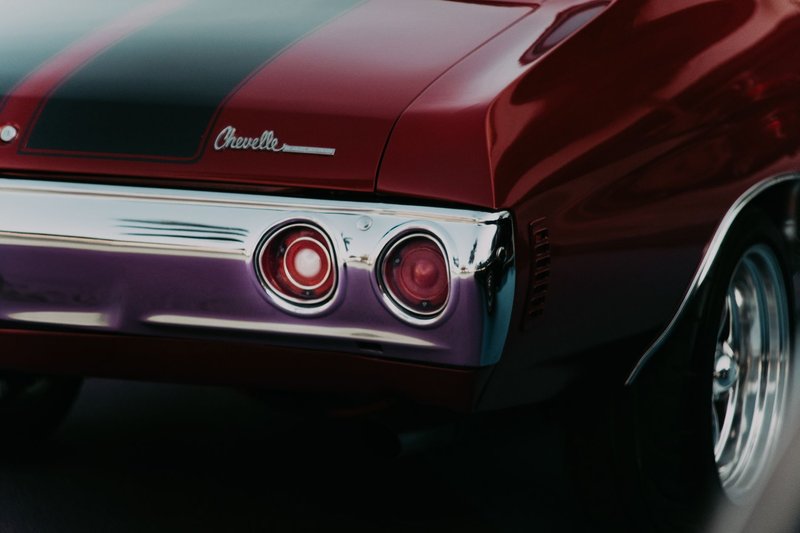
8. Porsche 930 Turbo
0-60: 5.2 sec | Quarter-mile: 13.5 sec | Top speed: 156 mph | Horsepower: 260 hp | Engine: 3.0-liter turbocharged flat-six
Porsche’s first turbocharged 911 arrived in 1975 with a whale-tail spoiler that existed for a real reason — the engine needed the extra downforce and cooling at speed, not just the look. The 930 also introduced a lag so pronounced that it became part of the car’s identity: nothing happens below 3,000 rpm, then the boost arrives all at once and the tail wants to come around on you. Porsche enthusiasts still call it “the widowmaker,” only half joking.
7. De Tomaso Pantera GTS
0-60: 5.5 sec | Quarter-mile: 13.9 sec | Top speed: 159 mph | Horsepower: 330 hp | Engine: 5.8-liter Ford Cleveland V8
The Pantera’s pitch was simple: Italian mid-engine styling and handling, American V8 reliability, sold through Lincoln-Mercury dealerships in the U.S. so owners didn’t need to find a specialist to get it serviced. Elvis Presley famously shot his Pantera with a pistol when it wouldn’t start — the bullet holes are part of the car’s mythology now, and a testament to how temperamental Italian-American hybrids could still be, even with a Ford engine under the decklid.
6. Maserati Bora
0-60: 6.5 sec | Quarter-mile: 14.5 sec | Top speed: 160 mph | Horsepower: 310 hp | Engine: 4.7-liter V8
Maserati’s first mid-engine road car came with a Giorgetto Giugiaro body and an oddly civilized cabin for a supercar of its era — adjustable pedals, proper sound insulation, a hydraulic system (borrowed from then-owner Citroën) that raised and lowered the pedal box and steering column to fit the driver. It was never the quickest car in a straight line among its rivals, but it was the one you could drive across a continent without your spine filing a complaint.
5. Aston Martin V8 Vantage
0-60: 5.3 sec | Quarter-mile: 13.6 sec | Top speed: 170 mph | Horsepower: 340 hp (est.) | Engine: 5.3-liter V8
Aston Martin never published an official horsepower figure for the 1977 Vantage, but independent testing at the time put it around 340 hp, and Motor magazine clocked it as the fastest accelerating production car it had ever tested up to that point. British motoring press nicknamed it “the first British supercar,” and unlike most of the Italian exotics on this list, it did all of it with a blacked-out grille, no rear wing, and the understated menace Aston built its whole reputation on.
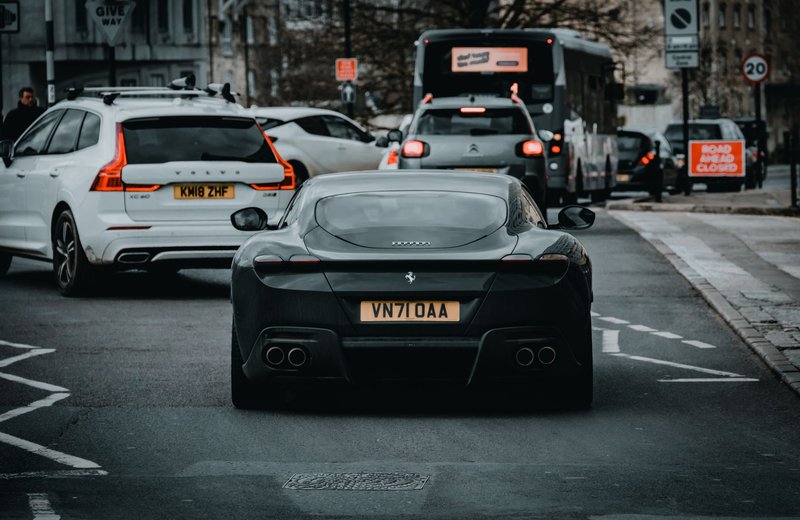
4. Lamborghini Miura SV
0-60: 5.5 sec | Quarter-mile: 13.8 sec | Top speed: 172 mph | Horsepower: 385 hp | Engine: 4.0-liter V12
By the time the Miura reached SV spec in 1971, Lamborghini had widened the rear track, separated the engine and gearbox oil supplies (an early Miura quirk that a heavy right foot could turn into a expensive problem), and pushed output to 385 hp. Only 150 SVs were built, making it the rarest and most sorted version of the car most historians credit with inventing the modern mid-engine supercar layout in the first place, back in 1966.
3. Ferrari Daytona 365 GTB/4
0-60: 5.4 sec | Quarter-mile: 13.9 sec | Top speed: 174 mph | Horsepower: 352 hp | Engine: 4.4-liter V12
Ferrari never officially called it “Daytona” — that name stuck after the 365 GTB/4 swept the top three spots at the 1967 24 Hours of Daytona, and it was popular enough that Ferrari eventually gave in. It’s a front-engine grand tourer at a time when Lamborghini was betting everything on mid-engine layouts, and for most of the early 1970s it was the fastest road car in the world by a comfortable margin, before the mid-engine wedge shapes finally caught up.
2. Ferrari 512 BB
0-60: 5.8 sec | Quarter-mile: 14.1 sec | Top speed: 175 mph | Horsepower: 360 hp | Engine: 4.9-liter flat-12 (boxer)
“BB” stands for Berlinetta Boxer, and it marked Ferrari’s first mid-engine, flat-12 road car — a deliberate answer to Lamborghini’s Countach and Miura after years of Ferrari insisting a boxer engine’s low center of gravity wasn’t worth the packaging headache. Enzo Ferrari reportedly resisted the mid-engine road car layout for years, worried that a car easier to spin than to drive would end up killing customers. The 512 BB’s added displacement over the earlier 365 GT4 BB closed the horsepower gap with Lamborghini and then some.
1. Lamborghini Countach LP400
0-60: 5.6 sec | Quarter-mile: 13.9 sec | Top speed: 179 mph | Horsepower: 375 hp | Engine: 4.0-liter V12
Marcello Gandini’s wedge shape looked like nothing else on the road in 1974, and the scissor doors weren’t a styling flourish — the Countach’s wide sills and low roofline made conventional doors impractical, so Gandini solved it by making them swing up instead. Lamborghini’s own numbers claimed the LP400 could reach 179 mph, a figure independent testers of the era struggled to confirm on any actual road, but even conservative real-world tests put it comfortably ahead of every other car on this list. It’s the poster on the bedroom wall for a reason.
Comparison Table
| # | Car | 0-60 mph | Quarter-mile | Top Speed | Horsepower |
|---|---|---|---|---|---|
| 1 | Lamborghini Countach LP400 | 5.6 sec | 13.9 sec | 179 mph | 375 hp |
| 2 | Ferrari 512 BB | 5.8 sec | 14.1 sec | 175 mph | 360 hp |
| 3 | Ferrari Daytona 365 GTB/4 | 5.4 sec | 13.9 sec | 174 mph | 352 hp |
| 4 | Lamborghini Miura SV | 5.5 sec | 13.8 sec | 172 mph | 385 hp |
| 5 | Aston Martin V8 Vantage | 5.3 sec | 13.6 sec | 170 mph | 340 hp |
| 6 | Maserati Bora | 6.5 sec | 14.5 sec | 160 mph | 310 hp |
| 7 | De Tomaso Pantera GTS | 5.5 sec | 13.9 sec | 159 mph | 330 hp |
| 8 | Porsche 930 Turbo | 5.2 sec | 13.5 sec | 156 mph | 260 hp |
| 9 | Plymouth Hemi ‘Cuda | 5.6 sec | 13.1 sec | 150 mph | 425 hp |
| 10 | Dodge Challenger R/T Hemi | 5.8 sec | 13.5 sec | 148 mph | 425 hp |
| 11 | Jaguar E-Type Series III V12 | 6.4 sec | 14.9 sec | 146 mph | 272 hp |
| 12 | Chevrolet Corvette LT-1 | 5.7 sec | 14.2 sec | 137 mph | 370 hp |
| 13 | Chevrolet Chevelle SS 454 LS6 | 5.7 sec | 13.44 sec | 135 mph | 450 hp |
| 14 | Plymouth Road Runner 440+6 | 5.7 sec | 13.8 sec | 130 mph | 390 hp |
| 15 | Buick GSX Stage 1 | 5.5 sec | 13.38 sec | 120 mph | 360 hp |
| 16 | Pontiac GTO Judge Ram Air IV | 5.8 sec | 13.9 sec | 118 mph | 370 hp |
The Oil Crisis Killed One Kind of Fast
Notice how every muscle car on this list is a 1970 or 1971 model, and none of the European exotics are. That’s not a coincidence. The 1973 OPEC oil embargo quadrupled gas prices in the U.S. almost overnight, and Detroit’s response was to detune engines, lower compression ratios to run on lower-octane unleaded fuel, and chase the EPA’s new emissions standards instead of horsepower. By 1975 a Corvette made barely 165 hp — less than half of what the 1970 LT-1 produced from a smaller engine.
European exotic makers weren’t insulated from the fuel crisis, but they were selling to buyers who didn’t care what a Countach cost to fill up, and their smaller production runs meant they could keep chasing top speed while Detroit chased compliance. That’s the real story hiding underneath any “fastest of the 1970s” list: the decade’s first three years and its last seven were basically two different eras of what “fast” was even allowed to mean, and the muscle cars on this list are relics of a window that slammed shut fast.

Marco Delantero
More from Marco DelanteroHow we reviewed this article
This article was researched against manufacturer records and editorially reviewed before publishing. We accept no payment for coverage. Some guides contain affiliate links; see our affiliate disclosure.