Ask most people to name a Scandinavian car brand and you’ll get “Volvo,” maybe “Saab” if they’re over forty, and a blank stare after that. Push a little and someone remembers Koenigsegg because they saw one hit 277 mph on YouTube.
But “Scandinavian” isn’t a synonym for “Swedish.” Norway and Denmark have their own carmakers — a Danish firm builds one of the most aggressive hypercars on earth, and a Norwegian company was selling electric city cars before Tesla existed. The region punches absurdly above its weight for a population smaller than metro Tokyo.
Here’s the honest roster: the household names, the boutique builders still going, and the marques that folded but earned a mention anyway. Grouped by country, because geography is the whole point.
Table of Contents
- Quick reference table
- Why Scandinavia builds cars the way it does
- Swedish car brands
- Norwegian car brands
- Danish car brands
- The pattern underneath
Quick reference table {#quick-reference-table}
| Brand | Country | Founded | Status | Known for |
|---|---|---|---|---|
| Volvo | Sweden | 1927 | Active | Safety, wagons, the seatbelt |
| Saab | Sweden | 1945 | Defunct (2011) | Turbos, aircraft DNA |
| Scania | Sweden | 1911 | Active | Heavy trucks |
| Koenigsegg | Sweden | 1994 | Active | Hypercars, speed records |
| Polestar | Sweden | 2017 | Active | Performance EVs |
| Lynk & Co | Sweden | 2016 | Active | Subscription cars |
| NEVS | Sweden | 2012 | Dormant | Saab’s electric afterlife |
| Uniti | Sweden | 2016 | Defunct | Lightweight city EV |
| Jösse Car | Sweden | 1994 | Defunct | The Indigo 3000 roadster |
| Think | Norway | 1991 | Defunct (2011) | Early electric city car |
| Buddy / Kewet | Norway | 1991 | Defunct | Three-seat electric pod |
| Troll | Norway | 1956 | Defunct | Fiberglass coupe, five built |
| Zenvo | Denmark | 2007 | Active | Handbuilt hypercars |
| Ellert | Denmark | 1987 | Defunct | Electric microcar |
Why Scandinavia builds cars the way it does {#why-scandinavia}
Three things shaped Nordic carmaking, and they still show up in the products.
Weather comes first. When your test track spends half the year under ice and your customers commute through polar darkness, you build for it. Volvo and Saab both obsessed over crash safety, cabin heating, and headlight performance decades before it was fashionable, because a breakdown on a rural Swedish highway in January isn’t an inconvenience, it’s a survival scenario.
Then there’s the design culture. The same Nordic minimalism that gave the world flat-pack furniture and quiet interiors runs straight through the cars: clean surfaces, honest materials, function you can see. A Polestar dashboard and a Danish lamp share a grandparent.
And finally, energy. Norway generates nearly all its electricity from hydropower and now sells more new EVs than combustion cars — over 88% of new cars sold in Norway in 2024 were fully electric, a share no other country comes close to. That environment produced electric-car experiments in the 1990s that the rest of the world only caught up to twenty years later.
Swedish car brands {#swedish-car-brands}
Sweden is the center of gravity here, and it earns the reputation. Six of these are still operating, a remarkable density of active marques for a country of ten million — more than many far larger nations manage on the global roster of car brands still in business.
Volvo

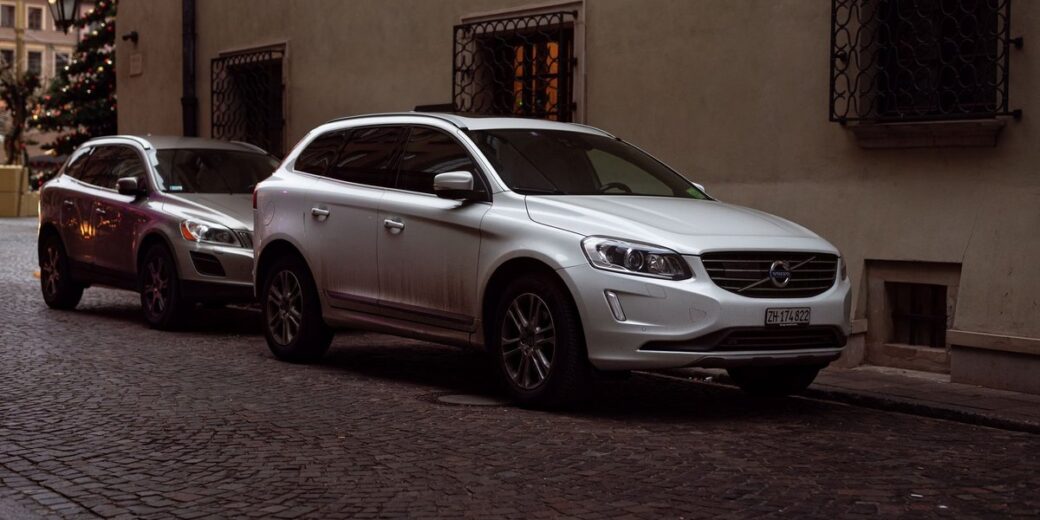
Founded in Gothenburg in 1927, Volvo built its whole identity on not killing you. In 1959 engineer Nils Bohlin designed the three-point seatbelt, and Volvo did the remarkable thing of patenting it and then giving the patent away for free so every other manufacturer could use it. That single decision has been credited with saving over a million lives.
The company is Chinese-owned now — Geely bought it from Ford in 2010 — but design and engineering stayed in Sweden, and the modern lineup (the XC90, the EX30) still leads on safety scores while looking like nothing else on the road. The wagon estate, the quietly boxy silhouette, the beige-leather-and-birch calm inside: all still recognizably Volvo.
Saab
Saab started as Svenska Aeroplan AB, an aircraft manufacturer, and rolled out its first car — the Saab 92 — in 1949. The aviation heritage was never marketing fluff. Saab engineers genuinely thought like aerospace people: the wraparound windshields, the ignition switch on the floor, the early and aggressive embrace of turbocharging with the 99 Turbo in 1977.
Enthusiasts loved Saab for being weird on purpose. General Motors bought it, never quite understood it, and the brand collapsed into bankruptcy in 2011. The assets went to a startup called NEVS. There’s still a devoted community keeping 900s and 9000s on the road, and used prices for clean turbo models have started climbing.
Scania
The one non-enthusiasts forget because you don’t park it in your driveway. Scania, founded in 1911 in Södertälje, builds heavy trucks and bus chassis, and it’s one of the most respected names in the freight world. If you’ve watched a long-haul truck thunder across a European motorway, decent odds it wore the Scania griffin. It’s owned by Volkswagen’s Traton group now but remains thoroughly Swedish in engineering.
Koenigsegg
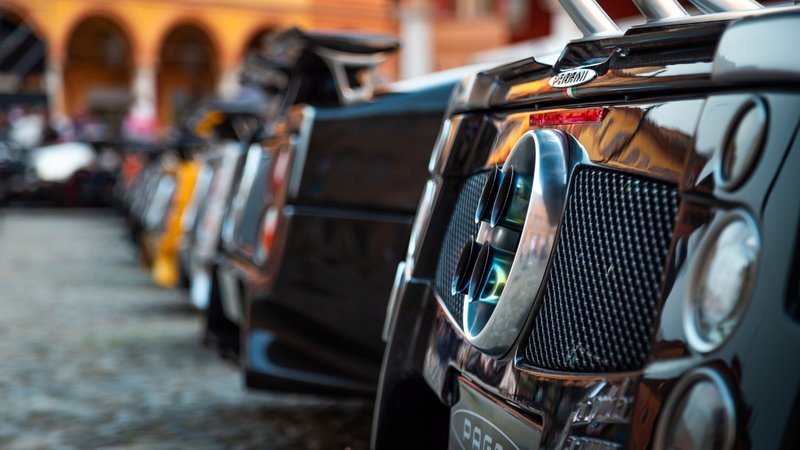
Christian von Koenigsegg was 22 when he decided to build the fastest cars in the world, and against every reasonable expectation, he did. Founded in 1994 and based in Ängelholm, on a former air force base, Koenigsegg makes hypercars that consistently rewrite the record books. The Agera RS hit a two-way average of 277.9 mph in 2017, briefly making it the fastest production car ever.
What sets the company apart is that it engineers almost everything in-house — its own engines, its own transmission (the bizarre and brilliant “Light Speed” gearbox in the Jesko), even a valve system that replaces the camshaft entirely. It’s a genuine engineering skunkworks that happens to sell cars for millions.
Polestar
Polestar began as Volvo’s racing partner and in-house tuner, then spun off in 2017 as a standalone electric performance brand. Think of it as what happens when Volvo’s safety obsession and Scandinavian design go fully electric and lose the beige. The Polestar 2 took direct aim at Tesla’s Model 3; the Polestar 3 and 4 push into SUV territory. Interiors are vegan, minimalist, and unmistakably Nordic. It’s still tied to the Volvo/Geely family but runs as its own marque.
Lynk & Co
The strangest business model on this list. Lynk & Co, launched in 2016 and headquartered in Gothenburg, is a Geely brand born from Swedish and Chinese engineering. Its pitch isn’t really the car — it’s the ownership model. Instead of buying, you take a flat monthly membership you can cancel, and members can even rent their car out to others through an app. In several European cities the 01 hybrid SUV became a genuinely common sight on this logic alone.
The smaller Swedish names
A few worth knowing if you want the deep cut:
- NEVS (National Electric Vehicle Sweden) bought Saab’s factory and assets in 2012 to build EVs. It produced a handful of electric 9-3s and then went largely dormant, a sad coda to the Saab story.
- Uniti was a Lund-based startup building the Uniti One, a tiny lightweight electric city car, in the late 2010s. It ran out of runway before real volume production.
- Jösse Car built the Indigo 3000, a pretty little roadster using Volvo mechanicals, in the mid-1990s. A few hundred were made before it folded — a rare and collectible curiosity today.
Norwegian car brands {#norwegian-car-brands}
Norway never had a mass-market carmaker, but it has something more interesting: a genuine claim to inventing the modern electric city car, decades early.
Think
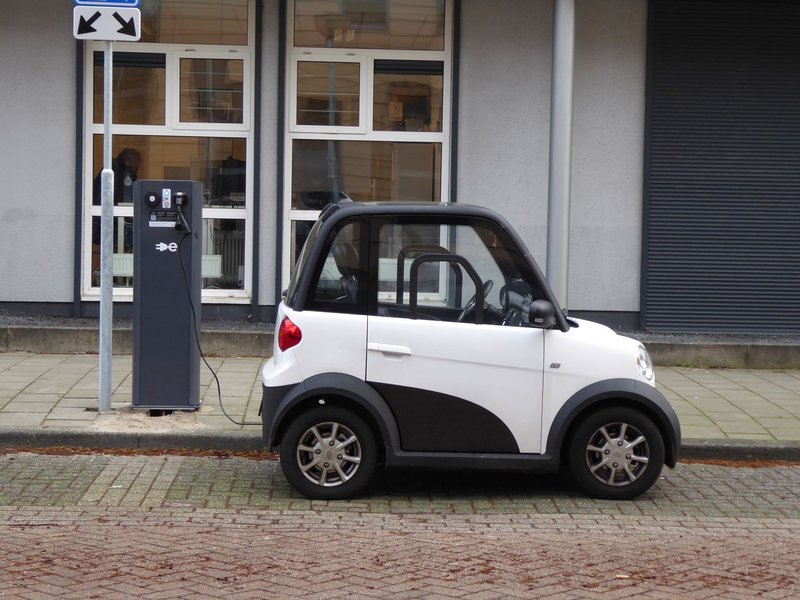
Think (styled Th!nk) traces back to 1991 and a Norwegian company called Pivco. Its Think City was a compact two-seat electric car in production when most of the auto industry still treated EVs as a joke. Ford actually bought Think in the late 1990s, used it to satisfy California emissions rules, then sold it off. The company changed hands repeatedly and finally went bankrupt in 2011 — too early, underfunded, and right about everything. Drive through Oslo and you can still spot the odd surviving City puttering along.
Buddy (Kewet)
Even smaller and even more charming. This three-seat electric pod started life as the Danish-designed Kewet, then moved to Norway where it was rebuilt and sold as the Buddy by Elbil Norge. It’s barely a car — a plastic box on wheels with a top speed you could outrun on a good bicycle — but for years it was one of the most common EVs on Norwegian streets, exempt from tolls and parking fees. A cult object now.
Troll
The purest “blink and you missed it” entry. Troll was a Norwegian sports car built in the town of Lunde in 1956, a sleek fiberglass-bodied coupe with a two-stroke engine. Financial trouble killed it almost immediately — only around five were ever built. Surviving examples are museum pieces, and the name has become shorthand among collectors for Norway’s brief, doomed swing at the sports-car dream.
Danish car brands {#danish-car-brands}
Denmark has never built cars in volume — punishing registration taxes historically made a domestic mass market almost impossible. But it produced one genuinely world-class supercar maker, a reminder that a country’s standing among the world’s many car brands has little to do with the size of its industry.
Zenvo
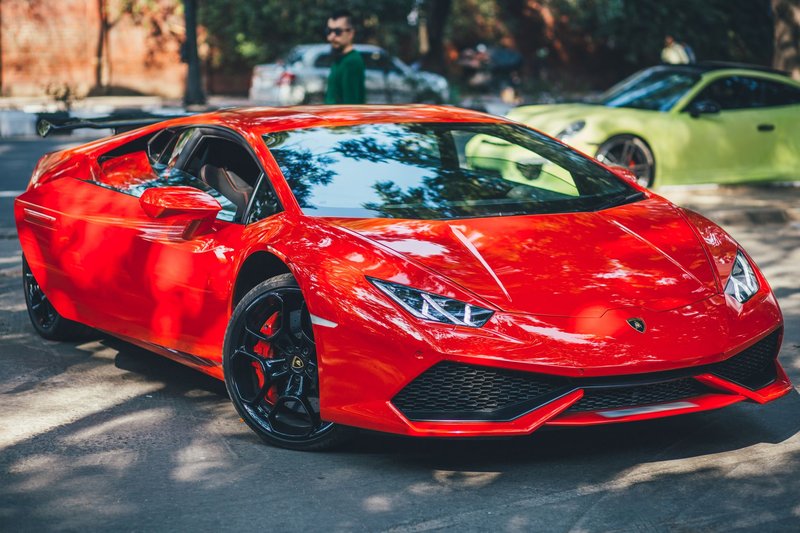
Zenvo, founded in 2007 in the small town of Præstø, builds brutal, handmade hypercars in tiny numbers. The debut ST1 announced the brand’s philosophy — supercharged and turbocharged, deliberately savage, no electronic nannying. The later TSR-S has one of the wildest features in the business: a “Centripetal” rear wing that tilts side to side to help the car rotate through corners, not just push down in a straight line.
Zenvo makes only a few cars a year, each essentially bespoke, and it’s the reason Denmark belongs in any serious conversation about performance cars. Proof that you don’t need a legacy industry to build something the giants can’t.
Ellert
The historical footnote worth keeping. The Ellert was a Danish electric microcar sold in the late 1980s and early ’90s, a tiny two-seater aimed at city commuting. Thousands were built — remarkable for the era — riding a wave of Danish interest in electric mobility long before it was mainstream. Like Norway’s early EVs, it was a preview of a future the market wasn’t ready for yet.
The pattern underneath {#the-pattern}
Look across the whole Scandinavian roster and a shape emerges. Sweden industrialized its instincts — Volvo turned safety into a business, Koenigsegg turned obsessive engineering into hypercars, Polestar turned minimalism into EVs. Norway and Denmark stayed small but ran ahead of the curve, building electric cars in the 1990s and hypercars in a village workshop.
None of it came from having a big domestic market or cheap labor. It came from a design culture that values doing one thing exceptionally well, an environment that punishes anything half-built, and enough stubbornness to give away the seatbelt patent or chase a land speed record from a decommissioned airbase.
That’s the real Scandinavian car brand. Not a country of origin — a way of building.

Marco Delantero
More from Marco DelanteroHow we reviewed this article
This article was researched against manufacturer records and editorially reviewed before publishing. We accept no payment for coverage. Some guides contain affiliate links; see our affiliate disclosure.