Most lists of South American car brands are one of two things: a Wikipedia-style directory with names, founding years, and nothing else, or a top-10 countdown of obscure oddities with no context on who actually sells cars there today. Neither tells you the full picture.
South America never built a mass-market car industry from scratch the way Japan or South Korea did. Instead, it got two very different stories running in parallel. A handful of homegrown brands emerged behind steep import walls, built tough, specific vehicles for local terrain, and mostly didn’t survive contact with global competition. Meanwhile, Chevrolet, Fiat, Volkswagen, and Renault set up shop decades ago, localized production, and never left — and now a new wave of Chinese manufacturers is elbowing in with the same playbook.
Here’s the roster, split into indigenous brands and the international players that localized to the region, with the founding context, the standout models, and who’s still around in 2026.
Table of Contents
- Why Local Brands Exist at All
- Homegrown Brands
- International Brands Localized to the Region
- Quick Reference Table
- Why So Few Homegrown Brands Made It
Why Local Brands Exist at All
South America’s homegrown automakers are a byproduct of protectionism, not ambition to compete globally. Brazil and Argentina spent decades running import-substitution policies designed to force manufacturing onto local soil instead of shipping in finished cars. Brazil’s automotive régime, for instance, combined steep tariffs with local-content requirements, and effective protection on the sector was estimated at over 250 percent at points in the 1990s. If you wanted to sell a car there, building it there stopped being optional.
That policy environment did two things at once. It gave a handful of small, scrappy manufacturers room to exist — building rugged trucks and off-roaders nobody was importing anyway — and it gave international brands a hard incentive to plant factories rather than pay the toll. Both paths produced the roster below.
Homegrown Brands
These are the brands that were born in South America, for South America, usually solving a problem the big multinationals weren’t bothering with: rough roads, agricultural use, or a domestic market cut off from cheap imports.
Troller (Brazil)
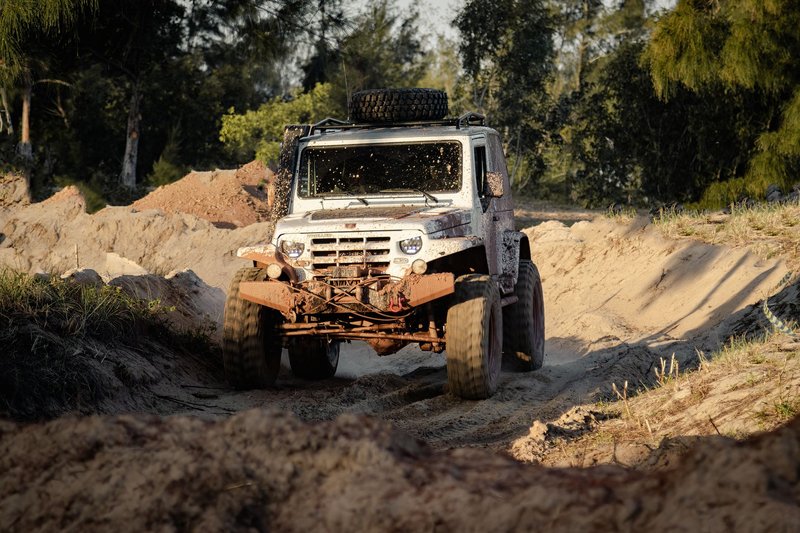
Founded in 1995 in Horizonte, in the state of Ceará, Troller built its name on one vehicle: the T4, a boxy, purpose-built off-roader aimed at ranchers and adventure drivers who needed something that could actually cross a riverbed. Ford bought a majority stake in 2007, which briefly made Troller look like a springboard into wider Latin American distribution. It didn’t pan out that way — Ford shuttered the plant in 2019 as part of its broader retreat from Brazilian manufacturing, and the brand was sold back to its founders, who’ve kept a smaller, specialist operation running since. Status: active, niche.
Agrale (Brazil)
Agrale started in 1962 building agricultural implements, not cars, and that DNA still shows. It moved into light trucks, buses, and even military vehicles rather than passenger cars, which is exactly why it survived where flashier brands didn’t — it never tried to fight Volkswagen and Fiat for the family-sedan buyer. Agrale trucks and minibuses are still a common sight on Brazilian roads and construction sites. Status: active.
IKA and the Torino (Argentina)
Industrias Kaiser Argentina started as a licensed local builder of American Kaiser sedans, which is a modest beginning for what became Argentina’s most beloved car. In 1965, two Rambler-based prototypes were sent to Pininfarina in Italy for a styling overhaul, and the result — fitted with a distinctive Argentine-built inline-six — went into production as the IKA Torino in 1966. It stayed in production until 1981, racked up a cult following that persists at classic car shows today, and remains the closest thing Argentina has to a genuine national car. IKA itself didn’t survive; Renault absorbed the company in the 1970s. Status: defunct, but the Torino has a dedicated collector culture.
Gurgel (Brazil)
Gurgel is the brand most directory-style lists skip entirely, which is a shame because it’s one of the stranger success stories in the region. Founded by engineer João Augusto Conrado do Amaral Gurgel in the late 1960s, the company built lightweight cars with fiberglass and later plastic composite bodies — partly out of necessity, since steel was expensive and heavily taxed under the same import regime that protected the industry. Gurgel even attempted a genuinely local economy car, the BR-800, in the early 1990s, aimed at buyers priced out of Fiat and VW’s entry models. It folded in 1994 when Brazil’s trade liberalization let in cheaper imported small cars it couldn’t compete with. Status: defunct.
Puma (Brazil)
Puma built fiberglass-bodied sports cars on Volkswagen and later Chevrolet mechanicals starting in the late 1960s, selling a genuinely good-looking coupé to a domestic market that had almost no access to imported sports cars at any price. It had a brief export run to markets including the United States before financial trouble and shifting import rules caught up with it in the 1980s. A revival attempt surfaced decades later but never reached the scale of the original run. Status: defunct, cult following among Brazilian classic car collectors.
International Brands Localized to the Region
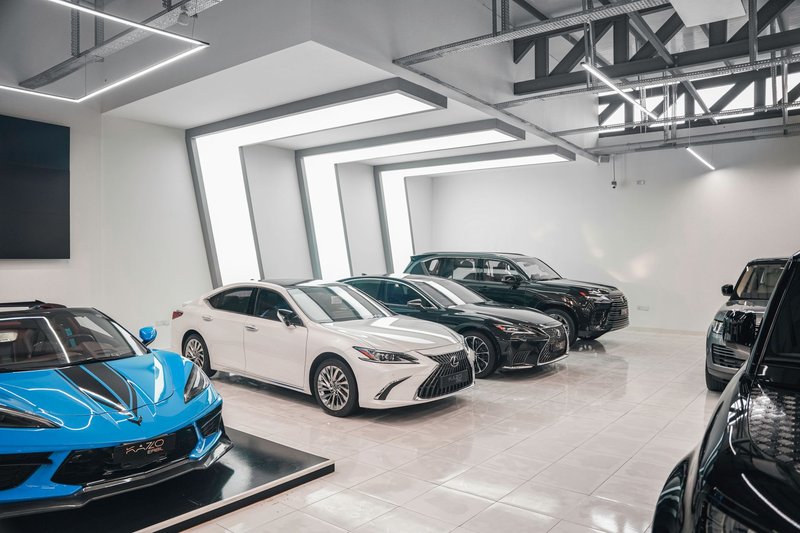
These aren’t South American brands by birth, but decades of local manufacturing, badge-specific models, and market dominance have made them as regionally embedded as anything on the homegrown list.
Chevrolet
Chevrolet has manufactured in Brazil and Argentina since the mid-20th century and remains one of the top-selling brands across the continent, with the Onix consistently ranking among Brazil’s best-sellers. GM’s regional strategy leans on models tuned specifically for Latin American buyers rather than direct exports of its U.S. lineup.
Fiat
Fiat effectively became a Brazilian institution after building its Betim plant in the 1970s — one of its largest manufacturing complexes anywhere in the world. The Fiat Strada pickup has spent years as one of Brazil’s best-selling vehicles overall, not just in its segment, which says a lot about how thoroughly the brand read the local market.
Volkswagen
VW’s Brazilian operation dates to the 1950s and produced some vehicles, like the Volkswagen Gol, that barely existed anywhere else on earth. The Polo and Gol nameplates remain fixtures on Brazilian sales charts today, and Volkswagen’s regional plants have functioned for decades as a semi-independent product pipeline distinct from its European lineup.
Renault
Renault’s regional footprint traces straight back to its absorption of IKA in Argentina in the 1970s, giving it a manufacturing base it never had to build from zero. It’s stayed a top seller in Argentina and a strong presence in Brazil and Colombia since, particularly with compact and mid-size sedans tuned for price-sensitive buyers.
Nissan
Nissan came to South American manufacturing later than its rivals, opening a Brazilian plant in the 2010s specifically to get around import tariffs rather than to chase volume leadership. It plays a smaller, steadier role in the market compared to the legacy brands.
Toyota
Toyota has run Brazilian production since the 1950s, initially assembling the Land Cruiser for agricultural and rural buyers before broadening into sedans and compacts. It’s a smaller player by volume than Chevrolet or Fiat but has a reputation for reliability that keeps resale values notably higher than regional competitors.
Ford
Ford’s history in the region is longer and messier than most — manufacturing since the early 20th century, a stake in Troller, and then a full withdrawal from Brazilian vehicle production in 2021, closing plants that had operated for decades. It’s a cautionary tale in the list: even a century of local presence isn’t a guarantee of permanence.
Peugeot-Citroën (Stellantis)
Operating through the Stellantis umbrella today, Peugeot and Citroën have manufactured in Argentina and Brazil since the 1990s, targeting the compact and small-SUV segments. Stellantis brands collectively rank among the top group of sellers across the continent.
BYD
BYD is the newest entrant to genuinely reshape the landscape rather than just compete in it. It opened a massive EV and hybrid plant in Camaçari, Bahia — built on a site Ford abandoned — with a reported investment of roughly $1.1 billion, and it’s aiming to source half its components locally by the end of 2026, according to Reuters. BYD has stated an ambition to become Brazil’s largest carmaker by volume by 2030, which would be a genuine changing of the guard.
Great Wall Motors (GWM)
GWM followed a similar path, buying a former Mercedes-Benz plant in Iracemápolis, Brazil, to build hybrid and electric SUVs locally rather than absorb import duties on Chinese-built units. It’s smaller than BYD’s operation so far but represents the same broader trend: Chinese manufacturers using local assembly to sidestep the tariff wall that shaped this whole market in the first place.
Quick Reference Table
| Brand | Country of Origin | Founded | Status | Flagship Model |
|---|---|---|---|---|
| Troller | Brazil | 1995 | Active (niche) | T4 |
| Agrale | Brazil | 1962 | Active | Light trucks/buses |
| IKA | Argentina | 1955 | Defunct (1970s) | Torino |
| Gurgel | Brazil | 1969 | Defunct (1994) | BR-800 |
| Puma | Brazil | 1964 | Defunct (1980s) | Puma GT |
| Chevrolet | USA (localized) | 1925 (BR ops) | Active | Onix |
| Fiat | Italy (localized) | 1976 (BR plant) | Active | Strada |
| Volkswagen | Germany (localized) | 1953 (BR ops) | Active | Polo, Gol |
| Renault | France (via IKA) | 1970s (AR ops) | Active | Sandero/Logan-based models |
| Nissan | Japan (localized) | 2014 (BR plant) | Active | Kicks |
| Toyota | Japan (localized) | 1958 (BR ops) | Active | Corolla, Hilux |
| Ford | USA (localized) | 1919, exited 2021 | Withdrew from BR manufacturing | Historic: Fiesta, Ka |
| Peugeot-Citroën | France (localized) | 1990s (AR/BR ops) | Active | 208, C3 |
| BYD | China (localized) | 2024 (BR plant) | Active, expanding | Song, Dolphin Mini |
| GWM | China (localized) | 2023 (BR plant) | Active, expanding | Haval H6 |
Why So Few Homegrown Brands Made It
The pattern across Troller, Gurgel, Puma, and IKA isn’t bad engineering — it’s scale economics colliding with trade policy. Each was built to serve a market artificially sealed off from cheap imports. The moment Brazil and Argentina began liberalizing trade in the 1990s, competing against Fiat’s and Volkswagen’s decades of manufacturing scale with a boutique operation building a few thousand cars a year stopped being viable. Gurgel folded almost immediately once liberalization hit; Puma had already been struggling for years before it went the same way.
The brands that lasted did it by not competing head-on. Agrale survives because it builds trucks and buses, not sedans, avoiding a direct fight with GM and VW. Troller survives as a niche off-roader for buyers who specifically want something no mass-market SUV replicates.
What’s changed by 2026 isn’t the pattern — it’s who’s playing the localization game. The same import-tariff logic that built Fiat’s and Volkswagen’s Brazilian empires decades ago is now pulling in BYD and GWM, who are buying up former Ford and Mercedes-Benz plants and racing to hit local-content targets. It’s the same protectionist mechanism, just with a different accent.
South America never built a domestic auto giant the way Japan or Korea did, and the reasons are structural, not a lack of engineering talent — the Torino and the Puma GT prove that talent was never the problem. What the region built instead is a manufacturing base attractive enough to keep pulling in whoever’s willing to set up a factory on the promise of tariff-free access to a few hundred million buyers. Right now, that’s Chinese EV makers. Fifty years ago, it was Detroit and Turin. The names on the badges change; the deal stays the same.

Marco Delantero
More from Marco DelanteroHow we reviewed this article
This article was researched against manufacturer records and editorially reviewed before publishing. We accept no payment for coverage. Some guides contain affiliate links; see our affiliate disclosure.