1992 was the year BMW was caught mid-stride. The beloved E30 3 Series was on its way out, the all-new E36 was arriving in the same showroom, and at the top of the range a V12 grand tourer and a fresh M3 were quietly redrawing what the brand could do. Buy a 1992 BMW today and the exact month it left the factory tells you which generation you actually own.
That overlap is also why the database listings get confusing. JD Power, KBB, and the valuation cards lump everything under “1992 BMW” without explaining that a 1992 318i and a 1992 318i convertible were two different cars from two different eras. This guide sorts it out model by model: what each car was, what it cost new, and what it’s worth now that the classic-BMW market has woken up.
Table of Contents
- The 1992 lineup at a glance
- 3 Series: the E30-to-E36 changeover
- 5 Series (E34): the sweet spot
- 7 Series (E32): cheap V12 thrills, expensive bills
- 850i (E31): the V12 coupe
- The new E36 M3
- Which 1992 BMW should you actually buy?
The 1992 lineup at a glance
Here’s the whole U.S. range in one place, with what it cost new and roughly what a clean example trades for today.
| Model | Chassis | Engine | Approx. power | Original MSRP | Today (good driver) |
|---|---|---|---|---|---|
| 318i sedan/coupe | E36 | 1.8L 4-cyl | 134 hp | ~$20,000 | $4,000–8,000 |
| 325i sedan/coupe | E36 | 2.5L inline-6 | 189 hp | ~$28,000 | $8,000–16,000 |
| 318i / 325i convertible | E30 | 1.8L / 2.5L | 134 / 168 hp | ~$28,000–34,000 | $10,000–22,000 |
| 525i / 535i sedan & Touring | E34 | 2.5L / 3.5L inline-6 | 189 / 208 hp | ~$36,000–42,000 | $6,000–14,000 |
| M5 | E34 | 3.6L inline-6 | 310 hp | ~$58,000 | $35,000–70,000 |
| 735i / 740i | E32 | 3.4L I6 / 4.0L V8 | 208 / 282 hp | ~$54,000–62,000 | $7,000–16,000 |
| 750iL | E32 | 5.0L V12 | 296 hp | ~$78,000 | $9,000–20,000 |
| 850i | E31 | 5.0L V12 | 296 hp | ~$83,000 | $20,000–40,000 |
Prices vary wildly with mileage, service history, and which decade the seller thinks we’re in. Use these as a sanity check, not gospel.
3 Series: the E30-to-E36 changeover
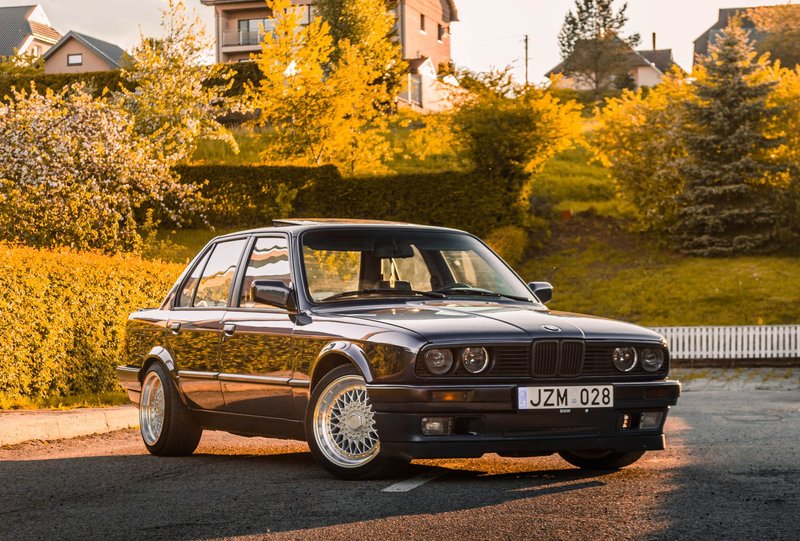
This is the part everyone gets wrong, so slow down here. In 1992 BMW sold two completely different 3 Series at the same time.
The new E36 arrived as a sedan and, partway through the model year, a coupe. The entry 318i ran a 1.8-liter four making 134 horsepower — modest, but the E36 finally gave the 3 Series a multilink rear end and a much stiffer body, so it drove like a grown-up. The one to want is the 325i, with the 2.5-liter M50 inline-six putting out 189 horsepower. Smooth, torquey, and revvy in the way only an old BMW straight-six is, it’s the engine that defines the early E36.
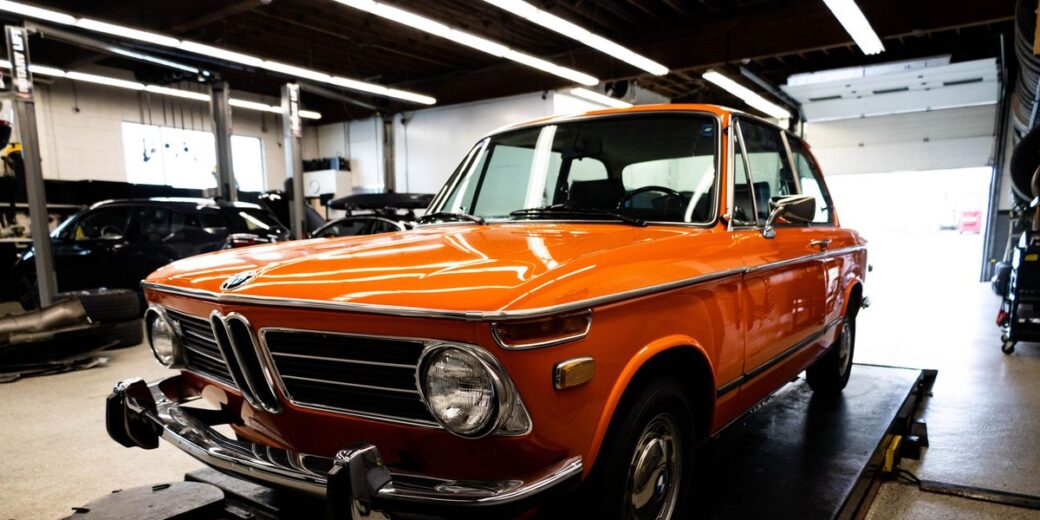
Meanwhile, the E30 convertible soldiered on. BMW kept building the drop-top on the old chassis well after the sedans switched over, so a 1992 318i or 325i convertible is an E30 — boxy, charming, and now genuinely collectible. The 325i convertible with the M20 “eta-era” six and a five-speed is the enthusiast pick. Hardtop E30 coupes and sedans had already ended their U.S. run, so if someone’s selling you a “1992 E30 coupe,” check the VIN.
What changed that year, in short: chassis underneath, not just the badge. The E36 transition also brought BMW’s first real move toward modern crash structure and aerodynamics, which is part of why the E36 325i still feels usable in traffic today while the E30 feels like a classic. For the full chassis-by-chassis history, BMW’s own heritage pages lay out the generation timeline.
Buying notes: E36 cooling systems are the classic weak point — plastic radiator necks, water pump impellers, and expansion tanks all go brittle. Budget for a full cooling refresh on any car that hasn’t had one. E30 convertibles rust at the rear shock towers and rockers; that matters far more than the paint.
5 Series (E34): the sweet spot
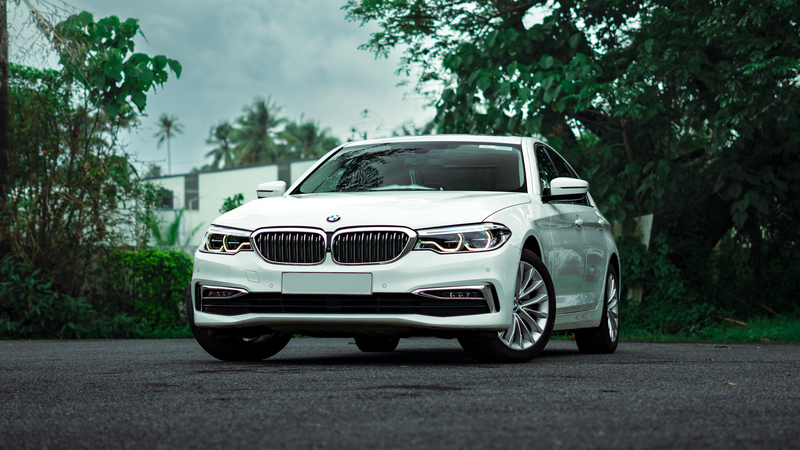
If you want the most car for the least money out of the 1992 range, the E34 5 Series is hard to beat. It’s the generation enthusiasts point to when they say BMW used to over-engineer everything.
The 525i used the same silky 2.5-liter inline-six as the 325i, while the 535i stepped up to a 3.5-liter M30 — the last of BMW’s legendary “big six” engines, a motor that will run past 250,000 miles if you change the oil and leave it alone. New for buyers who needed space, the 525i Touring wagon brought the same mechanicals in a long-roof body that’s now a cult favorite.
Then there’s the M5. The 1992 E34 M5 ran a hand-built 3.6-liter S38 straight-six making 310 horsepower, with a five-speed manual and a chassis that flatters you at any speed. It was the fastest sedan in the world when it launched, and it’s the 1992 BMW most likely to keep climbing in value. Clean, documented examples have already crossed into serious-collector money, a trend Hagerty’s valuation tools have tracked steadily upward.
Buying notes: The M30 535i is the durability champ. The M5’s S38 needs a specialist and timed maintenance — a cheap M5 is the most expensive car on this list. Touring wagons hide rust in the tailgate and rear arches.
7 Series (E32): cheap V12 thrills, expensive bills
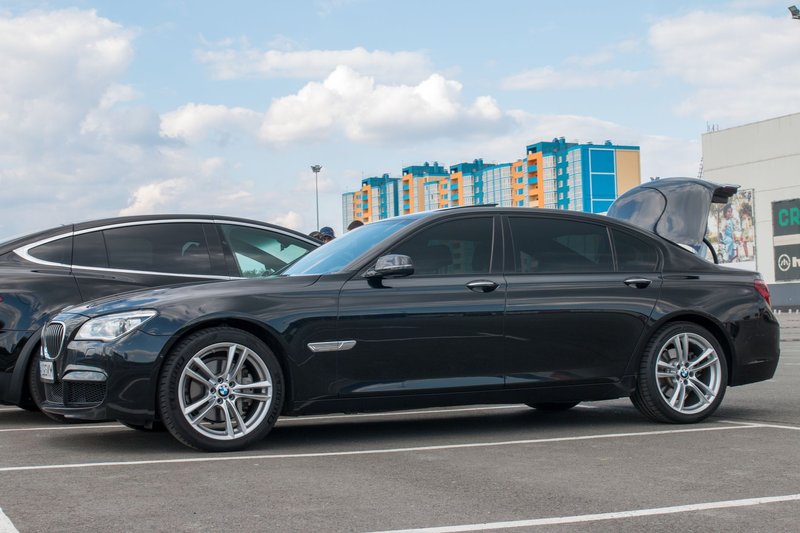
The E32 7 Series is where you live out a German-luxury fantasy for the price of a used economy car — and then get the repair bills. Going in with eyes open is the whole game.
The 735i used the trusty 3.4-liter M30 six. The 740i brought BMW’s new 4.0-liter V8, smooth and strong at 282 horsepower but with a known nikasil cylinder-lining issue on early blocks run on high-sulfur fuel, so verify compression. The headliner was the 750iL, with a 5.0-liter M70 V12 making 296 horsepower and a refinement that still impresses. It was BMW’s first production V12 since the war, and the long-wheelbase body made the back seat a place you’d actually choose to sit.
These are wonderful to drive and humbling to own. Two ignition systems, two of everything electrical, and parts prices that assume you paid $78,000 like the first owner did.
Buying notes: Buy the best-documented car you can find, not the cheapest. A $9,000 750iL with no history is a money pit; a $16,000 one with folders of receipts is a bargain.
850i (E31): the V12 coupe
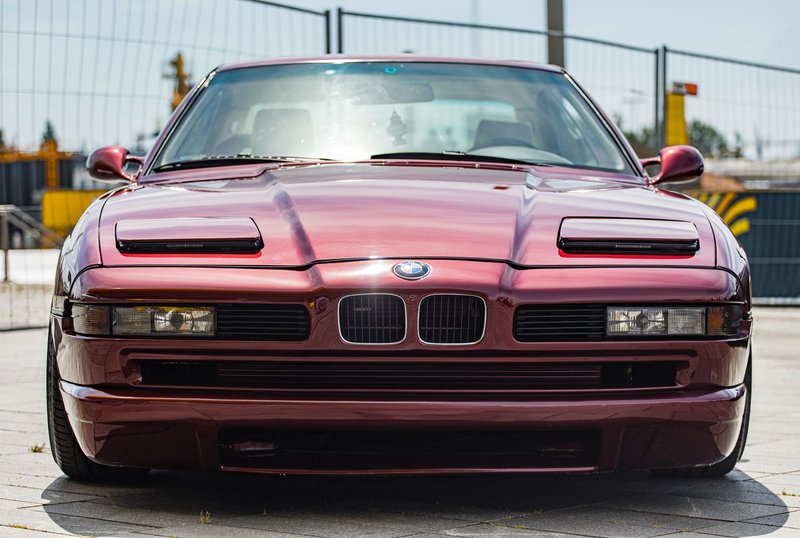
The 8 Series was BMW’s moonshot — a pillarless V12 grand tourer with pop-up headlights and a profile that still stops people in parking lots. The 1992 850i paired that 5.0-liter M70 V12 with a six-speed manual or a four-speed auto, and it was meant to challenge the idea of what a luxury coupe could be.
It wasn’t a sports car, and pretending otherwise misses the point. The 850i is a continent-crossing missile: long-legged, heavy, immensely solid, happiest at an indecent cruise. The wedge styling and the V12 badge are why it’s the most coveted 1992 model after the M5, and values have firmed up as the 8 Series finally gets its due. That silhouette has since earned it a permanent place among the greatest coupes ever built.
Buying notes: The M70 V12 is reliable; the wiring, the throttle bodies, and the electronics are the headache. A six-speed manual car carries a real premium over the automatic. As with the 750iL, history beats price every time.
The new E36 M3
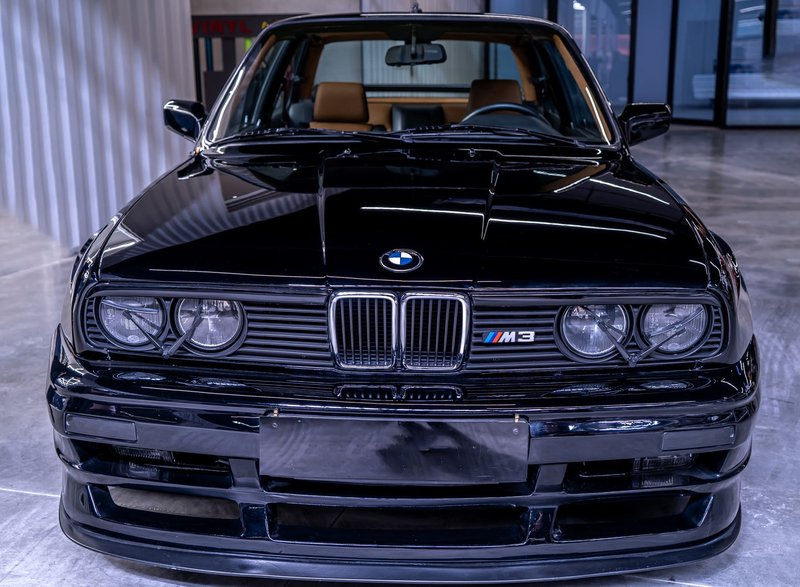
Worth flagging because it confuses U.S. buyers: the E36 M3 launched for 1992 in Europe, with a 3.0-liter S50 inline-six making 286 horsepower. America didn’t get the E36 M3 until the 1995 model year, and when it arrived it used a detuned engine. So a genuine 1992 M3 is a European-market car — if you’re shopping a 1992 M3 stateside, it’s an import, and that changes both the paperwork and the value.
The original-flavor Euro S50 is the enthusiast’s grail of the early E36 family: more aggressive, higher-revving, and a reminder of what the M division was building before regional versions diverged.
Which 1992 BMW should you actually buy?
Match the car to what you actually want:
- Appreciating asset, drive it sparingly: E34 M5. The clearest blue-chip of the bunch, and every clean one sold makes the next one dearer.
- Reliable classic you’ll actually use: E36 325i, or the E34 535i if you want the old-school big six. Both are cheap to buy and tough enough to daily with a sorted cooling system.
- Weekend cool for the money: E30 325i convertible. Classic shape, open top, and still climbing.
- Maximum drama, accepted risk: 850i if you want the icon, 750iL if you want the same V12 with back seats. Buy on history, not on price.
- Bragging rights and a passport stamp: Euro E36 M3 — but only if you’re comfortable importing.
The throughline for all of them: in 1992 BMW was still building cars to a standard, not a price. That’s exactly why the good ones are worth chasing now — and why the cheap ones are usually cheap for a reason. Find the documented example, budget for the deferred maintenance, and you’ll own a piece of the company’s best era.

Daniela Voss
More from Daniela VossHow we reviewed this article
This article was researched against manufacturer records and editorially reviewed before publishing. We accept no payment for coverage. Some guides contain affiliate links; see our affiliate disclosure.