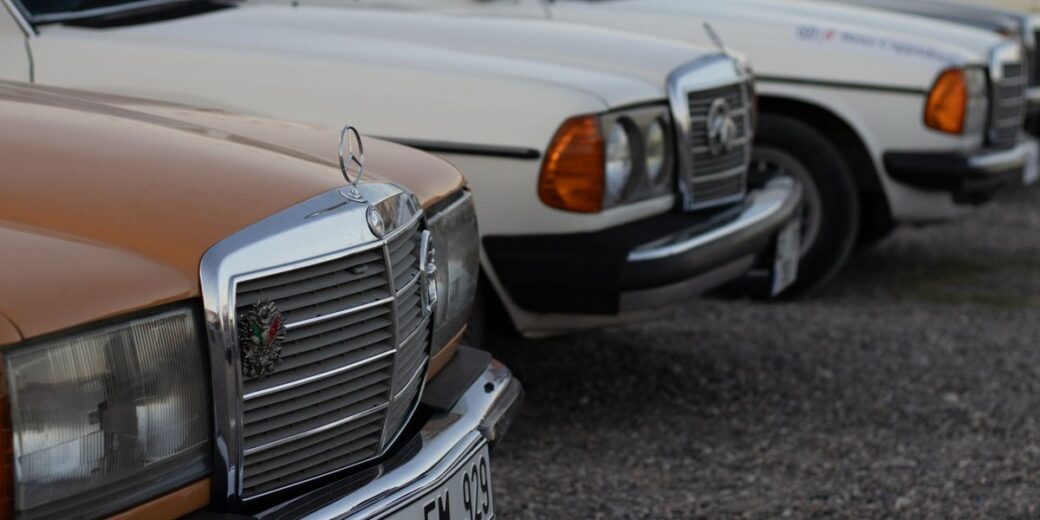
1996 was the year Mercedes-Benz had one foot in two eras. The new W210 E-Class — the one with the four oval headlights everyone argued about — landed in showrooms. Meanwhile the old guard was still on sale: the slab-sided W140 S-Class, overbuilt to the point of bankrupting itself, and the R129 SL roadster that felt like it would outlive its owner. If you’re shopping a used 1996 Mercedes today, this is the year where build quality peaked and badge-engineered cost-cutting hadn’t fully arrived yet.
Most pages listing the 1996 lineup are just spec tables pulled from a database. They’ll tell you the C280 made 194 horsepower. They won’t tell you which of these cars is quietly appreciating, which one will empty your wallet on suspension parts, or why the C36 AMG is the sleeper of the bunch. That’s what this guide is for.
Table of Contents
- TLDR: The Quick Picks
- The 1996 Lineup at a Glance
- C-Class: C220, C280, and the C36 AMG
- E-Class: E300 Diesel and E320
- S-Class: S320 to the S600 V12
- SL Roadsters: SL320, SL500, SL600
- G320: The Wagon That Never Died
- Which 1996 Mercedes Should You Buy Now?
- Common Problems by Model
TLDR: The Quick Picks
If you just want the bottom line:
- Best daily driver: 1996 E320 (W210 or W124 — see below). The 3.2L inline-six is the most reliable engine in the lineup.
- Best value classic: 1996 SL500. R129 roadster, V8 muscle, and prices that haven’t fully woken up yet.
- Collector sleeper: C36 AMG. The first AMG sold through Mercedes dealers, and people still don’t know it exists.
- Money pit to respect (or avoid): S600 V12. Glorious, but every repair has a comma in the price.
- Diesel that won’t die: E300 Diesel. Slow, indestructible, and beloved by people who keep cars for 300,000 miles.
The 1996 Lineup at a Glance
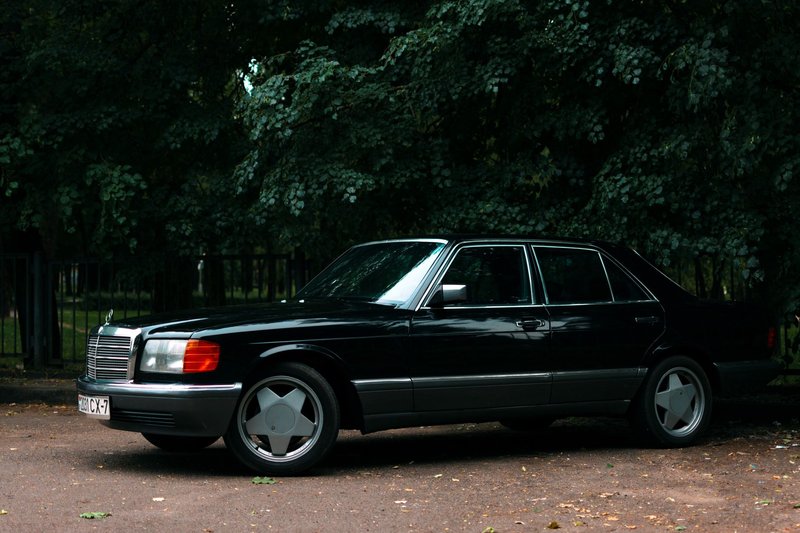
Here’s the full passenger-car roster Mercedes-Benz sold in the US for 1996, with engines and rough original pricing.
| Model | Engine | Horsepower | Original MSRP (approx.) | Today’s Value (good condition) |
|---|---|---|---|---|
| C220 | 2.2L I4 | 147 hp | $31,000 | $3,000–$6,000 |
| C280 | 2.8L I6 | 194 hp | $35,000 | $4,000–$7,000 |
| C36 AMG | 3.6L I6 | 268 hp | $52,000 | $12,000–$22,000 |
| E300 Diesel | 3.0L I6 diesel | 134 hp | $42,000 | $5,000–$11,000 |
| E320 | 3.2L I6 | 217 hp | $45,000 | $5,000–$10,000 |
| S320 | 3.2L I6 | 228 hp | $69,000 | $6,000–$12,000 |
| S420 | 4.2L V8 | 275 hp | $77,000 | $7,000–$14,000 |
| S500 | 5.0L V8 | 315 hp | $92,000 | $9,000–$18,000 |
| S600 | 6.0L V12 | 389 hp | $133,000 | $12,000–$28,000 |
| SL320 | 3.2L I6 | 228 hp | $80,000 | $9,000–$16,000 |
| SL500 | 5.0L V8 | 315 hp | $90,000 | $14,000–$28,000 |
| SL600 | 6.0L V12 | 389 hp | $122,000 | $18,000–$38,000 |
| G320 | 3.2L I6 | 208 hp | $74,000 | $25,000–$50,000+ |
Values are ballpark figures for clean, sorted examples with documented service history. Project cars go for less; concours and low-mile collector cars go for considerably more. If you want to place the 1996 cars in context, it’s worth browsing the broader list of cars made in 1991 to see how quickly Mercedes’ rivals were evolving in the early ’90s. The G320 is the outlier — these have appreciated hard, so a tidy one now costs more than it did new.
C-Class: C220, C280, and the C36 AMG
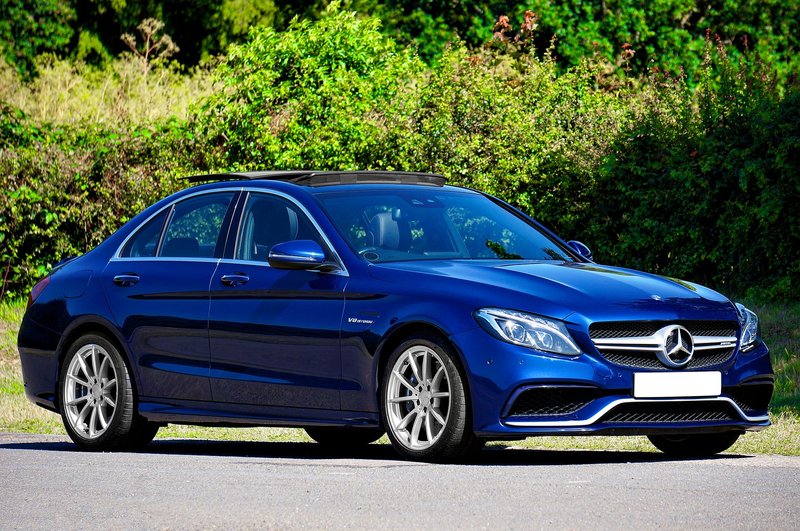
The W202 C-Class was Mercedes’ entry point in 1996, replacing the boxy 190E. It was the first C-Class to wear that name, and it brought the brand to buyers who couldn’t quite stretch to an E-Class.
C220 — The 2.2L four-cylinder is the one to skip if you want refinement. It’s adequate, it’s frugal, but it buzzes in a way no other engine in this lineup does. It exists because someone needed a sub-$32k Mercedes.
C280 — This is the sweet spot of the regular C-Class. The 2.8L inline-six (the M104) is smooth, torquey for its size, and one of the better engines Mercedes built in this era. A well-kept C280 still feels like a proper small Mercedes, not a budget one.
C36 AMG — Here’s the interesting one. The C36 was the first car developed under the formal AMG-Mercedes partnership and the first AMG product sold through official US dealers. AMG bored out the inline-six to 3.6 liters, good for 268 horsepower, and dropped it into the unassuming C-Class shell. Only around 5,000 were built worldwide across its run. It looks like a secretary’s commuter and goes like a junior E36 M3 rival — and if the M3 itself is on your radar, it’s worth seeing where it sits among the other iconic old BMW models and what they fetch today. Values have been climbing as enthusiasts catch on — clean ones now command real money, and that gap will only widen.
A note on the W202 generation broadly: early-to-mid ’90s cars from this platform are known for paint and clear-coat issues, and some had wiring harnesses with biodegradable insulation that crumbles. By 1996 the worst of the harness problem was being sorted, but inspect for it.
E-Class: E300 Diesel and E320
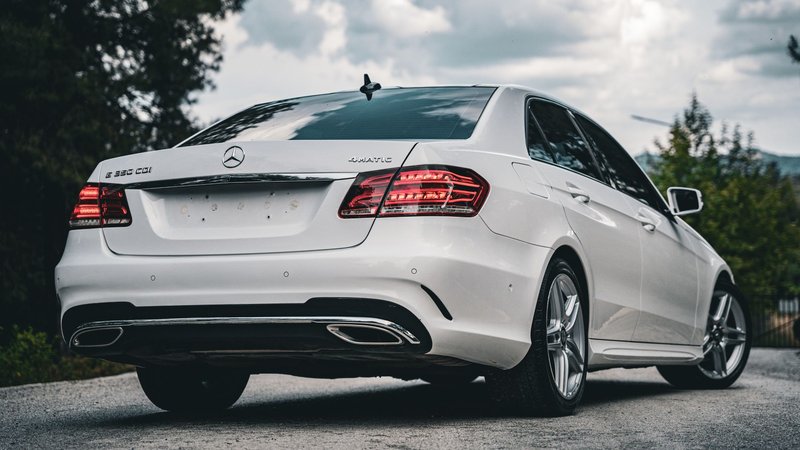
1996 is a confusing E-Class year because Mercedes was mid-transition. The new W210 E-Class (the four-eyed one) arrived for 1996 in the US, but some E-Class variants carried over briefly on the outgoing W124 platform depending on body style and market timing. The W124 wagon, in particular, soldiered on. If you’re shopping, confirm exactly which chassis a given car sits on — it changes the ownership experience.
E320 — The headline engine is the 3.2L M104 inline-six making 217 hp. This is, full stop, the engine you want from 1996 Mercedes. It’s smooth, durable, and parts are everywhere. The W124-based E320s are widely considered among the most over-engineered cars Mercedes ever sold — the kind of vehicle owners report crossing 250,000 miles on the original drivetrain. The newer W210 E320 drives more modern but introduced rust-prone bodywork that the W124 didn’t have. Many enthusiasts deliberately hunt a late W124 for that reason.
E300 Diesel — The 3.0L inline-six diesel makes a leisurely 134 hp. You do not buy this car for speed; 0–60 happens eventually. You buy it because it will outlast you. These diesels are legendary for longevity, and there’s a devoted following keeping them on the road well past 300,000 miles. If your priority is a Mercedes that simply refuses to break, this is it.
For an idea of how these hold up long-term, the NHTSA complaint database is a useful place to cross-check known issues on any specific year and chassis before you buy.
S-Class: S320 to the S600 V12
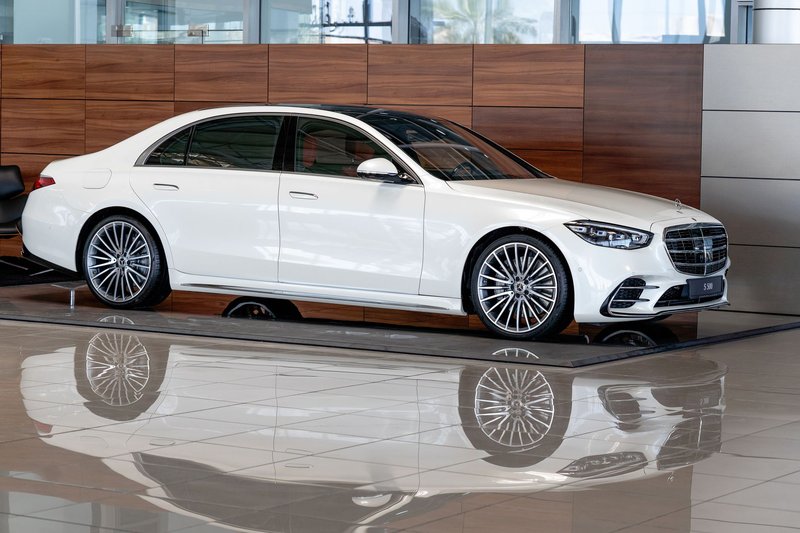
The 1996 S-Class was the W140 — the big one. The car that was so expensive to develop it reportedly contributed to a management shakeup at Mercedes and arrived heavier and pricier than planned. It’s also one of the most solidly built cars of the decade. Double-pane glass, self-closing doors, vault-like construction. This is the Mercedes that defined “bank-vault luxury.”
S320 — The 3.2L inline-six in a car this heavy is the practical choice. It’s not fast, but it’s the cheapest way into W140 ownership and the inline-six is more economical to keep running than the V8 or V12.
S420 — The 4.2L V8 with 275 hp. A good middle ground: proper V8 shove without V12 complexity.
S500 — The 5.0L V8 making 315 hp is the enthusiast’s pick of the regular range. It moves the considerable mass of the W140 with genuine authority and sounds great doing it. For many, the S500 is the definitive W140.
S600 — The 6.0L V12 with 389 hp. This is the flagship, the one driven by heads of state and movie villains. It’s magnificent and it’s a financial commitment. The V12 has twin everything — two distributors, complex ignition — and when something goes wrong, the bill reflects it. Buy one with a thick folder of receipts or don’t buy it at all. As a collector piece, low-mile S600s are starting to get attention; as a daily driver, it’s a hobby with a fuel bill.
SL Roadsters: SL320, SL500, SL600
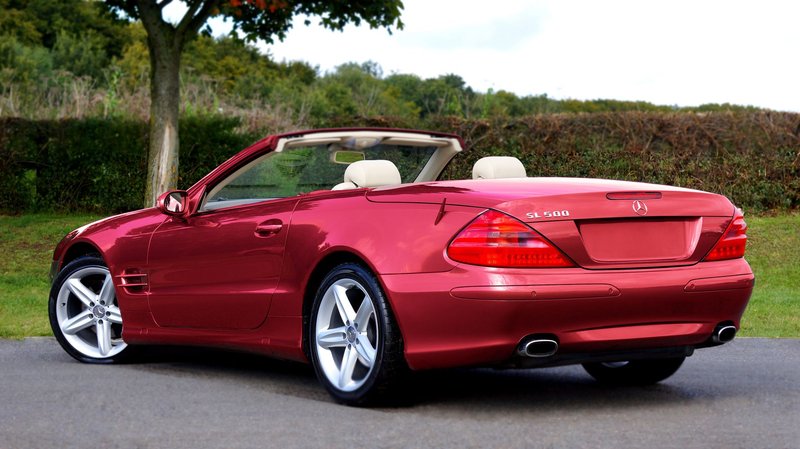
The R129 SL is one of the cleanest designs Mercedes ever put out, and 1996 examples are right in the durable sweet spot of the generation. Power hardtop, power soft top, a pop-up roll bar that deploys in milliseconds if the car senses a rollover. It feels engineered to a standard nobody hits anymore.
SL320 — The 3.2L six. Smooth, refined, and the most economical SL to run. It’s a boulevard cruiser, not a sports car, and that’s exactly what most R129 buyers want.
SL500 — The 5.0L V8 with 315 hp is the one to get. It’s the best balance of performance, sound, and running costs in the SL range, and it’s where the value-to-enjoyment ratio peaks right now. A sorted SL500 with a documented history is one of the best classic-roadster buys at its price point. Prices have been creeping up steadily as people realize what these are.
SL600 — The 6.0L V12 roadster. Same glorious, complicated engine as the S600, in a far prettier package. It’s the most exclusive R129 and the most expensive to maintain. Worth it if you love it and budget accordingly.
G320: The Wagon That Never Died
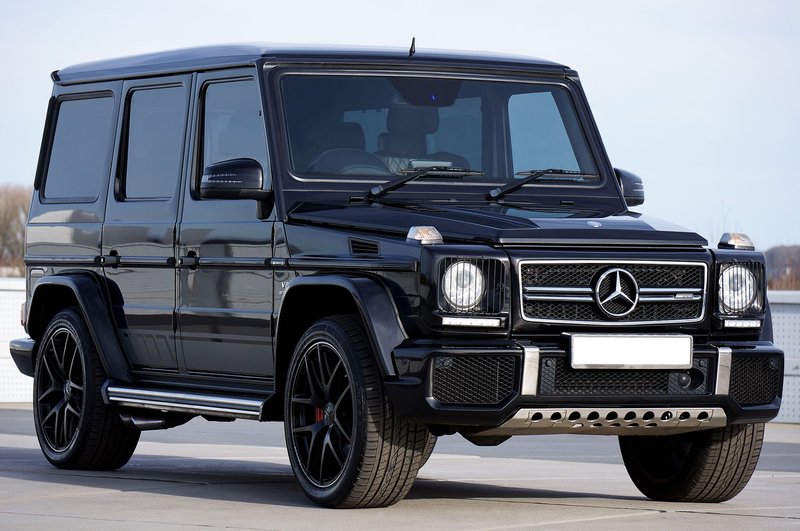
The G320 was the only G-Wagen flavor officially relevant in this period, and it’s the unexpected financial winner of the entire 1996 lineup. The G-Class was a military-derived, body-on-frame, three-locking-differential tank that Mercedes barely changed for decades. The 3.2L inline-six made a modest 208 hp, which is almost beside the point.
Here’s what makes it remarkable as a used buy: nearly every other car on this list depreciated for years before stabilizing. The G-Wagen did the opposite. Demand for the old-school G-Class has pushed clean 1990s examples above their original sticker. A well-kept 1996 G320 can cost more today than it did new — one of very few mainstream vehicles where that’s true. If you bought one in 1996 and kept it nice, congratulations, you parked your money well.
Which 1996 Mercedes Should You Buy Now?
It depends on what you actually want the car to do.
You want a reliable, characterful daily. Get an E320. Prioritize a late W124 chassis if you can find a clean one — the M104 inline-six is the heart of the whole 1996 lineup and the W124 body resists rust better than the W210. Budget for suspension bushings and you’ll be fine.
You want a weekend classic that’s still appreciating. SL500. The R129 design has aged beautifully, the V8 is reliable by 1996 standards, and the market is moving in your favor. Buy the best documented example you can, not the cheapest.
You want a sleeper collectible under $25k. C36 AMG. It’s genuinely rare, historically significant as the first dealer-sold AMG, and most people walking past have no idea what it is. The values trend points one direction.
You want maximum longevity and don’t care about speed. E300 Diesel. It will still be running when newer cars are scrap.
You want a flagship statement and have a maintenance budget. S500 over the S600. The V8 gives you 90% of the W140 experience at a fraction of the upkeep risk. Save the V12 for buyers with a trusted specialist and a thick wallet.
The one universal rule: with any 1996 Mercedes, condition and service history matter far more than model. A loved S320 is a better buy than a neglected S500. These cars reward maintenance and punish deferral, hard.
Common Problems by Model
Know what you’re inspecting before you hand over cash:
- W202 C-Class (C220/C280/C36): Early-’90s biodegradable wiring harness insulation (largely resolved by ’96 but verify), clear-coat peeling, and head gasket weeps on the inline-sixes. Check for oil seepage at the back of the head.
- W210 E-Class: Rust. The W210 is the rust-prone one — check wheel arches, jacking points, and the floor. This is the single biggest reason buyers prefer a late W124.
- W124 E-Class: Genuinely robust, but watch for the same M104 head gasket weep and aging cooling-system parts. Otherwise these are as bulletproof as Mercedes got.
- W140 S-Class: Wiring harness degradation on some early examples, expensive hydraulic and self-leveling suspension components, and on the V12, the cost of everything. Pre-purchase inspection by a W140 specialist is non-negotiable.
- R129 SL: Soft-top hydraulics and the convertible top mechanism are the usual trouble spots. Confirm the roof cycles fully and the roll bar deploys/retracts. V12 cars add ignition complexity.
- G320: Mechanically simple and tough, but old G-Wagens can hide rust in the frame and body seams, and parts for a niche vehicle aren’t cheap. Inspect the underbody thoroughly.
For broad reliability context on classic Mercedes ownership, enthusiast communities and a marque specialist will tell you more than any spec sheet. A pre-purchase inspection on a car this age pays for itself the first time it saves you from a hidden problem.
The 1996 lineup represents a high-water mark for Mercedes build quality before the cost-cutting of the late ’90s and early 2000s set in. Pick the model that matches how you’ll actually use it, buy on condition and paperwork rather than badge, and you’ll end up with one of the most satisfying used-luxury buys out there.

Daniela Voss
More from Daniela VossHow we reviewed this article
This article was researched against manufacturer records and editorially reviewed before publishing. We accept no payment for coverage. Some guides contain affiliate links; see our affiliate disclosure.