The databases will give you a model list and a grid of thumbnails. What they won’t tell you is which 1988 Fords are worth your garage space now and which were forgettable even when they were new. This is the year the boxy Reagan-era Ford gave way to the jellybean Taurus that reshaped the whole industry, the Fox-body 5.0 hit its stride, and Steve Saleen was hand-building the Mustangs that now cost more than a new Bronco.
Here’s the complete 1988 Ford car lineup, what each one cost when it was new, and the handful that collectors actually chase three and a half decades later.
Table of Contents
- TLDR: The Three Worth Owning
- The Full 1988 Ford Lineup at a Glance
- The Mustang: The 5.0 Era Arrives
- The Saleen: The Fox-Body Holy Grail
- The Taurus: The Car That Saved Ford
- The Thunderbird Turbo Coupe
- The Sensible Stuff: Escort, Tempo, Festiva, Crown Victoria
- Trucks and SUVs: F-Series and Bronco
- Which 1988 Fords Are Worth Collecting Now
- Buyer and Restorer Notes
TLDR: The Three Worth Owning {#tldr}
If you’re skimming for the verdict, here it is. Three 1988 Fords are worth chasing as collectibles: the Mustang 5.0 (GT hatch or the sleeper LX notchback), the Saleen Mustang (the rarest and most valuable Fox-body, ~708 built that year), and the Thunderbird Turbo Coupe (an underrated turbo coupe still trading in the low five figures). Everything else in the lineup is either a usable classic on a budget or a daily-driver appliance that survived on sheer numbers.
The Full 1988 Ford Lineup at a Glance {#lineup-table}
| Model | Body Style | Headline Engine | ~1988 Price (new) | Today’s Collectibility |
|---|---|---|---|---|
| Mustang LX/GT | Coupe / Hatch / Convertible | 5.0L V8, 225 hp | $8,999–$16,984 | High |
| Saleen Mustang | Hatch / Convertible | Tuned 5.0L V8 | ~$20,000+ | Very high |
| Taurus | Sedan / Wagon | 3.0L V6 | ~$11,000–$15,000 | Low (historical interest) |
| Thunderbird | Coupe | 2.3L Turbo / 5.0L V8 | ~$13,000–$17,000 | Medium (Turbo Coupe) |
| Crown Victoria / LTD | Sedan / Wagon | 5.0L V8 | ~$15,000–$17,000 | Low |
| Tempo | Sedan | 2.3L I4 | ~$8,000–$10,000 | Negligible |
| Escort / EXP | Hatch / Wagon / Coupe | 1.9L I4 | ~$6,500–$9,000 | Negligible |
| Festiva | Hatchback | 1.3L I4 | ~$5,800 | Cult/negligible |
| F-150/F-Series | Pickup | 4.9L I6 / 5.0L–5.8L V8 | ~$10,000–$14,000 | Rising |
| Bronco / Bronco II | Full-size / Compact SUV | 5.0L V8 / 2.9L V6 | ~$13,000–$16,000 | Rising |
Prices were optioned heavily in period, so the figures above are real-world ballparks for a typically equipped car rather than stripped base MSRP. The Mustang spread is the widest because a 5.0 LX notchback and a GT convertible were practically different cars at the dealership.
The Mustang: The 5.0 Era Arrives {#mustang}
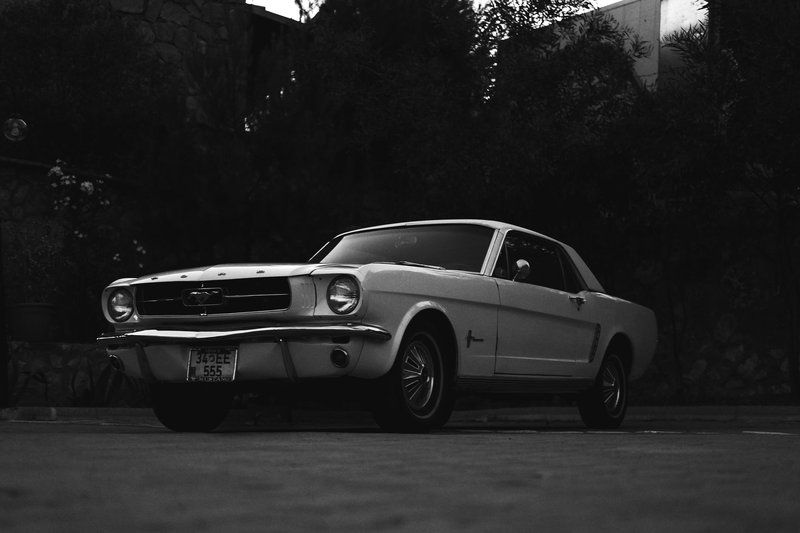
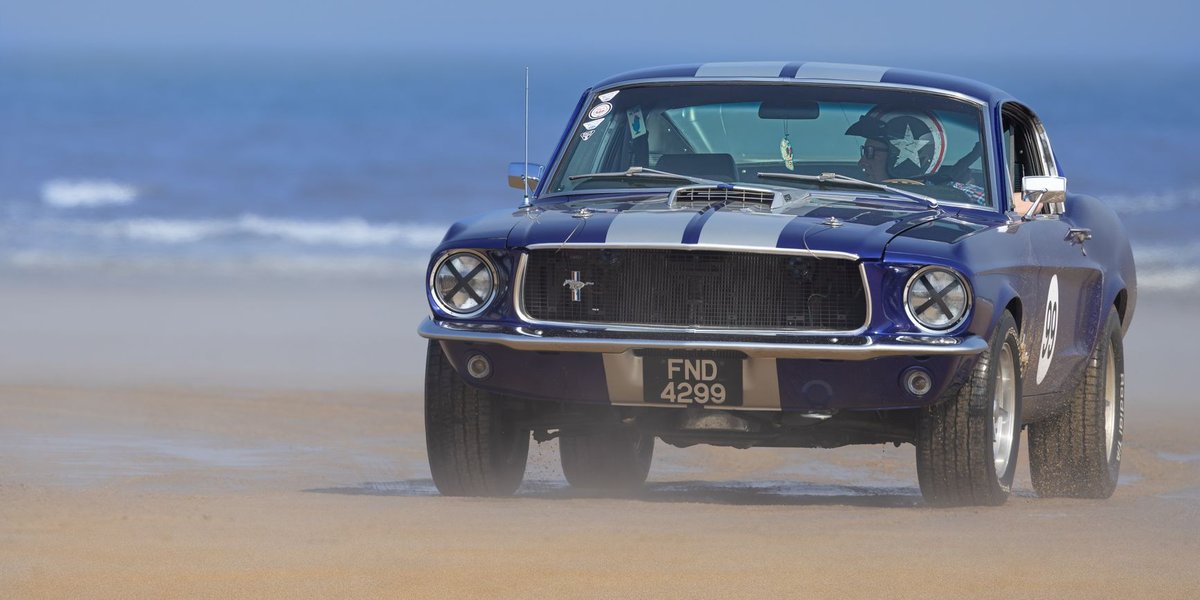
This is the one everybody came for, and 1988 is squarely in the sweet spot of the Fox-body run. The 5.0-liter V8 made 225 horsepower and 300 lb-ft of torque, mated to either a five-speed manual or a four-speed automatic. That doesn’t sound like much by modern standards, but in a car this light, with that much torque down low, it was genuinely quick in a straight line and cheap to make quicker. By the end of the decade the 5.0 was one of the few bright spots in a Detroit performance scene that had spent years in the wilderness, and it earns its place among the best 80s muscle cars worth buying today precisely because it was fast, affordable, and infinitely tunable.
The lineup split into two personalities. The GT got the body kit, the fog lights, the louvered taillights, and the aero ground effects, and it ran $13,119 as a hatchback or $16,984 as a convertible. Then there was the sleeper that real Fox-body people prize: the LX 5.0 notchback, which put the exact same drivetrain into the plain-Jane coupe body for as little as $8,999. Same engine, less weight, no boy-racer cladding, and a stiffer body shell. Drag racers figured this out decades ago, which is why a clean notchback 5.0 is now a budget-friendly unicorn.
Mechanically, 1988 carried over from 1987 with little change, which means parts interchangeability across the late Fox-body years is excellent. That matters enormously for anyone buying one to actually use.
The Saleen: The Fox-Body Holy Grail {#saleen}
If the 5.0 GT is the people’s champ, the Saleen is the trophy. Steve Saleen took regular Fox-body Mustangs and reworked the suspension, wheels, aero, and interior into something that handled like nothing else wearing a Ford badge in 1988. He didn’t build many. Saleen produced roughly 708 cars in 1988, and that scarcity is exactly why they’ve appreciated the way they have.
According to Hagerty’s valuation data, a standard-production Saleen Mustang averages around $24,150 in #2 (excellent) condition, and the rarer variants climb well past that. These are the most collectible Fox-bodies, full stop. If you find one with documentation and matching numbers, it’s the closest thing to a blue-chip investment in this entire model year.
The Taurus: The Car That Saved Ford {#taurus}
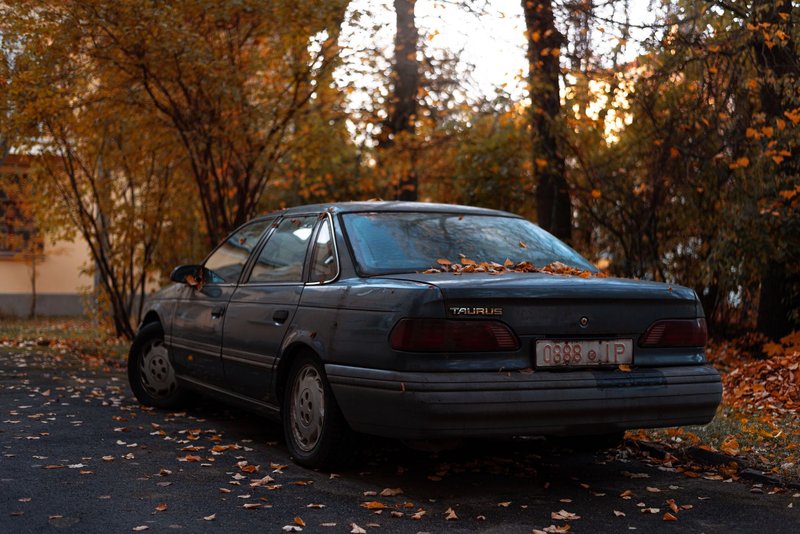
The Taurus won’t appreciate the way a Mustang does, but it’s arguably the most historically important car Ford built in this era. The aero “jellybean” shape was a shock when it landed, and by 1988 it had already started dragging the rest of Detroit out of the boxy 1980s. The bubble-smooth bodywork looked like it came from a decade in the future, and buyers responded.
Under the hood, the volume seller was the 3.0-liter Vulcan V6, paired with a four-cylinder on the base trims and the wagon as a practical family option. The performance halo, the legendary Taurus SHO with its 220-hp Yamaha-built DOHC V6 and five-speed manual, was developed during this period but didn’t reach showrooms until the 1989 model year, so don’t let a seller pass off an ’88 sedan as an SHO. That same 1989 model year was a turning point across Detroit, and you can see how Ford’s crosstown rivals stacked up in this rundown of every 1989 Chevrolet model ranked by what it’s worth now. For 1988, the Taurus is a fascinating, comfortable, and dirt-cheap entry into design history rather than a money-maker.
The Thunderbird Turbo Coupe {#thunderbird}
The Thunderbird is the lineup’s quiet sleeper. The standard cars came with V6 and 5.0 V8 options, but the one to know is the Turbo Coupe, running a turbocharged 2.3-liter four-cylinder with an intercooler, four-wheel disc brakes, and adjustable suspension. It was Ford’s tech-forward personal coupe, and it’s aged into a genuine enthusiast pick.
Values back that up. Market data from CLASSIC.com shows Turbo Coupes trading roughly from $7,400 to over $20,000 depending on mileage and condition, with low-mile survivors pulling the top of that range. For the money, it’s one of the more interesting things you can buy from this model year that isn’t a Mustang.
The Sensible Stuff: Escort, Tempo, Festiva, Crown Victoria {#sensible}
These are the cars that paid the bills, and most of them are footnotes to a collector.
- Escort and EXP: The compact 1.9-liter front-driver was Ford’s bread and butter, sold as a hatch, wagon, and the sporty two-seat EXP coupe (1988 was near the end of the EXP’s run). Reliable, forgettable, and almost extinct now because nobody saved them.
- Tempo: The mid-size compact with the 2.3-liter four. Comfortable, sold in huge numbers, collectible by no one.
- Festiva: The tiny Kia-built 1.3-liter hatchback. It has a small cult following for its cheapness and durability, but “cult” is doing heavy lifting there.
- Crown Victoria / LTD: The full-size, body-on-frame, 5.0 V8 rear-driver. A comfortable cruiser and a parts-bin sibling to the police and taxi fleets that ran forever. Low collector value, high nostalgia.
None of these will make you money. A clean Crown Vic, though, is a wonderfully cheap way to own a rear-wheel-drive V8 land yacht if that’s your thing.
Trucks and SUVs: F-Series and Bronco {#trucks}
This is where the quiet appreciation is happening. The F-Series, the eighth-generation trucks with the bricky aero front end, came with everything from the bulletproof 4.9-liter inline-six to 5.0 and 5.8 V8s. Clean, unmolested examples have been climbing in value as buyers rediscover square-body utility.
The Bronco (full-size, 5.0 V8, removable top) and the smaller Bronco II (compact, 2.9-liter V6) ride the same wave. The full-size Bronco especially has caught the collector eye, dragged upward by nostalgia and the modern Bronco’s revival. If you’re betting on what appreciates next out of 1988, it’s the trucks.
Which 1988 Fords Are Worth Collecting Now {#verdict}
Here’s the honest ranking.
- Saleen Mustang — the rarest, most valuable, and most blue-chip of the bunch. Buy with documentation or don’t buy.
- Mustang 5.0 (GT or LX notchback) — the smart-money pick. Affordable, endlessly supported by parts, and the notchback sleeper is undervalued relative to its hardcore reputation.
- F-Series and full-size Bronco — the appreciating dark horses. Get a clean one before the rest of the market figures it out.
- Thunderbird Turbo Coupe — the most interesting thing under $20K that nobody’s fighting over.
- Everything else — buy a Taurus or Crown Vic because you love it, not because it’ll pay you back.
Buyer and Restorer Notes {#buyer-notes}
A few things to check before you hand over money on any 1988 Ford:
- Rust is the killer. These cars predate widespread galvanizing. Check the strut towers and floor pans on Fox-body Mustangs, the rear quarters and bed corners on F-Series, and the frame on full-size Broncos.
- Parts availability is a real differentiator. Mustang and F-Series parts are everywhere and cheap, which is half the reason they’re good ownership bets. Festiva and EXP parts can be a scavenger hunt.
- Verify the Saleen. Saleens have specific build documentation and serial numbers. An undocumented “Saleen” is just a Fox-body with a body kit, and it’s priced accordingly.
- Don’t pay SHO money for an ’88. The SHO is a 1989-and-up car. Any 1988 Taurus claiming to be one is mislabeled.
The 1988 Ford lineup sits at a hinge point: the old square Detroit on one side, the aero future on the other. Most of it was disposable. But the handful that mattered, the 5.0, the Saleen, the trucks, are still here for a reason, and they’re still worth driving.

Marco Delantero
More from Marco DelanteroHow we reviewed this article
This article was researched against manufacturer records and editorially reviewed before publishing. We accept no payment for coverage.