1984 was the year Ferrari pivoted. The 512 BBi flat-12 was on its way out, the Testarossa landed at the Paris Salon to replace it, and somewhere in Maranello a homologation special called the 288 GTO was being built in just enough numbers to go racing in Group B. If you’re researching the 1984 Ferrari models specifically — for a purchase, a valuation, or just because the year produced two genuine icons — most pages give you a thin table with half the prices marked “Not on File.”
This is the full roster instead. Every model Ferrari offered for the 1984 model year, what powered it, how many were built, and what one costs now.
Table of Contents
- The quick roster
- Ferrari Testarossa (debut)
- Ferrari 288 GTO
- Ferrari 512 BBi
- Ferrari 308 GTB / GTS Quattrovalvole
- Ferrari Mondial Quattrovalvole
- Ferrari 400i
- Ferrari 208 GTB/GTS Turbo
- Which 1984 Ferrari is the smart buy
The quick roster {#the-quick-roster}
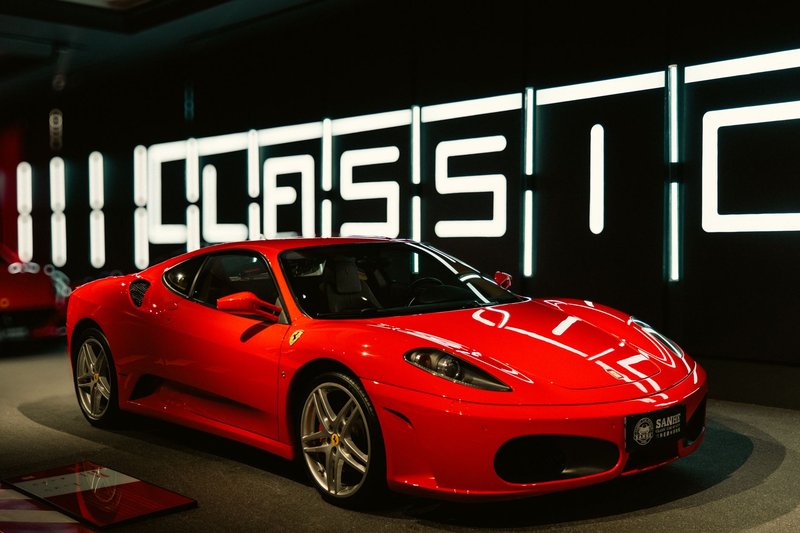
Seven model lines wore the prancing horse in 1984. Two were brand new (Testarossa, 288 GTO), one was in its final year (512 BBi), and the rest were carryover updates to the existing range. Here’s the whole year at a glance.
| Model | Engine | Power (approx) | Built | Value band (good driver → excellent) |
|---|---|---|---|---|
| Testarossa | 4.9L flat-12 | 380 hp | ~7,177 (1984–91) | $90k–$180k |
| 288 GTO | 2.85L twin-turbo V8 | 400 hp | 272 total | $2.5M–$3.5M+ |
| 512 BBi | 4.9L flat-12 | 340 hp | 1,007 total | $250k–$400k |
| 308 GTB/GTS QV | 3.0L V8 | 240 hp | thousands | $70k–$130k |
| Mondial QV | 3.0L V8 | 240 hp | thousands | $35k–$60k |
| 400i | 4.8L V12 | 310 hp | ~1,300 (i, 1979–85) | $40k–$70k |
| 208 GTB/GTS Turbo | 2.0L turbo V8 | 220 hp | ~1,100 (Italy only) | $60k–$110k |
Values are ballpark for clean, documented cars as of recent market data; condition, history, and provenance move these numbers hard. The 288 GTO is the obvious outlier — it’s not a sports car you buy, it’s a blue-chip collectible.
Ferrari Testarossa (debut) {#ferrari-testarossa}
The headline of 1984. Unveiled at the Paris Motor Show in October, the Testarossa replaced the Berlinetta Boxer and immediately became the poster on every teenager’s wall for the rest of the decade.
The name (“redhead”) came back from the 1950s 250 Testa Rossa, a reference to the red-painted cam covers. The engine underneath was a 4.9-liter flat-12 making 380 horsepower, mounted longitudinally behind the driver. Top speed was quoted around 180 mph, which in 1984 put it in a very short list of road cars. The Testarossa would go on to dominate the rest of the decade, and by the time you look at the 1996 Ferrari lineup the same flat-12 bloodline was running out its final chapter as the F512 M.
What everyone remembers, though, is the width and those side strakes. The car is nearly 78 inches wide — wider than a contemporary Lamborghini Countach — because Ferrari moved the radiators from the nose to the flanks and fed them through those slatted intakes. They weren’t styling for its own sake; they were a workaround for U.S. regulations about the size of openings, so Pininfarina turned a legal constraint into the car’s signature.
Early “monospecchio” cars (single high-mounted door mirror) and “monodado” single-bolt wheels are the ones collectors chase. A 1984–85 build with the right details and a service history sits comfortably above a generic later car.
Ferrari 288 GTO {#ferrari-288-gto}
The other 1984 debut, and the more important car historically. Ferrari built the 288 GTO to homologate for Group B racing — the same wild category that produced the Audi Quattro and Lancia Delta S4. The series collapsed before the GTO ever raced in it, which left Ferrari with a road car that had no purpose except being spectacular.
It looks like a 308 that’s been to the gym. Underneath, almost nothing was shared. The engine is a 2.85-liter twin-turbocharged V8 — the displacement chosen so the FIA’s 1.4x turbo equivalency factor kept it under the 4-liter Group B limit — mounted longitudinally rather than the 308’s transverse layout. Output was around 400 horsepower, and the body used composite panels to keep weight near 2,550 pounds.
Ferrari planned 200 cars to satisfy homologation. Demand meant they built 272 in total, and the GTO is now considered the first of the modern Ferrari “supercar” bloodline that runs through the F40, F50, Enzo, and LaFerrari. That lineage is exactly why values sit in the multi-million-dollar range — a documented 288 GTO trades for more than $3 million when a good one surfaces.
Ferrari 512 BBi {#ferrari-512-bbi}
1984 was the 512 BBi’s last full year before the Testarossa took over. The “BB” stands for Berlinetta Boxer, and the “i” marks the switch to Bosch K-Jetronic fuel injection that replaced the earlier carbureted setup.
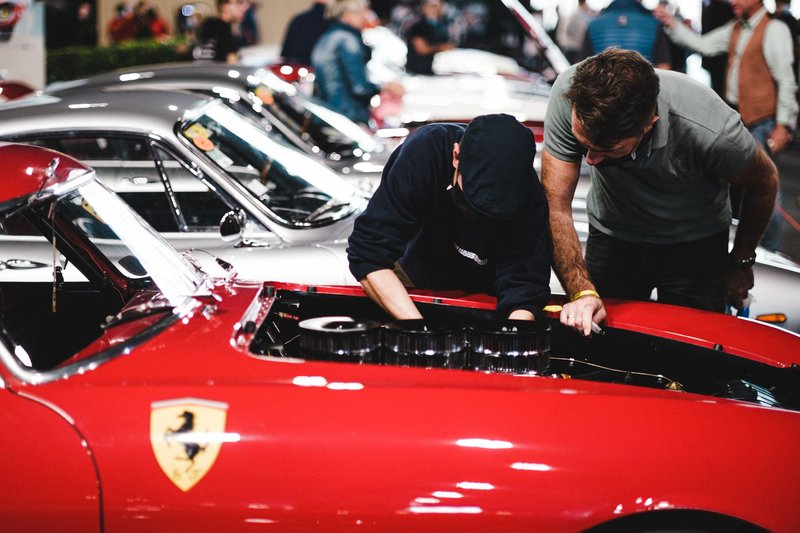
Power came from a 4.9-liter flat-12 producing roughly 340 horsepower — slightly less than the Testarossa that replaced it, but in a narrower, arguably prettier body. The Boxer is the connoisseur’s choice precisely because it’s less famous: where the Testarossa screams 1980s, the 512 BBi reads as the end of a more elegant era. If you want to see how this same Boxer sat in the range just a few years earlier, the 1981 Ferrari lineup shows the carbureted 512 BB before the BBi’s injection update arrived.
Total Boxer production across all variants (365 GT4 BB, 512 BB, 512 BBi) was only a few thousand cars, and the BBi itself accounts for 1,007 examples. That scarcity, plus the fact that Ferrari never federalized the Boxer for U.S. sale (so American cars are all grey-market imports), keeps clean ones firmly in six-figure territory and climbing.
Ferrari 308 GTB / GTS Quattrovalvole {#ferrari-308}
The bread and butter. The 308 had been around since 1975, and for 1984 it ran in Quattrovalvole form — “four valves” per cylinder — which Ferrari introduced in late 1982 to claw back the power that emissions tuning had stolen from the fuel-injected 308i.
The 3.0-liter V8 made about 240 horsepower in QV trim, up from the 214 of the injected non-QV car. GTB is the fixed-roof berlinetta; GTS is the targa with the removable roof panel, and the GTS outsold the coupe by a wide margin because buyers wanted the open-air drama (and Magnum, P.I. had made the targa the default mental image of a Ferrari).
This is the entry point to 1980s Ferrari ownership. A 308 QV is the one you can actually drive without a security detail, parts and specialists are everywhere, and a sorted GTS lands in the $70k–$130k range depending on condition and whether it’s a desirable early QV or a later car. The QV stuck around long enough that by the time it was replaced you’re well into the 1988 Ferrari lineup, where the 328 had taken over the small-V8 slot.
Ferrari Mondial Quattrovalvole {#ferrari-mondial}
The Mondial gets dunked on more than it deserves. It’s the practical Ferrari of 1984 — a 2+2 with a mid-mounted engine, usable rear seats (for short people or short trips), and four-seat doors that made it the family-friendly option in a range full of two-seaters.
It shares the 308’s 3.0-liter Quattrovalvole V8, so roughly 240 horsepower, in both coupe and cabriolet forms. The Mondial Cabriolet is notable as the only four-seat, mid-engined, convertible Ferrari the company has ever made — a genuinely specific niche.
Because the internet spent two decades calling it the “cheap Ferrari,” the Mondial QV is the most affordable way into a real V8 Ferrari from this era. That’s also the buyer’s-note warning: a cheap Mondial with deferred maintenance can cost more in a single major service (the engine-out cam belt job) than you paid for the car.
Ferrari 400i {#ferrari-400i}
The grand tourer most people forget Ferrari even made. The 400i was a front-engined, V12, 2+2 luxury coupe — the quiet, leather-lined Ferrari you’d drive across a continent rather than blast around a track.
Its 4.8-liter V12 made around 310 horsepower with Bosch K-Jetronic injection (the “i”), and the 400 series was the first Ferrari ever offered with a GM-sourced automatic transmission, which purists sneered at and tourers loved. Pininfarina’s three-box shape is angular and restrained, closer to a Maserati or a Mercedes coupe than anything wearing a prancing horse before or since.
Like the Boxer, the 400i was never officially sold in the U.S. For years these were the “bargain V12 Ferrari,” and while values have firmed up, the 400i still offers twelve cylinders and a Maranello badge for the price of a well-optioned new SUV.
Ferrari 208 GTB/GTS Turbo {#ferrari-208-turbo}
The one almost nobody outside Italy has seen. The 208 existed for a single reason: Italian tax law penalized engines over 2.0 liters heavily, so Ferrari built a sub-2-liter V8 for the home market. The naturally aspirated early 208 was gutless, so for 1982 onward Ferrari bolted on a turbocharger.
The 1984 208 GTB/GTS Turbo used a 2.0-liter turbocharged V8 making roughly 220 horsepower — within shouting distance of the 308 QV’s output, from two-thirds the displacement. It looks identical to a 308 apart from badging and the turbo’s intercooler ducting, which makes it a stealthy oddity at any gathering.
Production stayed in the low thousands and Italy-bound, so a 208 Turbo in the U.S. or northern Europe is a genuinely rare sight. It’s the trivia-night answer to “what’s the rarest regular-production 1984 Ferrari that isn’t a 288 GTO.” If you want to see where it sat against everything else on the road that year — Ferrari and otherwise — the complete 1984 car models list puts the whole field in context.
Which 1984 Ferrari is the smart buy {#which-1984-ferrari}
Depends on what you’re actually after.
Best investment / blue-chip: The 288 GTO, no contest — but it’s a museum piece priced like a small house, and you won’t be buying one on a whim. It’s the most collectible 1984 Ferrari, full stop.
Best icon you can drive: The Testarossa. It defines the decade, values have stabilized after years of swings, and a 1984–85 early car with monospecchio details is the version to hunt.
Best connoisseur’s pick: The 512 BBi. Rarer than the Testarossa, prettier to a lot of eyes, and the last of the Boxer line.
Best value entry point: The 308 GTS Quattrovalvole if you want the classic shape, or the Mondial QV if you want the cheapest real V8 Ferrari and you’ve budgeted for the service.
The thing to remember across all of them: with any 1980s Ferrari, the cheapest car to buy is almost never the cheapest to own. A documented service history — especially proof of a recent cam-belt service on the V8s — is worth more than a few thousand dollars off the sticker. Buy the file, not just the car.

Marco Delantero
More from Marco DelanteroHow we reviewed this article
This article was researched against manufacturer records and editorially reviewed before publishing. We accept no payment for coverage. Some guides contain affiliate links; see our affiliate disclosure.