Here’s the part most lists bury: of all the brands you’ve seen tagged “hybrid motorcycle,” exactly one actually sells a true parallel hybrid bike you can ride off a showroom floor. That’s Kawasaki. Everyone else is selling you a concept, a mild-hybrid scooter, or a press release.
That’s not a knock on the category. It’s just the honest starting point, and it’s the thing the “10 Best Hybrid Motorcycles” roundups won’t tell you because admitting the field is thin makes for a shorter article.
So let’s do this properly. Organized by manufacturer, with what’s real, what’s a scooter, and what’s still vaporware.
Table of Contents
- What “hybrid” even means on two wheels
- Spec comparison at a glance
- Kawasaki: the only real production hybrid
- Honda: mild-hybrid scooters, not bikes
- Piaggio: the plug-in three-wheeler
- Yamaha: concepts and patents
- TVS and the concept-stage crowd
- Hybrid vs electric: why most brands skipped hybrid
- What’s coming next
- The verdict
What “hybrid” even means on two wheels
On four wheels, “hybrid” has settled into clear buckets. On two wheels, marketing departments treat the word like wet clay. Three things get called hybrid, and they’re wildly different:
Strong (parallel) hybrid. A combustion engine and an electric motor that can both drive the wheel, sometimes together, sometimes solo. The bike can crawl through a parking lot on battery alone, then fire the engine for the on-ramp. This is the real deal, and right now Kawasaki is the only brand shipping it.
Mild hybrid. A small electric motor assists the engine but can’t drive the bike on its own for any meaningful distance. Think of it as a fancy stop-start system with a torque boost. Honda’s idle-stop scooters live here.
Plug-in hybrid. Bigger battery, charges from the wall, longer electric-only range. On two and three wheels this is rare, but Piaggio’s MP3 has flirted with it.
When a listicle lumps all three together and counts to ten, it’s padding the number. The honest count of true production hybrid motorcycles in 2026 is closer to one.
Spec comparison at a glance
Here’s the current landscape, sorted by how “real” the hybrid system actually is. Prices are rough US MSRP and shift with model year and trim.
| Brand / Model | Type | Engine | Electric motor | Approx. price | Status |
|---|---|---|---|---|---|
| Kawasaki Ninja 7 Hybrid | Strong hybrid | 451cc parallel-twin | ~9 kW | ~$12,500 | On sale |
| Kawasaki Z7 Hybrid | Strong hybrid | 451cc parallel-twin | ~9 kW | ~$12,000 | On sale |
| Honda PCX e:HEV | Mild hybrid | 125cc single | Small assist motor | ~$4,000 (region-dependent) | On sale (limited markets) |
| Piaggio MP3 | Plug-in / hybrid history | 400–530cc single | Varies by gen | ~$9,000+ | On sale (gas); hybrid discontinued |
| Yamaha HV / PES concepts | Concept | N/A | N/A | N/A | Not for sale |
| TVS hybrid concept | Concept | Small single | N/A | N/A | Not for sale |
The takeaway from the table is the rightmost column. Two real bikes, one real scooter, and a lot of “not for sale.”
Kawasaki: the only real production hybrid
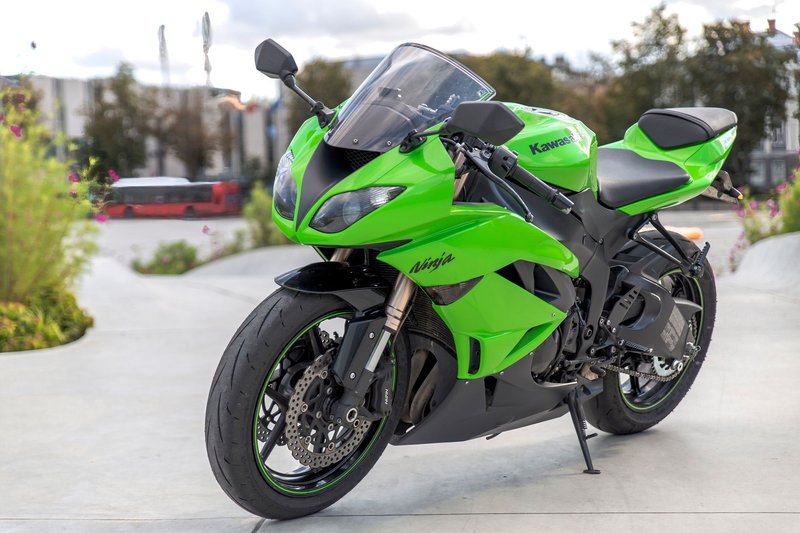
Kawasaki is the brand that actually did it. The Ninja 7 Hybrid and its naked sibling the Z7 Hybrid pair a 451cc parallel-twin with an electric motor and a 48V lithium battery, and they’re genuinely on sale, not slideware.
What makes them interesting isn’t outright speed. It’s the three riding modes. EV mode runs pure electric for low-speed creeping and tight neighborhoods, which is the bit that feels like the future the first time you roll silently out of your garage. Eco-Hybrid blends both for efficiency. Sport-Hybrid dumps engine and motor torque together for an “e-boost” that punches well above what a 451cc twin should feel like off the line.
Kawasaki claims acceleration in the neighborhood of a 650 and fuel economy closer to a 250, which is the entire pitch of the thing: 700-class punch, lightweight-class thirst. The catch is the curb weight. Stuffing a battery and a motor into the frame makes these heavier than a comparable pure-gas middleweight, and you feel it pushing the bike around the garage.
At roughly $12,000–$12,500, you’re paying a clear premium over a gas Ninja 500. The honest question isn’t “is it cool” (it is), it’s whether the EV-mode novelty and fuel savings justify the weight and the price. For a curious commuter who wants silent low-speed running without going full electric, it’s the only game in town. For a canyon carver, a lighter gas bike still wins.
Honda: mild-hybrid scooters, not bikes
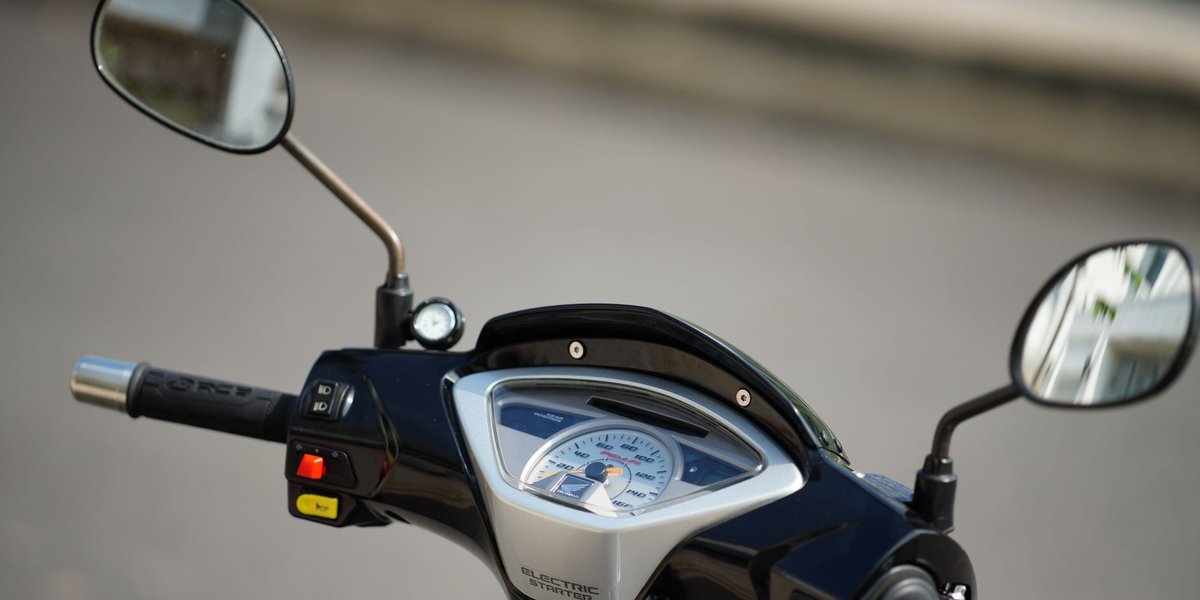
Honda gets name-dropped in every hybrid motorcycle list, and it’s a stretch. The PCX e:HEV is a 125cc scooter with a small assist motor that adds a torque kick when you crack the throttle. It’s a mild hybrid. It cannot run on electric alone in any practical sense, and it’s a step-through scooter, not a motorcycle in the way most people searching this mean.
That doesn’t make it bad. As a city scooter, the PCX is one of the most refined commuters Honda builds, and the hybrid version is noticeably perkier off the line than the standard one. But if you came here picturing a hybrid sportbike from Honda, that doesn’t exist yet. Honda has filed plenty of hybrid and electric patents, and the company has been louder about its broader electrification roadmap than about any specific hybrid bike. For now, the only thing you can buy is a scooter with a torque-assist motor, sold mostly in Asian and European markets.
Piaggio: the plug-in three-wheeler
Piaggio actually beat almost everyone to the punch. Years ago, the MP3 Hybrid — the tilting three-wheeled scooter — was one of the first plug-in hybrids on the road, full stop. It could charge from a wall outlet and run a short stretch on electric before the engine kicked in.
The current MP3 lineup is gas-only, and the hybrid version is no longer on the menu, so this is more history than buying advice. But it matters for one reason: it proves the plug-in two/three-wheeler concept worked a decade before anyone called it a trend. If a brand resurrects the hybrid scooter idea, Piaggio’s old MP3 is the blueprint. The MP3’s other party trick — two front wheels that let you keep it upright and lane-split without putting a foot down — is also why it never really fit the “motorcycle” box, hybrid or not.
Yamaha: concepts and patents
Yamaha is the king of the tease. Over the years the company has shown hybrid concepts (the HV-X being the most-cited) and filed hybrid patents, including clever setups using a motor in the wheel hub. The engineering interest is clearly there.
What isn’t there is a product. As of 2026 you cannot walk into a Yamaha dealer and buy a hybrid motorcycle. Yamaha has poured most of its public energy into electric prototypes and small EVs instead. If you see Yamaha on a “best hybrid motorcycles” list with a real model name and a price, double-check it, because it’s probably a concept being passed off as buyable.
TVS and the concept-stage crowd
India’s TVS has shown hybrid-related concepts and talked up hybrid tech for its smaller-displacement bikes, which makes sense for a market where fuel efficiency is everything and full EVs still hit range and charging walls. Segway and a few other newer players have floated hybrid ideas too.
Treat this whole group as “watch this space.” Concepts are cheap to show and expensive to ship. None of them put a production hybrid in your garage today. The reason this tier exists at all is that hybrid is genuinely attractive in markets with patchy charging infrastructure — you get some electric benefit without range anxiety. That’s the strongest real-world case for two-wheel hybrids, and it’s why the next wave, if it comes, may well come from Asia rather than Japan or Europe.
Hybrid vs electric: why most brands skipped hybrid
This is the question the listicles dodge, and it’s the most useful thing on this page. Why is the hybrid motorcycle field so empty when hybrid cars are everywhere?
Packaging. A car has a roomy engine bay and a floor pan to hide batteries under. A motorcycle has none of that. Cramming a combustion engine, a fuel tank, an electric motor, and a battery into a frame that also has to lean into corners is a genuine engineering headache. You add weight exactly where a bike doesn’t want it, and weight is the enemy of everything that makes a motorcycle fun. It’s a constraint riders have lived with since the era of big horizontal singles like the 1950s Moto Guzzi machines, where every kilo was fought over long before batteries entered the picture.
So most manufacturers did the math and jumped straight to full electric. An electric motorcycle is mechanically simpler than a hybrid — one power source, no engine, no gearbox, no exhaust. Brands like Zero, LiveWire, and Energica bet that the cleaner path was to skip the hybrid middle step entirely. The motorcycle industry, broadly, agreed.
Hybrid only makes sense on two wheels in a specific niche: riders who want some electric benefit (silent low-speed running, a torque boost, better mileage) but aren’t ready to deal with charging stops and range limits. That’s a real niche. It’s just a small one, which is why Kawasaki has it almost entirely to itself.
What’s coming next
The honest forecast: don’t expect a flood. The structural reasons hybrids stayed rare aren’t going away, and the industry’s momentum is pointed at full EVs and, increasingly, alternative fuels and hydrogen experiments on the combustion side.
That said, a few threads are worth tracking. Kawasaki has signaled it sees hybrid as part of a broader carbon-neutral lineup, not a one-off, so a second-generation or larger-displacement hybrid is plausible. Watch the Asian market, where the efficiency-without-charging pitch lands hardest, for the next genuinely buyable hybrid. And keep an eye on the scooter category, where mild-hybrid assist is cheap to add and easy to justify.
If a 2026-or-later hybrid lands with a real price tag and a dealer you can visit, it’ll most likely be either a Kawasaki follow-up or something from a manufacturer chasing the commuter market. Anything else, for now, is a concept wearing a buyable costume.
The verdict
The list of hybrid motorcycle brands you can actually buy from is short, and pretending otherwise does you no favors:
- Want a real production hybrid motorcycle? Kawasaki Ninja 7 Hybrid or Z7 Hybrid. That’s the whole list. Expect to pay around $12,000, carry extra weight, and get genuinely clever EV-mode-to-sport-boost flexibility in return.
- Want a hybrid for cheap city commuting? Honda’s PCX e:HEV scooter, if it’s sold in your market. Just know it’s a mild hybrid, not a motorcycle.
- Everything else — Yamaha, TVS, Segway hybrid talk, the old Piaggio MP3 Hybrid — is either a concept, a discontinued model, or a scooter dressed up for a listicle.
If you want the silent-creep-then-engine-boost experience and don’t want to commit to a full electric, Kawasaki built the bike for you. If your real itch is going electric, skip hybrid entirely and shop a Zero or a LiveWire. And if a roundup tries to sell you ten buyable hybrid motorcycle brands, now you know it’s counting concepts to hit a round number.

Marco Delantero
More from Marco DelanteroHow we reviewed this article
This article was researched against manufacturer records and editorially reviewed before publishing. We accept no payment for coverage. Some guides contain affiliate links; see our affiliate disclosure.